


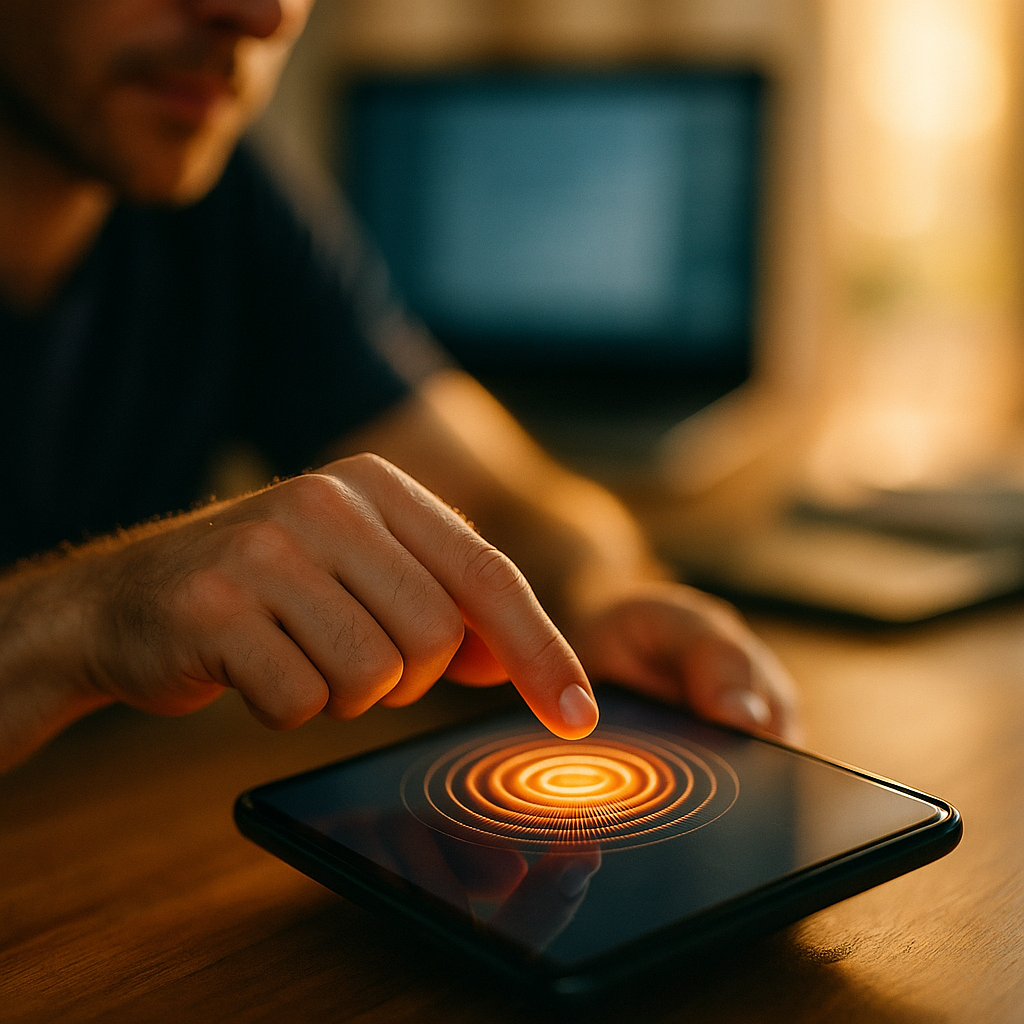
The Future Of Haptic Marketing is arriving fast as brands compete for attention in crowded feeds. In 2025, touch is no longer limited to product packaging or in-store demos; it can be embedded into apps, ads, and immersive experiences through phones, wearables, and XR devices. The real question is not whether touch works—but how you will use it to earn trust and drive action.
Why haptic marketing works: touch, memory, and decision-making
Haptics add a physical layer to digital content. When a user feels a vibration pattern that matches what they see—like a soft “click” when confirming a purchase—your message becomes more tangible, more believable, and easier to remember. Touch also helps reduce uncertainty, which is a major barrier in online buying.
In practice, haptics influence three key marketing outcomes:
- Attention: A well-timed tactile cue cuts through visual noise without increasing screen clutter.
- Comprehension: Touch can signal states and changes—success, error, progress, or urgency—faster than text.
- Confidence: “I felt it happen” can reinforce perceived control, especially during payments, form submissions, or onboarding.
Many teams ask whether haptics are “just a novelty.” They are not—when they reinforce meaning. Random vibrations train users to ignore the feature. Intentional patterns tied to outcomes build familiarity and trust, which is where marketing value compounds.
If you need a quick litmus test: if you can remove the haptic feedback without changing the user’s understanding or confidence, it is likely decoration. If removing it increases errors, abandonment, or doubt, it is functional—and worth iterating.
Integrating touch into content: formats, channels, and real-world use cases
Integrating touch into content starts by mapping where tactile cues can clarify intent, reduce friction, or create a signature brand moment. In 2025, the most practical channels are mobile devices, wearables, gaming controllers, and XR hardware that already support tactile feedback.
High-impact use cases include:
- Mobile ads and social content: Subtle tactile beats synced to key visual moments (product reveal, “tap to claim,” limited-time offers). Keep it brief and meaning-based to avoid annoyance.
- Ecommerce product confidence: Haptic “confirmation” for add-to-cart, size selection, and payment success; distinct patterns for error states to reduce mis-taps and repeat attempts.
- Interactive storytelling: Recipes that guide timing (knead, stir, bake), fitness content that cues pace changes, or travel content that “pulses” with route steps.
- Retail and out-of-home: QR/NFC experiences that shift from signage to phone with tactile verification (“you connected”) and guided navigation in-store.
- Customer support: Tactile confirmation for self-serve actions (reset password, lock card, cancel subscription) to increase perceived reliability.
Teams often worry about compatibility. You can design haptics to degrade gracefully: if the user’s device cannot render advanced feedback, you still provide the same meaning through sound and visuals. This makes haptic integration an enhancement, not a dependency.
Another common follow-up question: “Can touch be part of content, not just UI?” Yes. Treat haptics like a micro-narration layer. A pattern can represent a brand’s “tone” as reliably as a sonic logo—if you keep it consistent and purposeful.
Haptic feedback design: patterns, accessibility, and brand consistency
Haptic feedback design is where many haptic marketing initiatives succeed or fail. Users do not want stronger vibrations; they want clearer signals. Design should be grounded in user goals, not internal excitement about the technology.
Use these principles to create helpful tactile experiences:
- One meaning per pattern: Reserve a specific pulse for “success,” another for “warning,” and avoid reusing patterns across unrelated events.
- Match intensity to importance: A purchase confirmation can be stronger than a “like,” but not so strong it feels alarming.
- Keep duration short: Most cues should be felt in under a second to avoid fatigue and perceived intrusiveness.
- Provide user control: Offer settings to reduce intensity or disable non-essential haptics. Control builds trust.
- Design for accessibility: Haptics can support users who benefit from non-visual cues, but they can also overwhelm users with sensory sensitivities. Include “gentle mode” options and ensure all meaning is also conveyed visually.
Brand consistency matters. If your brand is calm and premium, your haptics should feel precise and restrained. If your brand is energetic, you can use sharper rhythms—but still keep them predictable. A useful approach is to create a small “tactile style guide” that defines patterns for key moments: confirm, error, navigation, progress, and reward.
When stakeholders ask how to avoid “annoying vibrations,” the answer is to tie haptics to intent and outcomes. Haptics should never compete with content. They should clarify it.
XR and wearable haptics: the next frontier for immersive brand experiences
XR and wearable haptics expand touch beyond the phone. In 2025, consumers increasingly encounter spatial experiences through AR features, VR training, mixed reality demos, and wearable devices that can deliver tactile cues on the wrist, hand, or body.
What changes with XR and wearables is not only the strength of sensation but the marketing possibilities:
- Try-before-you-buy in immersive spaces: Tactile cues can simulate interactions such as fastening, clicking, or snapping components into place, improving perceived usability.
- Guided navigation and assistance: Wearable taps can guide users through events, stores, or venues without forcing constant screen attention, which improves experience and safety.
- Training and education: Brands that sell tools, equipment, or services can use haptics to teach correct technique, reducing support costs and increasing satisfaction.
- Premium brand storytelling: “Feel” moments—like a soft pulse when a luxury product is revealed—can reinforce emotion and memorability when paired with strong visuals.
Most marketing teams will not start with specialized haptic hardware. That is fine. You can begin by developing a tactile language on mobile and then port patterns into XR as experiences mature. The important part is continuity: the tactile “signature” should carry across devices so users recognize it as yours.
Another practical consideration: XR and wearables can intensify user reactions. That makes testing essential, especially for comfort, motion sensitivity, and perceived intrusiveness. Responsible design improves both brand outcomes and user well-being.
Measurement and experimentation: proving ROI in sensory marketing
Sensory marketing ROI must be measured with the same discipline as any performance initiative. The benefit of haptics is that you can test it cleanly: compare experiences with haptics enabled versus disabled, keeping everything else constant.
Track outcomes that tie directly to business goals:
- Conversion rate: Purchases, sign-ups, bookings, quote requests.
- Task success and error rates: Mis-taps, form errors, retries, cart abandonment at key steps.
- Time to complete: Checkout speed, onboarding completion, content progression.
- Engagement quality: Return visits, feature adoption, interaction depth, completion of interactive content.
- Brand metrics: Aided recall, preference lift, perceived trust, satisfaction scores.
To follow EEAT-aligned best practices, document your approach: the hypothesis, the design rationale, the test plan, and the results. Share what you learned, not just what “won.” This helps decision-makers trust the program and helps users benefit from improvements.
A strong experimentation method in 2025:
- Define the user job: What is the user trying to accomplish at this moment?
- Choose one tactile signal: Success, warning, progress, or navigation.
- Design the smallest useful pattern: Short, distinct, consistent.
- Run an A/B test: Haptics on vs off, or pattern A vs pattern B.
- Validate with qualitative feedback: Ask whether haptics felt helpful, distracting, or confusing.
If leadership asks for immediate sales lift, set expectations: haptics often produce their best impact by reducing friction and increasing confidence, which may show up first in fewer errors and higher completion rates before it shows up as revenue. That is still ROI, and it is measurable.
Ethics, privacy, and trust: responsible haptic persuasion in 2025
Ethical haptic marketing matters because touch is persuasive. A tactile cue can nudge behavior more strongly than a visual hint, which raises the standard for user respect. Brands that misuse haptics can create discomfort, erode trust, or trigger accessibility concerns.
Responsible practices you should adopt:
- Explicit purpose: Use haptics to clarify actions and outcomes, not to pressure users into decisions.
- User control and consent: Provide clear settings to reduce or disable non-essential haptics, and respect system-level preferences.
- Avoid dark patterns: Do not use tactile urgency to rush checkout, hide cancellations, or exploit anxiety.
- Privacy discipline: If haptic experiences rely on sensors, location, or biometrics via wearables, explain what you collect and why, and collect only what you need.
- Inclusive testing: Test across different devices and with users who have varied sensory preferences to ensure comfort and clarity.
Trust is the strategic advantage. When users feel in control, haptics become a reliability signal: the brand “responds” in a way that feels consistent and respectful. That trust increases willingness to engage, share information, and buy again.
FAQs
What is haptic marketing?
Haptic marketing uses tactile feedback—such as vibrations, taps, or pressure-like cues—delivered through devices like smartphones, wearables, or controllers to enhance digital experiences and influence attention, understanding, and confidence.
How do you integrate touch into digital content without annoying users?
Make each haptic cue meaningful, short, and consistent. Tie it to clear moments such as confirmation, warnings, or progress. Provide intensity controls and allow users to disable non-essential haptics.
Which industries benefit most from haptic marketing in 2025?
Ecommerce, fintech, gaming, fitness, travel, event experiences, and retail benefit strongly because they rely on fast decisions and user confidence during key steps like checkout, navigation, and guided actions.
Do haptics improve conversion rates?
They can, especially when they reduce friction and errors in high-intent flows such as checkout, sign-up, or booking. The best way to confirm impact is A/B testing with conversion and task-success metrics.
What devices support haptic experiences?
Most modern smartphones support vibration-based haptics. Many wearables provide taps or pulses, and XR headsets and controllers can deliver more immersive tactile cues. Design should degrade gracefully when advanced haptics are unavailable.
Are there ethical risks with haptic persuasion?
Yes. Because touch can be persuasive, brands should avoid using haptics to pressure users or create false urgency. Prioritize transparency, user control, accessibility, and minimal data collection—especially when wearables or sensors are involved.
How do you create a brand-consistent haptic “signature”?
Define a small set of patterns for core moments—success, error, navigation, progress, reward—and document them in a tactile style guide. Keep meanings consistent across channels so users learn and recognize your touch language.
Haptic marketing will shape how digital content feels in 2025, turning taps and vibrations into signals that guide, reassure, and differentiate. Brands that win will treat touch as a meaning layer, not a gimmick: consistent patterns, accessible options, and measurable outcomes. Start with one high-intent flow, test rigorously, and scale a tactile style guide that strengthens trust and action.