


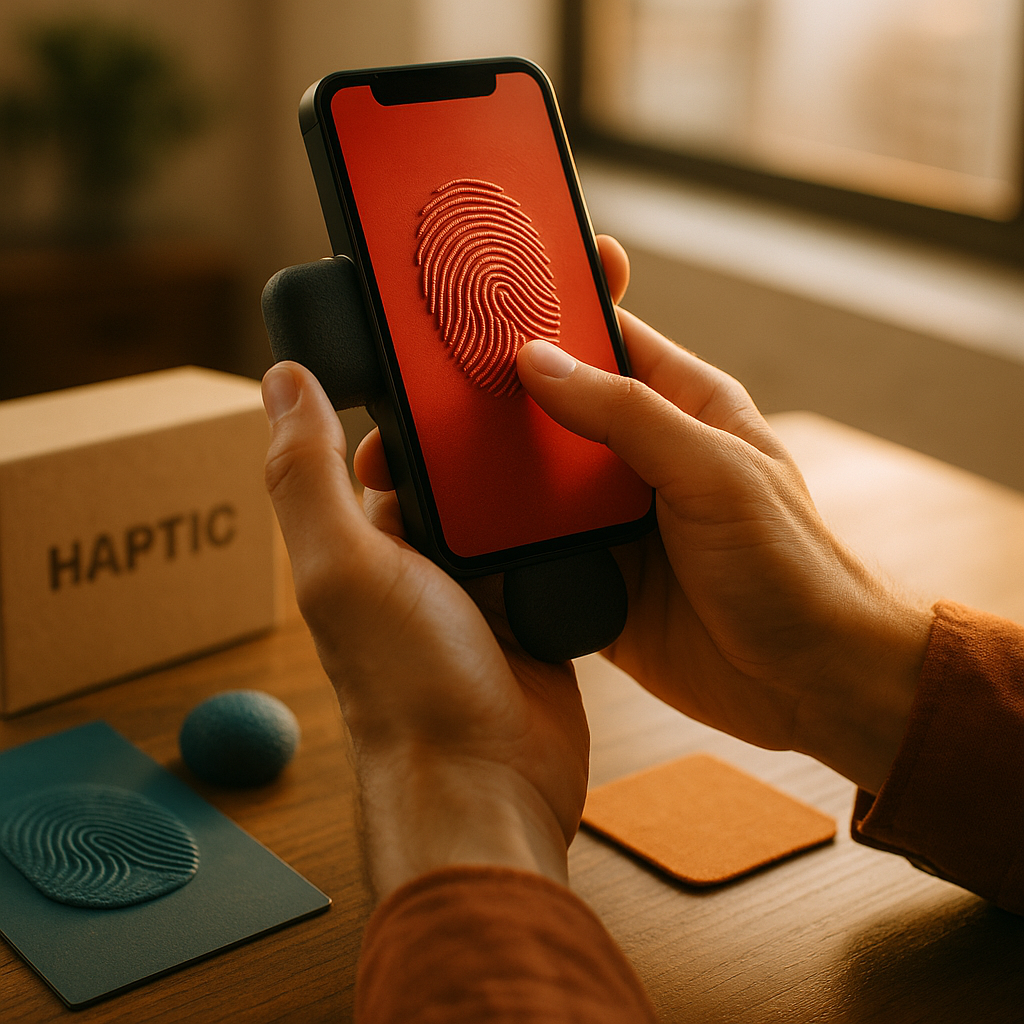
Haptic marketing is moving from novelty to strategy as brands compete for attention in crowded digital spaces. In 2026, touch-enabled experiences can make content feel more human, memorable, and actionable across mobile, gaming, retail, and connected devices. The opportunity is not just technological; it is creative, measurable, and increasingly expected by users. What happens when content can be felt?
Why sensory marketing now includes digital touch
Sensory marketing has traditionally focused on sight, sound, scent, and physical product interaction. Digital channels, however, have long lacked one critical dimension: touch. That gap is closing. Smartphones, wearables, gaming controllers, automotive interfaces, kiosks, and mixed-reality devices now support increasingly sophisticated tactile feedback. As a result, brands can design moments that users do not just see or hear, but physically perceive.
The rise of haptic marketing matters because attention is expensive and passive content is easy to ignore. A subtle vibration that confirms a purchase, guides a user through a meditation session, or reinforces a branded animation can improve clarity and create emotional resonance. Touch is immediate. It signals urgency, completion, direction, warning, and reward without adding visual clutter.
For marketers, this creates a practical advantage. Haptics can support user experience goals while also strengthening brand memory. For users, it can reduce friction. When executed well, tactile feedback feels useful rather than intrusive. That distinction is essential for helpful content and effective campaigns.
Brands should also recognize that digital touch is not a stand-alone gimmick. It works best when integrated into a broader content system that includes copy, motion, sound, accessibility, and measurement. In other words, haptics should serve the message, not distract from it.
How haptic technology is reshaping content design
Haptic technology is no longer limited to a simple buzz. In 2026, many devices can produce varied intensities, durations, and patterns, enabling designers to build a more nuanced tactile language. That gives content teams new tools to guide behavior and communicate meaning.
Here are the most relevant ways haptics are reshaping content design:
- Feedback loops: A tactile response can confirm a tap, form submission, add-to-cart action, or game achievement instantly.
- Navigation cues: Light pulses can guide users through onboarding, maps, in-app tutorials, and accessibility pathways.
- Emotional emphasis: A tailored vibration pattern can deepen suspense, reward, urgency, or reassurance in storytelling.
- Attention management: Haptics can highlight key moments without relying on louder sounds or more aggressive visual interruptions.
- Embodied learning: Educational content, training modules, and simulations can use touch to reinforce procedural memory.
This shift affects content strategy directly. Writers, designers, product managers, and developers must collaborate earlier. A call to action may no longer be just text plus button color. It may include a tactile confirmation designed to reduce hesitation. A tutorial may use haptics to guide timing. A retail app may turn product browsing into a richer experience by pairing animations with touch cues.
To build trust, teams should document what each haptic pattern means across the customer journey. Consistency matters. If one pattern means success in one part of the app and warning in another, users lose confidence. Clear governance is part of EEAT in practice: expertise shows up in thoughtful design systems, not just polished language.
Best practices for interactive content with haptics
Brands often ask the same question: where should haptics actually be used? The answer is in moments where tactile feedback improves understanding, confidence, or recall. The most effective haptic marketing supports a user need first and a brand goal second.
These best practices help teams create interactive content that feels intentional:
- Start with a user task. Identify where uncertainty, delay, or emotional drop-off occurs. Use haptics to clarify those moments.
- Match the intensity to the context. A payment confirmation might warrant a crisp, confident tap. A wellness app may need softer, calmer feedback.
- Keep patterns short and distinct. Users should understand a tactile cue quickly. Overly complex patterns reduce usability.
- Offer user control. Let people reduce or disable tactile feedback. Respect for preference supports accessibility and trust.
- Test across devices. Haptic behavior varies by hardware, operating system, and battery state. Validation is essential.
- Combine touch with clear content. Haptics should reinforce meaning, not replace labels, instructions, or visual states.
Use cases are expanding fast. In mobile commerce, haptics can reinforce checkout progression and reward completed purchases. In fitness apps, they can pace intervals or form corrections. In media and entertainment, they can enhance trailers, gameplay, and fan engagement. In automotive and mobility, they can reduce visual distraction by guiding attention through touch.
Interactive content also benefits from haptics in live events and hybrid experiences. A conference app can use touch to direct attendees to networking sessions. A museum guide can use tactile prompts to enhance storytelling. A brand activation can link wearable feedback to immersive screens or installations. These experiences work because they are multisensory without becoming overwhelming.
Measuring customer engagement and proving ROI
Marketers should treat haptics like any other experience layer: testable, measurable, and accountable. The strongest business case for haptic marketing comes from performance outcomes, not novelty claims. That means defining the metric before designing the vibration.
Relevant measurement frameworks include:
- Conversion metrics: Add-to-cart rate, checkout completion, subscription starts, or lead-form submissions.
- Behavioral metrics: Time on task, onboarding completion, feature adoption, scroll depth, or content completion.
- Retention metrics: Day-7 and day-30 retention, repeat sessions, habit formation, or loyalty actions.
- Experience metrics: Error reduction, faster navigation, support ticket decline, and qualitative satisfaction feedback.
- Brand metrics: Recall, emotional response, and perceived usefulness in post-experience surveys.
The best way to isolate impact is through controlled experimentation. Compare a tactile-enhanced flow against a non-haptic version. Measure whether users complete key actions faster, make fewer mistakes, or report more confidence. If the uplift is meaningful and sustained, scale the pattern. If not, refine or remove it.
It is also important to avoid vanity metrics. A campaign that generates attention because haptics feel new is less valuable than one that improves task success. Helpful content serves the user first. If touch makes the experience easier, clearer, or more memorable, it can support both user satisfaction and business growth.
For enterprise teams, cross-functional dashboards are useful. Product, UX, marketing, and analytics teams should share visibility into haptic performance by device type, funnel stage, and audience segment. This helps distinguish whether a tactile cue is contributing to engagement or simply correlating with it.
Accessibility, privacy, and trust in mobile marketing
As touch becomes more common in mobile marketing, brands need to design responsibly. Haptics can improve accessibility for some users, but they can also create discomfort, confusion, or exclusion if implemented carelessly. Trust depends on giving people clarity and control.
First, never assume haptic feedback works for everyone in the same way. Some users rely on tactile cues. Others may find them distracting or may use devices where haptic output is limited. Accessibility best practice is to provide multiple cues for important actions: visual, textual, auditory where appropriate, and tactile when helpful. Redundancy improves usability.
Second, explain what the user can expect in high-impact experiences. If an app includes strong or repeated tactile feedback, a brief onboarding note helps users understand the purpose and manage settings. This is especially important in health, finance, mobility, and child-focused products, where clarity is critical.
Third, avoid manipulative design. Haptics should not pressure users into clicks, purchases, or consent decisions. A forceful vibration at the wrong moment can feel coercive. Ethical experience design means using touch to support decision-making, not distort it.
Privacy also matters. Haptics themselves do not inherently collect personal data, but the systems that power personalized experiences often rely on behavioral signals, location context, or device capabilities. Be transparent about data use, obtain proper consent where required, and avoid personalizing tactile experiences in ways that feel invasive.
In practical terms, trustworthy mobile marketing with haptics follows a simple rule: make touch useful, optional, and understandable.
What the future of brand experience looks like in 2026
The future of brand experience is increasingly multimodal. People move across phones, wearables, cars, gaming systems, AR environments, and connected public spaces. In that ecosystem, touch can become a connective layer that helps brands feel more responsive and more consistent across channels.
Several developments are shaping the next phase of haptic marketing in 2026:
- Deeper OS and device integration: More platforms are offering standardized haptic APIs, making quality execution easier at scale.
- AI-assisted experience orchestration: Teams can test and refine tactile patterns based on journey data and context, while still requiring human oversight.
- Cross-device continuity: A user may begin an experience on mobile, continue on a wearable, and complete it in a vehicle or retail environment, with touch cues supporting continuity.
- Immersive commerce: Product discovery in virtual and mixed environments will increasingly use haptics to simulate interaction and strengthen confidence.
- Tactile design systems: Brands will formalize haptic libraries much like they already manage typography, color, motion, and sound.
The brands that benefit most will not be those that add haptics everywhere. They will be the ones that define a clear tactile strategy. That means identifying where touch can improve comprehension, reduce friction, and reinforce identity. It also means documenting principles, testing rigorously, and respecting user autonomy.
For content teams, this is a mindset shift. Content is no longer only written, visual, or spoken. It can be felt. That changes how stories are structured, how interfaces guide action, and how digital interactions build memory over time. The future is not touch for its own sake. It is touch as a meaningful part of communication.
FAQs about haptic marketing
What is haptic marketing?
Haptic marketing is the use of tactile feedback, such as vibrations or touch-based responses, to enhance digital or physical brand experiences. It helps users feel interactions, making content more immediate, memorable, and actionable.
How does haptic marketing improve content performance?
It can improve task completion, reduce uncertainty, strengthen emotional engagement, and increase recall. For example, a well-timed tactile confirmation can reassure users during checkout or onboarding, leading to better conversion and satisfaction.
Which industries benefit most from haptic marketing?
Mobile commerce, gaming, fitness, healthcare, automotive, education, retail, media, and live events all benefit. Any industry with app-based journeys, interactive training, or device-enabled experiences can use touch to improve usability and engagement.
Do haptics help with accessibility?
They can, especially when used alongside visual and textual cues. Haptics may support users who benefit from non-visual guidance, but they should never be the only signal for critical information. User control is essential.
How can brands measure haptic marketing ROI?
Use A/B testing and track metrics such as conversion rate, onboarding completion, retention, error reduction, feature adoption, and user satisfaction. The goal is to connect tactile design decisions to meaningful business and experience outcomes.
What are the risks of poor haptic design?
Overuse can annoy users, inconsistent patterns can confuse them, and aggressive feedback can feel manipulative. Weak testing across devices may also create uneven experiences. Good haptic design is subtle, purposeful, and consistent.
Do all devices support advanced haptics?
No. Capability varies by device, operating system, hardware quality, and user settings. Brands should design fallback experiences and test across common devices to ensure the core journey still works without tactile feedback.
Should every brand add haptics to content?
Not automatically. Brands should add haptics only where touch solves a real user problem or meaningfully improves the experience. If it does not increase clarity, confidence, or engagement, it is unlikely to add value.
Haptic marketing gives brands a new way to make digital content clearer, more memorable, and more human. The strongest results come from purposeful design, careful testing, and respect for user choice. In 2026, touch should not be treated as decoration. It should be used where it genuinely improves understanding, reduces friction, and strengthens trust across every relevant interaction.