


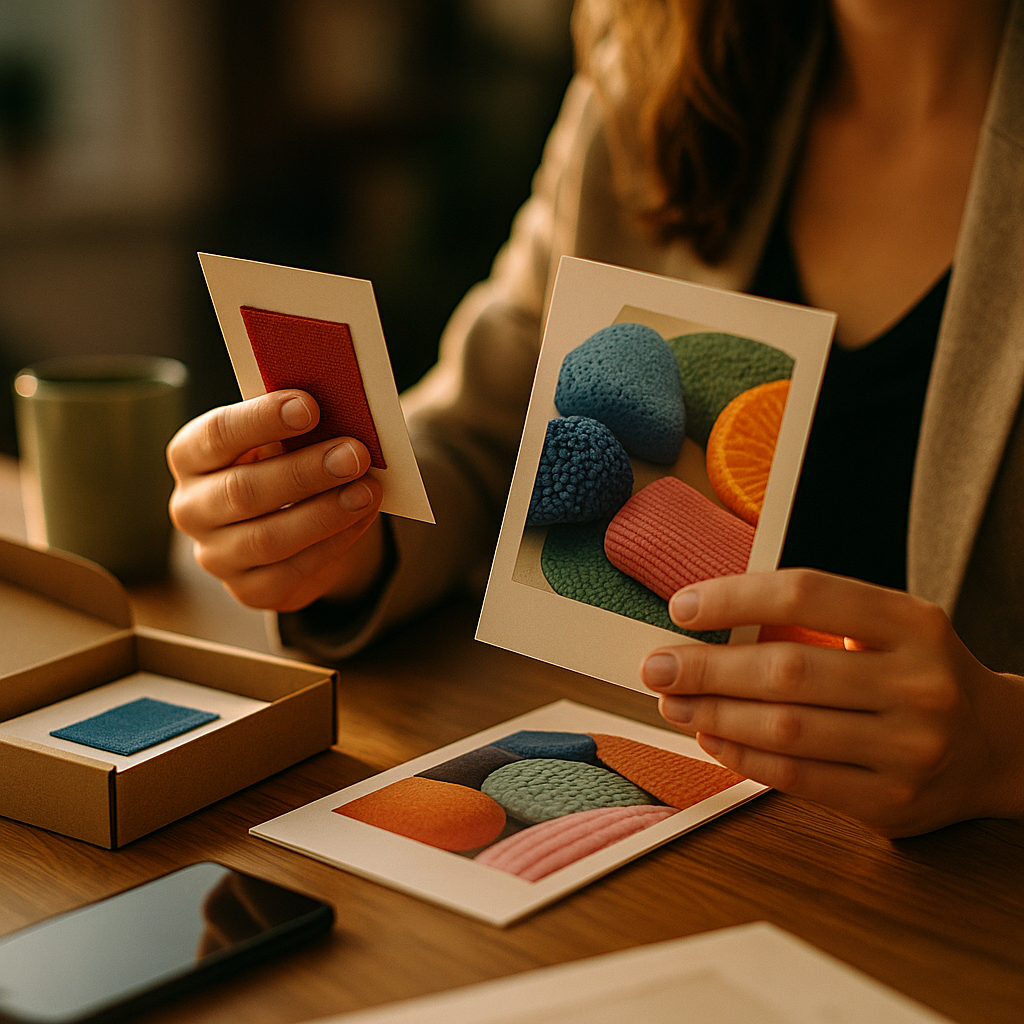
The Future Of Haptic Marketing is arriving fast as brands move beyond screens into experiences you can feel. Touch adds meaning to digital content, improves recall, and can shorten the path from curiosity to purchase when it’s designed with intent. In 2025, haptics is no longer a novelty; it’s a practical channel. The real question is: how will your brand use it well?
Why touchpoints matter: haptic marketing strategy
Haptics translates digital intent into physical sensation—vibration patterns, pressure, texture simulation, and motion cues. When those sensations align with a message, they increase clarity and confidence in the moment of decision. That is the core value of a strong haptic marketing strategy: using touch to reinforce meaning, not distract from it.
Brands already rely on touch in physical retail (packaging, materials, in-store demos). What’s changing is that touch can now be designed into digital journeys, especially on smartphones, wearables, gaming controllers, and emerging XR devices. Because haptic feedback is immediate and embodied, it can:
- Reduce friction by confirming actions (tap, pay, submit) with clear tactile signals.
- Build trust through consistent, recognizable patterns that feel “on brand.”
- Improve recall when tactile cues repeat across touchpoints like a sonic logo does for audio.
- Support accessibility for users who benefit from non-visual cues.
Follow-up question most marketers ask: Does haptic marketing replace visuals and audio? No. It works best as a reinforcement layer. Think of haptics as a “confirmation channel” that can carry emotion (subtle pulse), urgency (double-tap), progress (ramping vibration), or reassurance (soft, slow rhythm). The future belongs to brands that treat haptics like design—not like an effect.
Where haptics shows up: branded content experiences
The fastest growth in haptics is happening where devices already exist at scale. That means mobile-first executions and device ecosystems customers already own. In 2025, the most realistic branded content experiences with touch fall into a few categories:
- Mobile ads and landing pages: micro-haptics on key interactions (carousel snap, CTA press, form completion) to add certainty and reduce drop-off.
- Retail and packaging bridges: QR or NFC triggers that open an experience where haptics reinforces product benefits (e.g., “cooling” sensation represented by a crisp, light pulse pattern).
- Apps and loyalty programs: tactile “reward moments” that make points, tiers, and perks feel tangible.
- Gaming and live events: synchronized haptics through controllers, wearables, or seats to amplify sponsorship moments.
- Automotive and mobility: in-vehicle haptics for brand interactions (subscription upgrades, infotainment confirmations) with safety-conscious design.
A practical way to choose the right use case is to map where touch can add the most value: moments of uncertainty (checkout), moments of anticipation (reveal, drop, launch), and moments of learning (guided product discovery). If touch doesn’t change comprehension or confidence, don’t ship it.
Another likely question: Will haptics feel gimmicky? It does when it’s loud, frequent, or inconsistent. High-performing implementations are subtle and purposeful. They respect the user’s attention and battery life, and they avoid “buzzing for the sake of buzzing.”
Designing tactile identity: multisensory branding
As haptics becomes more common, brands will need a coherent tactile style—an approach sometimes called a “haptic logo” within multisensory branding. The goal isn’t to create one vibration and use it everywhere. It’s to define a tactile language: a small system of patterns that communicate specific meanings reliably.
To keep tactile branding consistent and usable, structure it like a design system:
- Define core emotions and actions: confirm, celebrate, warn, guide, delight.
- Create a small haptic palette: short pulse, long pulse, double-tap, ramp, heartbeat, etc.
- Set intensity rules: limit strong vibrations to rare, high-importance events.
- Synchronize with sound and motion: align timing so cues feel intentional, not accidental.
- Document device-specific fallbacks: a phone motor differs from a controller or wearable.
For EEAT-aligned execution, brands should involve cross-functional experts early: UX designers, accessibility specialists, legal/privacy, and performance engineering. This is where many teams fail—haptics is treated as a late-stage flourish and shipped without user testing. The future of haptic marketing will reward brands that treat tactile identity as part of brand governance, like typography or tone of voice.
Follow-up question: How do you keep it on-brand across devices? You don’t chase perfect sameness; you chase consistent meaning. A “success” pattern should feel like success everywhere, even if the hardware can’t reproduce the exact waveform.
Technology shifts driving adoption: immersive advertising
Haptics will scale because the supporting technology stack is maturing, enabling more practical immersive advertising that performs. In 2025, three shifts matter most:
- Better haptic engines in mainstream devices: more precise motors and improved control allow richer patterns without excessive intensity.
- XR and spatial computing growth: as more users spend time in immersive environments, touch becomes essential for realism and usability.
- Creator tools and APIs: more platforms provide haptic libraries, simplifying production and standardizing behaviors.
It’s also important to set expectations: advanced “texture simulation” and force feedback are still more common in specialized hardware than in everyday mobile. The best near-term approach is to design within what most customers have—smartphones and wearables—while creating premium variants for environments where high-end haptics is available (events, showrooms, gaming partnerships).
Follow-up question: What about “touch” in remote shopping? While true remote tactile replication remains limited for mass audiences, brands can still use haptics to represent product attributes symbolically. Done well, symbolic touch can improve comprehension, guide exploration, and create a memorable signature moment—without pretending it’s identical to physical touch.
Measurement and experimentation: sensory marketing analytics
If you can’t measure it, you can’t scale it. The discipline of sensory marketing analytics for haptics should focus on outcomes, not novelty. Treat haptics as an experience variable and test it like any other UX change.
Useful metrics and methods include:
- Conversion rate and funnel completion: compare haptics-on vs haptics-off for key flows (sign-up, checkout, add-to-cart).
- Time-to-confidence: measure how quickly users complete tasks without hesitation or backtracking.
- Recall and recognition: brand lift studies that test whether users recognize a tactile pattern after exposure.
- Engagement quality: interaction depth (feature exploration, repeat use), not just time on page.
- Opt-out rates and sentiment: track whether users disable haptics or report annoyance.
Design your experiments carefully. Haptics can produce different effects depending on context, device, and user preferences. Segment by hardware category, accessibility settings, and environment (on-the-go vs at home). Also, avoid “stacking” too many sensory changes in one test; if you change visuals, audio, and haptics simultaneously, you won’t know what caused the lift.
Follow-up question: What does a good A/B test look like? Keep everything constant except tactile feedback on a single interaction (e.g., CTA press). Then graduate to a small system (confirm + progress + reward) once you see consistent improvements without negative feedback.
Trust, privacy, and inclusion: ethical haptics in digital experiences
Touch can influence behavior, so brands must use it responsibly. Ethical design is not optional in 2025; it’s a competitive advantage and a risk control. Ethical haptics means using tactile cues to inform and guide—not to manipulate.
Key principles to build trust and meet EEAT expectations:
- Consent and control: respect device settings, offer in-app toggles, and default to subtlety.
- Accessibility-first patterns: ensure haptics supports, rather than replaces, visual and audio cues.
- Avoid dark patterns: don’t use urgent or “reward-like” vibrations to push unwanted subscriptions or obscure terms.
- Health and comfort safeguards: avoid excessive intensity or frequency; support reduced-haptics preferences.
- Data minimization: if you collect interaction telemetry for measurement, keep it anonymous where possible and disclose clearly.
Follow-up question: Can haptics be considered persuasive design? Yes, and that’s why transparency matters. A confirmation pulse is helpful. A vibration pattern engineered to trigger compulsive tapping is not. Brands that prioritize user well-being will earn more repeat engagement and fewer complaints.
FAQs
What is haptic marketing in simple terms?
Haptic marketing uses tactile feedback—usually vibration or pressure-like sensations—inside digital or physical experiences to reinforce brand messages and guide actions. It turns interactions into something you can feel, which can increase clarity, memorability, and confidence.
Does haptic feedback actually improve conversions?
It can, especially at high-friction moments like form completion, checkout, or product configuration. The biggest gains typically come from reducing uncertainty (confirming actions) and making progress feel clear. Results depend on subtle design and proper testing by device segment.
What devices support haptic branded content in 2025?
Most modern smartphones support haptics, and many wearables and gaming controllers do as well. XR headsets and accessories increasingly include haptic capabilities, though experiences vary by hardware. Brands should design for mobile as the baseline and add premium layers for specialized devices.
How do you create a “haptic logo” for a brand?
Start with a small set of repeatable patterns tied to meanings like success, progress, warning, and reward. Keep the library minimal, document intensity and timing rules, test across devices, and ensure patterns are consistent in meaning even if the feel differs slightly by hardware.
Is haptic marketing accessible for users with disabilities?
It can improve accessibility when it provides optional, supportive cues—such as confirmations and guidance—alongside visual and audio signals. Brands should avoid making haptics the only way to understand an interaction and should respect reduced-haptics preferences.
How should brands measure haptic marketing performance?
Use controlled experiments and track conversion, completion rates, error rates, time-to-completion, opt-outs, and brand recall. Pair quantitative analytics with qualitative usability testing to confirm the experience feels helpful rather than distracting.
The future of haptics is practical, measurable, and rooted in respectful design. Brands that treat touch as a system—aligned with message, device realities, and user control—will create content that feels clearer and more memorable. In 2025, the advantage won’t come from stronger vibrations; it will come from better intent, better testing, and a tactile identity people trust.