


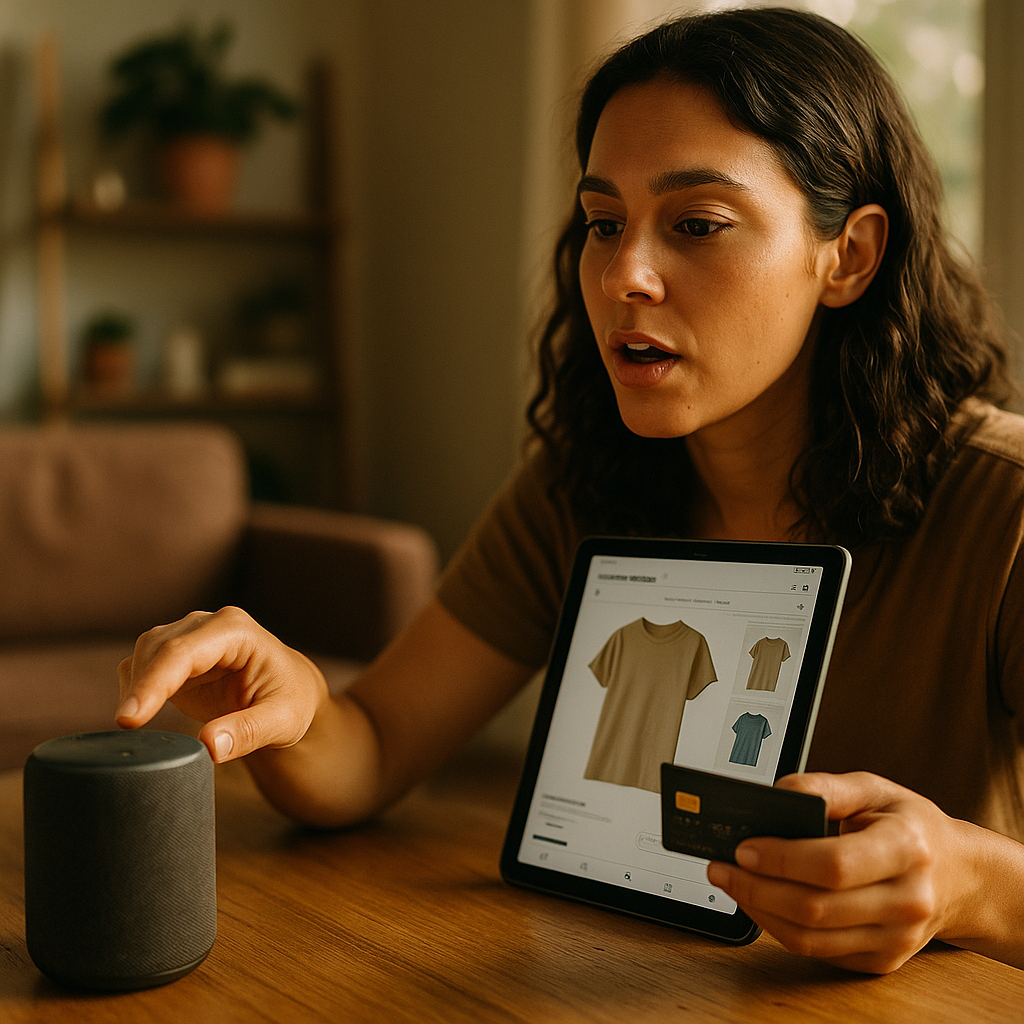
Voice interfaces have moved from novelty to revenue channel, making headless ecommerce for voice first conversational shopping a serious strategic decision in 2026. Brands now need flexible commerce systems that can understand intent, deliver personalized product discovery, and complete purchases across speakers, phones, cars, and AI assistants. The real question is not whether voice matters, but whether your architecture is ready.
What Headless Commerce Means for Voice Shopping
Headless commerce separates the front end from the back-end commerce engine. Instead of tying product catalogs, pricing, promotions, checkout, and customer data to one rigid storefront, a headless setup exposes that functionality through APIs. For voice shopping, that separation is valuable because the “storefront” is no longer just a website or app. It can be a smart speaker, a virtual assistant inside a car, a chatbot, a wearable, or a multimodal AI interface that blends voice and screen.
In practical terms, headless architecture gives brands the freedom to build conversational experiences without forcing every interaction through a traditional page-based storefront. A voice assistant can ask clarifying questions, narrow options, check inventory, recommend substitutes, and complete checkout by calling commerce APIs behind the scenes.
This matters because voice shopping is not a visual browsing journey. Users do not scroll through dozens of products. They ask, refine, compare, and confirm. That means the commerce system must support:
- Fast API responses so conversations feel natural
- Structured product data that voice assistants can interpret accurately
- Flexible business logic for recommendations, bundles, and promotions
- Unified customer profiles to support personalization and reorder flows
- Channel-agnostic checkout that works without a traditional cart page
Brands reviewing headless ecommerce should look beyond technical buzzwords. The real test is whether the platform can support conversational flows that reduce friction instead of adding it. If a customer says, “Order the same protein powder I bought last month, but vanilla,” the system should resolve identity, purchase history, product variants, stock status, payment preferences, and fulfillment options in seconds.
Benefits of Voice Commerce Architecture in a Headless Model
The strongest case for headless in voice commerce is adaptability. Voice interfaces evolve quickly, and buyer behavior changes with them. A monolithic commerce stack often slows experimentation because every new touchpoint requires extensive front-end customization. Headless reduces that constraint.
Here are the most important benefits when evaluating a voice commerce architecture:
- Omnichannel consistency: Pricing, inventory, customer accounts, and promotions stay consistent across web, app, and voice experiences.
- Faster innovation: Teams can launch conversational flows, voice actions, and assistant integrations without rebuilding the core commerce engine.
- Better personalization: AI-driven recommendations can pull from behavioral and transactional data in real time.
- Improved scalability: Traffic spikes from campaigns, seasonal demand, or viral product moments can be handled more effectively with API-first infrastructure.
- Easier integration with AI: Large language models, speech recognition tools, and search engines can connect more cleanly to modular commerce services.
There is also a business benefit that many teams miss: headless commerce supports different conversational designs for different contexts. A customer using a smart speaker at home might want a fast reorder. A customer in a car may need a short, safety-conscious interaction. A user on a phone may prefer voice plus visual confirmation. A flexible architecture makes each experience possible without managing separate commerce silos.
That said, headless is not automatically better. It works best when a brand has enough operational maturity to manage integrations, orchestration, and performance. For a business with simple catalog needs and limited channel ambitions, a fully decoupled stack may add complexity without enough return. The review process should focus on actual voice use cases, not trends alone.
Key Features in Conversational Commerce Platforms
Not every headless platform is equally prepared for conversational commerce platforms. Some are API-first in name but still built around visual storefront assumptions. Others support composable components that fit voice-driven journeys much better. When reviewing options, prioritize capabilities that directly affect conversational shopping performance.
Essential platform features include:
- Robust product information management: Voice shopping depends on clean attributes, synonyms, variants, compatibility data, and natural-language-friendly descriptions.
- Search and intent resolution: The platform should work well with semantic search, natural language queries, and recommendation engines.
- Real-time inventory and pricing APIs: Nothing damages trust faster than recommending unavailable items or quoting outdated prices.
- Flexible checkout services: Voice commerce needs tokenized payments, saved preferences, one-step reorder support, and secure confirmation workflows.
- Customer account and identity management: The system must recognize returning users, merge profiles across channels, and support permissions for household accounts when relevant.
- Promotion and rules engine: Conversational systems need logic for discounts, bundles, subscriptions, and conditional offers.
- Analytics and event tracking: Teams should be able to measure drop-off points, misunderstood intents, conversion rates, and assisted revenue from voice journeys.
It is also wise to examine speech-specific design needs. A voice-first shopping flow must handle ambiguity gracefully. If a customer asks for “running shoes under 100 dollars,” the system should know how to filter by category, intent, and price while also asking useful follow-up questions such as brand preference, size, or terrain. That requires more than a basic API catalog. It requires well-structured data and an orchestration layer that can translate conversation into commerce actions.
Security deserves equal attention. Voice purchases create unique risks around authentication, shared devices, and accidental orders. Strong platforms support layered verification, configurable purchase thresholds, consent controls, and detailed order logs. Trust is part of conversion.
Evaluating AI Personalization for Voice First Retail
Personalization is where AI personalization for voice first retail can either create a smooth buying journey or turn the experience into guesswork. Because voice presents fewer options at once, every recommendation carries more weight than it does on a grid-based product page.
A useful review framework starts with three questions:
- Can the system understand context? It should consider purchase history, current behavior, location, inventory, and known preferences.
- Can it explain recommendations clearly? In voice, transparency matters. Users should hear why a product is being suggested.
- Can it recover from mistakes? If the recommendation misses the mark, the system must pivot fast without restarting the journey.
For example, if a customer says, “I need a gift for a 10-year-old who likes science,” a strong conversational commerce stack should combine intent detection, merchandising rules, age-appropriate product filtering, availability, and perhaps a prompt about budget. It should not simply read a random list of products.
When assessing personalization quality, look at these signals:
- Relevance of first recommendations
- Ability to refine based on follow-up questions
- Consistency across channels
- Use of first-party data with privacy controls
- Support for multilingual and regional nuance
EEAT principles matter here. Helpful content and useful experiences come from demonstrating expertise and trustworthiness, not from overpromising AI magic. Brands should be transparent about what the assistant can do, how data is used, and when a human support handoff is available. Customers are more likely to complete a purchase when the experience feels competent and reliable.
A practical recommendation: test voice personalization with real-world scripts, not ideal demo scenarios. Include vague requests, interruptions, corrections, accent variations, and multi-turn conversations. The best platform is the one that still performs well when the customer speaks naturally.
Challenges in Headless Ecommerce Integration for Voice Assistants
Reviewing headless ecommerce integration for voice assistants means looking honestly at the implementation burden. Headless can unlock excellent experiences, but it shifts more responsibility to the brand and its partners. That is manageable if teams plan for it early.
The most common challenges include:
- Integration complexity: Product data, CRM, payment systems, search, loyalty tools, and order management all need to work together cleanly.
- Latency: Voice interactions feel broken when API calls are slow. Performance budgets should be strict.
- Data quality issues: Incomplete attributes, inconsistent taxonomy, and poor naming conventions reduce recommendation accuracy.
- Conversation design gaps: Technical teams may build APIs well but overlook how people actually speak and shop.
- Measurement challenges: Attribution in voice journeys can be harder than standard ecommerce analytics.
- Governance: Without strong ownership, composable systems can become fragmented and expensive to maintain.
To reduce risk, brands should create a voice-commerce readiness checklist before selecting a stack. This should cover API performance, catalog health, authentication rules, fallback experiences, analytics requirements, and channel governance. It should also define success metrics such as reorder rate, completion rate, average turns to purchase, and customer satisfaction.
Another useful step is piloting one or two high-intent use cases first. Reordering consumables, checking order status, and buying known products are often better early candidates than broad product discovery. Once the orchestration layer, data model, and trust mechanics are proven, brands can expand to more exploratory shopping journeys.
From an operational perspective, the best implementations usually involve cross-functional ownership. Commerce, UX, engineering, data, customer support, and legal teams all influence whether a voice-first shopping experience feels polished. Headless architecture makes this collaboration possible, but it does not replace it.
Best Practices for Choosing a Headless Commerce Platform in 2026
In 2026, the smartest reviews of headless commerce platform options are grounded in customer journeys, not feature lists alone. A platform may look strong on paper but still struggle to support the conversational moments that matter most.
Use these best practices during evaluation:
- Map the voice journey first
Define the exact scenarios you want to support: reorder, product discovery, customer service, guided selling, subscription management, or post-purchase updates.
- Audit your product data
Voice shopping depends on structured, enriched, and accurate product information. Weak data limits every platform.
- Run API performance tests
Ask vendors for realistic latency benchmarks and test common voice flows under load.
- Review AI and search compatibility
Check how the platform works with natural language processing, semantic search, recommendation engines, and large language model orchestration tools.
- Prioritize security and trust
Look for authentication flexibility, payment security, consent management, and clear audit logs for purchases made through voice interfaces.
- Demand measurable analytics
You need visibility into intent recognition, abandonment, conversion, reorder behavior, and customer satisfaction.
- Assess vendor support and ecosystem
Strong documentation, implementation partners, and active developer communities can significantly reduce launch risk.
A final strategic point: do not review headless commerce in isolation from brand experience. Voice shopping is not only a technical channel. It is a trust channel. Customers are handing over intent in plain language and expecting a competent response. The winning architecture is the one that combines fast commerce services, accurate data, intelligent orchestration, and customer-centered design.
FAQs About Headless Ecommerce for Voice First Conversational Shopping
What is headless ecommerce for voice first conversational shopping?
It is an ecommerce approach where the customer-facing experience is separated from the back-end commerce engine, allowing brands to create voice-driven shopping journeys through APIs. This lets voice assistants search products, personalize recommendations, and process orders without relying on a traditional storefront.
Why is headless commerce better for voice shopping than monolithic platforms?
Headless commerce is usually better suited because it gives brands more flexibility to build conversational interfaces across multiple devices and assistants. Monolithic platforms can work for simple use cases, but they often limit customization, speed of experimentation, and support for emerging channels.
What are the biggest risks when implementing voice commerce?
The biggest risks include poor product data, slow API performance, weak conversation design, inconsistent identity management, and unclear purchase authentication. These issues can reduce trust and increase abandonment.
Which businesses benefit most from headless voice commerce?
Brands with repeat purchases, large catalogs, strong mobile or omnichannel strategies, and a need for personalized shopping tend to benefit most. Grocery, beauty, consumer goods, health products, and subscription-based retail are especially strong candidates.
How should brands measure success in conversational shopping?
Key metrics include completion rate, reorder rate, average number of conversational turns before purchase, conversion rate, intent resolution accuracy, customer satisfaction, and assisted revenue from voice interactions.
Does voice shopping replace websites and apps?
No. Voice shopping usually complements websites and apps. The most effective strategy is multimodal, allowing customers to move between voice, screen, and chat based on context and preference.
What should brands review first before choosing a platform?
Start with customer use cases, product data quality, API readiness, identity and payment flows, and analytics requirements. This helps narrow the platform search based on real operational needs rather than generic promises.
Headless commerce can be an excellent foundation for voice-first conversational shopping when the goal is speed, flexibility, and customer-centered design. The strongest results come from pairing modular architecture with clean data, reliable AI, and careful trust controls. Brands should choose platforms based on real voice use cases, measurable performance, and their ability to deliver helpful, natural shopping experiences at scale.