


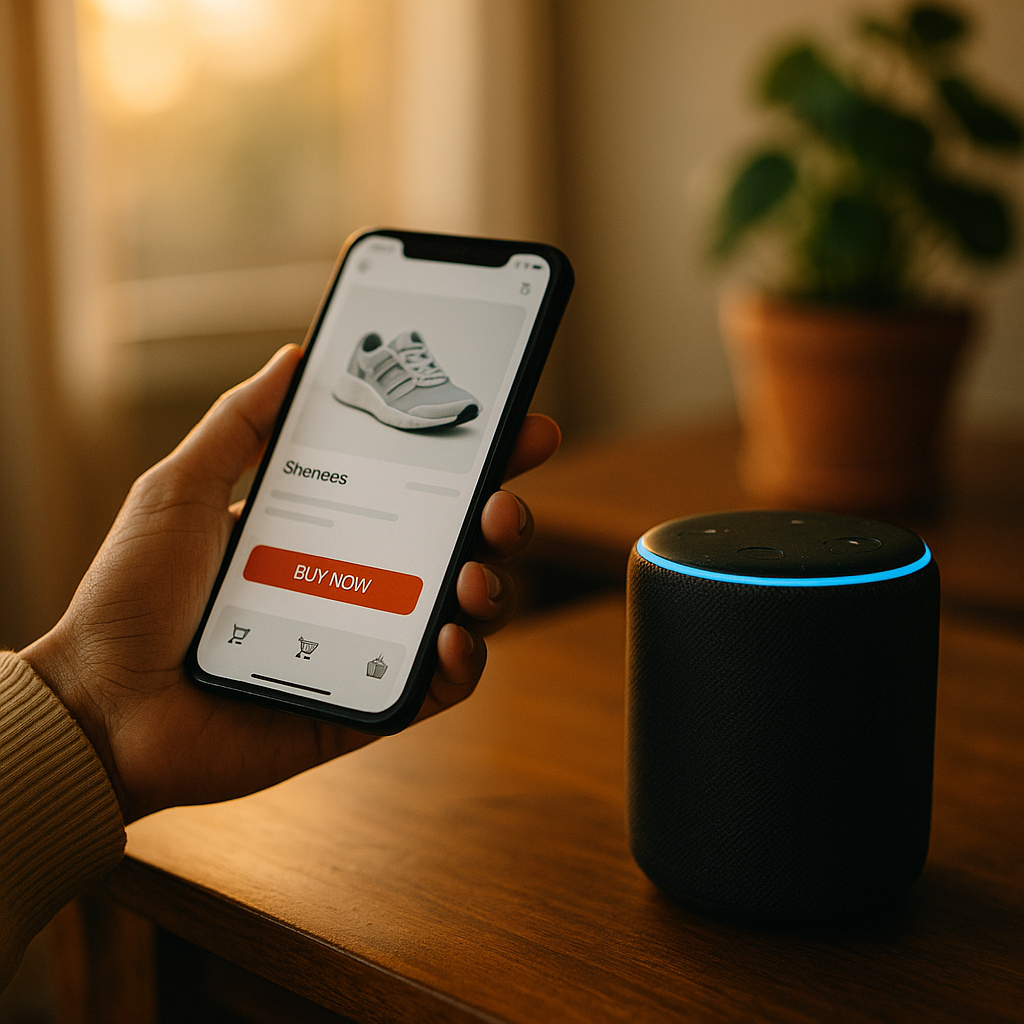
In 2025, shoppers increasingly expect to buy with a simple spoken request, not a search box. Reviewing Headless Ecommerce for Voice First Shopping Experiences helps teams deliver fast, flexible voice journeys while keeping commerce logic stable. This article explains what to evaluate, how to design voice-ready product discovery and checkout, and which technical choices reduce risk—so you can ship a voice experience customers will actually use.
Voice commerce trends and customer expectations
Voice-first shopping sits at the intersection of convenience, accessibility, and speed. Customers use voice when their hands are busy, when screens are inconvenient, or when they need quick replenishment. That changes what “good” looks like: the experience must confirm intent clearly, minimize back-and-forth, and resolve ambiguity without overwhelming the user.
For most brands, the highest-converting voice scenarios are not complex discovery journeys. They are repeat purchases, reorders, subscription management, order status, simple add-to-cart, and store/fulfillment questions. That reality should shape your roadmap: start where voice adds clear value, then expand to guided discovery once your catalog data, recommendations, and conversational UX are mature.
In practice, voice increases the cost of confusion. On a screen, users can scan filters and compare options; with voice, they need structured prompts and narrow choices. That is why teams evaluating voice-first initiatives often end up modernizing product information, search relevance, and checkout APIs before they ever launch a public skill or assistant integration.
Headless ecommerce architecture for voice interfaces
Headless ecommerce separates the commerce engine (catalog, pricing, promotions, carts, orders) from the presentation layer (web, mobile, kiosks, assistants). For voice, that separation is critical: your “front end” may be Amazon Alexa, Google Assistant, an in-car system, a call center voice bot, or an in-app conversational UI.
When reviewing headless for voice, focus on whether the platform can expose clean, composable APIs that support conversational flows:
- Catalog and availability APIs that return normalized product attributes, variant options, real-time inventory, and fulfillment constraints.
- Pricing and promotion APIs that can calculate totals consistently across channels, including coupons and personalized offers.
- Cart and checkout APIs designed for incremental updates (add, remove, change quantity, set shipping method) with strong validation and clear error messages.
- Customer and identity APIs supporting account linking, consent, and secure access to order history.
- Event and webhook support so voice systems can react to order updates, cancellations, substitutions, and delivery changes.
A common follow-up question is whether headless is required for voice. It is not strictly required, but it reduces integration friction and future rework. If your commerce engine only supports tightly coupled storefront templates, every new voice experience becomes a custom project. A headless approach makes voice just another client.
Also assess how the platform handles composability. Many voice experiences need more than commerce data: product content, reviews, store locations, customer service policies, and loyalty points. In a composable setup, you can combine best-in-class services behind a consistent API layer, rather than forcing everything into one monolith.
Conversational UX design for voice-first shopping
Voice-first UX is less about “conversational flair” and more about decision design. The user needs to know what the assistant understood, what it will do next, and how to correct mistakes quickly. Your evaluation should include these UX principles:
- Confirm critical details (product, size, color, quantity, delivery address, payment method) before placing an order. Use concise confirmations, not long summaries.
- Offer bounded choices when multiple matches exist. Present 2–3 options, then ask a narrowing question such as brand, price range, or primary attribute.
- Design for interruptions. Users pause, rephrase, or change their mind. Your cart and session logic should support “undo,” “start over,” and “what’s in my cart?” at any point.
- Use progressive disclosure. Provide only the next needed piece of information, and let users ask for more details (ingredients, dimensions, compatibility, return policy).
- Support multimodal handoff when available. If the user is on a phone or smart display, offer to “send options to your screen” for comparison.
Teams often ask how to handle product discovery without a screen. The key is to map your catalog into voice-friendly groupings: top intents (reorder, deals, gift), top categories, and top attributes. Then ensure your product data supports those attributes consistently. If “roast level” is missing from half your coffee products, voice narrowing questions will fail.
Finally, measure success differently. Beyond conversion rate, track completion rate per intent, turns per task (fewer is usually better), and disambiguation frequency. These metrics reveal whether your voice UX is truly reducing effort or simply moving complexity into longer dialogues.
APIs, integrations, and security for voice commerce
Voice shopping raises a practical question: how do you authenticate securely without adding friction? Your headless stack should support multiple identity and authorization patterns so you can match the risk level of each intent.
- Low-risk intents: product info, store hours, order status notifications. These may require minimal authentication or token-based access with limited scope.
- Medium-risk intents: add to cart, view order history, manage subscriptions. Use account linking, short-lived tokens, and step-up verification for sensitive data.
- High-risk intents: place order, change address, change payment method. Use step-up authentication (PIN, device biometrics, one-time codes) and explicit confirmation prompts.
From an integration standpoint, prioritize:
- Idempotent APIs for cart and order actions so repeated voice commands or retries do not create duplicate orders.
- Clear error semantics that the voice layer can translate into helpful prompts. “Invalid shipping method” must become “Delivery isn’t available for that address. Do you want pickup instead?”
- Latency controls through caching, edge delivery, and read-optimized endpoints. Voice users will abandon quickly if responses lag.
- Fraud and abuse controls including velocity limits, anomaly detection, and risk scoring, especially if voice ordering is enabled by default.
Security and privacy are also part of trust. Make consent explicit for voice recordings, clearly communicate what data is stored, and provide easy ways to revoke permissions. In reviews, look for strong logging and audit trails: who initiated an order, from which device, and which confirmation steps were completed.
Content, search, and product data optimization for voice shopping
Voice-first shopping lives or dies on data quality. If your product titles are inconsistent, your attributes are incomplete, and your search relevance is tuned for typed keywords only, the assistant will misunderstand requests and present the wrong options.
Optimize these areas:
- Structured product attributes: size, color, compatibility, dietary needs, materials, usage, and any decision-driving spec. Treat attributes as mandatory where relevant, not optional.
- Voice-friendly naming: ensure products have pronounceable names and include common spoken synonyms. For example, support both “soda” and “soft drink,” or “cell phone case” and “phone cover.”
- Search and ranking: prioritize intent matching and disambiguation. Voice queries often contain natural language (“the best running shoes under $100”) rather than exact keywords.
- Context-aware recommendations: reorder suggestions, complementary items, and substitutions when out of stock. Voice users value “good enough, fast” over browsing.
- Policy and compliance content: shipping cutoffs, returns, warranties, age restrictions. Voice needs short, accurate answers with the option to hear details.
A frequent follow-up is whether you need a separate voice catalog. Usually, no. You need a single source of truth with better structure and a “voice presentation layer” that selects the right fields and phrasing. Keep commerce and content aligned: if the voice assistant recommends an item, it must be purchasable in the same fulfillment context, at the same price, with the same promotions as other channels.
Evaluation checklist and KPIs for headless voice commerce
When reviewing platforms and implementations, use a checklist that ties architecture choices to business outcomes. This helps you avoid buying “headless” features that do not improve voice performance.
Platform and architecture checklist
- API completeness: does the platform cover catalog, pricing, promos, cart, checkout, orders, returns, and loyalty via APIs without hidden storefront dependencies?
- Extensibility: can you add custom validation, business rules, and voice-specific workflows without forking the core?
- Observability: distributed tracing, structured logs, and dashboards that identify where voice sessions fail (NLU, search, pricing, payment, address validation).
- Internationalization: language, currency, tax, and address formats suitable for voice prompts and confirmations.
- Reliability: SLAs, rate limits, graceful degradation, and rollback strategies for voice releases.
Voice experience KPIs
- Task completion rate per intent (reorder, add-to-cart, checkout, order status).
- Average turns per task and drop-off turn, to pinpoint confusing prompts.
- Disambiguation rate and top ambiguity causes (brand overlap, missing attributes, unclear variants).
- Time to first meaningful response and end-to-end latency to cart update or order placement.
- Customer support deflection for order status and simple changes, if support automation is a goal.
- Safety metrics: duplicate order rate, cancellation rate shortly after purchase, and step-up auth triggers.
Plan your rollout with risk controls. Start with authenticated reorder and order status for a subset of customers, then expand to broader discovery and new-to-brand purchases once your disambiguation and confirmation flows are consistently accurate.
FAQs about headless ecommerce and voice-first shopping
Is voice-first shopping only for smart speakers?
No. In 2025, voice shopping spans mobile assistants, in-app voice search, car systems, customer service voice bots, and smart displays. Headless ecommerce supports these channels by exposing reusable commerce capabilities through APIs.
What are the best use cases to launch first?
Start with high-intent, low-complexity tasks: reorder, subscribe/resubscribe, “add my usual,” order status, delivery tracking, and store pickup questions. These build adoption while you improve product data and search for more complex discovery.
How do you prevent accidental or unauthorized purchases?
Use step-up authentication for checkout, require explicit confirmation for high-risk actions, apply purchase limits, and implement idempotency keys to prevent duplicates. Maintain audit logs and allow customers to disable voice purchasing easily.
Do I need a separate CMS for voice content?
Not necessarily. You need structured product and policy content that can be rendered into short voice prompts. Many teams use an existing CMS or PIM plus a lightweight “prompt/content mapping” layer to control phrasing and field selection.
How does headless improve voice search accuracy?
Headless doesn’t automatically improve accuracy, but it makes it easier to connect a best-in-class search service and enforce consistent attribute data across channels. Voice accuracy improves when structured attributes, synonyms, and ranking rules are aligned to spoken intent.
What’s the biggest implementation risk?
Poor catalog data and unclear variant structure. If the system can’t reliably determine the exact product variant (size, color, pack size), voice flows will stall or create wrong orders. Fix data quality early and design strong disambiguation prompts.
The strongest voice-first shopping programs in 2025 pair a clean headless foundation with disciplined conversational design and trustworthy security. Evaluate platforms by how well they expose commerce capabilities through APIs, support fast and reliable interactions, and enable accurate product understanding through structured data. Start with reorder and order-status intents, measure completion and disambiguation, then expand confidently into richer discovery as your data and UX mature.