


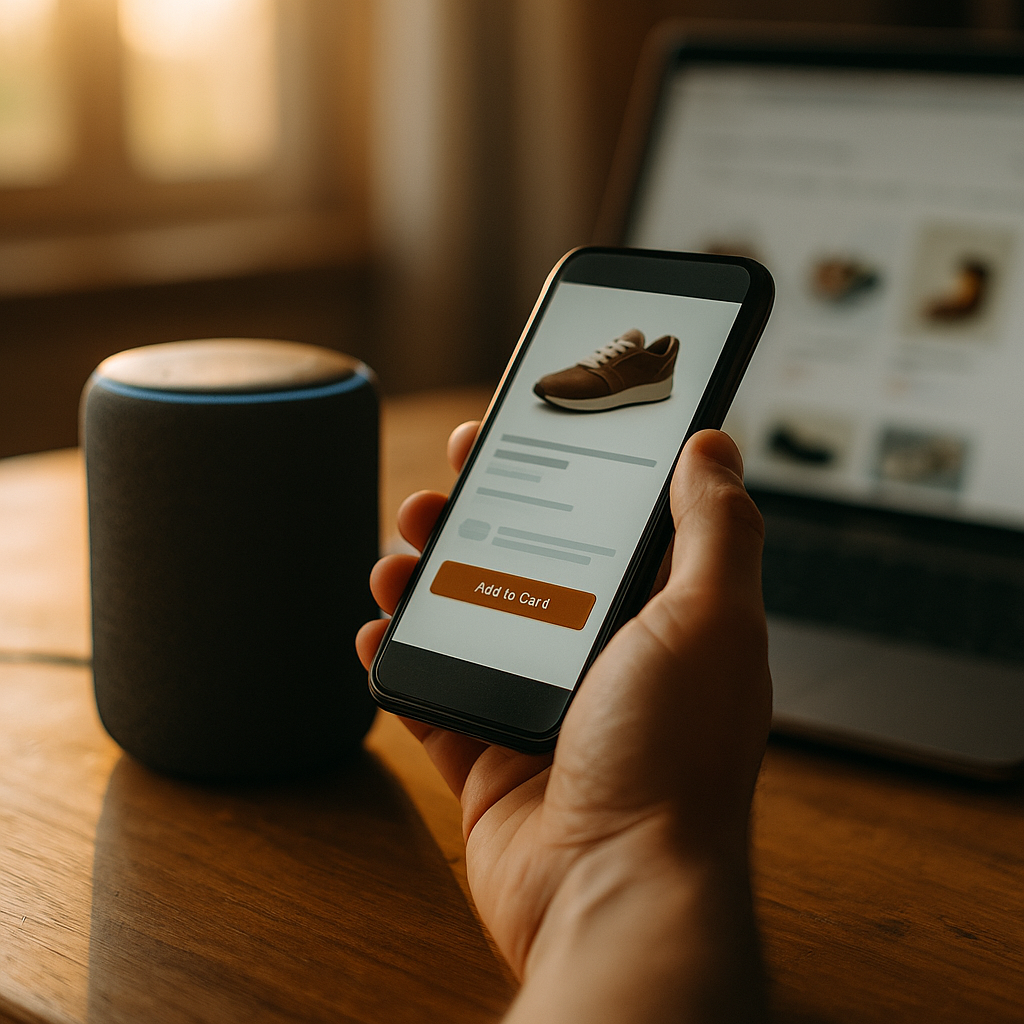
Reviewing Headless Ecommerce for Voice First Conversational Shopping is no longer a niche exercise in 2026. As shoppers move from screens to spoken interactions, brands need commerce systems that answer naturally, personalize instantly, and complete purchases across devices. Headless architecture promises that flexibility, but it also introduces complexity, cost, and governance questions. So, is it the right foundation for voice-led growth?
What headless ecommerce means for voice commerce architecture
Headless ecommerce separates the frontend customer experience from the backend commerce engine. In practical terms, your product catalog, pricing, promotions, checkout logic, inventory, and customer data live in services and APIs, while the shopping interface can be built independently for websites, apps, kiosks, cars, smart TVs, and voice assistants.
That separation matters for voice commerce architecture because voice shopping is not just a smaller website. It is a different interaction model. Users do not scan visual grids, compare ten products side by side, or click through dense menus. They ask questions, refine intent, receive curated options, and expect the system to remember context. A traditional monolithic storefront often struggles to support that flow cleanly across channels.
With headless, brands can create a conversational layer that pulls from the same commerce backend used by other channels. This enables:
- Consistent product data across mobile, web, smart speakers, and in-car systems
- Faster experimentation with conversation design without rebuilding the commerce core
- Channel-specific UX tailored to voice prompts, confirmations, and fallback paths
- API-driven orchestration between search, recommendations, order management, loyalty, and payments
From an implementation perspective, the strongest headless setups for voice-first commerce usually include a composable stack: ecommerce platform, CMS, search, customer data platform, recommendation engine, analytics, and often a large language model or conversation engine. The advantage is flexibility. The tradeoff is that flexibility must be managed. Without clear ownership and architecture discipline, brands can create fragmented experiences instead of seamless ones.
For decision-makers, the core question is not whether headless is modern. It is whether your organization needs a modular commerce foundation capable of supporting low-UI, high-context interactions that happen anywhere a customer can speak.
Why conversational shopping experience depends on flexible APIs
A great conversational shopping experience depends on speed, context, and relevance. Voice interfaces magnify every friction point. If a customer asks, “Reorder the protein powder I bought last month,” the system must understand identity, purchase history, product availability, delivery options, and payment preferences in seconds. That is difficult when commerce data is trapped in rigid templates or disconnected systems.
This is where headless often performs well. API-first platforms expose critical functions in a way that conversation engines can access programmatically. The result is a shopping flow that can feel assistive rather than transactional. Instead of forcing the user through static navigation, the system responds dynamically to intent.
In real-world evaluations, the best voice-first commerce journeys usually rely on these API-driven capabilities:
- Natural language product discovery tied to enriched catalog attributes and search relevance
- Context memory so the assistant can reference prior preferences, sizes, subscriptions, and order history
- Real-time inventory and fulfillment to avoid recommending unavailable items
- Promotion logic that can be applied conversationally without hidden surprises at checkout
- Secure account and payment flows with explicit confirmation steps for trust and compliance
Still, APIs alone do not guarantee a strong conversational experience. Brands must also redesign content for voice. Product descriptions need concise summaries. Comparison points should be structured. FAQs should be machine-readable. Policies such as returns, substitutions, and delivery windows must be accessible in plain language because users often ask about them mid-journey.
Another common oversight is confirmation design. Voice shoppers need clear checkpoints before a purchase is finalized. The assistant should restate product, quantity, size or variant, shipping address, total price, and expected delivery. Headless makes it easier to build those checkpoints consistently across touchpoints, but teams still need to define the rules carefully.
In short, headless provides the technical flexibility for conversational commerce, but success depends on product data quality, content modeling, conversation design, and trust-building flows.
Benefits of composable commerce for omnichannel retail systems
The strongest case for composable commerce in voice-first retail is that voice is rarely a standalone channel. A customer might begin with a spoken query on a phone, continue comparing on a laptop, and complete the purchase through an app. They may ask a smart speaker to reorder staples but use a screen for high-consideration products. Commerce systems must handle these channel shifts without losing context.
Headless and composable models support that better than tightly coupled storefronts because each service can be optimized for a specific job. Search can improve independently. Personalization can be upgraded without replacing the entire stack. A conversation engine can be tested against product FAQs before it touches checkout. This modularity lowers the risk of innovation when teams use it well.
Key benefits for omnichannel retail systems include:
- Faster deployment of new interfaces, including voice assistants, chat commerce, wearables, and embedded shopping
- Reusable business logic across every frontend, reducing duplication and inconsistency
- Better localization for multilingual voice shopping and regional catalogs
- Stronger personalization when customer data and intent signals are unified
- Operational resilience because components can be updated or replaced without full replatforming
There is also a strategic advantage. Retailers that treat conversational interfaces as part of a broader omnichannel ecosystem are better positioned to adapt as customer behavior changes. In 2026, that matters. Voice experiences are increasingly embedded in smartphones, vehicles, customer support workflows, and smart home environments. The winning brands are not waiting for one single device category to dominate. They are building commerce capabilities that can surface wherever demand appears.
That said, composable does not automatically mean simpler. It often increases vendor management, integration work, and architectural governance needs. Brands should expect to invest in middleware, observability, quality assurance, and cross-functional coordination. The upside is real, but it belongs to organizations that can manage a distributed stack with discipline.
Limits of voice shopping platforms and operational risk
Any honest review must cover the constraints of voice shopping platforms. Headless architecture can improve flexibility, but it does not solve the hardest issues in conversational commerce by itself. Some limitations are technical. Others are behavioral, legal, or operational.
The first challenge is discoverability. Voice interfaces are excellent for known-item reorders, simple replenishment, and narrow product categories. They are weaker for open-ended browsing and visual comparison. If your sales model depends heavily on merchandising visual storytelling, bundles, colorways, or side-by-side evaluation, voice will likely support only part of the journey.
The second challenge is accuracy. Speech recognition has improved, but product names, accents, background noise, multilingual queries, and ambiguous attributes still create failure points. A customer asking for “the black running shoes under one hundred” expects precision. If the system returns irrelevant results or asks too many clarifying questions, confidence drops quickly.
Third, privacy and compliance become more visible. Voice interactions may involve personal data, household accounts, shared devices, and payment authorization. Brands need clear consent flows, authentication logic, and account protections. This is especially important for regulated categories, age-restricted products, and any use case involving health, financial, or sensitive profile information.
Operationally, headless can create risk in these areas:
- Integration complexity across search, CMS, personalization, loyalty, and checkout services
- Performance bottlenecks when multiple APIs are called in a single conversational turn
- Data inconsistency if catalog, pricing, and promotions are not synchronized in real time
- Testing gaps because voice interactions are harder to QA than fixed screen flows
- Ownership confusion when ecommerce, product, engineering, CX, and AI teams share responsibility without clear governance
These risks do not invalidate headless. They simply mean the architecture must be matched to a practical use case. Brands should prioritize journeys where voice adds clear value: reorder flows, subscription management, account support, guided product selection, local inventory queries, and post-purchase updates. Trying to force every ecommerce scenario into voice is usually a mistake.
How to evaluate ecommerce personalization for AI shopping assistants
If you are considering headless for AI shopping assistants, evaluate the stack against business outcomes, not hype. The right assessment framework combines customer experience, technical readiness, and commercial impact.
Start with the customer journey. Which shopping moments are most likely to succeed in conversation? Replenishment is usually a strong candidate. Guided discovery can work well in categories with a clear decision tree, such as skincare, supplements, electronics accessories, pet supplies, and groceries. High-consideration luxury and visually driven fashion may require hybrid experiences where voice starts the conversation and a screen completes it.
Next, assess your data readiness. Headless commerce works best when product information is structured, normalized, and rich in attributes. If catalog quality is poor, voice results will be poor. Review whether your systems can support:
- Natural-language queries mapped to product attributes and synonyms
- Intent recognition tied to account history and preferences
- Real-time stock, fulfillment, and pricing checks
- Conversation-safe summaries of product benefits, restrictions, and policies
- Reliable handoff to screen-based interfaces when needed
Then measure platform fit. A strong headless candidate for voice-first commerce should offer robust APIs, event-driven capabilities, flexible checkout orchestration, identity controls, and support for custom frontend frameworks. It should also integrate cleanly with analytics and experimentation tools so teams can measure abandonment, misunderstood intents, reorder rates, average order value, and customer satisfaction.
Teams should ask direct vendor questions:
- How are latency and uptime managed when multiple backend services are invoked in one request?
- What observability exists for debugging failed conversations or dropped API calls?
- How are promotions and pricing exposed to conversational interfaces without inconsistency?
- Can the system support multimodal journeys that move from voice to mobile screen seamlessly?
- What security controls exist for household accounts, payments, and order confirmation?
Finally, test with a pilot. Build one or two high-intent use cases, define clear KPIs, and validate customer demand before scaling. In many organizations, this approach reveals that the value of headless is not just voice enablement. It is the ability to serve every emerging interface from one flexible commerce core.
Best practices for digital commerce transformation in 2026
For brands pursuing digital commerce transformation in 2026, the strongest approach is phased and evidence-based. Headless ecommerce can be a strong foundation for voice-first conversational shopping, but only when paired with careful execution.
Follow these best practices:
- Begin with narrow, high-frequency use cases such as reorder, subscription updates, delivery tracking, and product replenishment
- Design for multimodal continuity so customers can move from voice to app or web without losing context
- Invest in product data governance because clean attributes and taxonomy are essential for accurate spoken discovery
- Use explicit confirmation steps to reduce accidental purchases and build trust
- Monitor conversation analytics including misunderstood intents, repeated prompts, handoff rates, and cart completion
- Create cross-functional ownership across commerce, engineering, CX, legal, and AI operations
- Plan fallback paths when voice is not the best interface for the task
It is also important to document experience principles. For example, a voice assistant should never overstate certainty, conceal pricing details, or make risky assumptions about product fit. It should disclose alternatives clearly, handle out-of-stock situations gracefully, and offer a screen handoff whenever confidence is low. These may sound like design details, but they directly affect trust, compliance, and conversion.
From an EEAT perspective, brands should rely on first-party testing, implementation experience, and transparent measurement rather than broad claims. The practical question is not whether conversational commerce sounds impressive. It is whether customers complete tasks faster, with fewer errors, and with more confidence. When the answer is yes, headless can create a durable advantage.
FAQs about voice commerce and headless ecommerce
What is the main advantage of headless ecommerce for voice shopping?
The main advantage is flexibility. Headless lets brands connect a conversational interface to the same backend commerce services used by websites and apps, making it easier to support voice-specific flows without rebuilding the full commerce system.
Is headless ecommerce necessary for conversational shopping?
No, but it is often beneficial. Smaller voice pilots can run on non-headless systems, especially for basic reorder experiences. However, headless becomes more valuable when brands need personalization, omnichannel continuity, and rapid iteration across multiple interfaces.
Which products work best for voice-first shopping?
Repeat purchases, subscriptions, replenishable goods, simple accessories, groceries, pet supplies, and products with clear decision criteria tend to perform best. Highly visual or comparison-heavy categories usually need a hybrid voice-and-screen experience.
What are the biggest risks of voice commerce?
The biggest risks are misunderstood intent, weak product discovery, accidental purchases, data privacy issues, and inconsistent pricing or inventory data. Strong confirmation flows, clean product data, and secure identity checks reduce those risks.
How should brands measure success in conversational commerce?
Track task completion rate, conversion rate, reorder rate, average order value, misunderstood intent rate, handoff-to-screen rate, cancellation rate, customer satisfaction, and time to complete common tasks. These metrics reveal whether voice improves the customer experience or adds friction.
Can voice commerce replace traditional ecommerce storefronts?
Not completely. Voice is best viewed as an additional interface within a broader commerce ecosystem. It can streamline high-intent tasks and support guided discovery, but many shoppers still prefer visual interfaces for browsing, comparing, and final decision-making.
Headless ecommerce is a strong option for voice-first conversational shopping when brands need speed, flexibility, and omnichannel consistency. It excels in reorder flows, guided discovery, and multimodal journeys, but it demands clean data, disciplined architecture, and careful governance. The clear takeaway: adopt headless for voice commerce only when it solves a proven customer need and your team can operationalize it well.