


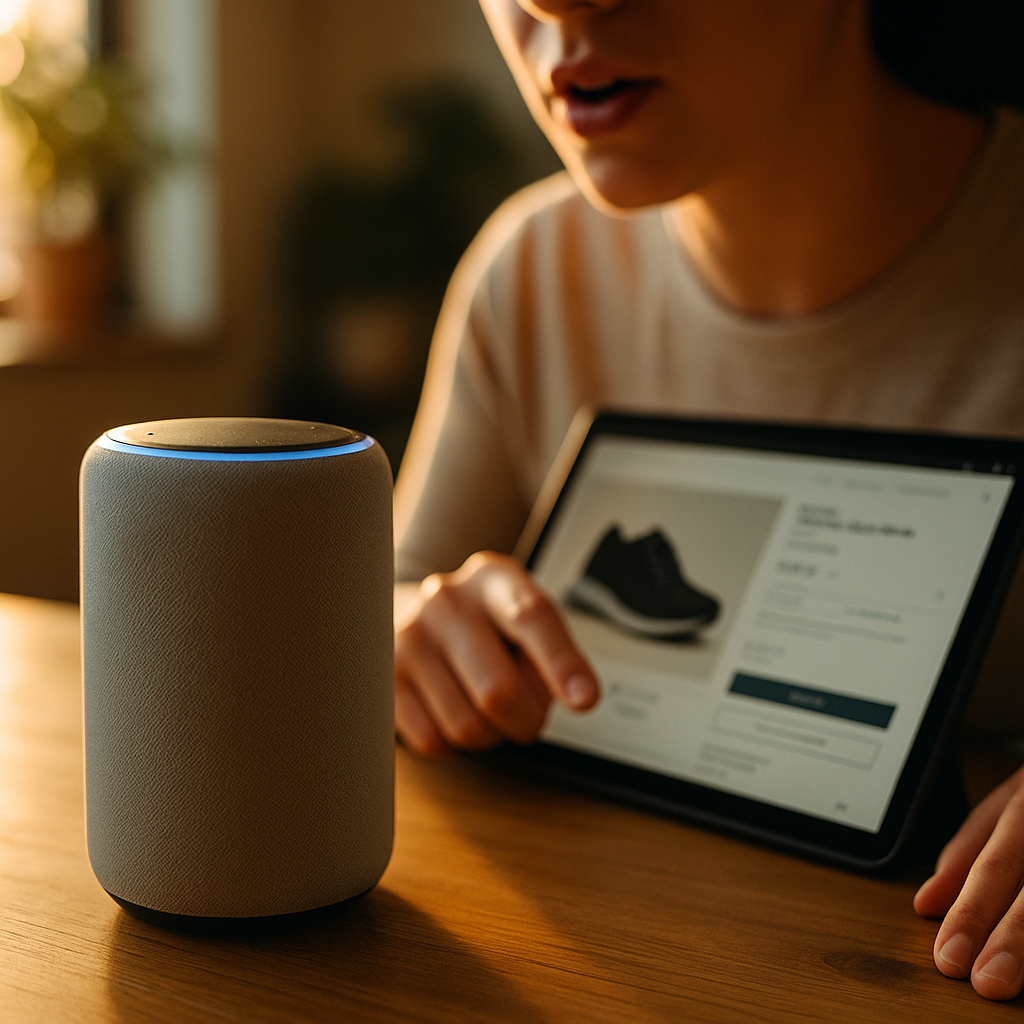
Reviewing Headless Ecommerce for Voice First Conversational Shopping is increasingly important as brands adapt to how people search, compare, and buy in 2026. Voice interfaces are no longer experimental touchpoints. They influence discovery, product questions, reorder behavior, and customer loyalty. The key question is whether headless architecture can support these experiences at scale without adding unnecessary complexity.
What headless commerce means for conversational commerce
Headless commerce separates the frontend experience from the backend ecommerce engine. In practice, that means a brand can keep core systems for catalog, pricing, inventory, promotions, checkout, and order management while building customer experiences across websites, apps, smart speakers, in-car interfaces, chat assistants, and other voice-enabled surfaces.
For conversational commerce, this separation matters. Voice shopping flows differ from traditional browsing. A shopper may ask for “running shoes under $120 with arch support,” refine by brand, compare two models, and request delivery timing without ever seeing a product grid. That interaction requires structured product data, search logic, recommendation engines, and API-driven responses that can be delivered in natural language.
Traditional monolithic ecommerce platforms often make these experiences harder to launch because presentation logic is tightly coupled to the storefront. Headless systems, by contrast, allow teams to build voice-first interfaces on top of reusable commerce services. This creates more freedom, but it also introduces architectural responsibility. Brands must design for intent recognition, context memory, fallback handling, and secure transaction flows.
The strongest argument for headless in voice settings is flexibility. The biggest risk is fragmentation. If the product data model, business rules, and analytics layer are not unified, customers get inconsistent answers across channels. That is especially damaging in voice interactions where trust depends on accuracy and speed.
How voice commerce architecture supports natural shopping journeys
A useful voice commerce architecture does more than connect a voice assistant to a product database. It needs to support the full shopping journey, from discovery to post-purchase support.
At a minimum, the stack should include:
- Composable APIs for catalog, search, pricing, availability, promotions, cart, checkout, and order history
- Structured product information with attributes that map to natural-language queries such as size, compatibility, ingredients, materials, use case, and delivery eligibility
- Search and recommendation services that can interpret intent, synonyms, and conversational follow-ups
- Identity and authentication layers to handle secure account linking, payment authorization, and profile-based personalization
- Conversation orchestration to manage prompts, clarifications, memory, and escalation when the system lacks confidence
- Analytics and observability to measure drop-off points, misunderstood intents, conversion quality, and channel-specific revenue
Headless architecture fits this model because each service can evolve independently. If a retailer wants to upgrade search, test a new large-language-model layer for query understanding, or launch on a new voice channel, the commerce core does not need to be rebuilt. That agility is valuable in 2026 because voice ecosystems continue to change across mobile operating systems, home devices, automotive platforms, and messaging interfaces.
Still, not every business needs a fully custom voice stack. A mid-market retailer with simple catalogs and limited engineering support may benefit more from a managed headless solution than from a deeply composable architecture. Reviewing headless ecommerce honestly means weighing long-term flexibility against implementation and maintenance costs.
Benefits of headless ecommerce for voice shopping experiences
When implemented well, headless ecommerce can significantly improve voice-first shopping. The main benefits are practical, not theoretical.
Faster channel expansion. Brands can launch the same commerce capabilities across web, app, chatbot, and voice interfaces without rebuilding core logic for each surface. That reduces duplicate work and speeds experimentation.
More natural interactions. Voice experiences require concise, context-aware responses. A headless setup lets teams create specialized conversation layers that are optimized for spoken interactions instead of forcing voice flows into web-centric templates.
Better personalization. Because customer data and commerce services are exposed through APIs, teams can combine order history, preferences, location, loyalty status, and behavior signals to tailor voice responses. That might mean prioritizing refillable products, surfacing favorite brands, or skipping unnecessary prompts for returning customers.
Improved performance and resilience. Modern headless stacks can reduce frontend bloat and allow channel-specific optimization. For voice, lower latency matters. Shoppers will not tolerate long pauses between a query and a useful answer.
Easier experimentation. Teams can test different conversation designs, recommendation logic, and prompt strategies without redesigning the entire storefront. This matters because voice shopping still requires iteration. Brands rarely get product discovery and checkout prompts right on the first release.
Stronger omnichannel consistency. A shopper might ask a voice assistant about a product, then continue in an app or on a laptop. Headless systems make it easier to preserve cart state, preferences, and context across those touchpoints.
These benefits are real, but they only materialize if the underlying data is clean. A voice interface built on incomplete product attributes, inconsistent inventory feeds, or vague shipping rules will fail quickly. Architecture cannot compensate for weak commerce operations.
Challenges in AI shopping assistants and headless implementation
The rise of AI shopping assistants has made voice commerce more capable, but it has also exposed new operational challenges. A headless model helps, yet it does not remove the hard parts.
Product data quality is the first hurdle. Voice systems depend on precise attributes and relationships. If the catalog does not distinguish between “water-resistant” and “waterproof,” or if compatibility data is missing, the assistant will mislead shoppers. For categories such as beauty, electronics, grocery, and health, that risk is even more serious.
Conversation design is the second hurdle. Voice experiences cannot dump ten options on a user and expect a decision. They must narrow intelligently, ask clarifying questions, and know when to offer a visual handoff. This requires UX writing, linguistic testing, and decision-tree planning alongside AI orchestration.
Checkout friction remains a major barrier. Customers may be comfortable asking questions by voice but less comfortable approving expensive purchases. Brands need strong authentication, simple payment flows, clear confirmation language, and transparent return policies. For many merchants, voice will drive assisted conversion rather than fully voice-only checkout.
Analytics are often immature. Many ecommerce teams still measure voice performance using web-first dashboards. That misses essential signals like reprompts, confidence failures, abandoned intent paths, and escalation rates. A headless build should include event tracking designed specifically for conversational interactions.
Governance matters more in 2026. As generative AI plays a larger role in search and product guidance, brands must control what the assistant can say, cite, and recommend. Pricing, compliance language, inventory claims, and policy responses need guardrails. The most reliable approach is retrieval from approved commerce systems, not freeform generation without source control.
In short, headless is an enabler, not a shortcut. It creates room for better voice commerce, but execution quality determines whether that flexibility turns into revenue or confusion.
Evaluating customer experience in omnichannel retail with voice
Any review of headless commerce should judge success through omnichannel retail outcomes, not architecture diagrams. The customer does not care whether the system is headless. The customer cares whether the experience is fast, accurate, and convenient.
To evaluate performance, brands should examine these customer-centered criteria:
- Intent resolution: Can the assistant understand real shopping language, including vague or comparative requests?
- Answer quality: Are responses accurate, current, and aligned with catalog and policy data?
- Guided discovery: Does the experience help narrow choices instead of overwhelming the user?
- Context continuity: Can the conversation move from voice to mobile or web without forcing the shopper to start over?
- Transaction confidence: Are pricing, delivery promises, returns, and payment confirmation clear enough to support trust?
- Accessibility and inclusivity: Does the system understand diverse accents, pacing, and phrasing patterns?
From an EEAT perspective, trustworthy content and recommendations are crucial. In commerce, that means product claims should be grounded in verified product information, not improvised language. If a voice assistant offers skincare advice, supplement guidance, or technical compatibility recommendations, the brand must be especially careful. Human review, approved knowledge sources, and domain-specific safeguards are essential.
It is also important to distinguish between categories. Replenishment-heavy businesses, such as grocery, household goods, pet supplies, or personal care, often see clearer voice-commerce value because customers know what they want. High-consideration categories like furniture or luxury fashion may benefit more from conversational assistance during research, with purchase completed on a visual interface.
This is where headless often proves its value. It supports hybrid journeys. A shopper can ask by voice, receive a shortlist, then get a link in an app to review visuals, specs, and social proof. That continuity is more useful than forcing a pure voice checkout model where it does not fit.
Choosing a ecommerce platform strategy for 2026
For brands planning an ecommerce platform strategy in 2026, the right question is not “Is headless the future?” The better question is “Where does headless create measurable advantage for our customers and operations?”
Headless makes the most sense when a business has one or more of these conditions:
- Multiple customer touchpoints that need consistent commerce logic
- A roadmap that includes voice, chat, mobile app, marketplace, or in-store digital experiences
- Complex product discovery or personalization requirements
- Internal teams or agency partners capable of managing APIs, orchestration, and frontend experiences
- A need to test emerging AI and conversational layers without replacing the commerce backend
It may be less suitable when the business has a simple storefront, a small catalog, limited development resources, or no clear use case for conversational commerce. In those cases, a well-configured traditional platform may deliver better return with less risk.
When reviewing vendors or internal plans, decision-makers should ask:
- How will product data be structured for conversational queries?
- What voice and AI channels are priorities, and what are the expected use cases?
- How will identity, payment, and consent be handled securely?
- What analytics will measure conversational performance and revenue impact?
- What governance controls will keep AI-generated responses accurate and compliant?
- How will teams support ongoing testing, tuning, and content updates?
The best implementations start small. Launch a narrow use case such as order tracking, replenishment, or guided product comparison. Measure completion rates, customer satisfaction, and assisted revenue. Then expand into richer discovery and purchase flows once the foundation is stable.
That measured approach reflects practical experience. Voice-first commerce can be powerful, but only when brands align architecture, data, UX, and trust. Headless architecture supports that alignment well, provided the organization is ready to use it responsibly.
FAQs about voice commerce and headless ecommerce
What is headless ecommerce in simple terms?
It is an ecommerce setup where the customer-facing experience is separated from the backend commerce engine. This allows brands to build shopping experiences on websites, apps, chat, and voice interfaces using the same core systems.
Why is headless ecommerce useful for voice shopping?
Voice shopping requires flexible interfaces, fast responses, and access to structured product and customer data. Headless architecture makes it easier to connect these services and create channel-specific conversational experiences.
Is voice commerce really important in 2026?
It is important for specific use cases, especially product questions, reorders, order tracking, and guided discovery. It is not equally valuable for every category, so brands should prioritize scenarios where voice adds speed or convenience.
Does headless ecommerce guarantee better customer experience?
No. It provides flexibility, but customer experience still depends on product data quality, conversation design, performance, security, and cross-channel consistency.
What are the biggest risks of implementing headless for conversational shopping?
The main risks are technical complexity, fragmented analytics, poor governance of AI responses, and inconsistent customer experiences if backend data is incomplete or disconnected.
Can small and mid-sized businesses benefit from headless commerce?
Yes, but only when there is a clear business case. If the company needs multiple channels, stronger personalization, or conversational interfaces, headless can be valuable. If needs are simple, a traditional platform may be more efficient.
How should brands measure success in voice-first shopping?
Key metrics include intent resolution, response accuracy, latency, handoff success to other channels, assisted conversion, repeat usage, customer satisfaction, and revenue from high-frequency use cases like replenishment.
What is the best first use case for voice commerce?
For many brands, the best starting points are order tracking, reordering past purchases, answering product questions, or narrowing a product set before handing the shopper to a visual interface for final review.
Headless ecommerce is a strong option for voice-first conversational shopping when brands need flexibility across channels, better control over data, and room to evolve with AI. It is not automatically the right choice for every retailer. The best takeaway is simple: choose headless when it supports a clear customer need, measurable value, and a disciplined execution plan.