


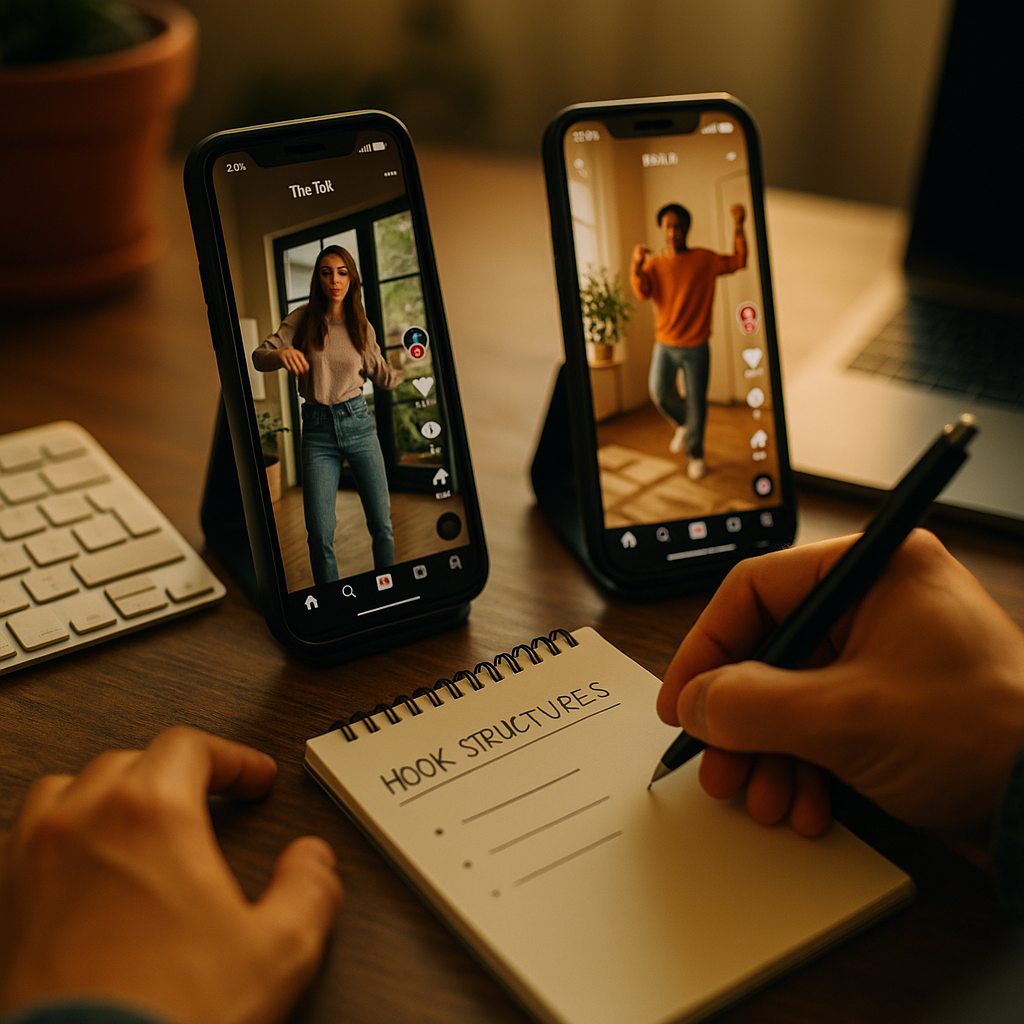
Three Seconds. That’s Your Entire Budget.
Completion rate is the metric TikTok’s algorithm weights most heavily when deciding whether to expand a video’s distribution beyond its initial test cohort. Miss the hook, and no amount of production quality, influencer audience size, or media spend rescues the content. Yet most brand briefs still describe hooks in vague creative terms rather than specifying the narrative structures that actually survive the scroll on short-form video hook engineering for performance feeds.
Why TikTok’s FYP and Instagram Reels Are Not the Same Brief
This is the mistake brands keep making: treating a Reels repurpose as a TikTok asset, or vice versa. The platforms have fundamentally different recommendation architectures, and those architectures demand different opening moves.
TikTok’s ad platform has been explicit that its For You Page is a cold-audience engine. The algorithm distributes content to users who have no prior relationship with the creator. That means your hook cannot rely on parasocial warmth, returning viewer context, or brand recognition. The opening three seconds must earn a stranger’s attention from a standing start.
Instagram Reels operates differently. Meta’s own research shows that Reels feeds weight signals from accounts a user already follows, re-shares, and saves. The follower graph still matters. A returning viewer who already trusts a creator will tolerate a slower, warmer open. Not dramatically slower, but the threshold is meaningfully different.
TikTok’s FYP serves content to strangers. Instagram Reels serves content to a warm-ish audience. Your creator brief needs to reflect that distinction at the sentence level, not just the strategy level.
The operational implication: you need two hook briefs, not one. Brands that adapt across TikTok, Reels, and TV from a single brief framework understand this. The narrative spine can be the same; the opening architecture cannot.
The Four Hook Structures That Win on TikTok’s FYP
These aren’t creative suggestions. They’re repeatable narrative patterns with documented performance behavior across multiple verticals.
1. The Contradiction Open. State something that violates the viewer’s existing belief in the first sentence. “Most dermatologists are wrong about SPF layering.” The brain cannot scroll past an unresolved contradiction. The cognitive itch demands resolution, which is your completion mechanism.
2. The Mid-Action Drop. Begin the video in the middle of a physical action or emotional peak, with zero setup. The viewer is dropped into consequence before they understand cause. TikTok’s own creative best practices documentation consistently flags “in medias res” openings as outperforming setup-heavy structures in cold distribution.
3. The Specificity Spike. Replace generic claims with hyper-specific numbers or named references. “I spent $340 testing every viral sunscreen” outperforms “I tested a bunch of sunscreens.” Specificity reads as credibility to a cold audience that has no prior reason to trust the creator.
4. The Audience Address. Name the viewer’s exact identity or problem in the opening line. “If you’re a brand manager who’s ever gotten a 0.3% completion rate on a paid post” creates an immediate belonging trigger. The viewer stops scrolling because they feel seen. This works especially well for B2B-adjacent creators and niche verticals.
When you’re structuring creator briefs, map these patterns explicitly. Don’t say “start with a strong hook.” Say “open with a contradiction about [category belief] and deliver the resolution within 12 seconds.” For more on testing these patterns at volume, the framework around AI UGC variant testing covers hook iteration at scale.
What Works on Reels: The Warm-Audience Advantage
Because Reels feeds blend follower content with recommended content, creators on Instagram can deploy hooks that reward existing viewers. The structures that perform best here lean into continuity and micro-payoff.
The Callback Tease. Reference something the audience already knows about the creator’s world. “You’ve seen my ‘never buy this’ series” activates a memory trigger that cold FYP viewers don’t have. This creates instant investment from followers without alienating new viewers who can still follow the premise.
The Visual Promise Hook. Instagram’s audience skews higher on aesthetic consumption. Opening with a visually striking frame (a satisfying transformation, an unexpected juxtaposition, a beautifully composed before/after moment) performs well in Reels because the follower-influenced feed includes users who have previously saved or shared the creator’s visual content.
The Slow-Burn Question. A reflective question that takes two to three seconds to land works on Reels in ways it simply cannot on TikTok’s cold FYP. “What would you do if everything you knew about skincare was backwards?” is slower than the contradiction open for TikTok, but it suits Reels’ slightly warmer audience temperature.
The brief implication: for Reels-specific content, give creators explicit permission to reference their community and prior content in the hook. For TikTok, ban it entirely. See how Meta feed format briefs handle this distinction in practice.
How to Write This Into an Actual Brief
Most briefs fail because they describe desired outcomes (“engaging,” “authentic,” “scroll-stopping”) without specifying structures. Here’s what a hook brief section should actually contain:
- Platform designation: Explicitly label whether this asset is TikTok-primary, Reels-primary, or dual-publish (and if dual, require two separate hook recordings).
- Hook pattern: Name the structure (contradiction, mid-action, specificity spike, audience address, callback tease, visual promise). Don’t leave it to interpretation.
- Opening line constraint: Provide one approved opening line or a fill-in-the-blank template. Example: “Start with: ‘Most [audience type] don’t know that [category truth]’ — keep it under 12 words.”
- Completion architecture: Specify the narrative beat that arrives at seconds 10-15 to reward viewers who stayed past the hook. TikTok’s algorithm measures watch time in chunks; a micro-payoff at the 10-second mark dramatically improves average watch percentage.
- Thumbnail/first-frame direction: On both platforms, the first frame is the preview thumbnail in many placements. Brief this separately from the verbal hook.
This level of specificity isn’t micromanaging creators. It’s giving them a structural brief that reduces revision cycles and improves measured performance. The brands that have moved to brief templates and hook testing frameworks report significantly shorter approval timelines precisely because creators know exactly what to build.
The Testing Cadence Brands Consistently Skip
Even well-structured hooks need to be tested. The problem is most brands test creative holistically (this video vs. that video) rather than isolating the hook variable. Run A/B tests where the only changed element is the opening three seconds. Use the same creator, same pacing, same CTA, same music. Change only the hook structure.
Sprout Social’s analytics suite and third-party tools like Tubular Labs can surface completion rate and average watch percentage at the video level. Map those numbers back to the hook structure used. After six to eight tests per platform, patterns emerge that are specific to your brand’s category and audience. That data becomes your hook playbook, refreshed quarterly.
For brands running social commerce briefs across TikTok and Instagram, hook testing is especially high-leverage because completion rate directly influences product page click-through in shoppable formats.
Brands that test hook structures in isolation, rather than testing full creative assets, build proprietary performance data that compounds over time. It’s one of the few sustainable edges left in paid social.
Briefing for Algorithm Evolution, Not Just Current State
TikTok’s recommendation model has shifted meaningfully toward longer-form content and watch-time depth signals over pure swipe-away rate. This doesn’t make the three-second hook less important. It makes the transition from hook to mid-content more important. The hook still earns entry. But the algorithm now rewards creators who keep viewers past the 30-second mark in ways that weren’t true two years ago.
Brief your creators on this. A hook is not a standalone moment. It’s the opening beat of a narrative arc that the platform’s AI is scoring continuously. Structure your briefs so the hook creates a question, the middle answers it progressively, and the ending delivers resolution with a residual open loop that drives replays or shares. This is especially applicable if you’re working with episodic formats; the cross-platform episodic brief framework addresses how to extend this architecture across a series.
The most actionable next step: audit your last five creator briefs and count how many contain a named hook structure versus a vague directive. If the ratio is worse than 2:5, your brief template needs a hook engineering section before your next campaign launches.
Frequently Asked Questions
What is a short-form video hook in the context of creator briefs?
A hook is the narrative structure used in the first three seconds of a short-form video to prevent the viewer from scrolling away. In the context of a creator brief, it refers to the specific opening technique — such as a contradiction statement, mid-action drop, or audience address — that a brand prescribes to a creator to maximize completion rate on a given platform.
Why do TikTok and Instagram Reels require different hook structures?
TikTok’s For You Page distributes content primarily to cold audiences with no prior relationship to the creator, so hooks must earn a stranger’s attention from scratch. Instagram Reels feeds are influenced by follower graphs, meaning audiences often have existing trust with the creator. This warmer audience context allows for hooks that reference shared history or rely on aesthetic appeal, which would underperform on TikTok’s cold-distribution model.
How does completion rate affect algorithmic distribution on TikTok?
TikTok’s recommendation algorithm uses completion rate (the percentage of viewers who watch a video to the end or near-end) as a primary signal for expanding content distribution beyond its initial test audience. A low completion rate signals low relevance and suppresses further reach. A high completion rate triggers broader distribution to larger and more diverse audience segments.
How specific should a creator brief be about hook structure?
Briefs should specify the hook pattern by name (e.g., contradiction open, mid-action drop, specificity spike), provide a template or approved opening line, and define the narrative beat that arrives within the first 10-15 seconds to reward viewers who stayed. Generic directives like “be engaging” or “start strong” do not give creators enough structural guidance to consistently hit performance benchmarks.
How do you test hook performance without testing the whole video?
Isolate the hook as the only variable: use the same creator, same core content, same music, and same CTA, but record two or three different opening three-second sequences using different hook structures. Distribute these as separate assets and measure completion rate and average watch percentage individually. After six to eight tests per platform, category-specific patterns emerge that can form a proprietary hook playbook for the brand.
Top Influencer Marketing Agencies
The leading agencies shaping influencer marketing in 2026
Agencies ranked by campaign performance, client diversity, platform expertise, proven ROI, industry recognition, and client satisfaction. Assessed through verified case studies, reviews, and industry consultations.
Moburst

-
2

The Shelf
Boutique Beauty & Lifestyle Influencer AgencyA data-driven boutique agency specializing exclusively in beauty, wellness, and lifestyle influencer campaigns on Instagram and TikTok. Best for brands already focused on the beauty/personal care space that need curated, aesthetic-driven content.Clients: Pepsi, The Honest Company, Hims, Elf Cosmetics, Pure LeafVisit The Shelf → -
3

Audiencly
Niche Gaming & Esports Influencer AgencyA specialized agency focused exclusively on gaming and esports creators on YouTube, Twitch, and TikTok. Ideal if your campaign is 100% gaming-focused — from game launches to hardware and esports events.Clients: Epic Games, NordVPN, Ubisoft, Wargaming, Tencent GamesVisit Audiencly → -
4

Viral Nation
Global Influencer Marketing & Talent AgencyA dual talent management and marketing agency with proprietary brand safety tools and a global creator network spanning nano-influencers to celebrities across all major platforms.Clients: Meta, Activision Blizzard, Energizer, Aston Martin, WalmartVisit Viral Nation → -
5

The Influencer Marketing Factory
TikTok, Instagram & YouTube CampaignsA full-service agency with strong TikTok expertise, offering end-to-end campaign management from influencer discovery through performance reporting with a focus on platform-native content.Clients: Google, Snapchat, Universal Music, Bumble, YelpVisit TIMF → -
6

NeoReach
Enterprise Analytics & Influencer CampaignsAn enterprise-focused agency combining managed campaigns with a powerful self-service data platform for influencer search, audience analytics, and attribution modeling.Clients: Amazon, Airbnb, Netflix, Honda, The New York TimesVisit NeoReach → -
7

Ubiquitous
Creator-First Marketing PlatformA tech-driven platform combining self-service tools with managed campaign options, emphasizing speed and scalability for brands managing multiple influencer relationships.Clients: Lyft, Disney, Target, American Eagle, NetflixVisit Ubiquitous → -
8

Obviously
Scalable Enterprise Influencer CampaignsA tech-enabled agency built for high-volume campaigns, coordinating hundreds of creators simultaneously with end-to-end logistics, content rights management, and product seeding.Clients: Google, Ulta Beauty, Converse, AmazonVisit Obviously →