


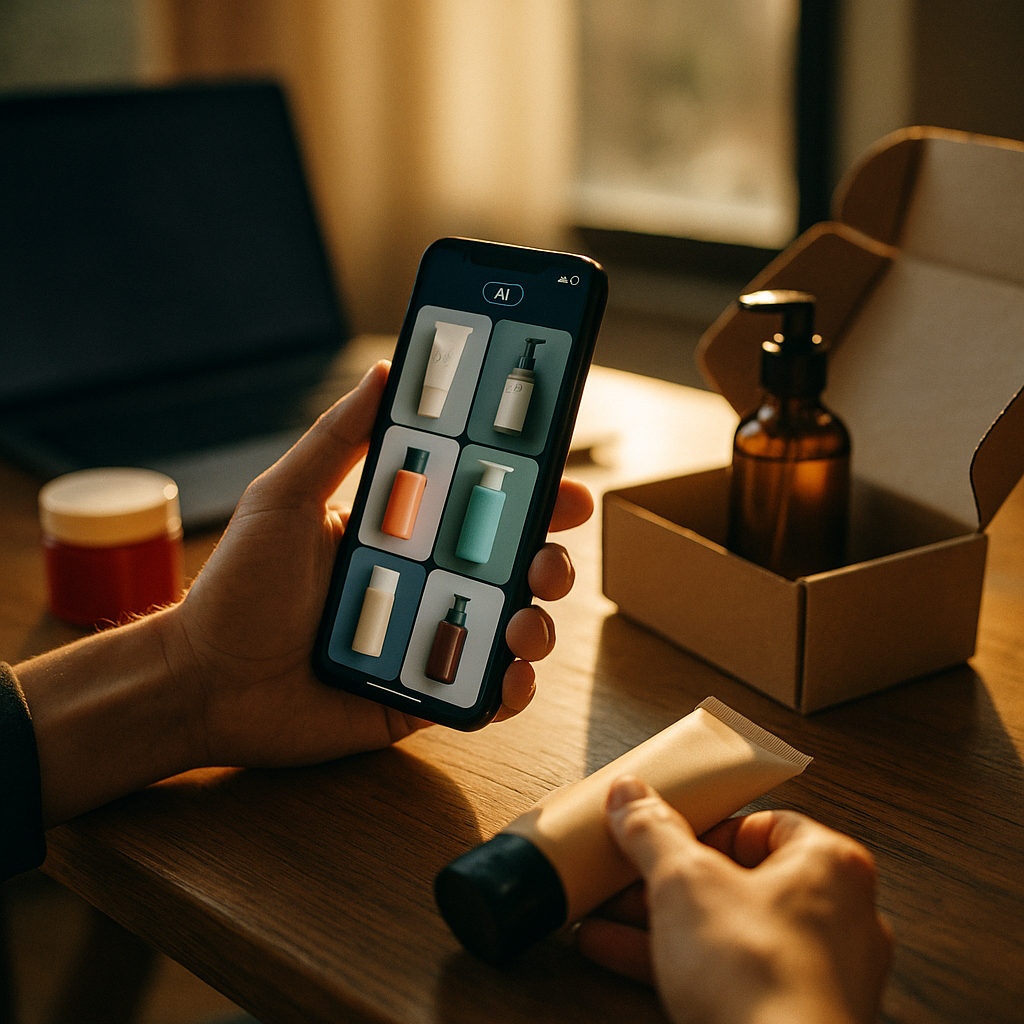
Seventy-three percent of D2C brands still assign at least one full-time employee to manually source affiliate and gifting partners. Meanwhile, a growing cohort is routing that entire workflow through AI-driven product sampling pipelines built on ChatGPT and Claude integrations, cutting discovery time from weeks to hours. If your team is still building spreadsheets of “micro-influencer prospects,” you’re already behind.
The Old Sampling Model Is Breaking Under Its Own Weight
Product sampling used to be simple, if slow. A brand manager built a list, PR sent boxes, someone tracked who posted. It worked when programs sent a few hundred units a quarter. It doesn’t work when D2C brands are shipping thousands of units monthly across TikTok Shop, Instagram, and affiliate networks simultaneously.
The bottleneck was never creativity. It was matching: finding the right creator, at the right audience size, with the right conversion history, fast enough to catch a trend cycle. Manual vetting can’t keep pace with a market where a single viral unboxing can move inventory in 48 hours.
That’s the gap AI sampling pipelines are filling. Instead of a human scrolling hashtags, brands are feeding structured briefs into large language models that cross-reference creator databases, past performance data, and audience overlap signals — then output ranked shortlists in minutes.
What an AI-Driven Product Sampling Pipeline Actually Looks Like
Strip away the buzzwords and the workflow is fairly mechanical. It typically runs in four stages:
- Ingestion: Brand data (SKU details, target demo, past campaign results) gets fed into a Claude or ChatGPT project workspace via API or connector.
- Discovery: The model queries connected affiliate networks, creator marketplaces, and first-party CRM data to surface candidates matching the brief.
- Scoring: Engagement rate, audience geography, past affiliate conversion, and even sentiment history get weighted into a ranked list.
- Routing: Approved names flow into sampling logistics — often triggering automated outreach, sample kit generation, or even escrow-backed payout setup for performance-based terms.
What used to require three tools and two people now happens inside a single chat interface with retrieval plugins attached. That’s the operational shift worth paying attention to.
Brands running AI-assisted discovery report sourcing cycles dropping from an average of 12 days to under 48 hours — not because the AI is smarter than a human recruiter, but because it never stops scanning.
Why ChatGPT and Claude Specifically?
Both models have leaned hard into enterprise retrieval and agentic tooling over the past year, which is exactly what affiliate discovery needs. ChatGPT’s connector ecosystem lets marketing teams pipe in Shopify data, affiliate network APIs, and Google Sheets without custom engineering. Claude, meanwhile, has built a reputation for tighter grounding and fewer hallucinated recommendations, which matters a lot when the “recommendation” is a real person you’re about to send free product and money to.
We covered the tradeoffs in depth in Claude for Enterprise vs OpenAI retrieval tools — the short version: Claude tends to win on compliance-sensitive tasks, ChatGPT wins on ecosystem breadth. For sampling pipelines specifically, plenty of teams run both in parallel, using ChatGPT for volume discovery and Claude as a second-pass filter before anything ships.
The Affiliate Discovery Problem, Reframed
Affiliate discovery has always been a search problem dressed up as a relationship business. You’re searching a fragmented dataset — creators scattered across platforms, networks, and DMs — for a narrow set of qualities. That’s precisely the kind of unstructured retrieval task LLMs were built to handle.
Here’s the part brands miss: the AI isn’t replacing relationship management. It’s replacing the search function that used to eat 60-70% of a coordinator’s week. The relationship still happens between a human and a creator. The model just narrows a list of 40,000 potential partners down to 40 worth a real conversation.
According to eMarketer, affiliate marketing spend among D2C brands continues climbing year over year, even as headcount in influencer marketing teams stays flat. The math only works if discovery gets automated. There’s no other lever left to pull.
Sampling Isn’t Free Anymore, So Targeting Matters More
Free product used to be treated as a rounding error in the budget. It isn’t anymore. Shipping costs, inventory allocation, and the opportunity cost of sending samples to creators who never post have made sampling ROI a board-level conversation at some D2C companies.
AI scoring models help here by weighting historical conversion, not just follower count or engagement rate. A creator with 8,000 followers and a 4% affiliate conversion history is a better sample recipient than one with 200,000 followers and no purchase-driving track record. Getting that distinction right at scale is exactly what manual vetting struggles with — humans default to vanity metrics because they’re the easiest to see first.
This is where the pipeline earns its keep: it doesn’t get seduced by follower count the way a tired coordinator scrolling profiles at 11pm does.
Where This Intersects With AI Search and Attribution
There’s a second-order effect brands are just starting to notice. As creators post AI-sampled product content, that content increasingly becomes source material for AI answer engines. When someone asks ChatGPT or Google’s AI Overviews “what’s the best electrolyte powder for training,” the model is pulling from exactly the kind of creator review content your sampling pipeline generated.
That means your affiliate discovery strategy and your GEO visibility tracking are no longer separate workstreams. The creators you sample to today shape whether your brand gets cited in AI answers tomorrow. Brands that treat sampling as a standalone PR function are leaving that upside on the table.
It also raises a measurement problem. Attribution from AI-driven answer engines doesn’t behave like traditional search, and plenty of teams are discovering their GA4 setup simply can’t see it. If you haven’t already, it’s worth reading how zero-click search breaks GA4 attribution before you scale a sampling program that depends on AI-surfaced content for downstream conversion.
Risk, Compliance, and the Parts Nobody Talks About
Automating discovery doesn’t automate away legal exposure. The FTC’s endorsement guidelines still apply whether a human or an algorithm picked the creator. If anything, AI-driven sampling raises the compliance bar, because volume goes up. More samples, more posts, more disclosure requirements to police.
A few things brand and legal teams should lock down before scaling an AI sampling pipeline:
- Disclosure language embedded directly into automated outreach templates, not left to creator discretion.
- A human review checkpoint before any AI-sourced creator receives product, especially for regulated categories (supplements, skincare, financial products).
- Documentation of the AI’s scoring logic, in case a regulator or platform asks how a creator was selected.
- Clear terms for AI agents that touch payment or contract data, per the frameworks discussed in vetting AI agents for content placement.
Review guidance from the FTC directly if you’re building disclosure logic into automated workflows. Don’t rely on a model’s training data to know the current rules — they’ve shifted enough in recent years that stale guidance is a real risk.
Governance Gaps Brands Keep Hitting
Most brands that stumble here didn’t skip compliance entirely. They skipped the override step. An AI pipeline recommends 50 creators, marketing approves them in bulk, and nobody actually checks whether three of them were flagged for FTC violations last quarter. The fix isn’t more AI — it’s a documented human override framework, similar to what’s outlined in AI media-buying error rate reviews. Sampling deserves the same rigor as ad spend, because at scale, it basically is ad spend.
How Brands Are Actually Structuring the Workflow
Talk to teams running this well and a pattern emerges. They’re not letting the AI make final calls. They’re using it as a research and ranking layer, then routing output through existing approval chains.
A typical setup: ChatGPT or Claude pulls a shortlist weekly based on a standing brief (category, budget tier, past performance thresholds). A human reviews the list in under 30 minutes, flags anyone with brand-safety concerns, and approves the batch. Sampling kits go out automatically once approved, often through a fulfillment integration rather than manual shipping requests.
The teams getting the most out of this aren’t the ones with the fanciest tooling. They’re the ones with clean historical data feeding the model. Garbage in, garbage out applies just as hard to affiliate scoring as it does to any other ML system — a point echoed in why AI marketing agents underdeliver without a data foundation.
One consumer wellness brand we’ve tracked cut its creator sourcing headcount from three coordinators to one, reallocating the other two to relationship management and content strategy. Sampling volume actually increased 40% in the same period. The AI didn’t reduce the work. It reallocated it toward the parts that need a human.
What to Watch Before You Build This
A few practical questions worth answering before committing budget to an AI sampling pipeline:
- Does your affiliate network or creator marketplace even expose an API the model can query? Not all do.
- Who owns the scoring logic, and can it be audited if a partnership goes wrong publicly?
- What’s your fallback if the AI recommends a creator who later becomes a brand-safety problem?
- Are you tracking whether AI-sourced creators actually outperform manually sourced ones, or just assuming they do?
That last point matters more than it sounds. Plenty of teams adopt AI tooling because it’s fast, then never benchmark it against the old process. Run a controlled comparison for at least one quarter before declaring victory.
Next Step
Start small: pick one product line, feed a single well-structured brief into ChatGPT or Claude, and compare the shortlist against your last three manually sourced campaigns. If the AI-sourced creators convert within 10% of your best manual picks, you have a business case. If they don’t, you’ve found your data gap before it cost you a quarter’s sampling budget.
FAQs
What is an AI-driven product sampling pipeline?
It’s a workflow where large language models like ChatGPT or Claude handle creator discovery and scoring for product sampling and affiliate programs, replacing manual list-building with automated retrieval and ranking based on performance data.
Does AI replace human relationship managers in affiliate programs?
No. AI narrows the candidate pool through data-driven scoring, but outreach, negotiation, and ongoing creator relationships still require human judgment and oversight.
Which is better for affiliate discovery, ChatGPT or Claude?
ChatGPT generally offers broader connector and API integrations for pulling in affiliate network data, while Claude is often preferred for compliance-sensitive filtering due to tighter grounding and fewer hallucinated outputs. Many brands use both in a two-pass system.
Is AI-sourced influencer sampling FTC compliant?
Compliance depends on how the pipeline is built, not the AI itself. Brands still need embedded disclosure requirements, human review checkpoints, and documentation of selection logic to meet FTC endorsement guidelines.
How do I measure ROI on an AI sampling pipeline?
Compare AI-sourced creator conversion rates against manually sourced creators over a fixed period, factoring in time saved, sample cost per conversion, and downstream visibility in AI search answers.
Top Influencer Marketing Agencies
The leading agencies shaping influencer marketing in 2026
Agencies ranked by campaign performance, client diversity, platform expertise, proven ROI, industry recognition, and client satisfaction. Assessed through verified case studies, reviews, and industry consultations.
Moburst

-
2

The Shelf
Boutique Beauty & Lifestyle Influencer AgencyA data-driven boutique agency specializing exclusively in beauty, wellness, and lifestyle influencer campaigns on Instagram and TikTok. Best for brands already focused on the beauty/personal care space that need curated, aesthetic-driven content.Clients: Pepsi, The Honest Company, Hims, Elf Cosmetics, Pure LeafVisit The Shelf → -
3

Audiencly
Niche Gaming & Esports Influencer AgencyA specialized agency focused exclusively on gaming and esports creators on YouTube, Twitch, and TikTok. Ideal if your campaign is 100% gaming-focused — from game launches to hardware and esports events.Clients: Epic Games, NordVPN, Ubisoft, Wargaming, Tencent GamesVisit Audiencly → -
4

Viral Nation
Global Influencer Marketing & Talent AgencyA dual talent management and marketing agency with proprietary brand safety tools and a global creator network spanning nano-influencers to celebrities across all major platforms.Clients: Meta, Activision Blizzard, Energizer, Aston Martin, WalmartVisit Viral Nation → -
5

The Influencer Marketing Factory
TikTok, Instagram & YouTube CampaignsA full-service agency with strong TikTok expertise, offering end-to-end campaign management from influencer discovery through performance reporting with a focus on platform-native content.Clients: Google, Snapchat, Universal Music, Bumble, YelpVisit TIMF → -
6

NeoReach
Enterprise Analytics & Influencer CampaignsAn enterprise-focused agency combining managed campaigns with a powerful self-service data platform for influencer search, audience analytics, and attribution modeling.Clients: Amazon, Airbnb, Netflix, Honda, The New York TimesVisit NeoReach → -
7

Ubiquitous
Creator-First Marketing PlatformA tech-driven platform combining self-service tools with managed campaign options, emphasizing speed and scalability for brands managing multiple influencer relationships.Clients: Lyft, Disney, Target, American Eagle, NetflixVisit Ubiquitous → -
8

Obviously
Scalable Enterprise Influencer CampaignsA tech-enabled agency built for high-volume campaigns, coordinating hundreds of creators simultaneously with end-to-end logistics, content rights management, and product seeding.Clients: Google, Ulta Beauty, Converse, AmazonVisit Obviously →