


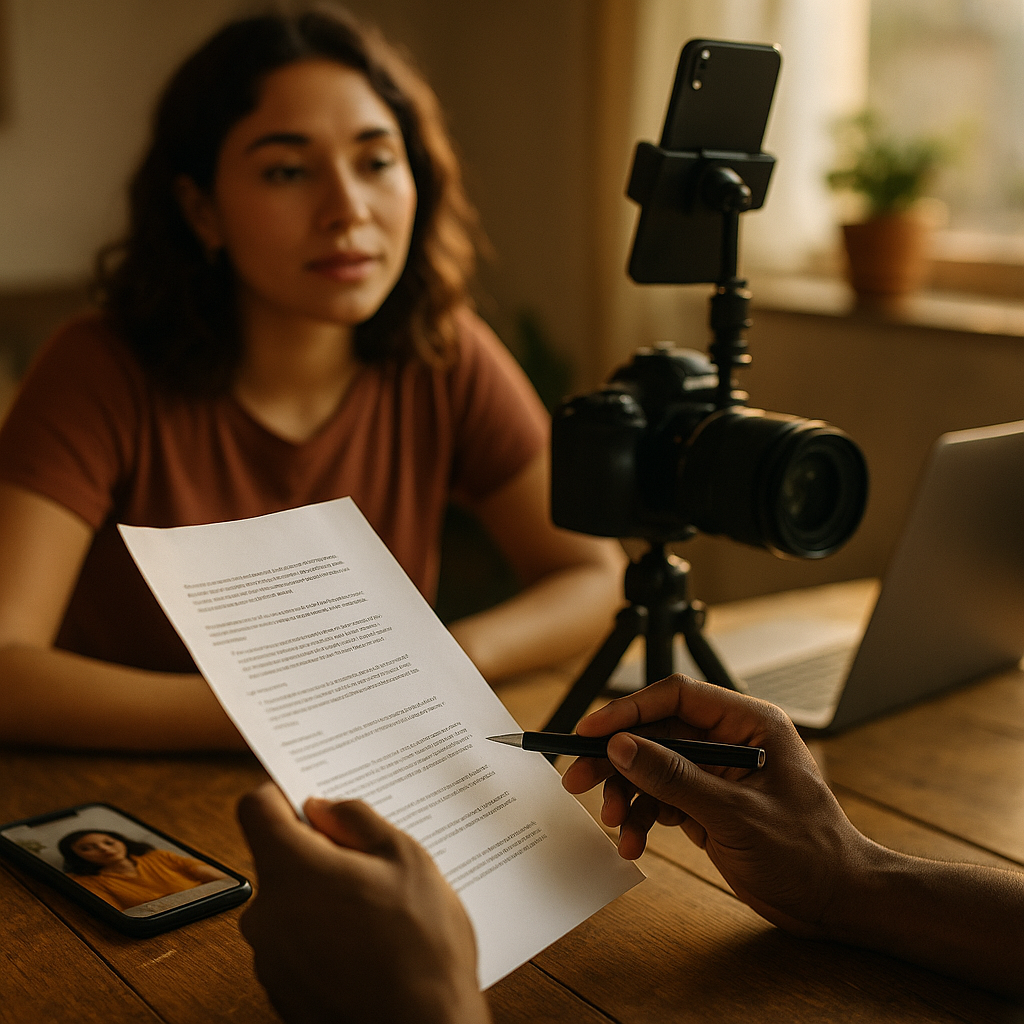
Platform algorithms are getting better at detecting fake human behavior than most brand teams realize. TikTok’s internal ranking systems now score for what researchers call “authenticity signals” — micro-patterns in delivery, pacing, and narrative structure that synthetic or over-produced content consistently fails to reproduce. If your creator briefs are still built around polish and brand safety above everything else, you are actively briefing toward suppression.
Why “Authentic” Is No Longer a Vibe — It’s a Technical Signal
For years, authenticity in influencer marketing meant aesthetics: raw lighting, casual captions, vertical video shot on a phone. That era is over. The platforms have moved the goalposts significantly. What YouTube and TikTok are now detecting isn’t a visual style. It’s a behavioral fingerprint.
Their systems are trained on billions of hours of content consumption data. They’ve learned that human-made content has consistent irregularities: speech hesitations, variable energy within a single clip, organic topic transitions that don’t follow a linear script, and emotional micro-expressions that follow conversational logic rather than production logic. AI-generated video, heavily templated UGC, and over-briefed creator content tend to fail on all four counts.
Over-briefed creator content now carries the same algorithmic risk as AI-generated video. Both exhibit the same structural flatness that platform classifiers are trained to downrank.
This has direct commercial consequences. A creator whose content gets suppressed delivers zero earned reach regardless of their follower count. For brands running paid amplification on top of organic posts, suppression also degrades paid efficiency — you’re spending against content that the algorithm has already flagged as low-quality or synthetic.
What the Platforms Are Actually Measuring
Neither YouTube nor TikTok has published a clean technical spec for their authenticity classifiers. But the signals are legible if you study their creator guidance and cross-reference with what’s performing in competitive intelligence tools like Sprout Social or Tubular Labs.
There are three categories that matter most:
- Structural irregularity: Human content doesn’t have perfectly even segment lengths. A creator talking about their morning routine naturally spends more time on the part that surprised them. Synthetic content produces unnaturally consistent segment durations.
- Delivery variance: Real people modulate pace, volume, and energy based on emotional salience. The part of a story that matters to the speaker lands with different energy than the setup. Scripted or AI-generated delivery tends to flatten this curve.
- Narrative spontaneity: Human storytelling includes observable course corrections: “Actually wait, I forgot to mention…” or a pivot when the creator visibly reconsiders a point mid-sentence. These aren’t imperfections. They’re trust signals to both algorithms and audiences.
Platform classifiers aren’t looking for any one of these in isolation. They’re looking for the co-occurrence pattern — content that hits all three tends to outperform content that hits only one or two.
The Brief Is the Problem (and the Fix)
Most brand briefs are written by people who’ve never had to perform to camera under a paid partnership agreement. That’s not a criticism — it’s a structural mismatch. Legal, brand, and compliance teams want certainty. Algorithms reward uncertainty. Specifically, the low-stakes uncertainty of a person genuinely working through their thoughts in real time.
The solution isn’t to remove structure from your briefs. It’s to restructure what you’re specifying. Here’s the practical distinction:
What brands should specify in a brief: Core message territory, non-negotiable claims, restricted language, disclosure placement, key product truth the creator must communicate.
What brands should stop specifying: Exact sentence structures, precise timing for mentions, scripted transitions, mandated emotion beats (“now look excited about the product”).
This is a real tension for compliance-sensitive categories like finance, pharma, and supplements. But even in those categories, there’s usually more latitude on delivery and narrative than legal teams assume. The key is to anchor the brief around outcomes (the audience should understand X and feel Y) rather than execution mechanics.
For deeper tactical frameworks on structuring briefs that perform algorithmically, the approach to brief architecture for algorithmic reach is a useful operational reference.
Three Brief Changes That Protect Authenticity Without Losing Brand Control
1. Swap script requirements for narrative anchors. Instead of “say this about the product,” give the creator a true story prompt: “Tell me a time when [problem] made you feel [emotion]. Then tell me what changed.” The product enters the story as a contextual detail rather than an interruption. The creator’s natural storytelling does the authenticity work for you.
2. Brief for a reaction, not a recitation. Give creators the product, the data point, or the claim and ask them to react to it genuinely before filming. Their first-take response will almost always outperform a scripted version of that same response. Some brands are now running what they internally call “reaction briefs” — single-page documents designed to provoke rather than instruct.
3. Allow visible self-correction. Explicitly tell creators it’s acceptable to restart a thought, change direction, or acknowledge they’re figuring something out. Many creators self-edit these moments out because they assume the brand wants polish. The brief needs to give them active permission to leave them in. This also applies to caption copy and comment engagement: organic-feeling comments from the creator under their own post continue to drive watch time signals.
For teams building brief templates at scale, the framework around creator briefs for AI-curated feeds covers how these principles apply across multiple content types simultaneously.
Platform-Specific Nuances Worth Knowing
TikTok’s For You Page algorithm weights watch completion and re-watch rate heavily, and both are driven by narrative tension: the feeling that something relevant is about to happen. Human storytelling creates this naturally through pacing. Synthetic content tends to front-load information and then plateau, which tanks completion.
YouTube’s classifier has become more sensitive to what the platform calls “helpful content” signals — a direct parallel to Google’s helpful content framework. This includes specificity of personal experience (generic product praise scores lower than specific, contextual detail), and evidence of genuine expertise rather than performed expertise. See the Google Search Central documentation for the helpful content framework — the structural logic applies to YouTube ranking too.
Instagram Reels, operating under Meta’s distribution model, has been increasingly aggressive about suppressing content that patterns-match to ad templates. Even organic posts that use text overlays, transitions, or audio timing that resembles paid ad formats can see reduced distribution. This creates a brief requirement to explicitly encourage off-template visual choices.
The LinkedIn environment has its own version of this problem. The platform’s algorithm is being tested with authenticity penalties for what internal teams have described as “corporate theater” — meaning highly produced, polished professional content that looks like a press release wearing a human face. The implications for B2B brand creator programs are significant, as explored in the piece on AI corporate theater killing creator authenticity.
The Compliance and Disclosure Layer
One legitimate concern: if you loosen brief controls to protect authenticity signals, how do you maintain FTC compliance? The answer is that disclosure requirements and content delivery requirements are separate systems. FTC guidelines specify what must be disclosed and where. They say nothing about delivery style, scripting, or narrative structure. A creator can say “#ad” at the start of a TikTok and then proceed to deliver entirely unscripted, spontaneous content. These aren’t in conflict.
Where brands need to maintain hard brief controls: specific factual claims, comparison claims against competitors, health or efficacy language, and any mandated legal disclaimers. Everything else is a candidate for loosening.
Disclosure compliance and algorithmic authenticity are not in conflict. The FTC governs what must be said. Platform algorithms govern how it performs. Brief for both, separately.
Measurement: How to Know Your Brief Is Working
The authenticity signal problem is measurable. Track completion rate, re-watch rate, and organic share rate on creator posts against your baseline. Content that’s hitting genuine authenticity signals will show above-average completion and share rates before you put paid spend behind it. If you’re consistently seeing low organic performance before boosting, the brief is the first variable to examine, not the creator’s audience quality.
Also watch comment sentiment velocity — the speed and nature of first-wave comments. Authentic content generates conversational responses. Synthetic or over-produced content tends to generate emoji-only engagement or bot-pattern comment clusters, which platforms actively penalize. For teams optimizing at scale across multiple formats, the framework for performance-linked creator briefs provides a useful measurement scaffolding alongside the brief structure itself.
There’s also an emerging tool category worth watching: AI-powered content analyzers like HubSpot’s social analytics suite and third-party tools such as Vidooly and CreatorIQ now offer authenticity scoring features that flag over-produced or template-matching content before you publish.
Audit one live campaign brief this week against the three authenticity signal categories above — structural irregularity, delivery variance, and narrative spontaneity — and identify every brief requirement that actively works against each one. That list is your starting point for brief reform.
FAQs
What are authenticity signals in platform algorithms?
Authenticity signals are behavioral and structural patterns in video content that platform algorithms — particularly TikTok’s and YouTube’s — use to distinguish human-made content from synthetic or over-produced content. These include delivery variance (natural changes in pace and energy), structural irregularity (uneven segment lengths that reflect genuine emphasis), and narrative spontaneity (observable course corrections or pivots mid-thought). Content that exhibits these patterns is favored in distribution; content that lacks them is increasingly suppressed or downranked.
How does an over-briefed creator brief hurt algorithmic reach?
Heavily scripted briefs force creators to deliver content with the same structural flatness as AI-generated video: consistent segment timing, even energy throughout, and linear narrative flow with no genuine self-correction. Platform classifiers have been trained on billions of examples of human versus synthetic content, and they’re increasingly effective at identifying this flatness as a suppression signal. Brands that over-specify delivery mechanics effectively engineer their way out of organic distribution.
Can brands maintain FTC compliance while briefing for authenticity?
Yes. FTC disclosure requirements govern what must be communicated and where (the disclosure itself), not how the rest of the content is delivered. A creator can include a compliant “#ad” or verbal disclosure and then deliver fully unscripted, spontaneous content. The brand needs to maintain hard controls only over specific factual claims, health or efficacy language, competitor comparisons, and mandated disclaimers. Delivery style and narrative structure are separate and can be loosened without creating compliance risk.
Which platforms are most aggressive about suppressing synthetic-looking content?
TikTok and YouTube are currently the most aggressive. TikTok’s For You Page algorithm heavily weights watch completion and re-watch rate, both of which authentic human storytelling drives better than synthetic content. YouTube’s classifier applies logic similar to Google’s helpful content framework, penalizing content that performs expertise rather than demonstrating genuine personal experience. Instagram Reels has also increased suppression of content that pattern-matches to paid ad templates, even in organic posts.
How should brands measure whether their brief changes are working?
Track organic completion rate, re-watch rate, and share rate on creator posts before applying any paid amplification. Genuine authenticity signals will show above-average performance on these metrics even without paid support. Also monitor comment sentiment velocity — authentic content generates conversational responses quickly, while synthetic content tends to attract emoji-only engagement or bot-pattern comments, both of which platforms penalize. If organic metrics are consistently weak before boosting, the brief structure is the first variable to revisit.
What’s the difference between a narrative anchor and a script in a creator brief?
A script tells a creator exactly what to say and in what order. A narrative anchor gives a creator a story prompt or emotional framework — for example, “tell me about a time this problem affected you, then explain what changed” — and lets them fill it with their own language, pacing, and genuine experience. The product or brand message enters as a contextual element within their story rather than as an interruption of it. Narrative anchors produce content with the structural irregularity and delivery variance that algorithms favor, while still keeping the brand message on-territory.
Top Influencer Marketing Agencies
The leading agencies shaping influencer marketing in 2026
Agencies ranked by campaign performance, client diversity, platform expertise, proven ROI, industry recognition, and client satisfaction. Assessed through verified case studies, reviews, and industry consultations.
Moburst

-
2

The Shelf
Boutique Beauty & Lifestyle Influencer AgencyA data-driven boutique agency specializing exclusively in beauty, wellness, and lifestyle influencer campaigns on Instagram and TikTok. Best for brands already focused on the beauty/personal care space that need curated, aesthetic-driven content.Clients: Pepsi, The Honest Company, Hims, Elf Cosmetics, Pure LeafVisit The Shelf → -
3

Audiencly
Niche Gaming & Esports Influencer AgencyA specialized agency focused exclusively on gaming and esports creators on YouTube, Twitch, and TikTok. Ideal if your campaign is 100% gaming-focused — from game launches to hardware and esports events.Clients: Epic Games, NordVPN, Ubisoft, Wargaming, Tencent GamesVisit Audiencly → -
4

Viral Nation
Global Influencer Marketing & Talent AgencyA dual talent management and marketing agency with proprietary brand safety tools and a global creator network spanning nano-influencers to celebrities across all major platforms.Clients: Meta, Activision Blizzard, Energizer, Aston Martin, WalmartVisit Viral Nation → -
5

The Influencer Marketing Factory
TikTok, Instagram & YouTube CampaignsA full-service agency with strong TikTok expertise, offering end-to-end campaign management from influencer discovery through performance reporting with a focus on platform-native content.Clients: Google, Snapchat, Universal Music, Bumble, YelpVisit TIMF → -
6

NeoReach
Enterprise Analytics & Influencer CampaignsAn enterprise-focused agency combining managed campaigns with a powerful self-service data platform for influencer search, audience analytics, and attribution modeling.Clients: Amazon, Airbnb, Netflix, Honda, The New York TimesVisit NeoReach → -
7

Ubiquitous
Creator-First Marketing PlatformA tech-driven platform combining self-service tools with managed campaign options, emphasizing speed and scalability for brands managing multiple influencer relationships.Clients: Lyft, Disney, Target, American Eagle, NetflixVisit Ubiquitous → -
8

Obviously
Scalable Enterprise Influencer CampaignsA tech-enabled agency built for high-volume campaigns, coordinating hundreds of creators simultaneously with end-to-end logistics, content rights management, and product seeding.Clients: Google, Ulta Beauty, Converse, AmazonVisit Obviously →