


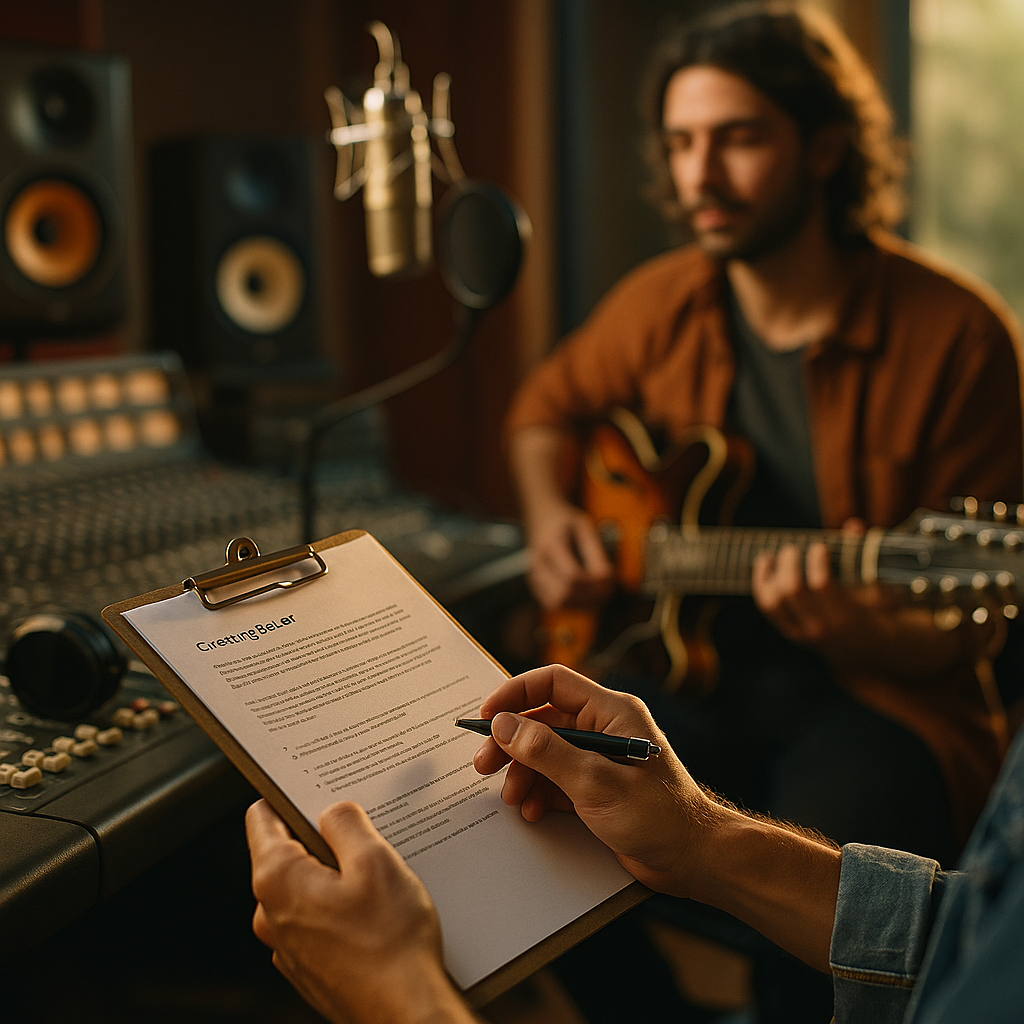
Spotify Wrapped campaigns get the headlines. But the format quietly outperforming them on completion rate and comment sentiment is far less polished: the studio-session behind-the-scenes clip. No choreography, no green screen, just a mic, a mixing board, and a creator working through a take. For music and audio brands, the studio-session behind-the-scenes format has become the highest-trust, lowest-lift integration on the briefing sheet.
That trust is measurable. Creators shooting raw studio content report engagement rates that run 20-40% above their polished product placements, according to agency data shared across the creator economy in the past year. Audiences have grown allergic to obvious ad breaks. They still lean in for a glimpse of process.
Why the Format Works Now
Music gear and audio brands have a problem most categories don’t: their product is invisible in the final output. A listener can’t tell if a track was recorded on a $300 interface or a $3,000 one. That makes traditional “show the product, praise the product” briefs weirdly ineffective for this vertical. Nobody buys an audio interface because a song sounds good — they buy it because they trust the person who made the song.
The studio-session format solves this by moving the story upstream. Instead of showing the result, it shows the decision-making. A producer adjusting gain staging. A vocalist doing a fourth take because the mic caught a breath. A songwriter scrapping a hook mid-take and pivoting live. That’s the content. The gear is present, but it’s supporting cast, not the lead.
When the product disappears into the process, viewers stop watching an ad and start watching a craft demonstration — and craft demonstrations convert better than testimonials.
This isn’t a new insight for other categories. Heritage and craft brands have been running variations of this playbook for years — see the parallels in the craftsperson micro-documentary format, which applies the same “show the work, not the pitch” logic to artisans and makers. Music brands are just catching up to a format that’s already proven itself in adjacent verticals.
What Goes in the Brief
A studio-session brief should feel less like an ad spec and more like a documentary shot list. Here’s what actually needs to be locked before the creator hits record:
- The moment of use, not the moment of unboxing. Brief creators to film the interface, mic, or plugin mid-workflow — adjusting EQ, punching in a vocal, comping a take — rather than pulling it out of a box.
- One authentic friction point. A retake, a settings tweak, a “let me try that again.” Perfection reads as scripted. A small stumble reads as real.
- Natural audio, not voiceover narration stapled on top. If the creator is going to talk about the gear, have them talk while working, not in a separate on-camera address.
- A single clear product moment. Somewhere in the clip, the product name or logo should be visibly and audibly referenced once, unforced. Brands that try to cram in three mentions end up with zero that feel real.
- Disclosure language baked into the caption and, ideally, spoken on camera. More on this below — this is where most music-brand campaigns get sloppy.
Keep the brief to one page. Studio-session creators — many of whom are musicians first, marketers a distant second — respond better to a short creative prompt than a 12-page deck of dos and don’ts. Give them the beat sheet, not the script.
The FTC Angle Nobody Wants to Think About (But Should)
Here’s the uncomfortable truth: music creators are, on average, less disclosure-literate than beauty or fashion influencers. The influencer marketing compliance conversation has mostly happened in lifestyle and beauty spaces. Music and audio has lagged. That’s a liability waiting to surface.
The FTC’s endorsement guidance doesn’t carve out an exception for “but it’s just gear in the background of a creative process video.” If a brand gifted or paid for the placement, disclosure rules apply whether the video is a polished ad or a grainy 45-second studio clip shot on an iPhone propped against a monitor.
Brands running studio-session campaigns should require:
- A verbal or on-screen “#ad” or “#sponsored” disclosure within the first three seconds of the clip, not buried in a caption below the fold.
- Platform-native paid partnership tags (TikTok’s Branded Content Toggle, Instagram’s Paid Partnership label) turned on for every studio-session post, per Meta’s branded content policies and TikTok’s advertising guidelines.
- A written confirmation step in the contract that the creator understands disclosure isn’t optional just because the content “doesn’t feel like an ad.”
This is the same compliance logic covered in our confession-booth format brief and the ghost ad confession format guide — low-production, high-authenticity formats are exactly where compliance gets overlooked, because nothing about the footage screams “advertisement.”
Casting: Who Actually Belongs in a Studio-Session Campaign
Not every music creator is a fit. The format demands someone who is genuinely working, on camera, with real stakes in the outcome. That rules out creators who primarily lip-sync or react to trending audio. It favors:
- Bedroom producers with an established posting cadence around their process (not just finished tracks).
- Session musicians and engineers who already film “day in the studio” content organically.
- Independent artists mid-album-cycle, who have a built-in narrative reason to be filming studio time anyway.
Vet for consistency, not just follower count. A creator with 40,000 followers who posts three studio clips a week is a better bet than one with 400,000 who posted their last studio content eight months ago. Engagement on studio-adjacent content specifically — not their average post — is the number to pull before you sign anything.
This is also where nano and micro-tier creators outperform. The intimacy of a home studio setup matches their scale. A polished celebrity producer filming a “behind the scenes” segment in a $2 million studio doesn’t land the same authenticity signal — the gap between their reality and the viewer’s is too wide. The same principle drives success in the grocery-aisle walkthrough format, where nano-creator scale is the point, not a limitation.
Measuring What Actually Matters
Standard influencer KPIs undersell this format. Impressions and reach are the least interesting numbers here. What brands should actually track:
- Watch-through rate on the friction moment. If viewers drop off right before the “retake” or “let me adjust this” beat, the edit is too slow getting there.
- Comment sentiment specifically mentioning the product (not just the creator or the track). Tools like Sprout Social or native platform analytics can filter for branded keyword mentions in comments.
- Save rate. Studio-session content, unlike trend-driven formats, tends to get saved by other creators and hobbyist musicians as reference material. That’s a strong secondary distribution signal traditional ad content rarely earns.
- Click-through on gear-specific links, if the creator includes an affiliate or bio link to the specific product shown.
Per eMarketer tracking of creator content performance, process-oriented and “how it’s made” formats consistently post save rates two to three times higher than polished product demos across creator categories — music and audio included.
Save rate, not view count, is the real leading indicator that a studio-session clip earned trust instead of just attention.
Common Mistakes That Kill the Format
Three failure modes show up again and again in music-brand studio content:
Over-scripting the “spontaneous” moment. If a brand writes out the exact retake dialogue, experienced viewers can smell it. Musicians have real workflow hiccups constantly — brief the creator to just capture one honestly, don’t manufacture one.
Product placement that’s too convenient. If the interface is angled perfectly toward the camera with the logo lit like a product shot, the illusion breaks. Real studio setups are messy, cluttered, cable-strewn. Let it look that way.
Skipping the disclosure because “it doesn’t look like an ad.” Already covered above, but it bears repeating because it’s the single most common compliance gap brands walk into with this format.
For brands running this alongside other lightweight formats, it’s worth reviewing how a single shoot day can be repurposed across placements. The one shoot, three formats brief and the package-deal creative brief both cover how to structure a single studio day into a full-funnel content set without burning extra budget on a second shoot.
Next Step
Draft a one-page studio-session brief, cast two or three creators who already film their process organically, and require an on-screen disclosure within the first three seconds — then measure save rate before you judge the campaign on reach.
FAQs
What is the studio-session behind-the-scenes format?
It’s an influencer content format where creators film raw, unpolished moments from music production or recording work, subtly featuring audio gear or software as part of the workflow rather than the focus of a traditional product ad.
Why does this format work better than standard product placement for audio brands?
Because listeners can’t hear the gear in the final track, brands can’t rely on the product “speaking for itself.” Showing the process, rather than the result, builds credibility with an audience that values craft and authenticity over polish.
Do studio-session videos still need FTC disclosure?
Yes. Any paid or gifted product placement requires clear disclosure regardless of production quality or how “unscripted” the content appears. This includes on-screen or verbal disclosure plus platform-native paid partnership tags.
What kind of creators are the best fit for this format?
Bedroom producers, session musicians, audio engineers, and independent artists who already post process-oriented content regularly. Consistency and organic studio-content history matter more than raw follower count.
How should brands measure success for this format?
Prioritize watch-through rate around the “friction moment,” save rate, and comment sentiment mentioning the product specifically, rather than relying solely on impressions or reach.
How long should a studio-session clip be?
Most high-performing clips run between 30 and 90 seconds, long enough to show a real moment of process (like a retake or setting adjustment) without overstaying the format’s “caught in the act” feel.
FAQs
What is the studio-session behind-the-scenes format?
It’s an influencer content format where creators film raw, unpolished moments from music production or recording work, subtly featuring audio gear or software as part of the workflow rather than the focus of a traditional product ad.
Why does this format work better than standard product placement for audio brands?
Because listeners can’t hear the gear in the final track, brands can’t rely on the product “speaking for itself.” Showing the process, rather than the result, builds credibility with an audience that values craft and authenticity over polish.
Do studio-session videos still need FTC disclosure?
Yes. Any paid or gifted product placement requires clear disclosure regardless of production quality or how “unscripted” the content appears. This includes on-screen or verbal disclosure plus platform-native paid partnership tags.
What kind of creators are the best fit for this format?
Bedroom producers, session musicians, audio engineers, and independent artists who already post process-oriented content regularly. Consistency and organic studio-content history matter more than raw follower count.
How should brands measure success for this format?
Prioritize watch-through rate around the “friction moment,” save rate, and comment sentiment mentioning the product specifically, rather than relying solely on impressions or reach.
How long should a studio-session clip be?
Most high-performing clips run between 30 and 90 seconds, long enough to show a real moment of process (like a retake or setting adjustment) without overstaying the format’s “caught in the act” feel.
Top Influencer Marketing Agencies
The leading agencies shaping influencer marketing in 2026
Agencies ranked by campaign performance, client diversity, platform expertise, proven ROI, industry recognition, and client satisfaction. Assessed through verified case studies, reviews, and industry consultations.
Moburst

-
2

The Shelf
Boutique Beauty & Lifestyle Influencer AgencyA data-driven boutique agency specializing exclusively in beauty, wellness, and lifestyle influencer campaigns on Instagram and TikTok. Best for brands already focused on the beauty/personal care space that need curated, aesthetic-driven content.Clients: Pepsi, The Honest Company, Hims, Elf Cosmetics, Pure LeafVisit The Shelf → -
3

Audiencly
Niche Gaming & Esports Influencer AgencyA specialized agency focused exclusively on gaming and esports creators on YouTube, Twitch, and TikTok. Ideal if your campaign is 100% gaming-focused — from game launches to hardware and esports events.Clients: Epic Games, NordVPN, Ubisoft, Wargaming, Tencent GamesVisit Audiencly → -
4

Viral Nation
Global Influencer Marketing & Talent AgencyA dual talent management and marketing agency with proprietary brand safety tools and a global creator network spanning nano-influencers to celebrities across all major platforms.Clients: Meta, Activision Blizzard, Energizer, Aston Martin, WalmartVisit Viral Nation → -
5

The Influencer Marketing Factory
TikTok, Instagram & YouTube CampaignsA full-service agency with strong TikTok expertise, offering end-to-end campaign management from influencer discovery through performance reporting with a focus on platform-native content.Clients: Google, Snapchat, Universal Music, Bumble, YelpVisit TIMF → -
6

NeoReach
Enterprise Analytics & Influencer CampaignsAn enterprise-focused agency combining managed campaigns with a powerful self-service data platform for influencer search, audience analytics, and attribution modeling.Clients: Amazon, Airbnb, Netflix, Honda, The New York TimesVisit NeoReach → -
7

Ubiquitous
Creator-First Marketing PlatformA tech-driven platform combining self-service tools with managed campaign options, emphasizing speed and scalability for brands managing multiple influencer relationships.Clients: Lyft, Disney, Target, American Eagle, NetflixVisit Ubiquitous → -
8

Obviously
Scalable Enterprise Influencer CampaignsA tech-enabled agency built for high-volume campaigns, coordinating hundreds of creators simultaneously with end-to-end logistics, content rights management, and product seeding.Clients: Google, Ulta Beauty, Converse, AmazonVisit Obviously →