


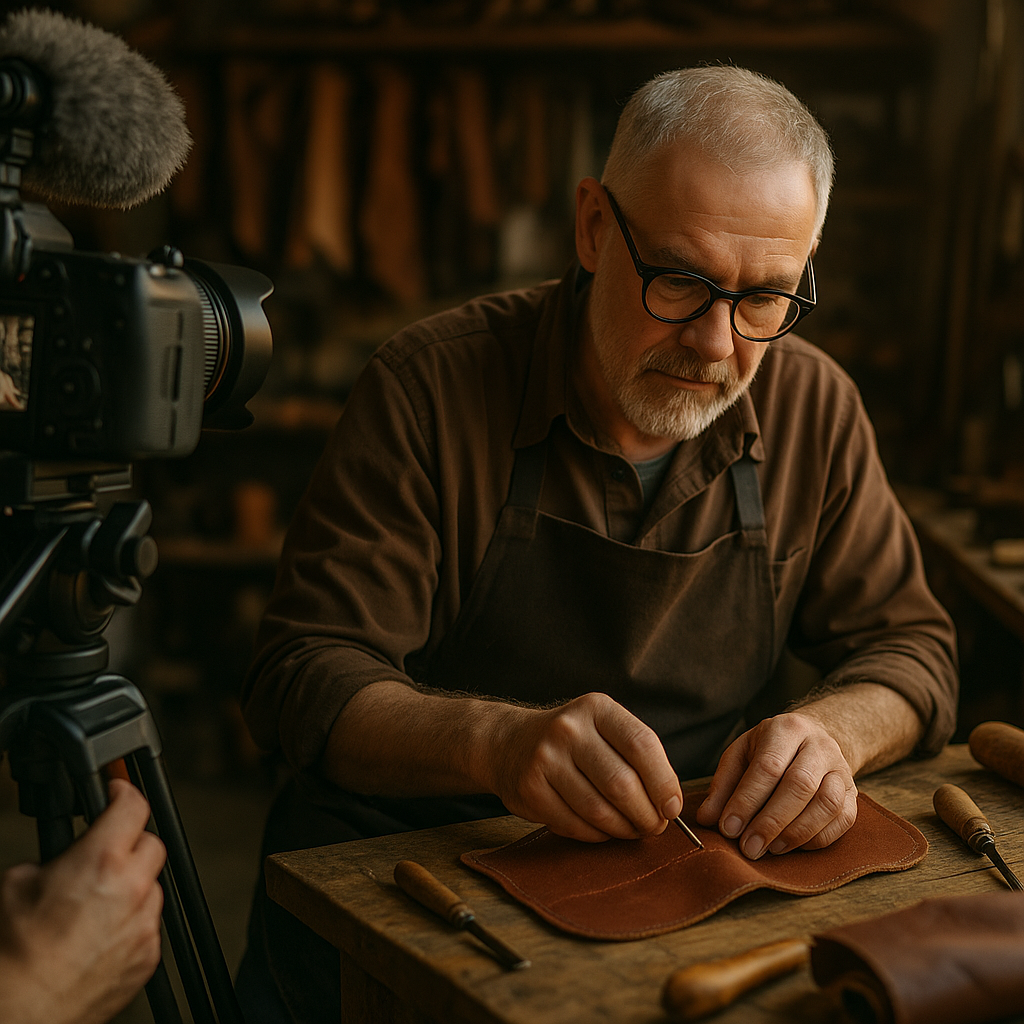
Most heritage brands waste their best asset — provenance — on 30-second ads nobody trusts. A micro-documentary craftsperson format flips that: 90 seconds of unscripted founder and factory footage outperforms polished brand films because it looks like proof, not promotion. Here’s how to structure it, brief it, and keep it FTC-clean.
Why 90 Seconds Beats a 3-Minute Brand Film
Heritage brands love long-form. The problem: nobody finishes a three-minute video on Instagram or TikTok. Sprout Social’s audience research consistently shows completion rates falling off a cliff after the first 15 seconds on short-form platforms, and that cliff gets steeper as runtime climbs. A 90-second cut forces discipline. It’s long enough to show real process — hands stitching leather, dough proofing, metal being poured — but short enough to survive the swipe-away reflex.
The craftsperson format works because it’s structurally honest. You’re not asking a creator to perform enthusiasm for a product they unboxed an hour ago. You’re pointing a camera at someone who has made the same object for fifteen years and letting the work speak. That authenticity reads instantly, even to a scrolling thumb.
A founder-and-factory story doesn’t need a script so much as a sequence — the craft only feels credible if the camera stays where the work actually happens.
The Four-Beat Structure That Actually Works
Forget three-act narrative theory. For a 90-second craftsperson piece, use four beats, each roughly 20-25 seconds:
- Beat 1 — The hands (0:00-0:20): Open on close-up process footage before any face or voiceover. Texture, material, tools. No logo yet.
- Beat 2 — The founder (0:20-0:45): Cut to the person, mid-motion, speaking naturally about why this material or method matters. Avoid a seated interview setup; keep them working.
- Beat 3 — The factory (0:45-1:05): Wide shots of the space, other workers, machinery or benches. This is where scale and legitimacy get established without saying “we’re legit.”
- Beat 4 — The object, finished (1:05-1:30): The product in hand, a name or date stamped, a final line from the founder. End on product, not logo animation.
That’s it. No dramatic score swell, no stock-photo timelapse. The structure mirrors how a trusted local news segment would cover a small manufacturer, and that resemblance is the point.
What Makes Founder Footage Feel Real Instead of Rehearsed
The single biggest failure mode is over-directing the founder. Marketers trained on polished corporate video instinctively want a teleprompter and three retakes. Resist it. Give the founder a prompt, not a script: “Tell me what you were taught about this material by the person who taught you.” Let them answer while their hands keep moving. The slight imperfection — a pause, a laugh, an unfinished sentence — is the credibility signal viewers can’t consciously name but instantly trust.
This is similar in spirit to why ASMR ingredient pour formats work in food and beauty: unmediated process footage builds trust faster than a voiceover claiming quality. The craftsperson format is the heritage-brand cousin of that same principle.
Briefing the Creator or Documentary Partner
Most heritage brands don’t hire a full documentary crew for this. They hire a single videographer, sometimes a creator with a documentary-adjacent aesthetic, and give them a day at the factory. Your brief needs to cover:
- Shot list, not script: List the beats above as required shots, not lines of dialogue.
- Access windows: Specify what hours production actually happens. Shooting an idle factory floor kills the format instantly.
- Founder availability: Book 90 minutes minimum, even for 90 seconds of usable footage. Natural dialogue needs breathing room to emerge.
- Sound priorities: Ambient factory noise (looms, ovens, saws) should stay audible under any voiceover. Silence reads as staged.
- Deliverable cuts: Request a 90-second hero cut plus 15-second and 30-second trims for paid amplification and Stories.
This is the same “one shoot, multiple formats” economics that make sense for any brand watching production budgets. If you haven’t formalized that approach yet, the multi-format creator brief model is worth adapting here, and the package-deal creative brief approach applies almost directly to a factory shoot day.
Where This Format Fits in the Funnel
Don’t mistake this for a top-of-funnel awareness play only. Craftsperson micro-docs perform across the journey:
- Cold audience prospecting: The tactile, unpolished visual style stops the scroll better than studio product shots. Meta’s creative benchmarks have repeatedly shown that native-feeling video outperforms overt ad creative on cost per click; see Meta Business guidance on creative diversity for paid social.
- Consideration and retargeting: Use the 30-second cut as a retargeting asset for cart abandoners. The provenance story answers the “is this worth the price” objection directly.
- Post-purchase and PR: The full 90-second cut becomes evergreen content for product pages, press kits, and wholesale pitch decks. Heritage retailers buying into a brand want the same story a consumer does.
According to eMarketer’s ongoing tracking of short-form video ad spend, brands are shifting budget toward formats with documentary or behind-the-scenes framing precisely because trust-building creative now drives lower funnel performance, not just impressions.
Compliance: Disclosure Doesn’t Disappear Because It’s a Documentary
Here’s where marketers get sloppy. A craftsperson film feels like earned media, so teams sometimes skip disclosure entirely. Don’t. If the brand paid for production, commissioned the creator, or is the subject of the video and it’s running as an ad, FTC endorsement guidance still applies. The FTC’s endorsement guides don’t carve out an exception for documentary style — a sponsored placement is a sponsored placement regardless of how unscripted it looks.
Practical fix: a small on-screen “Paid Partnership” or “Sponsored” tag in the first three seconds, plus a spoken or on-screen mention if the founder is compensated separately from their normal role. If you’re running this through UK audiences, check ICO guidance on advertising transparency as well, since disclosure expectations vary slightly by market.
Teams that have built compliant briefs for other trust-heavy formats already have the muscle memory for this. The same logic that shaped our reverse unboxing format guidance — disclose clearly, but don’t let disclosure kill the authenticity — applies directly to factory documentaries.
The moment a craftsperson film feels like it’s hiding the fact that it’s sponsored, it stops working as trust-building content and starts working as evidence against the brand.
Common Mistakes That Undercut the Format
A few patterns show up repeatedly when brands attempt this and get underwhelming results:
- Too much logo, too early. If the brand mark appears in the first ten seconds, viewers categorize it as an ad and disengage before the craft footage lands.
- Studio lighting on a factory floor. Bringing softboxes and bounce cards into a workshop erases the exact texture that makes the format credible. Shoot with available light wherever safely possible.
- Founder reciting brand copy. If the founder says “artisanal” or “handcrafted with love,” cut it. Real craftspeople rarely use marketing adjectives about their own work.
- No second cut for paid media. A 90-second organic hero cut without a trimmed paid version wastes half the production value.
- Skipping captions. Ambient factory noise plus accented or regional speech patterns means captions aren’t optional — they’re the difference between comprehension and abandonment on muted autoplay.
Brands running heritage or provenance stories alongside price-sensitive messaging should also look at how price-tag reveal formats handle transparency, since craftsmanship claims and pricing claims often get scrutinized together by skeptical audiences.
Measuring Whether It’s Working
Standard video metrics undersell this format if you only watch view counts. Track instead:
- Watch-through to Beat 4: If viewers drop before the finished-product shot, your Beats 1-3 are running long or feel repetitive.
- Saves and shares relative to views: Craftsperson content tends to over-index on saves compared to standard product ads, since viewers treat it as reference material, not entertainment.
- Assisted conversions in retargeting sequences: Compare cart-abandon audiences shown the craftsperson cut versus a standard product retarget ad.
- Wholesale and press pickup: If retail buyers or journalists start requesting the raw footage or full cut for their own coverage, that’s a signal the story has legitimacy beyond paid media.
HubSpot’s content marketing benchmarks generally show that trust-building, narrative-driven video earns disproportionate engagement in mid-funnel nurture sequences compared to product-forward creative, which tracks with what heritage brands report internally once they start testing this format seriously.
Run one 90-second craftsperson cut against your best-performing product ad in a controlled A/B test before committing production budget to a full series — the format either earns its place in your mix on data, or it doesn’t, and you’ll know within two weeks.
FAQs
How long should a founder-and-factory micro-documentary actually be?
Ninety seconds is the sweet spot for paid and organic social distribution. It’s long enough to include four distinct beats (process, founder, factory, finished product) without triggering the drop-off that hits longer brand films on short-form platforms.
Do we need a professional documentary crew, or can a single creator shoot this?
A single skilled videographer or documentary-style creator can produce this format effectively, especially with a strong shot list and a full day of factory access. Full crews add polish but often reduce the raw authenticity that makes the format work in the first place.
Does this format require FTC disclosure if the founder is the brand owner?
Yes, if the content runs as a paid ad or was created as part of a compensated marketing arrangement, standard endorsement disclosure rules apply regardless of the documentary style. Check current guidance directly on ftc.gov before launching a campaign.
How is this different from a standard behind-the-scenes video?
Standard BTS content is usually loosely structured and product-launch adjacent. The craftsperson format follows a deliberate four-beat structure designed for repeatable production and specific funnel placement, from cold prospecting to retargeting to wholesale pitch decks.
What’s the biggest risk in briefing this format wrong?
Over-scripting the founder. The moment dialogue sounds rehearsed or uses marketing language like “handcrafted with passion,” viewers subconsciously downgrade trust in the entire piece, even if the factory footage itself is genuine.
Top Influencer Marketing Agencies
The leading agencies shaping influencer marketing in 2026
Agencies ranked by campaign performance, client diversity, platform expertise, proven ROI, industry recognition, and client satisfaction. Assessed through verified case studies, reviews, and industry consultations.
Moburst

-
2

The Shelf
Boutique Beauty & Lifestyle Influencer AgencyA data-driven boutique agency specializing exclusively in beauty, wellness, and lifestyle influencer campaigns on Instagram and TikTok. Best for brands already focused on the beauty/personal care space that need curated, aesthetic-driven content.Clients: Pepsi, The Honest Company, Hims, Elf Cosmetics, Pure LeafVisit The Shelf → -
3

Audiencly
Niche Gaming & Esports Influencer AgencyA specialized agency focused exclusively on gaming and esports creators on YouTube, Twitch, and TikTok. Ideal if your campaign is 100% gaming-focused — from game launches to hardware and esports events.Clients: Epic Games, NordVPN, Ubisoft, Wargaming, Tencent GamesVisit Audiencly → -
4

Viral Nation
Global Influencer Marketing & Talent AgencyA dual talent management and marketing agency with proprietary brand safety tools and a global creator network spanning nano-influencers to celebrities across all major platforms.Clients: Meta, Activision Blizzard, Energizer, Aston Martin, WalmartVisit Viral Nation → -
5

The Influencer Marketing Factory
TikTok, Instagram & YouTube CampaignsA full-service agency with strong TikTok expertise, offering end-to-end campaign management from influencer discovery through performance reporting with a focus on platform-native content.Clients: Google, Snapchat, Universal Music, Bumble, YelpVisit TIMF → -
6

NeoReach
Enterprise Analytics & Influencer CampaignsAn enterprise-focused agency combining managed campaigns with a powerful self-service data platform for influencer search, audience analytics, and attribution modeling.Clients: Amazon, Airbnb, Netflix, Honda, The New York TimesVisit NeoReach → -
7

Ubiquitous
Creator-First Marketing PlatformA tech-driven platform combining self-service tools with managed campaign options, emphasizing speed and scalability for brands managing multiple influencer relationships.Clients: Lyft, Disney, Target, American Eagle, NetflixVisit Ubiquitous → -
8

Obviously
Scalable Enterprise Influencer CampaignsA tech-enabled agency built for high-volume campaigns, coordinating hundreds of creators simultaneously with end-to-end logistics, content rights management, and product seeding.Clients: Google, Ulta Beauty, Converse, AmazonVisit Obviously →