


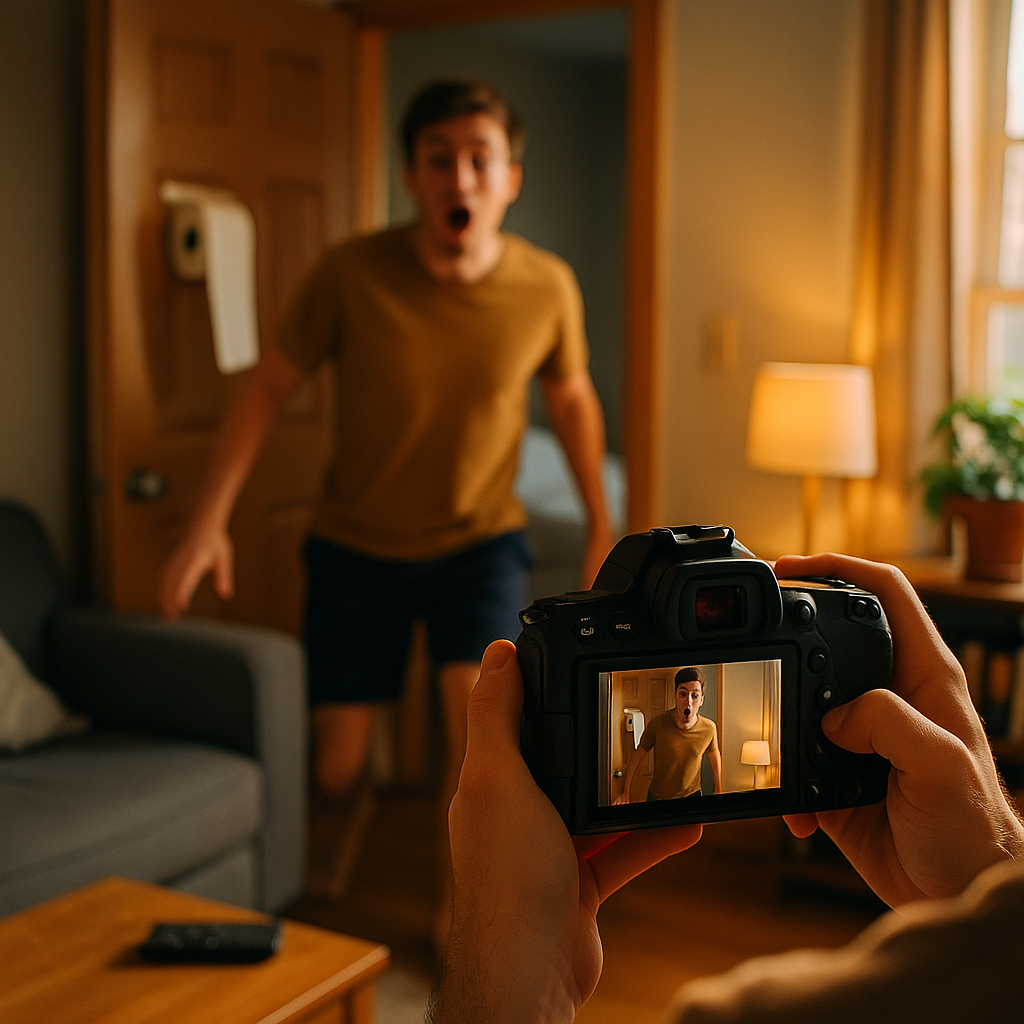
Roommate prank videos rack up billions of views a year, and a growing share now feature a branded product hidden inside the punchline. The roommate prank format works because nobody feels sold to mid-laugh. But brief it wrong, and you get a stiff ad wearing a comedy costume. Here’s how to keep the joke intact while still landing the message.
Why This Format Keeps Outperforming Straight Ads
Prank and reaction content built around domestic life, roommates, siblings, partners, has a built-in advantage: it’s premised on real relationships doing real things. The audience isn’t watching a testimonial. They’re watching two people they’ve followed for months mess with each other, and the product just happens to be the mechanism.
That’s the trick. The mechanism has to actually matter to the gag. A prank where the product is incidental (sitting on a counter, visible but irrelevant) does nothing for recall. A prank where the product causes the joke, its smell triggers a reaction, its packaging fools someone, its function creates the twist, gets remembered because it’s structurally load-bearing.
If you removed the product from the script and the joke still works exactly the same way, you haven’t briefed a roommate prank — you’ve briefed a skit with a prop.
Brands like Liquid Death and Poppi have leaned into this style precisely because their product’s sensory qualities (shock value, unexpected flavor, weird packaging) give creators something to prank around. It’s not an accident. It’s a brief decision made before a single frame is shot.
The Setup Has to Earn the Punchline
Every good prank has three beats: setup, escalation, payoff. Most branded prank videos fail in the setup, either rushing it to get to the product faster, or over-explaining the product before the joke has room to breathe.
The setup should establish stakes that have nothing to do with the brand. Someone’s annoyed roommate. A running bit about who eats whose snacks. A long-standing prank war. The product enters as the tool the prankster reaches for, not the subject of a cutaway demo.
- Setup: Establish the relationship dynamic and the prank’s premise in under five seconds.
- Escalation: Let the product do something visibly surprising, confusing, or funny to the target.
- Payoff: The reaction shot. This is the moment brands must not interrupt with a CTA, a logo card, or dialogue that breaks the fourth wall.
This structure mirrors what we’ve seen work in other reaction-driven formats. The split-screen reaction format succeeds for the same reason: the authenticity of the reaction is the content. Script it too tightly and the reaction reads as fake, which kills both the humor and the trust.
Where Brands Get the Brief Wrong
The single biggest mistake: treating the prank format like a 15-second demo with jokes sprinkled on top. That’s backwards. Comedy has to lead. Product benefit follows.
Marketers used to briefing 15-second demo content often bring the same instinct into prank briefs: list every feature, mandate a close-up of the label, require a spoken benefit statement. That instinct is exactly what breaks comedic pacing. A prank video with a mandated product callout in the middle of the escalation feels like a commercial break in the middle of a bit. Viewers scroll.
Another common failure: casting creators who don’t have an established roommate or duo dynamic. The prank format depends on pre-existing rapport. If two creators are visibly meeting for the first time on camera, the “prank” reads as staged, and staged pranks get called out in comments within hours. Comment-section skepticism is brutal, and rightly so, audiences have gotten good at spotting a paid setup dressed as candid content.
How Much Creative Control Should the Brand Keep?
Less than you’d think, but more than zero. The winning approach is a “guardrails, not scripts” brief:
- Define the non-negotiables: product must be visible for X seconds, must be used correctly (for compliance reasons), disclosure must appear per FTC guidelines.
- Define the comedic premise loosely: “prank involving mistaken identity of the product” rather than a full script.
- Let the creator write the dialogue. Nobody knows their roommate’s actual reactions better than they do.
- Require a rough cut review before publish, not for tone policing, but to confirm claims and disclosures are intact.
This is functionally similar to how smart teams brief GRWM content that doesn’t sound scripted. You’re not writing the performance. You’re defining the boundaries the performance has to stay inside.
The FTC Question Nobody Wants to Answer Mid-Laugh
Here’s the tension: disclosure has to be clear and conspicuous, but a #ad tag jammed into the funniest second of a prank kills pacing. The fix isn’t creative rebellion against compliance, it’s better timing.
Disclosure works best placed in three spots: the caption (always), a verbal or on-screen tag in the first three seconds before the prank premise is established, or a brief tag layered during the setup beat rather than the punchline. What you should never do is rely solely on a bio link or a buried caption hashtag. Platforms and regulators have both tightened expectations here. The FTC’s endorsement guidance is explicit that disclosures need to be unavoidable, not discoverable.
Brands that have handled functional claims carefully in other formats, see our FTC compliance guide for creator briefs, already have review workflows for this. Apply the same rigor here. A prank video making an implied performance claim (“this spray really works, look at his face”) needs the same substantiation backing as a straight testimonial. Comedy doesn’t exempt you from truth-in-advertising standards.
A joke doesn’t dilute a claim’s legal weight. If the punchline implies a benefit, the brand still owns that claim.
What Makes a Prank Shareable Versus Skippable
Completion rate is the metric that matters most for this format, more than likes, more than saves. Sprout Social’s research on short-form engagement consistently shows that videos losing viewers in the first three seconds rarely recover, regardless of how strong the ending is. For pranks, that means the cold open needs a visual hook, a facial expression, a prop reveal, before any premise is even explained.
A few patterns that consistently perform:
- Repetition with variation: the same roommate falls for a similar trick differently each time, building a mini-series audiences return for. This overlaps with the logic behind cliffhanger-driven TikTok series.
- Delayed reveal: viewers know something the target doesn’t, dramatic irony is one of the oldest comedy tools for a reason.
- Genuine surprise: creators who don’t fully brief their roommate on the exact prank get more authentic reactions, though this requires trust and safety planning so nobody’s genuinely upset on camera.
Brands running influencer programs at scale should be tracking these completion curves per creator, not just aggregate view counts. A creator whose pranks consistently hold viewers past the eight-second mark is worth a retainer. One who spikes on the hook and craters by the punchline is a one-off, not a partner.
Measuring ROI Beyond Vanity Views
Views are the easiest metric and the least useful one for this format. What you actually want to track:
- Completion rate as a proxy for whether the comedy landed before the brand message did.
- Comment sentiment, specifically, are viewers laughing at the joke or calling out the placement as forced?
- Saves and shares, which for comedy content correlate more strongly with genuine resonance than likes do.
- Branded search lift in the days following a post, per platforms like eMarketer’s creator-attribution research, which has flagged search lift as an underused signal for comedic and entertainment-first formats.
If you’re building a broader measurement framework across formats, it’s worth reviewing how completion and save metrics stack up against other social-first content types in our format taxonomy and ROI guide.
FAQs
Frequently Asked Questions
What makes the roommate prank format effective for brand marketing?
It borrows credibility from an existing relationship dynamic between creators, which makes the product placement feel incidental rather than promotional. Audiences trust reactions between people who already have real rapport far more than staged testimonials.
How do brands stay FTC compliant without killing the joke?
Place disclosure in the caption and within the first three seconds of the video, ideally during the setup beat rather than the punchline. Avoid burying disclosure in a bio link, and remember that comedic framing doesn’t reduce the substantiation requirement for any implied product claim.
Should brands script the prank dialogue?
No. Define non-negotiables like product visibility duration and correct usage, then let the creator write their own dialogue and reactions. Over-scripted pranks read as fake and get called out quickly in comments.
What metrics matter most for prank-format content?
Completion rate, comment sentiment, and saves/shares matter more than raw view counts. A high view count with a steep drop-off before the punchline signals the joke didn’t land, regardless of how the brand message performed.
How is this format different from split-screen reaction content?
Roommate pranks rely on a pre-existing relationship and a scripted-but-loose premise, while split-screen reactions typically involve a creator reacting to external content or a first-time reveal. Both depend on authentic, unscripted-feeling reactions, but the setup mechanics differ.
The next brief you write for this format should have one rule at the top: if the joke doesn’t survive without the product, you haven’t found the right prank yet. Build the comedy first, let the brand earn its place inside it, and the completion rate will do the selling for you.
Top Influencer Marketing Agencies
The leading agencies shaping influencer marketing in 2026
Agencies ranked by campaign performance, client diversity, platform expertise, proven ROI, industry recognition, and client satisfaction. Assessed through verified case studies, reviews, and industry consultations.
Moburst

-
2

The Shelf
Boutique Beauty & Lifestyle Influencer AgencyA data-driven boutique agency specializing exclusively in beauty, wellness, and lifestyle influencer campaigns on Instagram and TikTok. Best for brands already focused on the beauty/personal care space that need curated, aesthetic-driven content.Clients: Pepsi, The Honest Company, Hims, Elf Cosmetics, Pure LeafVisit The Shelf → -
3

Audiencly
Niche Gaming & Esports Influencer AgencyA specialized agency focused exclusively on gaming and esports creators on YouTube, Twitch, and TikTok. Ideal if your campaign is 100% gaming-focused — from game launches to hardware and esports events.Clients: Epic Games, NordVPN, Ubisoft, Wargaming, Tencent GamesVisit Audiencly → -
4

Viral Nation
Global Influencer Marketing & Talent AgencyA dual talent management and marketing agency with proprietary brand safety tools and a global creator network spanning nano-influencers to celebrities across all major platforms.Clients: Meta, Activision Blizzard, Energizer, Aston Martin, WalmartVisit Viral Nation → -
5

The Influencer Marketing Factory
TikTok, Instagram & YouTube CampaignsA full-service agency with strong TikTok expertise, offering end-to-end campaign management from influencer discovery through performance reporting with a focus on platform-native content.Clients: Google, Snapchat, Universal Music, Bumble, YelpVisit TIMF → -
6

NeoReach
Enterprise Analytics & Influencer CampaignsAn enterprise-focused agency combining managed campaigns with a powerful self-service data platform for influencer search, audience analytics, and attribution modeling.Clients: Amazon, Airbnb, Netflix, Honda, The New York TimesVisit NeoReach → -
7

Ubiquitous
Creator-First Marketing PlatformA tech-driven platform combining self-service tools with managed campaign options, emphasizing speed and scalability for brands managing multiple influencer relationships.Clients: Lyft, Disney, Target, American Eagle, NetflixVisit Ubiquitous → -
8

Obviously
Scalable Enterprise Influencer CampaignsA tech-enabled agency built for high-volume campaigns, coordinating hundreds of creators simultaneously with end-to-end logistics, content rights management, and product seeding.Clients: Google, Ulta Beauty, Converse, AmazonVisit Obviously →