


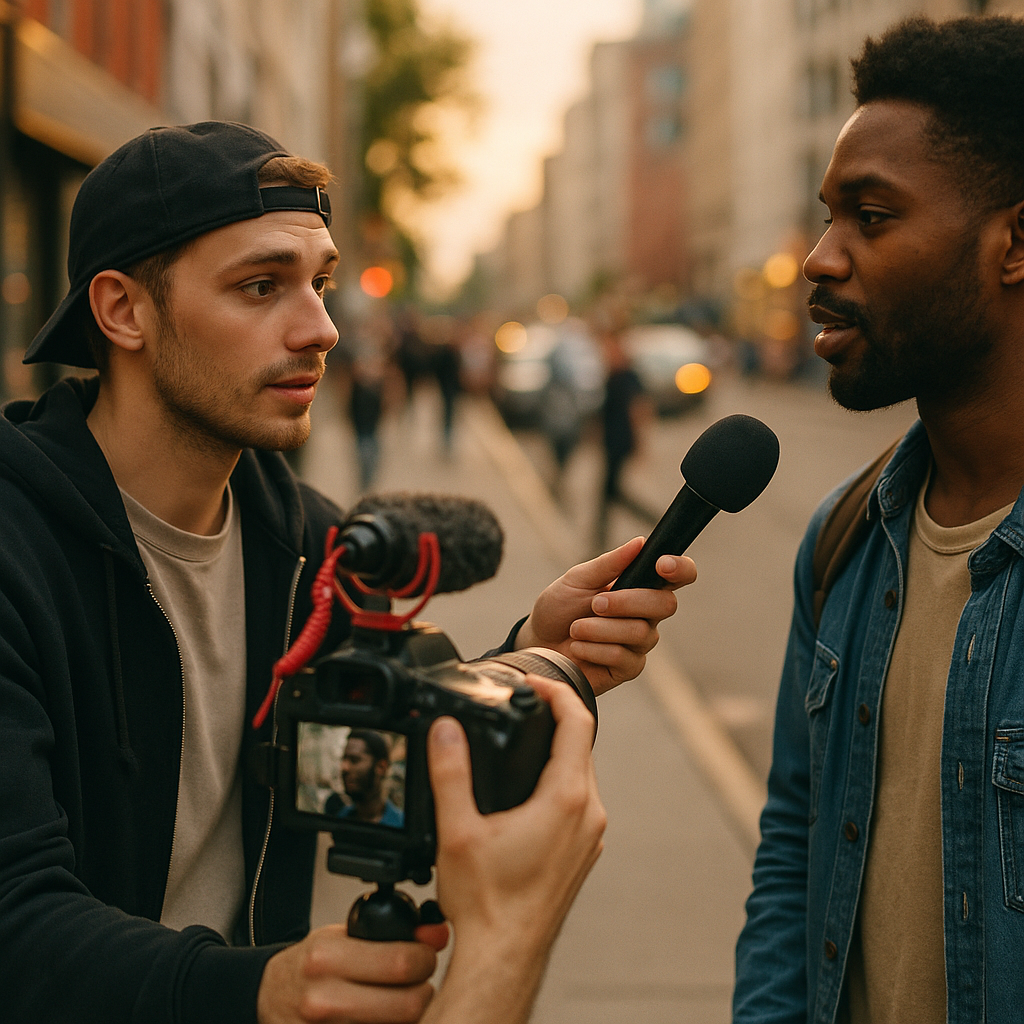
Sixty-three percent of consumers say user-generated content makes them more confident in a purchase decision than branded content. Now imagine that UGC is a stranger on the street, unprompted, telling a camera they actually love your product. That’s the power of the street-interview creator format — and most brands are quietly ruining it with over-briefing.
Why Street-Interview Content Converts (and Why Brands Keep Breaking It)
The vox-pop format works because it mimics the most trusted form of social proof: a real person, caught off-guard, sharing an honest opinion. TikTok’s feed is full of creators stopping strangers outside gyms, malls, and coffee shops to ask about their supplement stacks, skincare routines, or spending habits. When it lands, it feels like eavesdropping on a conversation you weren’t supposed to hear. That friction-free candor is exactly what drives the comment sections that feed the algorithm.
The problem is that brands, understandably nervous about uncontrolled messaging, try to engineer the outcome. They send scripts. They require specific product names. They ask creators to ensure respondents mention the hero SKU. The result is content that looks like a vox-pop but feels like an infomercial. Audiences are sophisticated. They clock the tell immediately, and trust collapses.
The street-interview format lives or dies on perceived spontaneity. Once a viewer suspects the answers are coached, the entire social proof mechanism breaks down — and no production value can rescue it.
What the Brief Should Actually Control (and What It Shouldn’t)
There’s a useful distinction to draw here: format control versus content control. Brands should own the former and surrender the latter almost entirely.
Format control means specifying the visual style (handheld camera, candid setting, natural lighting), the opening question structure, the duration range per clip, caption requirements, and FTC disclosure placement. This is legitimate brief territory. It protects the brand, ensures platform compliance, and gives the creator a clear production framework.
Content control — meaning dictating what respondents say, which product attributes they name, or how they frame their answers — is where briefs become counterproductive. The moment a respondent says something that sounds like a product bullet point, the format fails. Your brief should guide the creator’s questions, not pre-write the public’s answers.
For authentic voice in EGC briefs, the same principle applies: constraints around output format are healthy; constraints around genuine expression are destructive.
The Question Architecture Framework
This is where most brands leave significant value on the table. The questions the creator asks on the street are the single highest-leverage variable in the brief. Get them right and you don’t need scripted answers, because good questions reliably surface the kinds of responses that move buyers.
Structure your question architecture in three tiers:
- Awareness openers: Questions that establish the category context without mentioning the brand. (“What does your morning skincare routine actually look like?” rather than “Have you heard of Brand X?”) These ease respondents in and produce quotable, relatable content.
- Problem-surface questions: Questions designed to surface the pain point your product addresses. (“What’s the one thing you wish your current moisturizer did better?”) These create the implicit demand signal that makes your product’s later mention feel like a logical solution.
- Reaction-capture prompts: If the creator is doing a product reveal or taste test, brief them on how to capture the unfiltered first reaction, not the polished follow-up commentary. The first three seconds of a real reaction are worth more than a 30-second endorsement.
The creator should be given these tiers as a framework, not a rigid script. Let them rephrase questions in their own voice. What matters is the strategic intent behind each question, not the exact wording.
Casting the Creator: Format Fit Over Follower Count
Street-interview content requires a specific creator skill set that has nothing to do with follower count. The creator needs to be comfortable approaching strangers, skilled at reading social cues, and capable of keeping the camera rolling through awkward silences rather than cutting away. These are interviewer skills, not influencer skills. They’re related but not identical.
When evaluating creators for this format, look at their existing street content. Do respondents seem relaxed? Are there genuine pauses and unexpected turns in the conversation, or does every clip feel suspiciously on-message? A creator whose street content looks too polished is probably coaching respondents between takes, which introduces compliance risk on top of authenticity risk.
Also consider the creator’s audience geography. If your product has regional distribution limitations or your target consumer skews to specific markets, the creator’s typical filming locations matter operationally. This is a logistics variable that briefs routinely omit.
FTC Compliance in an Unscripted Format
Here’s where the format creates a genuine compliance wrinkle that brands need to solve before briefing. The street respondents are members of the public, not paid endorsers, so their statements don’t trigger FTC disclosure requirements directly. But the creator is a paid or gifted partner, and the framing device they’re operating within absolutely does.
The disclosure needs to be clear, conspicuous, and positioned before the content creates any commercial impression. That means the creator’s opening frame or caption must establish the sponsored context before the vox-pop clips roll. Burying a disclosure after three compelling testimonial clips is not compliant under current FTC guidelines, and the enforcement posture on influencer content has hardened considerably. Brief this explicitly. Don’t assume creators know the current standard.
For more detail on weaving disclosures into narrative-driven formats without killing the content’s flow, see our coverage of FTC-compliant narrative briefs.
Editing Briefs: The Part Most Brands Forget
The edit is where authentic raw footage either gets preserved or sanitized into oblivion. Your brief needs to address post-production as explicitly as it addresses filming. Specifically:
- Instruct creators to prioritize genuine reaction moments over articulate summary statements. The stumbled “wait, that’s actually really good” beats the composed “I’d definitely recommend this product.”
- Specify that B-roll of respondents reacting (not talking) should be included. These cutaway moments humanize the format.
- Set a maximum clip length per respondent. Keeping individual responses to 8-15 seconds creates pace, prevents over-explanation, and mimics the rhythm of organic vox-pop content that performs well on TikTok’s commerce formats.
- Explicitly prohibit any re-recording or ADR of respondent audio. If a clip is unusable due to audio quality, it gets cut, not re-dubbed.
This level of editorial guidance in a brief is unusual, but it’s necessary precisely because the format’s value is in its rawness. Creators who come from polished content backgrounds will instinctively smooth out the rough edges. Your brief needs to tell them not to.
If you’re thinking about how this content gets repurposed across platforms after the primary drop, multi-platform repurposing strategy is worth building into the production plan from the start.
Measuring What Actually Matters
Street-interview content performs differently from standard influencer content, and your measurement framework needs to reflect that. Reach and impressions are table stakes. The metrics that tell you whether the format is driving social commerce trust are:
- Save rate: Saves indicate intent and future reference. A high save rate on a vox-pop clip means viewers found it genuinely useful, not just entertaining.
- Comment sentiment on respondents: Are viewers commenting on the strangers in the video (“she’s so right” / “this is literally me”) rather than on the creator? That’s a signal the format is working as social proof, not just as entertainment.
- Link-in-bio or swipe-up conversion rate: If the content is doing its job, it should move traffic with higher intent than a standard sponsored post. Track this against your baseline.
- Organic reshare rate: Genuine vox-pop content gets reshared by viewers who want their own followers to see it. Scripted vox-pop content doesn’t. The reshare delta between campaigns is a useful authenticity proxy.
Comment sentiment analysis on street-interview content is underused as a quality signal. When viewers are talking about the strangers in the video rather than the creator, the format has done something rare: it’s made the audience feel like witnesses, not targets.
For brands running social commerce conversion goals, pairing vox-pop content with shoppable formats compounds the effect. The social commerce brief frameworks on this site cover how to structure those integrations without compromising the content’s organic feel. Additionally, platforms like Sprout Social and HubSpot offer sentiment tracking tools that can automate comment analysis at scale, which is practical when running multi-creator vox-pop campaigns simultaneously.
One more practical note: if you’re producing street-interview content in public spaces, check local filming ordinances. Several major cities require permits for commercial filming even when conducted by individuals with handheld equipment. Brief creators on this, because a compliance failure here doesn’t just create legal exposure — it creates content you can’t actually publish.
Your immediate next step: Take your current creator brief template and identify every line that specifies what respondents should say or imply. Delete it. Replace it with question architecture that surfaces the same insight organically. That single edit will do more for your vox-pop conversion rate than any production upgrade.
Frequently Asked Questions
What is a vox-pop creator format in influencer marketing?
A vox-pop creator format involves a content creator filming candid, unscripted interviews with members of the public, typically in street or public settings, to capture genuine reactions and opinions about a product, trend, or topic. Brands use this format because it generates authentic social proof that converts more effectively than polished branded content.
How should brands brief creators for street-interview content without over-controlling it?
Brands should control format variables such as visual style, filming location type, question framework, edit pacing, and disclosure placement, but should avoid scripting respondent answers or specifying which product attributes must be mentioned. The brief should provide a tiered question architecture that guides the creator’s interviewing strategy without predetermining public responses.
Do street-interview respondents need to provide FTC disclosures?
Members of the public who are not paid or gifted by the brand do not typically trigger FTC endorsement disclosure requirements for their individual statements. However, the creator who is compensated or gifted must clearly disclose the commercial relationship before the content creates any commercial impression. Brands should brief this requirement explicitly and ensure disclosure appears before the vox-pop clips begin.
What creator skills matter most for the street-interview format?
The most important skills are the ability to approach strangers comfortably, read social dynamics in real time, ask follow-up questions naturally, and keep filming through pauses and unexpected responses. These are interviewing skills distinct from typical influencer content skills. Brands should evaluate creators’ existing street content for these qualities rather than defaulting to follower count.
Which metrics best measure whether street-interview content is building social commerce trust?
The most useful metrics are save rate, comment sentiment about the respondents (not just the creator), link conversion rate compared to standard sponsored content baselines, and organic reshare rate. High reshare rates in particular serve as a proxy for perceived authenticity, since audiences rarely reshare content that feels staged or scripted.
Can street-interview content be repurposed across platforms?
Yes, but the repurposing strategy should be built into the production brief from the start. Raw footage can be edited into different lengths and formats for TikTok, Instagram Reels, YouTube Shorts, and even used as social proof assets in paid campaigns. However, ensure that FTC disclosures are updated appropriately for each platform’s specific format requirements.
Top Influencer Marketing Agencies
The leading agencies shaping influencer marketing in 2026
Agencies ranked by campaign performance, client diversity, platform expertise, proven ROI, industry recognition, and client satisfaction. Assessed through verified case studies, reviews, and industry consultations.
Moburst

-
2

The Shelf
Boutique Beauty & Lifestyle Influencer AgencyA data-driven boutique agency specializing exclusively in beauty, wellness, and lifestyle influencer campaigns on Instagram and TikTok. Best for brands already focused on the beauty/personal care space that need curated, aesthetic-driven content.Clients: Pepsi, The Honest Company, Hims, Elf Cosmetics, Pure LeafVisit The Shelf → -
3

Audiencly
Niche Gaming & Esports Influencer AgencyA specialized agency focused exclusively on gaming and esports creators on YouTube, Twitch, and TikTok. Ideal if your campaign is 100% gaming-focused — from game launches to hardware and esports events.Clients: Epic Games, NordVPN, Ubisoft, Wargaming, Tencent GamesVisit Audiencly → -
4

Viral Nation
Global Influencer Marketing & Talent AgencyA dual talent management and marketing agency with proprietary brand safety tools and a global creator network spanning nano-influencers to celebrities across all major platforms.Clients: Meta, Activision Blizzard, Energizer, Aston Martin, WalmartVisit Viral Nation → -
5

The Influencer Marketing Factory
TikTok, Instagram & YouTube CampaignsA full-service agency with strong TikTok expertise, offering end-to-end campaign management from influencer discovery through performance reporting with a focus on platform-native content.Clients: Google, Snapchat, Universal Music, Bumble, YelpVisit TIMF → -
6

NeoReach
Enterprise Analytics & Influencer CampaignsAn enterprise-focused agency combining managed campaigns with a powerful self-service data platform for influencer search, audience analytics, and attribution modeling.Clients: Amazon, Airbnb, Netflix, Honda, The New York TimesVisit NeoReach → -
7

Ubiquitous
Creator-First Marketing PlatformA tech-driven platform combining self-service tools with managed campaign options, emphasizing speed and scalability for brands managing multiple influencer relationships.Clients: Lyft, Disney, Target, American Eagle, NetflixVisit Ubiquitous → -
8

Obviously
Scalable Enterprise Influencer CampaignsA tech-enabled agency built for high-volume campaigns, coordinating hundreds of creators simultaneously with end-to-end logistics, content rights management, and product seeding.Clients: Google, Ulta Beauty, Converse, AmazonVisit Obviously →