


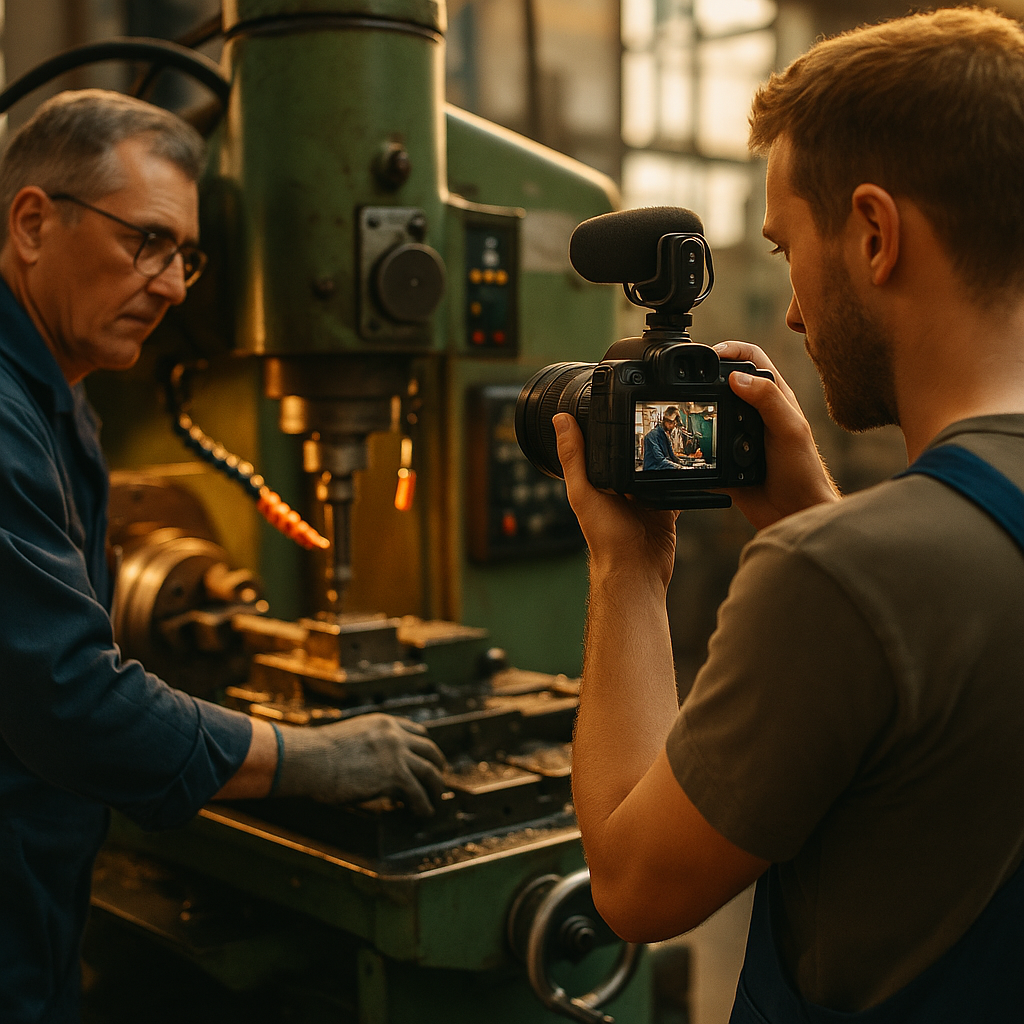
In 2025, many industrial brands are discovering that trust is built face to face—even when buyers never visit the factory. This case study shows how a traditional manufacturer using video to humanize its brand can shorten sales cycles, improve recruiting, and reduce price pressure without sacrificing technical credibility. The shift is simple, but the execution is not—so what actually worked?
Industrial video marketing: The manufacturer, the market, and the problem
Company profile (anonymized for confidentiality): A mid-sized, family-owned manufacturer of precision metal components supplying OEMs in automotive, industrial equipment, and energy. The business runs high-mix, low-to-medium volume production with strict quality requirements and long customer relationships.
Context in 2025: The company’s buyers had changed. Engineering and procurement teams still demanded tolerances, certifications, and lead-time reliability, but they increasingly researched suppliers online before ever taking a call. Competitors were publishing product pages, CAD assets, and polished “factory tour” videos that made them feel larger and more modern.
The problem: The manufacturer’s website was technically accurate but emotionally flat. It showed machines and parts, not people. Sales heard the same objections:
- “You look small—can you really scale?”
- “We don’t know your quality culture.”
- “Your quote is higher—what makes you safer?”
Recruiting had its own friction. Candidates asked, “What’s it like to work there?” but the company’s online presence didn’t answer in a credible way.
Goal: Build trust earlier in the buying journey and reduce perceived risk by showing the humans behind the process—without drifting into generic brand fluff.
Humanizing manufacturing brand: The strategy that made credibility feel personal
The leadership team decided that the brand didn’t need to “look cool.” It needed to feel knowable. The strategy anchored on one principle: use video to translate expertise into trust. That meant showcasing decisions, standards, and accountability—through people.
Audience-first messaging: The team mapped three decision groups and the questions each group asks:
- Engineers: “Can you hold tolerance? What’s your process control? How do you handle change requests?”
- Procurement: “Are you stable? Are you responsive? What reduces supply risk?”
- Operations leaders: “Will you deliver on time? Can you communicate issues early?”
Content pillars: The manufacturer built a small library of videos around five pillars that answered those questions directly:
- Meet the experts: short profiles of quality, engineering, and production leaders explaining how they prevent defects.
- Process proof: step-by-step visuals of inspection, traceability, calibration, and nonconformance handling.
- Customer outcomes: anonymized case vignettes showing problems solved (material swaps, tolerance stack-ups, lead-time recovery).
- Plant reality: guided tours that show cleanliness, organization, safety practices, and key equipment.
- Workplace truth: recruiting videos featuring operators and apprentices describing training and advancement.
Why this humanizes without weakening authority: Humanization in manufacturing is not about jokes, trends, or viral edits. It is about accountability—viewers see who owns quality, who approves changes, and who responds when something goes wrong.
Follow-up question readers often ask: “Won’t video expose too much?” The company addressed this by filming operationally, not competitively: no proprietary customer parts in close-up, no sensitive machine settings, and no whiteboards with order data.
B2B manufacturing video content: Formats, scripts, and production workflow
The company kept production lean and repeatable. Instead of chasing one expensive flagship film, it built a system that could generate useful videos monthly.
Core formats (with practical lengths):
- Trust builders (60–120 seconds): “Meet the Quality Manager,” “How we handle first article inspection,” “What happens when a part is out of spec.”
- Sales enablement clips (30–60 seconds): single-topic answers sales reps can send after a call, such as “Our standard lead times” or “How we support PPAP documentation.”
- Deeper explainers (3–6 minutes): process walkthroughs, capability explanations, and “day in the life” roles for recruiting.
- Customer reassurance updates (under 60 seconds): short messages from production leadership during peaks, explaining planning and communication cadence.
Script approach that preserves authenticity: The team used bullet scripts rather than word-for-word reads. Each video followed a consistent structure:
- Problem: name the buyer concern in plain language.
- Proof: show the process, equipment, or documentation that addresses it.
- People: identify who owns the step and why they care.
- Next step: invite a call, a plant visit, or a capability review.
Production workflow:
- Pre-production: 45-minute internal interview to surface real stories and decide what can be shown safely.
- Filming: one half-day per month, capturing multiple videos in one session plus b-roll.
- Review: quality and compliance review to avoid customer identifiers and unsafe demonstrations.
- Publishing: website, YouTube, LinkedIn, and email follow-ups from sales.
Answering another follow-up: “Do buyers actually watch?” They do when the video is specific. Generic “we care about quality” statements were avoided. Every clip answered a single question a buyer already has.
Video content for manufacturers: Distribution that supports the entire buyer journey
Publishing videos is not the same as using them. This manufacturer treated video as a sales and recruiting asset, not just marketing output.
Where videos lived (and why):
- Capability pages: each key capability page embedded a relevant proof video (“CNC machining inspection flow,” “Material traceability explained”).
- RFQ response emails: sales added one video link per email, matched to the prospect’s risk concern.
- Quote follow-ups: if price pressure appeared, sales sent a “what you’re buying” video featuring quality leadership and on-time delivery practices.
- Recruiting pages: role-specific videos reduced back-and-forth questions and improved candidate fit.
- LinkedIn posts: short clips introduced team leads and shop-floor improvements, building familiarity over time.
How they avoided “content sprawl”: The team built a simple library with tags by persona (engineering/procurement/operations/candidates) and by topic (quality, lead time, capacity, onboarding, safety). Sales could find the right asset in under a minute.
On-site trust signals: Each embedded video included a short text summary below it. This helped accessibility, reinforced the key points for scanning readers, and supported SEO by clarifying relevance.
Internal adoption: The sales manager ran monthly “video picks” where reps shared which clips helped in conversations. This created feedback loops and prevented the library from becoming a forgotten folder.
Manufacturing brand trust: EEAT in action—proof, expertise, and responsible transparency
Humanizing works best when it strengthens credibility. The company followed EEAT principles by making expertise verifiable and the content accountable.
Experience: Videos featured the people who actually do the work—quality technicians, production supervisors, manufacturing engineers. They spoke from direct responsibility, not brand scripts.
Expertise: Technical claims were tied to tangible practices: inspection stages, calibration routines, process documentation, training, and problem-solving cadence. When a term like “traceability” appeared, the video showed how traceability is recorded and used.
Authoritativeness: Instead of claiming “industry-leading,” the company demonstrated what it does: how nonconformances are handled, how corrective actions are tracked, and how changes are approved. It also added short bios on the website pages hosting the videos, highlighting years in role and areas of specialization.
Trustworthiness:
- No exaggerated promises: Lead times were described as ranges with the factors that influence them.
- Clear disclaimers: Where processes vary by customer requirements, the video said so directly.
- Safety and privacy controls: Filming guidelines prevented exposure of sensitive customer data and reinforced shop-floor safety.
How they handled difficult topics: One of the most effective videos was “What happens when we miss something.” It explained containment, communication, corrective action, and what the customer receives. That single video reduced fear more than ten upbeat brand messages.
Manufacturing video ROI: Outcomes, metrics, and what changed in sales and hiring
The company set measurable targets before launch and tracked performance across marketing, sales, and HR. Instead of obsessing over views alone, it focused on evidence of reduced friction.
Primary metrics used:
- Sales cycle indicators: fewer repetitive qualification calls, faster movement from first meeting to plant visit, and improved quote-to-meeting conversion.
- Deal risk indicators: fewer “are you too small?” objections and fewer stalled deals due to “unknown supplier” concerns.
- Website engagement: higher time on capability pages that embedded proof videos, and more contact form submissions from those pages.
- Recruiting: higher completion rates on job applications and better-qualified candidates citing specific videos in interviews.
What changed operationally:
- Sales conversations became more technical, faster: prospects arrived with better questions, which reduced early-stage uncertainty.
- Quality team gained influence: quality leadership became a visible part of the brand, reinforcing confidence for regulated and high-risk programs.
- Employer brand became specific: candidates referenced training, mentorship, and safety practices they saw, not vague impressions.
What did not work at first: A few early videos tried to cover too much. Engagement improved after they narrowed each video to one buyer question and added a clear next step.
A practical takeaway on ROI: In B2B manufacturing, the biggest return often shows up as reduced perceived risk. Video helps prospects feel they know how you operate before they commit to a site visit or a long qualification process.
FAQs: Traditional manufacturers using video to humanize
What types of videos work best for a traditional manufacturer?
Start with “process proof” and “meet the expert” videos. Buyers want to see how you inspect, how you document, and who is accountable. Add customer outcome vignettes once you can anonymize details responsibly.
How long should manufacturing videos be in 2025?
Most trust-building clips perform well at 60–120 seconds when they answer one question. Use 3–6 minutes for walkthroughs that prospects will watch after initial interest, such as inspection flows or onboarding for new hires.
Do we need professional production, or can we film internally?
You can film internally if audio is clean, lighting is safe, and the message is specific. Many manufacturers use a hybrid approach: internal filming with a repeatable setup, plus occasional professional shoots for flagship content.
How do we avoid revealing proprietary information?
Create filming rules: no customer part close-ups, no order boards, no screens with data, and no sensitive machine settings. Film people, processes, and general equipment context. Add a review step with quality and operations before publishing.
Where should we publish manufacturing videos for the best results?
Embed them on the exact capability and quality pages where buyers evaluate risk. Then use them in sales follow-ups and RFQ responses. Social channels help discovery, but website placement and sales enablement usually drive the highest business impact.
How do we measure whether video is improving trust?
Track leading indicators: fewer basic qualification questions, higher quote-to-meeting conversion, increased time on key pages, and prospects referencing videos on calls. In recruiting, track application completion and interview quality.
Video can make a traditional manufacturer feel accessible without diluting technical authority. By building short, specific clips that show real people owning real processes, this company reduced perceived risk across sales and hiring. In 2025, buyers reward clarity and accountability more than polish. The takeaway: film what you do, explain why it matters, and let your experts speak.