


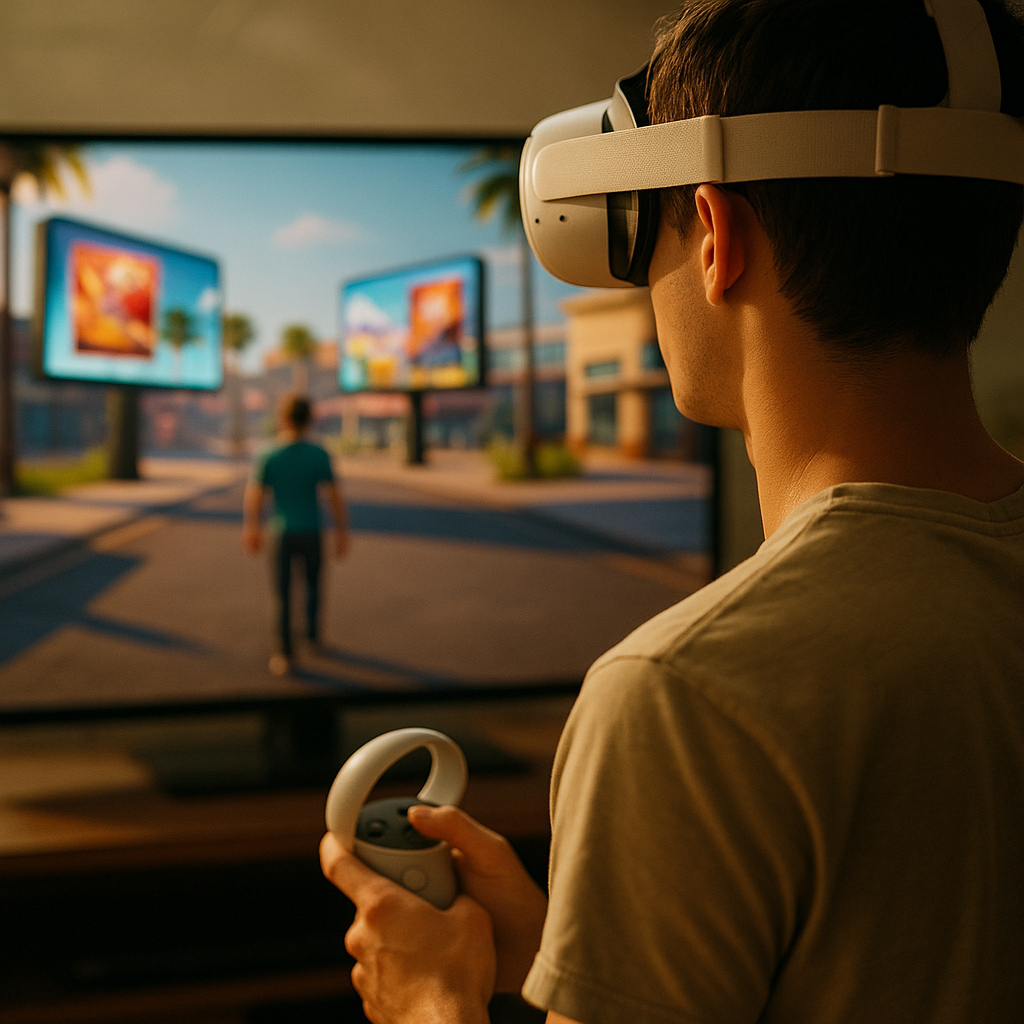
In 2025, brands want attention inside calm, social, and exploratory digital spaces where people spend real time. This playbook explains how to plan, build, and measure in game billboards in non combat virtual worlds without breaking immersion or trust. You’ll learn formats, targeting, creative rules, and measurement that respects players and platforms—plus what to avoid. Ready to turn scenery into strategy?
Non-combat virtual worlds: context-first advertising
Non-combat virtual worlds prioritize presence over pressure. Players gather, build, trade, roleplay, attend events, and explore. That changes how billboards should work: you are not “interrupting a match,” you are becoming part of a place. Effective campaigns start with the world’s core loop and social norms.
Start with three questions:
- Why are people here? (creation, socializing, collecting, identity expression, events)
- Where does attention naturally flow? (transport hubs, plazas, marketplaces, venues, onboarding zones)
- What does the world’s aesthetic promise? (cozy, futuristic, minimalist, whimsical, realistic)
Billboards perform best when they reinforce those motivations. In a marketplace hub, promote an offer tied to trading or customization. Near a venue, highlight a schedule or a creator collaboration. In exploration zones, use curiosity-driven creative (short copy, strong iconography, waypoint-style prompts) rather than hard-selling.
Define acceptable immersion levels early. Some worlds welcome “real-world” signage as urban texture; others prefer lore-friendly brand integrations (e.g., “sponsored by” phrasing that matches the world’s voice). Ask the platform for its ad policy, creator guidelines, and moderation standards before you design anything. This protects your campaign and signals respect for the community.
In-game billboard placements: visibility without disruption
Placement strategy determines whether a billboard feels helpful or intrusive. In non-combat settings, players often move slowly and linger, so you can prioritize readability, repeat exposure, and scenic fit rather than fast reaction time.
High-performing placement categories:
- Arrival points: spawn areas, tutorials, transit stops, portals, elevators
- Social anchors: town squares, lounges, cafés, guild halls, community noticeboards
- Commerce corridors: markets, storefront streets, crafting zones, trading posts
- Event infrastructure: stages, queues, ticket kiosks, photo spots, after-parties
- Wayfinding surfaces: directional signs, maps, district markers
A placement checklist that prevents backlash:
- Keep sightlines clean: don’t block scenic vistas, roleplay areas, or creator showcases.
- Match scale to environment: oversized ads can feel like takeover; choose proportions consistent with nearby signage.
- Respect personal spaces: avoid placing ads in private housing, intimate hangouts, or sensitive community areas unless explicitly opted in.
- Limit frequency: repetition helps recall, but clutter kills trust. Use fewer, better locations.
Answering a common follow-up: “Should we buy the biggest billboard?” Not by default. The best unit is often the one placed at a natural pause point (queue, map, lounge) where players have seconds—not milliseconds—to notice, understand, and act.
Brand safety and governance: rules, review, and transparency
In 2025, brand safety is not only about avoiding objectionable content; it also includes protecting players from deceptive design, poor disclosure, and unsafe targeting. In non-combat worlds, communities can be tight-knit, and reputational damage spreads quickly.
Set governance before launch:
- Platform policy alignment: confirm ad categories allowed, disclosure requirements, data practices, and restrictions around minors.
- Creative review workflow: pre-approve assets, translations, and any interactive elements. Define who can update live creatives and how rollback works.
- Moderation escalation: agree on response times for reports, what triggers takedown, and how you communicate changes to the platform and creators.
Transparency and trust:
- Clear labeling: if the platform requires “Sponsored” indicators or ad markers, comply consistently.
- Respect community standards: avoid shock tactics, manipulative countdowns, and misleading “system message” styling.
- Age-appropriate messaging: when an audience may include minors, keep creative and calls-to-action suitable and avoid restricted categories.
EEAT principle in practice: document your ad policies, approval steps, and measurement approach. When stakeholders ask, you can show exactly how you controlled risk, ensured compliance, and protected users.
Creative best practices: immersive design that earns attention
In-game billboards succeed when they look like they belong. That does not mean hiding your brand; it means expressing it in a way that fits the world’s visual language and the player’s mindset.
Design for legibility at distance:
- Short headline: 3–7 words that communicate one idea.
- Strong contrast: readable against the environment’s lighting and color palette.
- Single focal point: one product, one hero visual, one promise.
- Stable animation: avoid rapid flicker; use slow, purposeful motion if animated.
Design for the non-combat tempo:
- Information players can use: event times, location cues, creator drops, limited editions, or “visit this district” prompts.
- World-friendly tone: align copy with the community’s style (cozy, playful, aspirational, practical).
- Photo-worthiness: billboards near photo spots can become shareable backdrops when they add aesthetic value.
Creative formats to consider:
- Static signage: simplest, safest, lowest performance risk.
- Dynamic rotation: time-of-day or event-based swaps; useful for live ops.
- Contextual variants: different creatives by district theme or venue type.
- Interactive but optional: “Scan/visit/collect” prompts that require deliberate player action, not forced pop-ups.
Answering the follow-up: “Do we need interactivity to perform?” Not necessarily. In non-combat worlds, a well-placed static billboard with clear value can outperform gimmicks. Use interactivity when it adds genuine utility, like a waypoint to a sponsored event or a voluntary info panel.
Targeting and measurement: privacy-respecting performance
Measurement in virtual worlds can be powerful, but it must be credible and privacy-aware. Players and platforms increasingly scrutinize tracking, especially when audiences may include younger users. Build a plan that delivers actionable insights without over-collecting data.
Choose targeting that fits the medium:
- Contextual targeting: by district type (market vs. venue), activity (crafting area vs. social hub), or event attendance.
- Time-based targeting: align with peak social hours, scheduled concerts, seasonal festivals, or creator drops.
- Geo-style targeting: by server/region where supported, keeping messaging culturally appropriate.
Core KPI framework:
- Opportunity to see (OTS): counted via proximity and view angle thresholds.
- Viewable impressions: exposure meeting minimum time-in-view criteria (define this with the platform).
- Dwell time: seconds spent within a viewable zone; crucial in non-combat spaces where lingering is common.
- Engagement actions: voluntary clicks, teleports, QR scans, saves, or coupon claims where available.
- Brand lift: in-world surveys or platform-run studies for recall and favorability.
Make attribution realistic:
- Use clean calls-to-action: short URLs, unique codes, or platform-native destination links.
- Separate awareness vs. conversion: billboards often drive discovery; conversions may happen later on web or in-app.
- Run controlled tests: A/B creative, holdout regions, or time-sliced experiments to isolate impact.
Answering the follow-up: “How do we prove ROI if users don’t click?” Combine dwell and viewability metrics with lift studies and incrementality tests. In non-combat worlds, influence frequently appears as increased visits to a location, higher event attendance, or improved brand consideration—not immediate clicks.
Operations and optimization: launch, iterate, and scale
Billboards in live virtual worlds behave more like live media than static out-of-home. Lighting changes, crowd patterns shift, and events create spikes. Plan for iteration from day one.
Pre-launch checklist:
- Technical validation: confirm texture resolution, compression, loading behavior, and performance impact.
- Lighting pass: test readability across day/night cycles and weather effects if present.
- Localization: translate copy and verify line breaks, character limits, and cultural nuance.
- Moderation readiness: ensure reporting paths and rapid takedown procedures are active.
Optimization rhythm:
- Week 1: confirm delivery, viewability, and placement heatmaps; fix readability issues fast.
- Week 2–3: rotate creative based on dwell and recall; shift inventory to higher-intent districts.
- Ongoing: align creatives with world events, creator partnerships, and seasonal moments.
Scaling without losing quality:
- Create a billboard style system: templates for typography, safe areas, contrast rules, and tone.
- Maintain an asset library: approved logos, taglines, world-adapted variants, and event modules.
- Standardize measurement: consistent definitions for viewability and dwell enable fair comparisons.
Practical warning: don’t let optimization turn into visual spam. Adding more units can reduce overall effectiveness by lowering community sentiment and making the world feel commercialized. Aim for “ambient presence,” not saturation.
FAQs
What makes in-game billboards different in non combat virtual worlds?
Players move slower, socialize more, and spend longer in hubs. That makes readability, aesthetics, and dwell time more important than rapid-response clicks. Ads should feel like part of the environment, not a disruption.
How many billboard placements should a campaign start with?
Start with a small set of premium locations (often 3–10) tied to natural attention points like plazas, markets, and event venues. Validate viewability and sentiment before expanding.
Are animated billboards better than static?
Not automatically. Subtle animation can improve noticeability, but overly bright or fast motion harms immersion and may trigger platform restrictions. Use animation only when it adds clarity or world-building.
How do we ensure brand safety in user-generated worlds?
Use platform-approved inventory, require pre-moderated placement zones, set strict creative guidelines, and agree on takedown and escalation procedures. Prefer contextual targeting over personal profiling when possible.
What metrics matter most if players don’t click?
Track viewable impressions, dwell time, visits to sponsored destinations, event attendance lift, and brand lift studies (recall/favorability). Add incrementality tests to prove impact beyond correlation.
Can in-game billboards work for small budgets?
Yes. Focus on one world, one district, and one clear objective (e.g., event attendance). Use a strong static creative, measure dwell and visits, then scale only after you find a repeatable placement pattern.
In 2025, in-game billboards in non combat virtual worlds work best when they respect the setting, deliver useful context, and measure outcomes responsibly. Choose placements where players naturally pause, design creatives that match the world’s aesthetic, and run governance that protects communities and brands. Combine viewability, dwell, and lift to prove value. Build for trust first, and performance follows.