


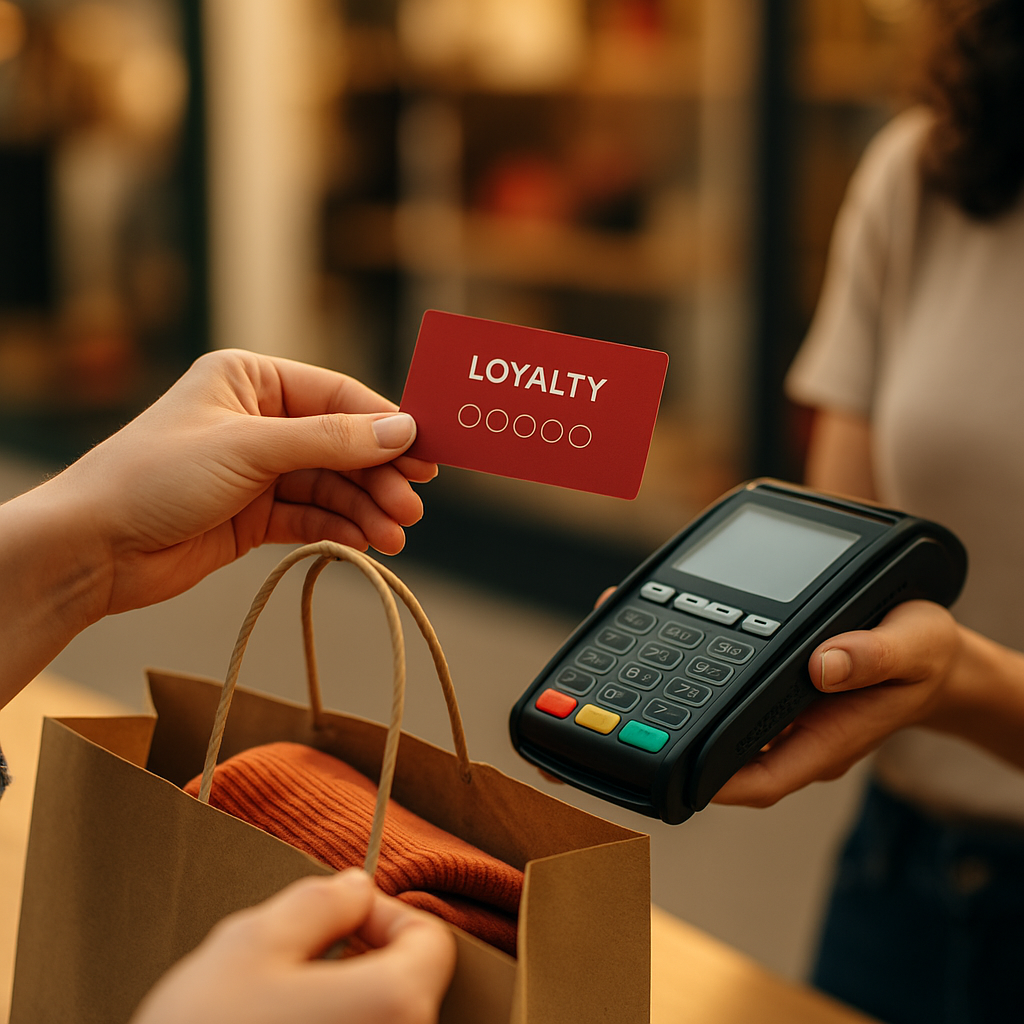
In 2025, loyalty leaders are shifting from big, infrequent perks to rewards that match how people actually shop. This case study shows how a legacy retailer used Inchstone rewards to reduce churn, increase repeat purchases, and rebuild trust with customers who had grown indifferent to points. The strategy relied on small, provable wins—and a measurement plan that made improvements undeniable. What changed first?
Retention strategy for a legacy retailer: the business problem to solve
The retailer in this study (a long-established national chain with both stores and e-commerce) faced a familiar mix of headwinds: rising acquisition costs, lower foot traffic in some regions, and loyalty fatigue. Their existing points program looked strong on paper—millions of members and frequent promotional emails—but performance told a different story.
Three issues stood out:
- Rewards felt distant. Customers needed several purchases before seeing tangible value, which increased drop-off after the first or second order.
- Discounting trained behavior. Members waited for big offers, reducing margin and making full-price purchases rarer.
- One-size-fits-all incentives. A household essentials shopper and a seasonal buyer received the same messages and thresholds, which weakened relevance.
Leadership aligned on a clear goal: boost retention without escalating discount spend. That meant changing the reward experience, not just increasing the reward amount. The loyalty team proposed “inchstones”—small milestones that create forward motion and measurable habit-building.
Customer loyalty program redesign: what “Inchstone” Rewards are and why they work
Inchstone Rewards are designed around the psychology of progress: customers respond when they can see themselves moving toward a benefit with minimal effort. Instead of only rewarding “big events” (like hitting a high points threshold), inchstones create micro-milestones that unlock frequent, low-friction value.
For this retailer, Inchstone Rewards were built on five principles:
- Visible progress. Customers saw a simple progress bar toward the next micro-reward, updated in real time in app and at checkout.
- Fast time-to-value. New members could earn a meaningful reward within the first one to two purchase occasions.
- Choice over blanket discounts. Rewards could be applied to categories that mattered to each shopper (e.g., household, beauty, kids, home), limiting margin leakage.
- Behavior-based milestones. The program rewarded actions that predict retention (second purchase, replenishment cadence, app engagement) rather than just spend.
- Fairness and clarity. Terms were plain-language, with no “gotchas” about exclusions that would erode trust.
In 2025, customers also expect programs to respect their attention. The retailer removed redundant loyalty emails and shifted to event-driven messages (e.g., “You’re one purchase away from your next inchstone”). This reduced noise while increasing relevance—an important step for long-term retention.
Likely question: isn’t this just “gamification”? The team avoided superficial game mechanics and focused on practical utility. Inchstones were positioned as shopping accelerators—helpful nudges that delivered predictable savings and convenience, not gimmicks.
Incremental rewards implementation: step-by-step rollout and operations
The retailer treated this as a business transformation, not a marketing refresh. They ran a structured rollout across digital and store channels to minimize disruption and maximize learning.
Step 1: Define milestone journeys by segment. Using first-party purchase history and channel preference, the loyalty team created four journeys:
- New members: incentivize the second purchase quickly.
- Core repeat shoppers: reinforce cadence and category expansion.
- Lapsed members: reduce reactivation friction with a short path to value.
- High-value members: shift benefits from discounts to service perks (priority support, free alterations, extended returns) where margin impact is lower.
Step 2: Select inchstones that predict retention. The analytics team tested which behaviors correlated most strongly with repeat purchasing. The first inchstones emphasized:
- Completing profile preferences (to improve personalization accuracy)
- Opting into digital receipts (to connect store purchases to accounts)
- Second purchase within a defined window
- Replenishment purchase in a key category
Step 3: Build a “rewards wallet” that works everywhere. A common failure point in legacy retail is channel mismatch—members earn in one place and struggle to redeem in another. The retailer integrated a single rewards wallet into POS and app. Cashiers could see inchstone progress, and customers could apply rewards in-store with a simple phone number or QR code.
Step 4: Train frontline teams and write new scripts. Store teams matter. The retailer created short scripts focused on clarity: “You’re one step away from your next inchstone—do you want to apply it today or save it?” They also added a quick-reference guide for handling edge cases (returns, partial redemptions, exclusions) so customers received consistent answers.
Step 5: Launch with guardrails. To protect margin and prevent abuse, rewards were structured with:
- Category-scoped offers instead of storewide discounts
- Redemption limits per time window for high-risk items
- Fraud monitoring for unusual redemption patterns
Likely question: how long did it take? The retailer planned a phased deployment, starting with e-commerce and the app, then rolling into a pilot store group, and finally scaling nationally once redemption reliability and reporting were stable.
Retail retention metrics: measurement plan, testing, and what changed
The leadership team required proof that Inchstone Rewards improved retention without simply buying it through heavier discounting. So the program was evaluated with a disciplined measurement approach, designed to earn internal trust.
Primary KPIs (reported weekly):
- Repeat purchase rate within the second and third purchase windows
- Time to second purchase for new members
- Churn rate for previously active members
- Redemption rate and breakage (to ensure customers actually used value)
Financial KPIs (reported monthly):
- Incremental margin impact (reward cost net of lift)
- AOV and units per transaction with and without reward redemption
- Promo dependency (share of orders requiring deep discounting)
Experience KPIs (reported monthly):
- Customer support contacts per 1,000 members about loyalty
- App engagement tied to loyalty screens
- Store associate feedback on ease of explanation and checkout flow
The retailer used controlled tests to separate correlation from causation. Members were split into comparable groups: one received the existing points structure, and the other received Inchstone Rewards. The teams also ran “holdout” groups for messaging to ensure the lift came from the reward design, not simply more reminders.
What changed operationally: reporting became more actionable. Instead of a single “points issued” dashboard, leaders saw which inchstones drove the highest repeat rate by segment and category. That made it easier to reallocate incentive budget toward behaviors that actually predicted long-term value.
Likely question: does this only work for high-frequency categories? The team found inchstones were especially effective in replenishment categories, but they also improved retention in lower-frequency lines by offering service perks and early access rather than pure discounts.
Omnichannel loyalty engagement: results and what drove the lift
Within the first full measurement cycle after launch, the retailer saw consistent improvements across both digital and store cohorts. The most important outcome wasn’t a single headline metric—it was that multiple retention indicators moved in the right direction at the same time, suggesting real behavior change rather than a temporary promo spike.
Key outcomes observed:
- Higher second-purchase conversion among newly enrolled members due to shorter paths to a meaningful reward.
- Shorter time to next purchase as progress visibility encouraged follow-through.
- Improved redemption satisfaction (fewer customer service contacts related to “why can’t I use this?”).
- Lower dependence on blanket discounts because rewards were category-targeted and behavior-linked.
Three drivers explained most of the lift:
- Time-to-value collapsed. Customers no longer had to “wait” through multiple purchases before experiencing benefits.
- Progress was always present. The app, receipts, and POS prompts reinforced the next inchstone without overwhelming customers.
- Better personalization without creepy targeting. Customers chose preference categories, so offers felt helpful rather than invasive, supporting trust and EEAT-aligned transparency.
What the retailer avoided: They did not add complicated tiers, obscure multipliers, or rotating rules that would confuse shoppers. They also resisted the temptation to inflate rewards during peak periods, prioritizing consistency to strengthen long-term habits.
Likely question: what about customers who hate programs? The team kept a guest checkout path and used store signage to explain the value in one sentence. That reduced friction while still capturing members who wanted benefits.
EEAT-driven loyalty marketing: governance, trust, and long-term sustainability
To make Inchstone Rewards durable, the retailer embedded trust-building practices into program governance. This mattered because loyalty programs fail when customers feel manipulated, surprised by exclusions, or uncertain about data use.
How the retailer applied EEAT principles:
- Experience: The program was tested in real stores with frontline input, and friction points were removed before scale.
- Expertise: Merchandising, finance, and analytics jointly designed reward economics to protect margin while funding meaningful value.
- Authoritativeness: Policies were standardized across channels, and customer support had a single source of truth for reward rules.
- Trust: Data practices were disclosed clearly, preference controls were easy to adjust, and customers could view reward history and expiration in one place.
The team also introduced a quarterly “loyalty integrity review” to evaluate:
- Whether rewards were still attainable for average shoppers
- Whether exclusions were growing in ways that could erode trust
- Whether certain segments were being unintentionally disadvantaged
Likely question: how do you keep inchstones from becoming noise? The retailer limited active inchstones per shopper, prioritized the next best milestone, and suppressed messages when customers were unlikely to act. This preserved attention and prevented loyalty communications from feeling like spam.
FAQs
What are Inchstone Rewards in retail loyalty programs?
Inchstone Rewards are small, frequent milestones that help customers reach meaningful benefits faster than traditional points-only structures. They emphasize visible progress, attainable goals, and behavior-based triggers such as a second purchase or replenishment cadence.
How do Inchstone Rewards improve retention without heavy discounting?
They reduce the time it takes for customers to experience value and use targeted, category-based rewards or service perks instead of storewide discounts. That improves repeat behavior while protecting margin.
What metrics should a retailer track to prove retention lift?
Track repeat purchase rate, time to second purchase, churn rate, redemption rate, incremental margin impact, and customer support contacts related to loyalty. Use controlled tests or holdouts to confirm causality.
Do Inchstone Rewards work in both stores and e-commerce?
Yes, but only if redemption is frictionless across channels. A unified rewards wallet, real-time progress visibility, and consistent policies at POS and online are essential.
How do you prevent fraud or abuse with faster, more frequent rewards?
Use category scoping, redemption limits for high-risk items, monitoring for unusual redemption patterns, and clear return policies that address partial redemptions. Align fraud controls with a customer-friendly experience to avoid false positives.
What’s the biggest implementation risk for legacy retailers?
Integration and consistency. If store associates can’t explain the program, or if rewards behave differently online versus in-store, trust drops quickly. Pilot in real stores, train teams, and standardize rules before scaling.
Inchstone Rewards helped this legacy retailer in 2025 because the program made value immediate, progress visible, and rules easy to trust—without relying on constant deep discounts. The retailer paired smart incentive design with strong omnichannel execution and rigorous testing, so retention gains held up under scrutiny. The takeaway is straightforward: design loyalty around attainable milestones customers can feel, then measure relentlessly to protect margin and credibility.