


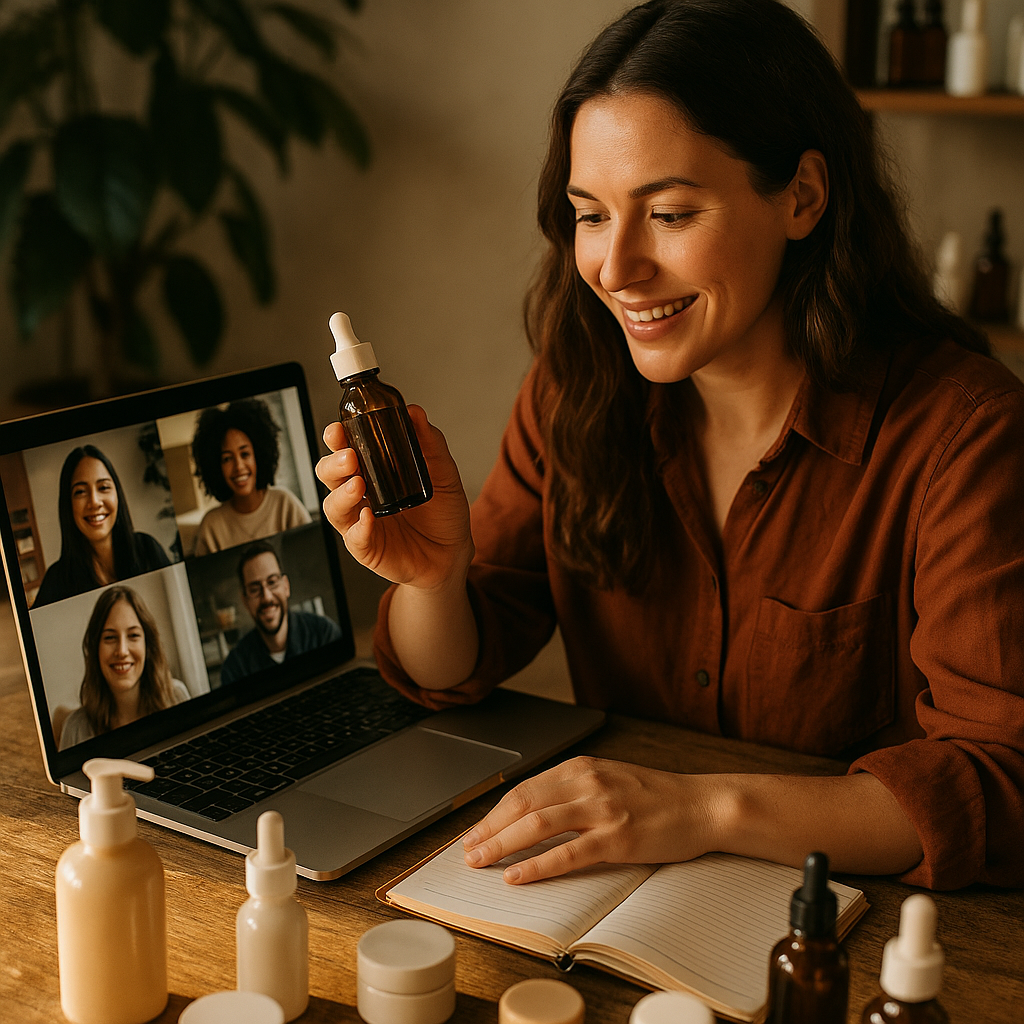
In 2025, beauty shoppers trust proof more than promises. This case study shows how a mid-sized indie brand used community-led R&D to turn everyday customers into co-creators—and launched a product that outperformed its legacy hero line. You’ll see the exact research steps, decision gates, and launch mechanics, plus what to copy without burning your margin or your goodwill. Ready to build with your audience instead of guessing?
Community-led product development: The brand, the problem, and the opportunity
Brand: LumenSkin (pseudonym), a direct-to-consumer beauty brand with 18 SKUs across skincare and complexion. The team: 14 people, in-house marketing and customer experience, and a contract manufacturer for formulation and fill.
Challenge: Growth stalled. Paid acquisition costs rose, and repeat purchase softened because customers felt newer launches were “nice, but not necessary.” LumenSkin’s existing R&D process relied on trend reports, internal brainstorming, and limited pre-launch feedback from a small influencer circle. The result: launches that looked good on a mood board but failed to solve a daily problem.
Opportunity: Their customer support inbox and social comments contained unusually detailed usage stories. The brand also ran a private community of 9,000+ customers (email-gated forum plus SMS list) where members routinely compared routines, shared ingredient sensitivities, and posted product hacks. LumenSkin recognized that its most valuable dataset was already arriving—unstructured and underused.
Goal: Build one “must-rebuy” product in six months that could become the new flagship, with a target of 25% of total revenue within two quarters post-launch, while keeping returns below the brand’s category average and avoiding regulatory risk.
Strategic bet: Replace “brand-led” innovation with community-led product development—using the community not as a focus group, but as an ongoing R&D partner with clear boundaries, incentives, and validation steps.
Beauty community insights: How they turned conversations into usable R&D data
LumenSkin started by building a repeatable system to convert scattered feedback into decisions. They treated community input like research, not vibes.
Step 1: Define the decision the community will influence. The team outlined what was truly “open for collaboration” versus fixed constraints. Community input would shape: primary problem to solve, format preferences, sensorial expectations, usage occasions, and acceptable price range. Non-negotiables included safety thresholds, allergen restrictions, regional compliance, manufacturing minimums, and performance claims that required clinical testing.
Step 2: Map customer pain points with evidence. They pulled three months of customer support tickets, product reviews, and community posts into a single repository, then categorized them by:
- Problem: what outcome customers sought (e.g., barrier repair, long-wear hydration, redness calming)
- Context: when it happened (seasonal flare-ups, post-actives irritation, makeup pilling)
- Constraints: allergies, texture aversions, routine complexity limits
- Workarounds: what customers tried and why it failed
Step 3: Run a two-layer survey: broad then deep. First, a short pulse survey to the entire list captured the “top 3 unresolved skincare frustrations.” Then they invited 250 highly engaged members into structured interviews and routine diaries. The diary method answered follow-up questions inside the research: what products were used together, what caused pilling, which steps were skipped, and what customers considered “worth paying for.”
Step 4: Quantify the opportunity with a simple scorecard. Each potential product concept received a weighted score based on: problem severity, frequency, willingness to pay, competitive saturation, feasibility within six months, and risk (sensitivities/claims). The top concept was not the trendiest; it was the most repeatable.
Key insight: The largest unmet need wasn’t “glass skin.” It was daytime barrier support that works under sunscreen and makeup, without stinging, pilling, or feeling greasy. Customers described the same failure pattern: soothing products that were too heavy for morning, or lightweight products that weren’t effective enough to calm redness and tightness.
Customer co-creation strategy: Designing a product with guardrails and incentives
LumenSkin created a co-creation program that respected both customers’ time and the realities of formulation.
1) Create a “Community R&D Council.” They selected 120 members representing different skin types, climates, and sensitivities, plus a smaller group of 25 with professional backgrounds (esthetician students, cosmetic chem enthusiasts, nurses) to strengthen the questioning quality. Participation required signing an NDA and agreeing to structured feedback timelines.
2) Use clear guardrails to prevent “design by committee.” The brand published a one-page brief with constraints: fragrance-free, essential-oil-free, compatible with common actives, and designed for morning layering. They also stated what the community would not decide (supplier selection, preservative system, and any claim language before testing).
3) Incentivize fairly without biasing feedback. Instead of paying for positive reviews, they offered:
- store credit for completed feedback cycles (not for liking the product)
- early access and a permanent discount for council members
- name credit in a “developed with our community” page (opt-in)
4) Convert preferences into testable specifications. The community didn’t just say “lightweight.” They defined “lightweight” as: absorbs in under 60 seconds, no tack after 3 minutes, no pilling with their top three sunscreens, and no shine on combination skin after two hours. These became measurable evaluation criteria in lab sampling.
5) Align stakeholders early. LumenSkin brought their manufacturer and a consulting cosmetic chemist into the community process at the concept stage. This prevented a common failure: promising a texture or ingredient story that can’t be produced reliably at scale.
Skincare product launch case study: Iteration, testing, and compliance that built trust
The product that emerged was a “Barrier Day Serum”—a lightweight, fragrance-free serum designed to reduce the feeling of tightness and visible redness over time while layering cleanly under SPF and makeup.
Iteration cycle (three rounds, four weeks each):
- Round 1 (texture and layering): 60 council members tested two base prototypes for spread, dry-down, and pilling with their own sunscreens. The winner had a slightly higher humectant ratio but needed improved slip.
- Round 2 (tolerance and feel): 80 members tested an updated prototype for 14 days. Feedback flagged a minority experiencing warmth on application when used after strong actives. The chemist adjusted the soothing blend and buffering to reduce perceived sting.
- Round 3 (performance validation): 100 members tested for 21 days with standardized check-ins. The team required completion of structured forms plus optional voice notes to capture nuance.
Clinical and safety checks: To follow EEAT principles and protect customers, LumenSkin invested in appropriate third-party testing before making performance claims. They also ran stability and compatibility testing for common packaging interactions. The brand avoided overpromising; claims were limited to what testing and ingredient function could support.
What they did differently from past launches:
- They documented decisions. Every formula adjustment tied back to a specific complaint or metric (pilling reports, dry-down time, tolerance notes).
- They separated “preference” from “problem.” For example, some members wanted a dewy finish, but the core problem was midday shine with makeup breakdown. The brand prioritized the problem.
- They planned manufacturing scale early. The chosen formula matched the manufacturer’s capabilities and raw material lead times, reducing risk of out-of-stocks at launch.
Answering the follow-up question most teams ask: “Does this slow you down?” LumenSkin found the opposite. While they added structured testing, they removed internal back-and-forth and reduced late-stage reversals. A clear community scorecard sped up decisions because the team stopped arguing about assumptions.
Beauty brand marketing: Turning community proof into demand without eroding credibility
Community-led R&D only becomes a best-seller when the launch story is credible and easy to verify. LumenSkin built marketing around transparency, not hype.
1) Build the “receipt trail” into the launch assets. The product page included:
- the exact problem statement the community voted on
- layering guidance with sunscreen and makeup
- who it’s for and who should skip it (e.g., those needing a richer occlusive balm)
- a plain-language “what changed between prototypes” timeline
2) Use creators as educators, not script readers. Instead of sending a rigid brief, LumenSkin supplied a testing framework and encouraged creators to show real layering tests, makeup wear, and routine compatibility. They prioritized creators who already discussed sensitive skin and barrier care with nuance.
3) Launch mechanics that rewarded participation without faking scarcity.
- 72-hour early access for community members
- bundle with a best-selling SPF to reinforce the layering use case
- post-purchase onboarding emails with “how to avoid pilling” tips
4) Customer support as a conversion lever. The CX team received a one-page “Barrier Day Serum playbook” including contraindications, pairing guidance, and how to troubleshoot. Faster, more accurate responses reduced returns and improved trust.
What made it a best-seller: Customers recognized their own language on the product page—tightness, redness, pilling, makeup breakdown. That increased message-market fit. The community didn’t just validate; it shaped the vocabulary, which made ads and PDP copy more precise and less generic.
Community-led R&D results: Metrics, learnings, and a repeatable framework
LumenSkin evaluated success using a mix of commercial and customer outcomes, with weekly dashboards shared across teams.
Commercial outcomes (first 60 days):
- the new serum became the #1 SKU by revenue
- repeat purchase intent (measured via post-purchase survey) outperformed prior launches
- bundle attachment rate increased due to clearer routine positioning
Customer outcomes:
- lower “didn’t work for me” return reasons compared to the brand’s previous two launches
- higher review completeness (more mentions of routines, layering, and time-to-absorb)
- reduced support volume on “how do I use this?” due to better onboarding
Operational learnings:
- Structure beats volume. A smaller, committed council produced better data than thousands of unstructured comments.
- Guardrails protect speed. Publishing constraints early prevented unbuildable wish lists.
- Trust compounds. Transparency about what the product can and cannot do reduced backlash and improved retention.
A repeatable framework (what readers can copy):
- Collect: centralize reviews, tickets, community posts
- Classify: problem, context, constraints, workarounds
- Confirm: pulse survey + diary study
- Co-create: council with NDAs, timelines, incentives
- Constrain: publish non-negotiables and safety boundaries
- Test: multiple prototypes with measurable criteria
- Prove: third-party testing for any performance claim
- Teach: launch with guidance, not just slogans
Follow-up question: “What if your community asks for something unsafe or non-compliant?” Treat it as a signal about the underlying need, then solve it within safe parameters. Customers may request a high level of exfoliation for quick results; the real need might be “smooth texture without irritation.” Your job is to translate desire into responsible design.
FAQs: Community-led R&D in beauty
What is community-led R&D in the beauty industry?
Community-led R&D is a product development approach where a brand systematically involves customers in identifying problems, defining product requirements, and testing prototypes. It goes beyond listening on social media by using structured research methods, clear guardrails, and documented decision-making.
How do you choose the right customers for a co-creation council?
Select a mix of skin types, routines, climates, and sensitivity profiles that match your target market. Prioritize members who give detailed, consistent feedback. Use simple screening: past purchase history, review depth, and willingness to complete timed check-ins.
How many testers do you need to validate a skincare prototype?
For early sensorial and layering feedback, dozens of testers can be enough if the feedback is structured. For claims and performance statements, use appropriate third-party testing and follow regulatory guidance for your markets. Community testing should complement, not replace, safety and substantiation.
How do you prevent “design by committee”?
Publish non-negotiables and success criteria before you collect opinions. Ask the community to choose between tested options rather than invent from scratch. Tie decisions to measurable metrics like dry-down time, pilling frequency, and tolerance notes.
Is community-led R&D only for DTC brands?
No. Retail brands can run councils via loyalty programs, QR-coded inserts, or retailer communities. The key is having a reliable feedback loop and the ability to act on insights with your manufacturing and compliance partners.
What should you share publicly about the co-creation process?
Share the problem statement, the testing approach, and what you learned—without exposing proprietary formula details. Transparency works best when it helps customers use the product correctly and understand why it exists.
Community-led R&D works when you treat customers as informed partners and build a system that turns feedback into measurable requirements. In this case, LumenSkin used structured research, tight guardrails, and responsible testing to create a serum that solved a daily layering problem and earned repeat purchases. The takeaway: build proof into development, then launch with transparency customers can verify.