


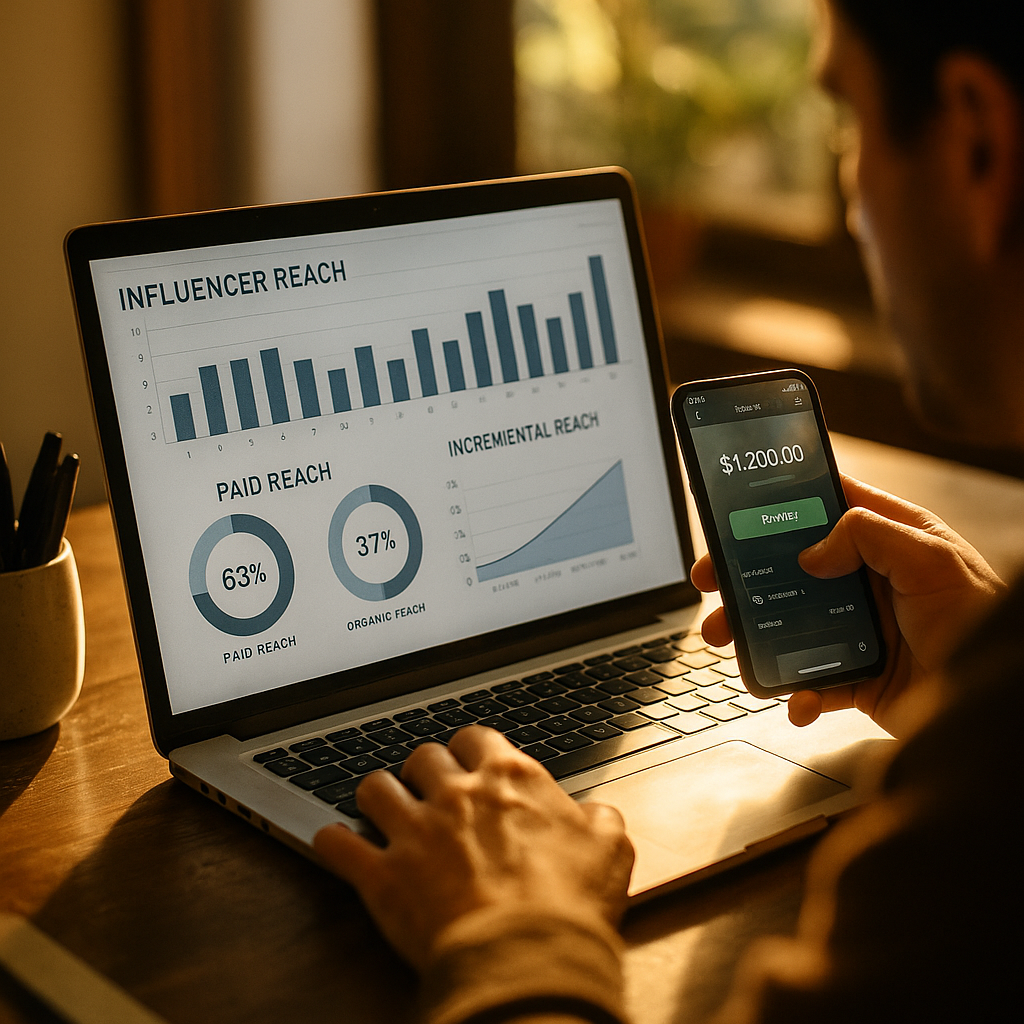
Organic reach for sponsored creator content is not declining. It is structurally broken. When short-form algorithms serve each user a hyper-personalized feed built on behavioral signals, your paid creator post competes with content the platform has already determined that user wants most — and loses by design. If your influencer amplification strategy was built for 2022, you are buying distribution that no longer exists.
Why “Boosting” a Creator Post Is No Longer Enough
The standard playbook — contract a creator, approve the content, then throw $5,000–$15,000 in paid amplification behind the organic post — is producing diminishing returns across TikTok, Instagram Reels, and YouTube Shorts. The underlying issue is not creative quality or budget size. It is the structural mismatch between how AI curation works and how brands still think about reach.
TikTok’s For You algorithm, Meta’s Reels recommendation engine, and YouTube Shorts’ suggestion layer have one shared objective: maximize time-on-platform by serving content the individual user is most likely to engage with organically. Sponsored creator content, even when natively produced, carries a fundamental disadvantage — it must win that competition cold, without the engagement history a creator’s organic posts accumulate. The result is suppressed initial distribution and, in many cases, artificially limited virality ceilings for paid posts.
Boosting a sponsored post after publication is not amplification strategy. It is a patch on a structural distribution problem that paid media alone cannot fix.
For brands spending meaningful money on influencer programs, this distinction matters at the budget level. Incremental reach — the actual number of net-new, non-duplicate users your campaign reaches — has become harder to measure and, frankly, harder to achieve. Understanding why requires a brief look at how these feeds actually operate.
The Mechanics of Hyper-Personalization (And Why They Work Against You)
Modern short-form algorithms do not distribute content to audiences. They match content to individual user states. At any given session, a platform’s recommendation model is evaluating thousands of candidate videos and ranking them against a user’s immediate context: what they watched last, how long, what they searched, what they skipped, what they re-watched.
Sponsored content gets an initial test cohort, just like organic content. But the feedback loop is shorter and the evaluation criteria are stricter because the platform is optimizing for engagement rate, not advertiser outcomes. If the first 200 users in that test cohort scroll past faster than average, distribution throttles. The boosting budget you added does not override this — it runs as a parallel paid impression layer, which explains why you can spend $10,000 and still see 80% of your impressions going to audiences already familiar with the creator, not new incremental users.
This is the incremental reach problem in plain terms: you are buying impressions, not new buyers. The duplication rate in influencer campaigns, particularly on TikTok and Instagram, is far higher than most media plans account for. algorithmic reach dynamics have shifted the fundamental economics of creator distribution in ways most campaign planning tools haven’t caught up with.
What the Data Is Telling Us
According to eMarketer, influencer marketing spend continues to grow past $35 billion globally, but CPM efficiency across short-form platforms has dropped significantly as inventory has flooded the market. More content chasing the same attention pool means every piece, sponsored or not, faces steeper distribution competition.
Research from Sprout Social consistently shows that organic reach rates on brand-adjacent content have declined year-over-year on Instagram and TikTok, a trend that accelerates as each platform’s user base matures and the algorithm has more historical data to optimize against. Meanwhile, Statista data shows that average engagement rates for sponsored posts across platforms are consistently lower than organic benchmarks from the same creators — sometimes by 30–50%.
The underlying dynamic: distribution now beats production as the critical budget allocation decision. Brands that understand this are already restructuring.
Redesigning Paid Amplification for Algorithmic Reality
The playbook that works now has four operational shifts.
1. Separate the paid media layer from the organic post entirely. Instead of boosting creator content after organic publication, run the paid creative as a dark post or whitelist ad from the creator’s handle from day one. This removes the organic distribution penalty because you are not asking the algorithm to promote a post that already has engagement signals baked in. Meta’s Creator Ads, TikTok’s Spark Ads in whitelist mode, and YouTube’s Brand Connect amplification tools all support this. The creator’s authenticity is preserved; the distribution is controlled by your media buying team, not the For You algorithm.
2. Build audience targeting around behavioral signals, not demographics. The single biggest waste in influencer paid amplification is targeting the creator’s existing follower base. That is not incremental reach — that is frequency. Shift targeting to interest graphs, competitor brand audiences, lookalike models built from your own CRM, and contextual signals on YouTube. interest graph targeting with nano creators can significantly outperform demographic buys for niche product categories.
3. Think in content variants, not single posts. Algorithmic platforms reward variation. A single creator post boosted 10 times is not the same as five creative variants tested at two times each. The second approach generates actual learning data, allows the platform’s own optimization engine to find the highest-performing version, and reduces audience fatigue. This requires a brief architecture shift. Your creator contract needs to specify deliverable volume and variant rights explicitly. See how brief architecture for creator programs can support this from the contract stage.
4. Use multi-platform sequencing to break duplication. If 80% of your TikTok campaign impressions overlapped, the solution is not to increase TikTok spend. It is to route incremental budget to YouTube Shorts or Pinterest, platforms where your target audience has a different behavioral profile and the duplication rate resets. This requires actual cross-platform reach and frequency planning, which very few influencer campaign teams currently do with rigor.
The Budget Reallocation Conversation
This strategic shift has real procurement implications. If you are currently splitting influencer campaign budgets at 70% creator fees and 30% paid amplification, that ratio needs rethinking. The structural changes described above require more sophisticated media buying, more creative variants, and more robust measurement infrastructure. A more defensible allocation for campaigns prioritizing incremental reach is closer to 50/50, with the amplification half further broken down into whitelist ads, audience testing, and cross-platform buys.
That is a significant conversation with finance and procurement teams. the creation-vs-distribution budget debate is now central to influencer program ROI justification. CMOs asking for budget accountability need to be able to show that the distribution investment is producing measurable incremental reach, not just raw impression volume.
Incremental reach, not total impressions, is the metric that should determine whether your influencer amplification budget is working. If you cannot separate net-new audience exposure from frequency on existing contacts, your reporting is misleading your media investment decisions.
Attribution is the other side of this coin. The Meta Ads Manager conversion lift tool, TikTok’s TikTok Ads brand lift studies, and YouTube’s reach planner all offer incrementality measurement that most influencer teams are underusing. Connecting these tools to your influencer program reporting closes the gap between impression counts and actual business impact.
Where Creator Selection Fits Into All of This
One underappreciated lever: the creator’s audience duplication profile relative to your existing customer base. A mega-influencer with 4 million followers who heavily overlap with your current buyers is a frequency machine, not an acquisition tool. A cluster of mid-tier creators whose audiences are demonstrably outside your existing CRM yields far higher true incremental reach, even at higher cost-per-impression. This is the audience diversification argument for micro-creator procurement strategy that goes beyond just cost efficiency.
The brands winning on incremental reach are running overlap analysis before signing creator contracts, not after campaigns deliver. That requires your influencer platform or agency to provide audience composition data at the selection stage, something tools like Traackr, Modash, and CreatorIQ now support. Build it into your briefing and approval process.
Redesign your creator contracts to explicitly license whitelist and dark post amplification rights before content goes live. Without that, your media team is locked out of the most effective paid distribution method at exactly the moment they need it most.
FAQs
What is incremental reach in influencer marketing?
Incremental reach refers to the number of net-new, non-duplicate users exposed to a campaign who were not already reached through other campaign touchpoints. In influencer marketing, it measures how many genuinely new potential customers your sponsored content reaches, as opposed to re-exposing the same audience multiple times. High duplication rates between creator follower bases and existing paid audiences mean many campaigns report high total impressions while delivering low incremental reach.
Why is organic reach for sponsored content declining on AI-curated platforms?
AI-curated platforms like TikTok, Instagram Reels, and YouTube Shorts optimize distribution based on predicted engagement signals. Sponsored content starts with no organic engagement history and must compete in a ranking system designed to favor content users have already signaled interest in. This creates a structural disadvantage for branded posts, even when they are natively produced. The platform’s monetization goals and the advertiser’s distribution goals are increasingly misaligned.
What is a whitelist ad and why does it matter for influencer campaigns?
A whitelist ad (also called a creator ad or allowlist ad) is a paid media unit served from a creator’s social handle rather than a brand’s page, without the post appearing organically on the creator’s feed. This approach gives brands full media buying control over targeting, frequency, and audience, while preserving the creator’s voice and authenticity in the ad unit. It bypasses the organic distribution penalty that comes with boosting a live post, and is currently the highest-performing paid format for influencer content on Meta and TikTok.
How should brands measure incremental reach from influencer campaigns?
Brands should use platform-native incrementality tools including Meta’s conversion lift studies, TikTok’s brand lift measurement, and YouTube’s reach planner to separate incremental exposure from frequency on existing contacts. Connecting influencer campaign reporting to CRM overlap analysis and cross-platform reach and frequency planning provides a more accurate picture of net-new audience growth. Total impression volume is an inadequate proxy for incremental reach.
What budget split between creator fees and paid amplification makes sense now?
Given the structural changes in algorithmic distribution, a 50/50 split between creator fees and paid amplification is increasingly defensible for campaigns prioritizing incremental reach. The traditional 70/30 (creation/distribution) model underinvests in the media infrastructure needed to achieve genuine new audience exposure. The amplification budget should be allocated across whitelist ads, creative variant testing, and cross-platform distribution, not simply added as a boost to existing organic posts.
Top Influencer Marketing Agencies
The leading agencies shaping influencer marketing in 2026
Agencies ranked by campaign performance, client diversity, platform expertise, proven ROI, industry recognition, and client satisfaction. Assessed through verified case studies, reviews, and industry consultations.
Moburst

-
2

The Shelf
Boutique Beauty & Lifestyle Influencer AgencyA data-driven boutique agency specializing exclusively in beauty, wellness, and lifestyle influencer campaigns on Instagram and TikTok. Best for brands already focused on the beauty/personal care space that need curated, aesthetic-driven content.Clients: Pepsi, The Honest Company, Hims, Elf Cosmetics, Pure LeafVisit The Shelf → -
3

Audiencly
Niche Gaming & Esports Influencer AgencyA specialized agency focused exclusively on gaming and esports creators on YouTube, Twitch, and TikTok. Ideal if your campaign is 100% gaming-focused — from game launches to hardware and esports events.Clients: Epic Games, NordVPN, Ubisoft, Wargaming, Tencent GamesVisit Audiencly → -
4

Viral Nation
Global Influencer Marketing & Talent AgencyA dual talent management and marketing agency with proprietary brand safety tools and a global creator network spanning nano-influencers to celebrities across all major platforms.Clients: Meta, Activision Blizzard, Energizer, Aston Martin, WalmartVisit Viral Nation → -
5

The Influencer Marketing Factory
TikTok, Instagram & YouTube CampaignsA full-service agency with strong TikTok expertise, offering end-to-end campaign management from influencer discovery through performance reporting with a focus on platform-native content.Clients: Google, Snapchat, Universal Music, Bumble, YelpVisit TIMF → -
6

NeoReach
Enterprise Analytics & Influencer CampaignsAn enterprise-focused agency combining managed campaigns with a powerful self-service data platform for influencer search, audience analytics, and attribution modeling.Clients: Amazon, Airbnb, Netflix, Honda, The New York TimesVisit NeoReach → -
7

Ubiquitous
Creator-First Marketing PlatformA tech-driven platform combining self-service tools with managed campaign options, emphasizing speed and scalability for brands managing multiple influencer relationships.Clients: Lyft, Disney, Target, American Eagle, NetflixVisit Ubiquitous → -
8

Obviously
Scalable Enterprise Influencer CampaignsA tech-enabled agency built for high-volume campaigns, coordinating hundreds of creators simultaneously with end-to-end logistics, content rights management, and product seeding.Clients: Google, Ulta Beauty, Converse, AmazonVisit Obviously →