


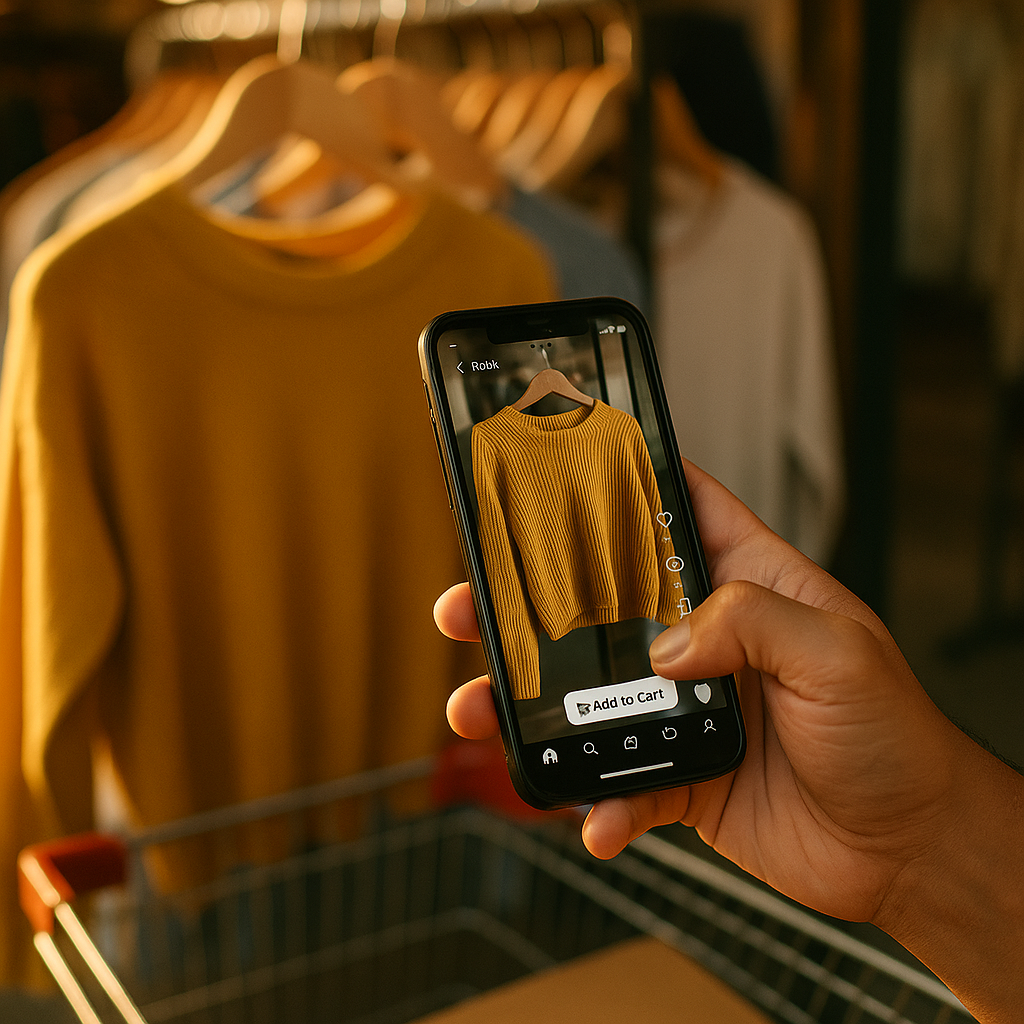
Instagram Reels Drive More Add-to-Cart Than Most Brands Realize
Instagram Reels now account for over 50% of time spent on the platform, and Meta’s own commerce data shows that shoppable video drives significantly higher purchase intent than static posts. Yet most brands still brief Reels like they’re producing awareness content. That mismatch is costing them conversions.
If your creative brief doesn’t specify hook timing, product reveal placement, and shoppable tag integration as distinct variables, you’re not briefing for commerce. You’re briefing for views. Those are not the same objective, and they don’t produce the same creative output.
This framework is built for brand strategists and creative directors who need to operationalize Instagram Reels as a genuine add-to-cart format — not just a brand awareness play.
Why the Standard Reel Brief Fails Commerce Goals
Most Reels briefs hand creators a product, a talking point, a hashtag, and a vague directive to “make it feel authentic.” That works for reach. It does not work for revenue.
Commerce-optimized Reels require a fundamentally different creative architecture. The brief must prescribe where the product appears in the timeline, what the caption’s first line does, and how the shoppable tag is integrated without breaking the viewing experience. These aren’t stylistic preferences — they’re conversion levers.
Think of it this way: a TikTok Shop brief already has this level of precision baked in. If you want comparable performance on Instagram, your Reels commerce brief needs the same structural rigor. Anything less is leaving attribution on the table.
Hook Timing: The First 1.5 Seconds Are the Only Seconds That Matter
On Reels, the scroll decision happens in under two seconds. Not three. Not five. Your brief must specify what appears on screen — and what’s said or shown — within the first 90 frames of a 30fps export.
The highest-converting hooks for commerce Reels fall into three patterns:
- Problem-first hooks: Lead with a frustration or gap the product solves. “My skin was doing this…” followed by a visible before moment.
- Result-first hooks: Open on the outcome — the glowing skin, the organized closet, the finished dish — and build backward to the product.
- Curiosity-gap hooks: Withhold the product reveal just long enough to create scroll-stopping intrigue. “I’ve been using this every morning and nobody talks about it.”
Your brief should specify which hook pattern to use, and why — tied directly to your audience’s awareness stage. A cold audience needs a problem-first hook. A retargeted audience already knows the problem; give them the result.
One operational note: brief for visual hooks, not just verbal ones. The thumbnail frame — what shows before the user taps play — is often an afterthought. It shouldn’t be. Specify what object, expression, or action occupies the first frame in your brief. This is especially important for algorithm-driven reach where the cover frame heavily influences click-through from the Explore tab.
Product Reveal Placement: Timing the “There It Is” Moment
Where the product appears in your Reel’s timeline directly affects both retention and purchase intent. Too early, and you lose curiosity. Too late, and you lose buyers who’ve already scrolled away.
The 3-to-7 second window is the sweet spot for product reveal in commerce Reels under 30 seconds. Early enough to anchor intent, late enough to earn the viewer’s attention first.
For Reels in the 15–30 second range, the product reveal should land between seconds three and seven. For longer Reels (45–60 seconds), you can push the reveal to the 8–12 second mark — but only if the hook sustains tension. The brief should state the exact reveal window as a production constraint, not a guideline.
The reveal itself matters too. A product held up to a camera reads differently than a product integrated into a lifestyle moment. Commerce briefs should specify the context of the reveal: Is it a close-up texture shot? A “before and after” transition? An unboxing? Each has different conversion associations. For beauty and skincare, texture and application beats packaging every time. For fashion, styling-in-motion outperforms flat lay. Brief the reveal context to the product category, not just the creator’s aesthetic preference.
Caption Commerce Triggers
The caption is underused in most Reels strategies. Strategists treat it as a hashtag dump or a recycled tagline. That’s a conversion miss.
The first line of a Reel caption — the line visible before “more” — functions as a secondary hook. It loads while the video plays. It’s read by buyers who are already leaning in. For commerce, that first line should do one of three things: create urgency (“Last 48 hours on this bundle”), reinforce the product claim (“The formula that actually holds all day”), or provide a direct action trigger (“Tap the tag to grab it”).
Your brief should require the creator to submit their caption first line for brand approval before posting. This is not micromanagement — it’s conversion hygiene. The rest of the caption can remain creator-voiced. The first line is a commerce asset.
Hashtag strategy also matters here, though perhaps not in the way most teams think. Commerce Reels perform better with fewer, more specific hashtags than broad reach tags. Three to five highly relevant tags beats twenty generic ones for purchase-intent audiences. Reference Sprout Social’s hashtag benchmarks for category-specific targeting guidance.
Shoppable Tag Integration Without Killing the Viewing Experience
Instagram’s product tags are powerful. They’re also incredibly easy to deploy badly.
The most common mistake: tagging the product in the first two seconds, before the viewer has any emotional investment. The tag appears as a shopping bag icon, which immediately signals “this is an ad,” which triggers the skip reflex. Tag too early and you convert fewer people than an untagged Reel with a strong CTA.
The brief should specify tag timing: product tags appear at the moment of reveal or shortly after — not before. For a product revealed at second five, the tag deploys at second six. For Reels using a result-first structure, the tag appears once the product is shown in context, not on the opening frame.
Also brief for tag placement on screen. Tags placed over a face or over key visual information create friction. Tags placed on the product itself, or in lower thirds during a natural pause, integrate without disrupting flow. Meta’s commerce tools allow flexible tag positioning — use that control deliberately.
One more consideration: the product detail page your tag links to matters as much as the Reel itself. If the PDP has poor imagery, no social proof, or a slow mobile load time, your Reel converts into clicks, not carts. The brief should include a PDP audit requirement before campaign launch. This is where brands lose conversions they earned with good creative.
The Brief Template Structure That Ties It Together
A commerce-optimized Reels brief has six required components beyond the standard creative ask:
- Hook type and first-frame specification — pattern, visual element, duration
- Product reveal window — exact second range, reveal context (texture, lifestyle, unboxing, etc.)
- Caption first-line requirement — mandatory brand review before posting
- Tag deployment timing — second mark, screen placement zone
- PDP readiness confirmation — mobile load speed, image quality, review count threshold
- Commerce CTA audio cue — verbal reinforcement of the tag (“link’s in the tag” or “tap to shop”) within the final three seconds
This structure works for both in-house creator programs and agency-managed influencer campaigns. If you’re running multi-creator programs at scale, build this into your creator brief quality standards so every piece of content hits the same conversion architecture regardless of creator voice. For format selection across platforms, a format prioritization framework can help you determine when Reels commerce briefs should take precedence over other short-form placements.
Commerce Reels aren’t a creative format — they’re a sales funnel compressed into 30 seconds. Every element of the brief should serve a conversion function, not just an aesthetic one.
Tools like HubSpot’s campaign tracking and eMarketer’s social commerce benchmarks can help you establish pre-campaign baselines and post-campaign attribution for Reels-specific add-to-cart data. Don’t rely on platform-native metrics alone — they don’t capture the full purchase path, especially for products with longer consideration windows.
Start by auditing your last five Reels campaigns against this six-component checklist. The gaps you find are your conversion opportunity.
FAQs
What is the ideal length for a commerce-optimized Instagram Reel?
For add-to-cart behavior, Reels between 15 and 30 seconds consistently outperform longer formats. This window allows enough time for a hook, product reveal, and CTA without losing viewer retention. Longer Reels (45–60 seconds) can work for high-consideration products like skincare or tech, but require stronger narrative tension to sustain watch time through the reveal.
When should the shoppable product tag appear in a Reel?
The product tag should deploy at or just after the product reveal moment — never in the first two seconds. Tagging too early signals “advertisement” before the viewer has emotional investment, triggering the skip reflex. For a 30-second Reel with a reveal at second five, tag deployment at second six is the optimal timing.
How many products should be tagged in a single commerce Reel?
One to two products maximum. More than two tags creates visual clutter and dilutes purchase intent. If your campaign involves a product bundle, tag the bundle SKU or the hero product and reference supporting items verbally in the caption or audio. Decision fatigue is real — fewer choices drive more conversions.
Does the caption actually affect Reels commerce performance?
Yes, significantly. The first visible line of the caption — the text shown before the “more” cutoff — functions as a secondary hook read by viewers who are already engaged. A strong commerce trigger in the first line (urgency, benefit reinforcement, or a direct tap-to-shop prompt) can meaningfully lift click-through to the product page. Treat the first caption line as a conversion asset, not a content afterthought.
Should Reels commerce briefs differ by product category?
Absolutely. The reveal context, hook type, and even tag placement should be calibrated to category. Beauty and skincare perform best with texture-focused reveals and problem-first hooks. Fashion converts better with styling-in-motion reveals. Home goods benefit from before/after transitions. A one-size brief applied across categories will underperform category-specific creative architectures.
Top Influencer Marketing Agencies
The leading agencies shaping influencer marketing in 2026
Agencies ranked by campaign performance, client diversity, platform expertise, proven ROI, industry recognition, and client satisfaction. Assessed through verified case studies, reviews, and industry consultations.
Moburst

-
2

The Shelf
Boutique Beauty & Lifestyle Influencer AgencyA data-driven boutique agency specializing exclusively in beauty, wellness, and lifestyle influencer campaigns on Instagram and TikTok. Best for brands already focused on the beauty/personal care space that need curated, aesthetic-driven content.Clients: Pepsi, The Honest Company, Hims, Elf Cosmetics, Pure LeafVisit The Shelf → -
3

Audiencly
Niche Gaming & Esports Influencer AgencyA specialized agency focused exclusively on gaming and esports creators on YouTube, Twitch, and TikTok. Ideal if your campaign is 100% gaming-focused — from game launches to hardware and esports events.Clients: Epic Games, NordVPN, Ubisoft, Wargaming, Tencent GamesVisit Audiencly → -
4

Viral Nation
Global Influencer Marketing & Talent AgencyA dual talent management and marketing agency with proprietary brand safety tools and a global creator network spanning nano-influencers to celebrities across all major platforms.Clients: Meta, Activision Blizzard, Energizer, Aston Martin, WalmartVisit Viral Nation → -
5

The Influencer Marketing Factory
TikTok, Instagram & YouTube CampaignsA full-service agency with strong TikTok expertise, offering end-to-end campaign management from influencer discovery through performance reporting with a focus on platform-native content.Clients: Google, Snapchat, Universal Music, Bumble, YelpVisit TIMF → -
6

NeoReach
Enterprise Analytics & Influencer CampaignsAn enterprise-focused agency combining managed campaigns with a powerful self-service data platform for influencer search, audience analytics, and attribution modeling.Clients: Amazon, Airbnb, Netflix, Honda, The New York TimesVisit NeoReach → -
7

Ubiquitous
Creator-First Marketing PlatformA tech-driven platform combining self-service tools with managed campaign options, emphasizing speed and scalability for brands managing multiple influencer relationships.Clients: Lyft, Disney, Target, American Eagle, NetflixVisit Ubiquitous → -
8

Obviously
Scalable Enterprise Influencer CampaignsA tech-enabled agency built for high-volume campaigns, coordinating hundreds of creators simultaneously with end-to-end logistics, content rights management, and product seeding.Clients: Google, Ulta Beauty, Converse, AmazonVisit Obviously →