


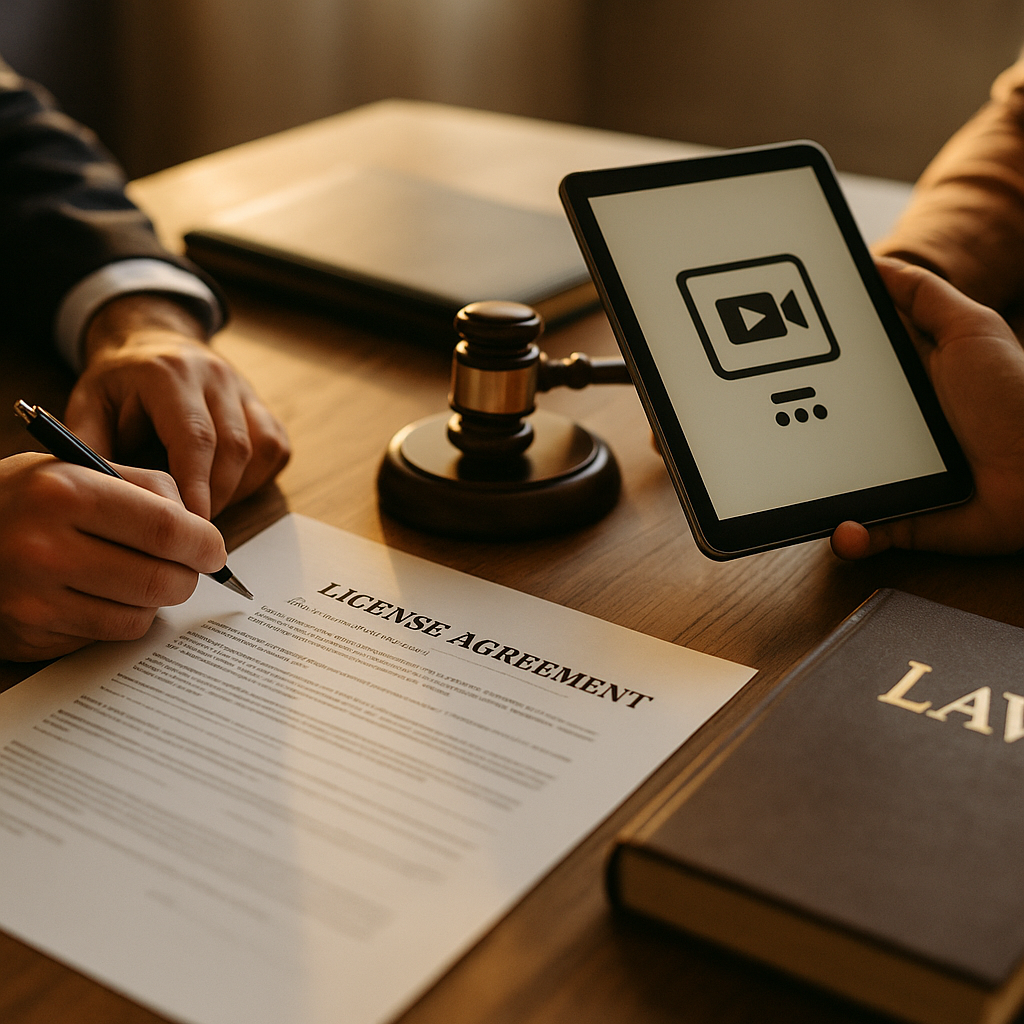
Understanding the key legal issues in creator licensing and sub-licensing is essential for digital content makers, brands, and platforms entering these complex agreements. Navigating contracts, copyright, and revenue sharing ensures creators get what they deserve—and everyone stays protected. Let’s clarify these crucial issues and show how both creators and licensees can avoid costly mistakes.
Understanding Creator Licensing Agreements
Creator licensing agreements govern the use of original works—videos, images, music, or writing—by third parties. These contracts define the scope, duration, and rights granted to the licensee, typically covering:
- Exclusive vs. Non-Exclusive Rights: Does the licensee gain sole rights, or can the creator license the same work to others?
- Territory and Duration: Where and for how long can the work be used?
- Purpose: Are there restrictions on how, where, or why content is used (e.g., commercial vs. editorial)?
Many disputes stem from ambiguities in these clauses. Precise definitions help prevent conflicts and ensure legal enforceability. When negotiating, creators must protect their future options, while licensees want clear authority to exploit the content.
Navigating Copyright and Ownership in Content Licensing
Copyright ownership sits at the heart of licensing and sub-licensing. By default, creators own the copyright in their original works unless created as a work for hire or otherwise assigned. Licensing allows the copyright owner to grant others limited rights—but does not transfer ownership unless explicitly stated in writing.
Common legal pitfalls arise when:
- Licenses lack clarity on which rights are conveyed—performance, adaptation, or distribution.
- Improper permissions (e.g., underlying music or images) threaten the legal status of the content.
For sub-licensing, licensees may pass rights on to others, but only if the original agreement allows it. Unlawful sub-licensing exposes all parties to infringement claims.
Sub-Licensing: Rights and Restrictions for Third Parties
Sub-licensing involves granting another party the right to use the creator’s content, based on the original contract. Typically, holders of a license wish to sub-license content to partners, customers, or affiliates. But:
- The original agreement must clearly permit sub-licensing.
- Creators should review the scope of sub-licensed rights to prevent misuse or dilution of their brand.
- Any revenue generated from sub-licensing may require separate compensation structures or reporting requirements.
Failure to anticipate these factors can result in lost revenue streams and disputes over content control. Creators are advised to negotiate approval rights over sub-licensees or require notice before sub-licensing occurs.
Monetization, Payment Terms, and Revenue Sharing
One key legal issue in creator licensing and sub-licensing is payment: who gets paid, how much, and when? Agreements must detail:
- Royalty rates—lump sum, percentage, or hybrid models
- Payment schedules and methods
- Accounting and auditing rights to verify revenue statements
- Transparency in reporting, especially when content is sub-licensed across different platforms
In 2025, with new monetization tools and platforms proliferating, creators must ensure contracts reflect emerging revenue models, such as microtransactions, NFT licensing, and AI-generated usage. Unclear or outdated payment terms can lead to under-compensation or protracted litigation. Always specify whether advances are recoupable and how deductions (such as for advertising or transaction fees) are handled.
Compliance, Moral Rights, and Content Control
Legal compliance goes beyond copyright—licensing and sub-licensing must adhere to local, national, and international laws. For example:
- Moral rights: In many jurisdictions, creators maintain the right to be credited and object to derogatory edits, even after licensing.
- Privacy and consent: If content involves identifiable individuals, future use must respect image rights and personal data protection laws.
- Platform-specific terms: Platforms such as YouTube or Instagram have their licensing requirements, which all parties must respect.
Creators should assert approval rights for adaptations or translations that might affect reputation, and licensors must vet content for compliance before broad usage or sub-licensing. Failure here may provoke take-down requests, bans, or legal exposure.
Risk Management and Dispute Resolution in Creator Licensing
No agreement is bulletproof. Well-drafted contracts anticipate potential breaches or unexpected scenarios. Smart contracts address:
- Indemnity provisions: Who bears responsibility if a third party claims infringement?
- Limitation of liability: Caps on damages in case of errors or misuse
- Dispute resolution: Mechanisms for resolving conflicts, such as arbitration, mediation, or jurisdiction selection
Clear communication and legal review before signing minimize misunderstandings. In 2025’s global market, cross-border licensing adds layers of risk: make sure contracts specify applicable law and assign dispute forums.
In summary, understanding the key legal issues in creator licensing and sub-licensing is vital to secure both creative and financial interests. Careful contracting on copyright, sub-licensing, payments, and compliance helps protect your brand, foster new revenue, and avoid unnecessary legal headaches.
FAQs on Key Legal Issues in Creator Licensing and Sub-Licensing
-
What is the difference between licensing and sub-licensing?
Licensing grants permission to use content directly from the creator, while sub-licensing allows a third party to use the content by obtaining rights from the licensee—not the original creator. Sub-licensing needs explicit permission in the original contract.
-
What are moral rights in creator licensing?
Moral rights let creators be credited for their work and object to derogatory edits, regardless of licensing. These rights can’t always be waived—even if the copyright is licensed or partially assigned.
-
Can I sub-license content to any number of third parties?
Only if the original agreement specifically allows unrestricted sub-licensing. Most creators limit sub-licensing or require approval to prevent misuse or loss of brand value.
-
How should payment terms be structured in creator licensing?
Payment terms should clearly state amounts, revenue splits, deadlines, and auditing rights. As platforms and revenue models change rapidly in 2025, flexible, well-defined structures are essential to safeguard compensation.
-
What happens if there is a dispute in a creator licensing contract?
Most contracts include a dispute resolution clause specifying arbitration, mediation, or courts. Early legal consultation, clear notices, and documentation help resolve issues quickly and cost-effectively.
Top Influencer Marketing Agencies
The leading agencies shaping influencer marketing in 2026
Agencies ranked by campaign performance, client diversity, platform expertise, proven ROI, industry recognition, and client satisfaction. Assessed through verified case studies, reviews, and industry consultations.
Moburst

-
2

The Shelf
Boutique Beauty & Lifestyle Influencer AgencyA data-driven boutique agency specializing exclusively in beauty, wellness, and lifestyle influencer campaigns on Instagram and TikTok. Best for brands already focused on the beauty/personal care space that need curated, aesthetic-driven content.Clients: Pepsi, The Honest Company, Hims, Elf Cosmetics, Pure LeafVisit The Shelf → -
3

Audiencly
Niche Gaming & Esports Influencer AgencyA specialized agency focused exclusively on gaming and esports creators on YouTube, Twitch, and TikTok. Ideal if your campaign is 100% gaming-focused — from game launches to hardware and esports events.Clients: Epic Games, NordVPN, Ubisoft, Wargaming, Tencent GamesVisit Audiencly → -
4

Viral Nation
Global Influencer Marketing & Talent AgencyA dual talent management and marketing agency with proprietary brand safety tools and a global creator network spanning nano-influencers to celebrities across all major platforms.Clients: Meta, Activision Blizzard, Energizer, Aston Martin, WalmartVisit Viral Nation → -
5

The Influencer Marketing Factory
TikTok, Instagram & YouTube CampaignsA full-service agency with strong TikTok expertise, offering end-to-end campaign management from influencer discovery through performance reporting with a focus on platform-native content.Clients: Google, Snapchat, Universal Music, Bumble, YelpVisit TIMF → -
6

NeoReach
Enterprise Analytics & Influencer CampaignsAn enterprise-focused agency combining managed campaigns with a powerful self-service data platform for influencer search, audience analytics, and attribution modeling.Clients: Amazon, Airbnb, Netflix, Honda, The New York TimesVisit NeoReach → -
7

Ubiquitous
Creator-First Marketing PlatformA tech-driven platform combining self-service tools with managed campaign options, emphasizing speed and scalability for brands managing multiple influencer relationships.Clients: Lyft, Disney, Target, American Eagle, NetflixVisit Ubiquitous → -
8

Obviously
Scalable Enterprise Influencer CampaignsA tech-enabled agency built for high-volume campaigns, coordinating hundreds of creators simultaneously with end-to-end logistics, content rights management, and product seeding.Clients: Google, Ulta Beauty, Converse, AmazonVisit Obviously →