


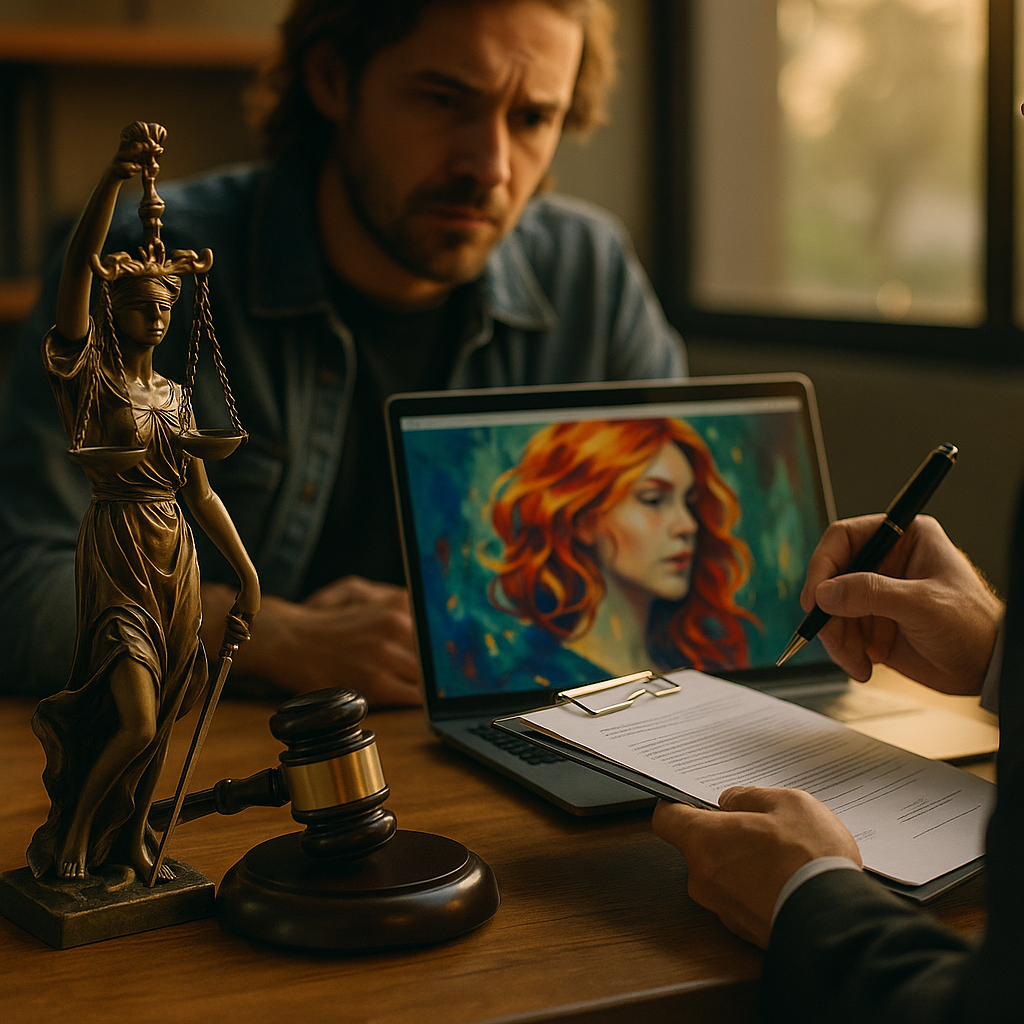
In 2025, brands are racing to stand out with generative tools, but imitation can turn expensive fast. The legal risks of using AI to mimic a specific artist’s style in ads go beyond simple copyright claims, touching publicity rights, trademarks, unfair competition, and contract breaches. Before your next campaign ships, you need a clear, practical framework for what’s allowed, what’s risky, and what to change—will your creative pass scrutiny?
Copyright infringement in AI-generated advertising
When an ad “looks like” a famous illustrator, painter, photographer, or filmmaker, the first concern is copyright. Copyright protects original expression fixed in a tangible medium—such as specific compositions, character designs, distinctive graphical elements, and sequences. It does not protect broad ideas (for example, “a dreamy pastel landscape”) or general techniques (“use watercolor textures”). The legal risk rises when an AI output is substantially similar to protected elements of a specific work or a recognizable portfolio.
In advertising, plaintiffs often point to side-by-side comparisons: similar poses, lighting, unique linework, signature motifs, recurring characters, or a distinctive arrangement of elements. Even if the output is “new,” close imitation of protectable expression can trigger a claim. Another pressure point is the training and reference workflow. If your team uses the artist’s works as direct inputs (uploads, image-to-image, inpainting, or tight “style + composition” prompts), the resulting asset may be easier to characterize as an unauthorized derivative.
Brands also face indirect liability risks. If a vendor supplies AI art “in the style of” a living artist and it infringes, the advertiser may still be sued for publishing the ad. Many disputes settle, but settlement costs, re-shoots, takedowns, and reputational damage can exceed the original production budget. A practical standard helps: if the ad would plausibly be mistaken for the artist’s own commissioned work by an ordinary viewer, treat it as high risk and redesign.
What readers usually ask next: “If we don’t copy any one piece, are we safe?” Not necessarily. A consistent portfolio can contain protectable recurring elements. Also, if you build prompts around specific titles, characters, or distinctive scenes, you increase the chance the output reproduces protectable expression.
Right of publicity and celebrity endorsement laws
Many brands assume “style” is only a copyright issue. In reality, the biggest advertising exposure can come from right of publicity and false endorsement laws when the artist is famous or when the campaign implies the artist participated. If your ad suggests “Artist X collaborated,” or uses a voice, signature, or identity cues strongly tied to the person, you can face claims even if the visuals are technically “original.”
Right of publicity rules vary by jurisdiction, but advertising is a common flashpoint because commercial speech gets less leeway than editorial or commentary uses. Risk increases if you use the artist’s name in prompts and then reference that name in marketing copy, behind-the-scenes content, or credits. It also increases if you replicate recognizable personal branding—like a distinctive signature mark, watermark style, or recurring self-portrait elements—because consumers may infer endorsement.
False endorsement claims can also arise under unfair competition statutes when consumers are likely to be confused about sponsorship or affiliation. In practice, the question is not “Did we intend to mislead?” but “Would a substantial portion of the audience reasonably believe the artist is involved?” If the answer is yes, you need either permission (a written license and endorsement release) or a new creative direction that does not trade on the artist’s identity.
What to do instead: Keep campaign language clean. Avoid “in the style of [Living Artist]” in public-facing materials. Use internal design guides that describe attributes at a higher level (color palette, mood, era references) without pointing to a specific person’s identity.
Trademark, trade dress, and consumer confusion risks
Brands sometimes forget that artists and studios can hold trademark rights. These can include names, logos, studio marks, and in some cases a distinctive brand “look” associated with a source—often described as trade dress. While trademark law doesn’t typically protect “art style” in the abstract, it can apply when your ad uses brand identifiers or creates likely confusion about who made or sponsored the work.
Common risk patterns include: copying an artist’s signature monogram; recreating a recognizable series title; imitating packaging or campaign visuals tied to that artist’s merchandising; or using “inspired by [Artist]” taglines that imply an official partnership. If an artist’s brand is strong, the threshold for confusion can be lower, especially in social ads where context is minimal and attribution spreads quickly.
Another overlooked issue is platform enforcement. Even if you believe the law favors you, ad platforms may remove content based on complaints, counterfeit policies, or brand safety rules. That can disrupt campaigns and complicate reporting to clients and regulators. Build a preflight review that checks not only copyright similarity but also trademarks, names, and any visual marks that could be read as a brand identifier.
Follow-up readers ask: “Can we use disclaimers?” Disclaimers may help in some contexts, but they rarely fix a confusing ad. If the creative itself signals endorsement, a small disclaimer is unlikely to eliminate risk and can even highlight the connection you are trying to avoid.
Training data, licensing, and contract liability for marketers
Even when an AI image does not closely resemble a specific artwork, advertisers must evaluate how the model was built and what rights you receive. Many legal disputes now focus on whether training used copyrighted works without permission and whether outputs are traceable to those works. As a marketer, your exposure often comes from contracts: warranties, indemnities, and usage restrictions in model terms, agency agreements, influencer deals, and client SOWs.
Start with the tool’s license. Some providers restrict using outputs that imitate living artists or disallow prompts that reference individuals. Violating terms can lead to account termination, loss of indemnity, or breach claims. Next, review your vendor chain. If a freelancer delivers “AI art” without confirming sources, you may inherit the risk. Require written representations covering: (1) tool used, (2) whether any third-party reference images were input, (3) whether the output was post-edited, and (4) whether any artist-specific prompting was involved.
For regulated industries, documentation matters. Keep records of prompts, model versions, and editing steps. If you need to defend originality or show a clean-room approach, a simple audit trail can reduce legal spend. Also confirm music and voice. AI “style mimicry” in ads frequently includes voiceovers that sound like a known artist or celebrity. That adds separate licensing and publicity issues, plus union and talent agreement implications.
Answering the next question: “Does a paid plan mean we’re covered?” Not automatically. Some tools offer limited indemnity, often with conditions (approved workflows, no prohibited prompts, prompt logging, geographic limits). Treat indemnity as a backstop, not a strategy.
Fair use, parody, and other defenses—when they fail in ads
Teams often rely on “fair use” as a comfort blanket. In commercial advertising, it is a weak shield. Fair use analyses can consider purpose, nature, amount used, and market effect. Ads are typically designed to sell, which weighs against fair use, and mimicry can harm the artist’s licensing market—also weighing against you. Parody can help when the work comments on the original, but most ads are not making a commentary about the artist; they’re borrowing attention.
Courts and regulators also look at the overall context. If your ad leans on “style cloning” to avoid paying an artist, a plaintiff can argue you are substituting for the artist’s services. That market-harm narrative resonates in disputes about creative labor. Even if you believe you have a defense, litigation is expensive and disruptive. For most brands, the business goal is predictable campaigns, not precedent-setting lawsuits.
Practical takeaway: If your creative rationale is “we want it to look like Artist X but cheaper,” assume a bad fact pattern. Switch the brief to “we want an original look with these non-identity-specific attributes,” then commission human art direction or develop a bespoke style bible that is not anchored to one person.
Compliance checklist for brands: safer alternatives to “style cloning”
You can still use AI in advertising without skating on thin ice. The goal is to build an original, ownable visual language and a workflow that respects artists’ rights. Use this checklist to reduce risk while keeping speed and experimentation.
- Don’t name living artists in prompts for production assets. If you must reference, keep it internal for mood exploration and never ship those outputs.
- Create an originality brief that lists attributes (color temperature, contrast, era, materials) without referencing a specific artist identity.
- Use licensed or commissioned training inputs if you build custom models. Get written licenses that cover training, derivative outputs, advertising, territories, duration, and exclusivity.
- Run similarity checks through human review: compare against the artist’s most known works and general portfolio patterns. If it reads like them, redesign.
- Clear publicity and endorsement issues: avoid language, signatures, or cues that imply the artist’s involvement. Secure releases for any real people or recognizable personas.
- Lock down contracts: require vendor warranties, prompt/model disclosure, and indemnities where feasible. Specify who bears the cost of takedowns and rework.
- Maintain an audit trail: keep prompt logs, model/version info, and edit histories. This supports internal governance and external defense.
- Consider collaboration: licensing an artist’s style legitimately can be a campaign asset. A transparent partnership can reduce legal risk and increase trust.
Answering the common follow-up: “What if we want a similar vibe because it converts?” Build a brand-owned look by commissioning a new visual system, then use AI only as a productivity layer within that system. Conversion gains are not worth an injunction that halts your campaign mid-flight.
FAQs
Is it illegal to use AI to generate an image “in the style of” a specific artist for an ad?
It can be, depending on how close the output is to protected expression, whether the ad implies endorsement, and which jurisdiction applies. Even if not clearly illegal, it can still trigger takedowns, platform enforcement, and costly claims. Treat “in the style of a living artist” as high-risk for advertising.
If we never copy a specific artwork, can an artist still sue?
Yes. A claim may focus on substantial similarity to protectable elements across a body of work, implied endorsement, trademark confusion, or unfair competition. The absence of one-to-one copying reduces risk but does not eliminate it.
Does adding “inspired by” or a disclaimer prevent legal problems?
Usually not. Disclaimers rarely cure consumer confusion in ads and can strengthen the argument that you intentionally invoked the artist’s identity. The safer approach is to remove the identity reference and redesign toward originality.
Can we use AI to mimic the style of a deceased artist?
Copyright and trademark issues can still apply, and some jurisdictions recognize post-mortem publicity rights. Risk depends on how long rights last, who controls the estate, and whether your ad implies official affiliation. Get legal clearance when the campaign leans on recognizability.
What should we ask an agency or vendor delivering AI creative?
Ask for the tools/models used, whether any artist works were uploaded or used as references, whether prompts named real artists, what editing steps were taken, and what warranties/indemnities they provide. Require prompt and version documentation for high-visibility campaigns.
What is the safest way to get a “signature look” for ads using AI?
Commission or license a style directly from an artist (with explicit training and advertising rights), or develop an original brand style guide and use AI only to generate within that guide. This reduces legal exposure and improves long-term brand consistency.
Using AI in ads is not inherently risky; using it to imitate a specific, recognizable artist is. The safest path in 2025 is to design for originality, avoid identity-based prompts, and treat endorsement signals as legal red flags. Put contracts, audits, and human review in place before launch. If the creative would make viewers assume the artist was hired, change it—before someone else forces you to.