


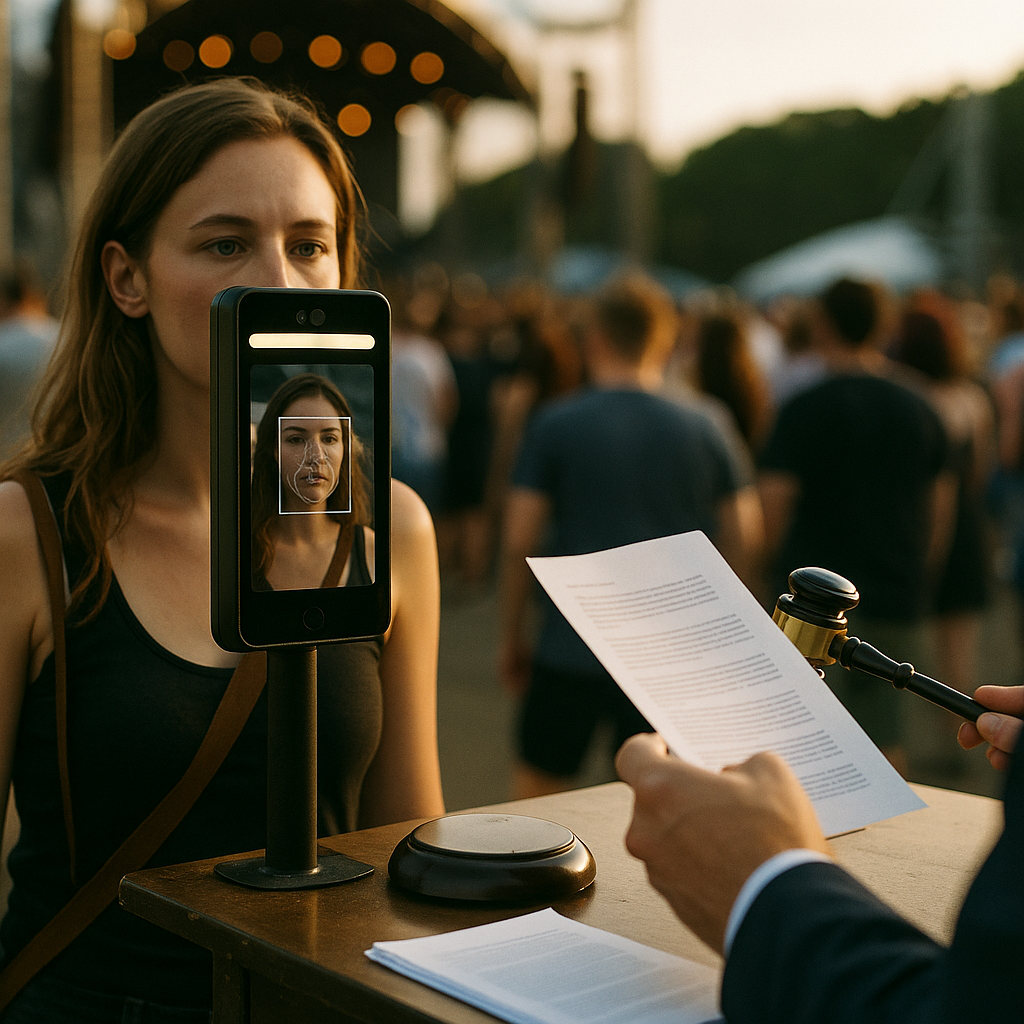
Legal Considerations For Brands Using Biometric Data In Live Event Activations are now central to experiential marketing in 2025. From face-based entry to emotion analytics and touchless payments, biometric tech can raise engagement while raising legal risk. Brands that treat biometrics as “just another data point” invite fines, lawsuits, and reputational damage. Want the upside without the blowback? Start with the law, not the gadget.
Biometric data in live events: definitions, use cases, and why it’s legally “sensitive”
Biometric data refers to information derived from a person’s biological or behavioral characteristics that can uniquely identify them. At live events, common examples include facial templates used for fast-lane entry, fingerprint or palm scans for cashless purchases, voiceprints for concierge experiences, and eye-tracking or emotion inference used to measure audience response.
Legally, biometrics are treated as sensitive because they are hard to change if compromised. A password can be reset; a faceprint cannot. Many regulators also view biometrics as having an elevated potential for surveillance, discrimination, and unwanted profiling—especially in crowded public spaces where people may not expect identity-grade data collection.
Brands often ask a practical question: “If we never store an image, is it still biometric data?” In many jurisdictions, templates and derived identifiers still count as biometric data even if the original image is deleted. Another frequent question is whether “anonymous” emotion analytics is biometric. If the system can identify or single out a person, or if the output is linked to a device ID or ticket profile, it may be considered personal data and sometimes biometric data depending on local definitions.
Bottom line: treat any system that detects, measures, or authenticates a person’s body or behavior as high-risk data processing and design the activation accordingly.
Privacy laws and consent requirements for biometric privacy
In 2025, the legal landscape for biometric use at live activations is a patchwork. Your obligations depend on where the event occurs, where attendees live, and who controls the processing (brand, venue, agency, or technology vendor). The safest approach is to plan for the strictest standard you can reasonably meet.
Key compliance themes appear across major regimes:
- Lawful basis and explicit consent: Many privacy frameworks require a strong legal justification for processing biometrics. In practice for brand activations, explicit, informed, opt-in consent is often the most defensible basis. “By entering the venue you agree” is rarely sufficient for biometrics.
- Clear notice at the point of collection: Attendees should understand what is collected, why, how long it is kept, who receives it, and how to withdraw consent. Notice must be understandable in a live-event environment—short, prominent, and reinforced digitally.
- Data minimization: Collect only what is necessary for the stated purpose. If the goal is faster entry, you likely don’t need ongoing emotion analytics or cross-event identity linking.
- Purpose limitation: Do not reuse biometric data for unrelated marketing, ad targeting, or training AI models unless that use is disclosed and separately consented to where required.
- Rights handling: Build a practical method for access, deletion, correction, and portability requests. Brands should anticipate requests immediately after events when social sharing spikes.
For U.S. activations, be mindful that certain states impose specific biometric consent and retention rules and can expose brands to litigation. For EU/UK contexts, biometric processing is often treated as a special category requiring heightened safeguards and a documented assessment. If your activation may include minors or a family audience, requirements can become stricter quickly, especially around consent and marketing.
Practical takeaway: plan consent and notice like you would for a regulated financial product—because biometrics are regulated like high-impact data.
Risk management: DPIAs, vendor contracts, and accountability controls
Live events move fast; regulators and plaintiffs’ lawyers do not. Strong governance is what keeps a one-week activation from turning into a multi-year legal problem. In 2025, brands that can prove they assessed risk and implemented controls are better positioned in enforcement inquiries and disputes.
Start with a formal risk assessment. Depending on jurisdiction, you may need a Data Protection Impact Assessment (DPIA) or similar documented evaluation. Even where not mandatory, it is a best practice for EEAT because it demonstrates diligence and explains design decisions.
Include these elements in your assessment and operating plan:
- Data map: What is collected (raw images, templates, liveness signals), where it flows (devices, cloud regions), who can access it, and when it is deleted.
- Role clarity: Identify who is the data controller and who is the processor. At activations, brands often share control with venues or ticketing partners. Define responsibilities in writing.
- Necessity and proportionality: Document why biometrics are needed versus less intrusive alternatives (QR codes, NFC wristbands, manual check-in).
- Failure modes: What happens if facial recognition fails, network drops, or a user refuses biometrics? Plan a frictionless non-biometric path.
- Training and SOPs: Staff need scripts and procedures for consent, troubleshooting, and escalation of privacy requests.
Vendor contracting is where many activations quietly fail. Your agreements should cover:
- Processing instructions: No secondary use, no model training, no sale or sharing beyond your written instructions.
- Security standards: Encryption, access controls, logging, and vulnerability management appropriate to sensitive data.
- Subprocessors: Full list, approval rights, and flow-down obligations.
- Retention and deletion: Specific timelines, deletion verification, and handling of backups.
- Incident response: Tight breach notification timelines and clear responsibility for attendee notification and regulator engagement.
- Audit rights: The ability to review compliance evidence, especially for temporary event deployments.
Brands often ask: “Can we just rely on the vendor’s standard terms?” For biometrics, standard terms are rarely adequate. Negotiate for event-specific safeguards and insist on written proof of deletion after the activation ends.
Security and retention: encryption, deletion schedules, and breach readiness
Biometric security is both a legal requirement and a trust requirement. Because activations are time-bound, teams sometimes treat the system as “temporary.” Attackers do not. Your security posture must match the sensitivity of the data, even if collection lasts only one weekend.
Security controls to prioritize for live event activations:
- Encrypt in transit and at rest: Use modern encryption and manage keys securely. Avoid hard-coded credentials in kiosks or tablets.
- Minimize raw capture: When feasible, avoid storing raw images or audio; store only what is needed, and prefer on-device processing where it reduces exposure.
- Strong access controls: Role-based access, least privilege, and multifactor authentication for admin consoles.
- Logging and monitoring: Maintain audit logs for access and changes, and monitor for unusual spikes in lookups or exports.
- Secure kiosk operations: Lock down ports, prevent local caching, harden devices, and plan for physical security in high-traffic areas.
Retention is where “cool tech” often becomes “indefensible.” For many brand activations, the legitimate business need ends when the event ends. If you want post-event personalization, consider storing a non-biometric token and re-collect biometrics only with a fresh opt-in at the next activation.
Create a retention schedule that is:
- Short: Default to days or weeks, not months, unless you can justify longer storage.
- Specific: Different timelines for raw capture, templates, logs, and support tickets.
- Provable: Capture deletion confirmations from vendors and verify that backups and caches are addressed.
Breach readiness must be practical. Prepare a runbook tailored to the event: who decides, who contacts the venue, how you isolate compromised devices, and how you message attendees without downplaying the seriousness. In many jurisdictions, notification deadlines can be short, and biometric exposure may increase harm considerations.
Marketing compliance: transparency, avoiding “surveillance vibes,” and accessible opt-outs
Even if your biometric activation is technically lawful, it can still fail if attendees feel tricked or watched. In 2025, trust is a conversion lever. The goal is to design an experience that feels like a benefit, not an extraction.
Operationalize transparency in three layers:
- Pre-event: Ticketing flows, registration emails, and event pages should clearly explain the biometric feature, the benefit, and the opt-in choice.
- On-site: Prominent signage near kiosks and entry points that repeats the key points in plain language.
- Post-event: A follow-up link where attendees can manage consent, request deletion, and see a simple FAQ about what happened to their data.
Offer a real alternative. A non-biometric option must be comparable in speed and quality. If the non-biometric line is intentionally slower, consent may be challenged as not freely given. Staff should be trained to offer the alternative without pressure or judgment.
Avoid dark patterns and overreach:
- No bundling: Do not bundle biometric consent with unrelated marketing consent.
- No surprise sharing: If sponsors, venues, or production partners access any biometric-derived outputs, disclose it clearly and keep it limited.
- No covert capture: If cameras are present for security or production, separate those purposes from biometric processing. Explain the distinction in your notices.
Accessibility matters. Provide notices and consent flows that are usable for people with disabilities and for multilingual audiences where appropriate. Also anticipate biometric mismatch: some modalities perform differently across demographics, lighting, and mobility constraints. Provide a respectful fallback process, and document testing to reduce discrimination risk.
Cross-border data transfers and special populations: minors, employees, and VIPs
Live events commonly involve cross-border realities: global tours, traveling pop-ups, cloud processing, and attendees from multiple jurisdictions. This can trigger transfer restrictions and additional safeguards.
Cross-border considerations include:
- Where processing occurs: If biometric templates are processed or stored in another country, you may need transfer mechanisms and contractual protections.
- Vendor cloud regions: Confirm where data is hosted and whether it may be accessed remotely by support teams in other countries.
- Event-by-event configuration: Avoid “one global setting.” Configure retention, consent language, and access policies per location.
Special populations require extra care:
- Minors: If minors may participate, design age-aware flows. Consider restricting biometric collection entirely, or implement verifiable parental consent where required. Keep marketing use tightly limited.
- Employees and contractors: If staff biometrics are used for backstage access, the power imbalance can undermine consent. Rely on an appropriate legal basis, provide alternatives where feasible, and limit the data strictly to access control.
- VIPs and talent: Celebrity or high-profile attendee data can have heightened security and reputational stakes. Implement stronger access controls, minimize exposure, and avoid linking biometric identifiers to public-facing content without explicit permission.
Brands also ask whether they can combine event biometrics with CRM profiles. Treat this as a separate, higher-risk purpose. If you intend to link biometrics to a marketing identity, you need clear disclosure, a strong lawful basis, and strict retention boundaries. Many activations achieve the same personalization by using event-issued tokens rather than biometric identifiers.
FAQs
Do we need explicit consent to use facial recognition for event entry?
Often, yes. For brand activations, explicit opt-in consent is typically the most defensible approach because biometric identifiers are sensitive and because attendees should have a meaningful choice. Also provide a non-biometric entry option of comparable convenience.
Is storing a “face template” less regulated than storing a photo?
Not necessarily. Many laws treat biometric templates and derived identifiers as biometric data even if the original photo is deleted. Plan compliance, security, and retention around the template as the primary sensitive asset.
Can we use biometric data for marketing personalization after the event?
Only if you clearly disclose that purpose and obtain any required separate consent. Keep retention short, limit access, and consider using non-biometric tokens instead to reduce risk while still enabling personalization.
What should our on-site signage and notice include?
Explain what is collected, why, who receives it (including vendors and partners), how long it is retained, how to opt out, and where to exercise data rights. Use plain language and place signage where the biometric capture occurs.
How long should we keep biometric data from a live event?
Keep it only as long as needed for the stated purpose. For many activations, that means deleting biometric data shortly after the event ends, once reconciliation and support needs are complete. Document the schedule and obtain deletion confirmation from vendors.
Who is liable if our biometric vendor has a breach?
Both parties can face consequences depending on roles and contracts. Brands may still be accountable to attendees and regulators if they selected the vendor and determined the purposes of processing. Use strong contracts, diligence, and incident-response coordination to reduce exposure.
Do we need a DPIA for a biometric activation?
In many jurisdictions, biometric processing triggers assessment requirements or is strongly recommended. Even when not strictly required, a DPIA-style assessment helps demonstrate necessity, proportionality, and mitigation measures if complaints arise.
Biometric activations can deliver smoother entry, richer experiences, and stronger brand recall, but in 2025 they also carry heightened legal and trust expectations. Treat biometrics as sensitive data, secure explicit consent, minimize what you collect, and build deletion into the plan. When governance, vendor controls, and transparency lead the creative, your activation earns participation instead of scrutiny.