


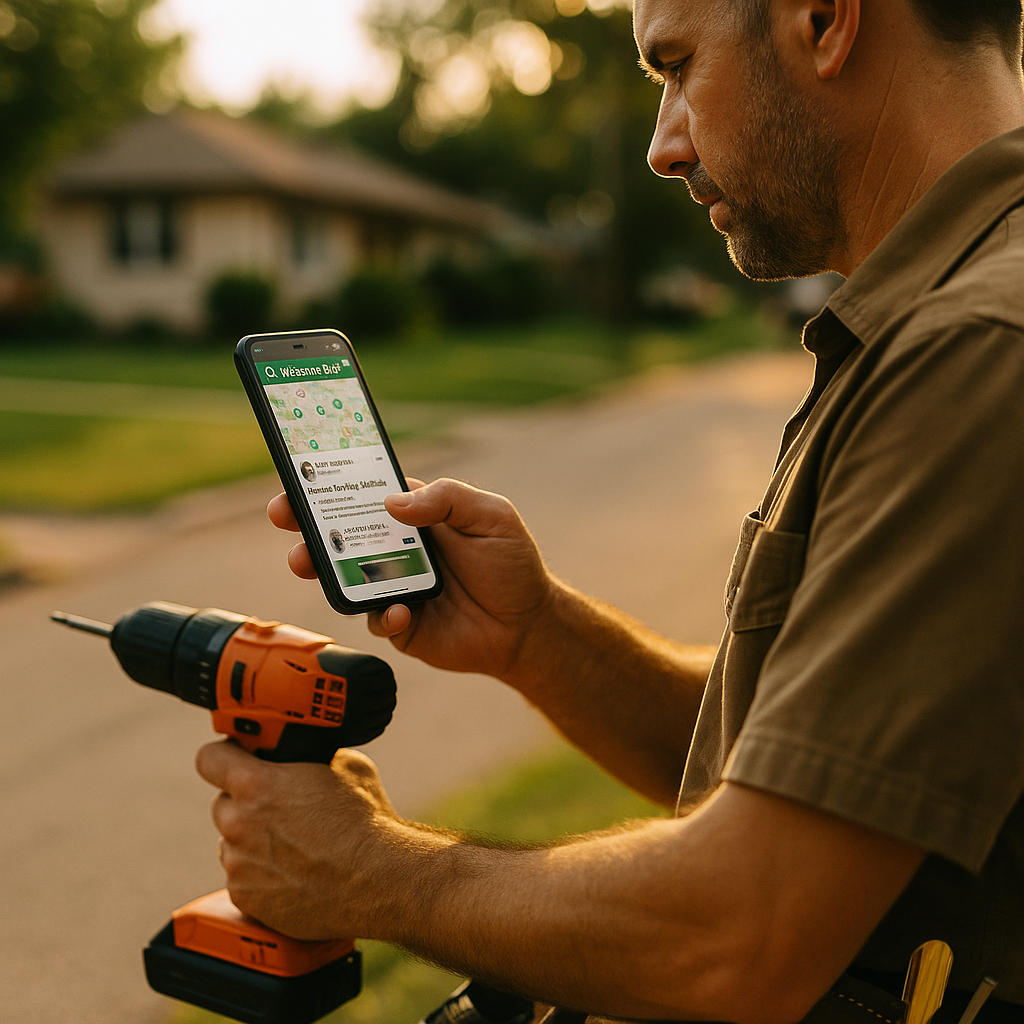
Leveraging local neighborhood apps for service-based brand growth has become one of the fastest ways to turn nearby attention into booked jobs in 2025. These platforms concentrate intent: people ask for help, request recommendations, and hire quickly. If you show up with credibility, clarity, and a process, you can win consistently without “going viral.” Ready to become the obvious local choice?
Local neighborhood apps marketing: picking the right platforms and use cases
Local neighborhood apps aren’t all the same, and your results depend on matching the platform to how people buy your service. Start by identifying where your ideal customers already ask for recommendations and where service requests are posted most often. Common patterns:
- Recommendation-first communities: Users post “Who does X near me?” and hire from replies. These are strong for home services, wellness, tutoring, pet care, and local professional services.
- Request/lead marketplaces inside communities: Some platforms include quote requests or “need help” posts that behave like warm leads.
- Hyperlocal group messaging: Best for building familiarity over time (especially for recurring services like cleaning, lawn care, dog walking, mobile detailing, or accounting/tax support).
Choose one primary app and one secondary app to avoid spreading yourself thin. Then select a use case:
- Demand capture: respond quickly to service requests and recommendation threads.
- Trust building: post useful tips, answer questions, and share proof without sounding like an ad.
- Retention and referrals: stay visible to existing customers so they rebook and recommend you.
Answer the question most owners miss: What do people come here to do? If they come to solve problems fast, your content must be concise and action-oriented. If they come to chat and share, your approach should be more conversational and community-first.
Service-based brand growth strategy: define your niche, offer, and service area
Neighborhood apps reward specificity. A general “handyman” profile is easy to ignore; “door and lock repairs + drywall patching within 5 miles” feels hireable. Build your strategy around three elements:
1) A tight niche statement
Use a one-sentence positioning line you can repeat everywhere: “I help [local area] homeowners solve [specific problem] with [unique approach/benefit].” Examples:
- Plumber: “Emergency leak fixes and water heater swaps in Northwood, usually same-day.”
- Mobile mechanic: “Brake and battery service at your driveway in Eastview and nearby.”
- Therapist: “Evening anxiety counseling for working adults in Riverside, telehealth available.”
2) A clear starter offer
People on neighborhood apps want low-friction decisions. Offer a first-step service that reduces uncertainty:
- “Free 10-minute phone diagnosis” (for many professional services)
- “Flat-rate service call” (for trades)
- “New-client intro package” (for wellness and recurring services)
3) A realistic service radius
Define your core zone and your extended zone. State it clearly in your profile and replies: “Primary: Midtown + 3 miles. Extended: within 8 miles with appointment.” This prevents wasted conversations and improves conversion because prospects feel you are truly local.
Expect the follow-up question: “Should I post my prices?” If your service is standardized (cleaning packages, lawn mowing, mobile detailing), publish a range or menu. If jobs vary (electrical, remodeling), publish minimums and what affects price. This reduces tire-kickers while signaling professionalism.
Hyperlocal customer acquisition: optimize your profile with proof and compliance
Your profile is your landing page. On neighborhood apps, people often decide within seconds. Build it to satisfy three needs: competence, trust, and fit.
Profile essentials (EEAT-aligned)
- Real identity: use your actual business name (or your name if you’re a solo provider), consistent with your website and Google Business Profile.
- Service list that matches what you want to sell: don’t list everything you can do—list what you want more of.
- Location clarity: neighborhoods served, travel limits, and availability windows.
- Licenses/insurance where relevant: state “licensed and insured” only if true; include license number where allowed and appropriate.
- Proof: before/after photos, certifications, short case results, and testimonials (with permission).
- Response promise: “Replying within 1 hour during business hours” sets expectations and nudges action.
Make expertise visible without overselling
Replace claims with verifiable detail. Instead of “best in town,” use specifics: “10+ years in residential rewires,” “background-checked team,” or “specialized in senior-friendly home modifications.” When you share outcomes, keep them concrete: “Replaced failing sump pump; prevented basement flooding during heavy rain; job completed in 2 hours.”
Safety and community rules
Neighborhood apps often enforce strict policies on promotions, contact info, and solicitation. Read the rules before posting. If direct links are discouraged, invite people to message you for a quote and keep your replies helpful. Never scrape user data or spam multiple groups with identical posts—this hurts your reputation and can get you removed.
Answer the inevitable question: “How do I stand out if competitors are everywhere?”
Stand out through clarity + speed + proof. Most providers are vague, slow to respond, and light on evidence. You can win by being the opposite.
Neighborhood app engagement tactics: earn visibility without sounding like an ad
Success comes from participating like a neighbor, not broadcasting like a billboard. Aim for a repeatable weekly rhythm that balances value and conversion.
1) The “helpful reply” playbook
When someone asks for a recommendation, respond with a short, structured message:
- Confirm fit: “Yes—this is exactly what I do.”
- Offer one useful insight: a quick diagnostic question or safety tip.
- Provide a next step: “Message me your ZIP + photos and I’ll give options today.”
- Include proof: “I can share recent photos/reviews if helpful.”
Keep it human. People hire people, even when they’re hiring a company.
2) Post content that solves recurring local problems
Instead of “Book now,” publish posts like:
- “3 signs your water heater is about to fail (and what to do first)”
- “How to choose a reputable mover: questions to ask before you pay a deposit”
- “Seasonal checklist for [your neighborhood] homeowners this month”
End with a soft call to action: “If you want me to take a look, message me with a photo.” This respects the community and still drives leads.
3) Use social proof the right way
Ask happy customers to recommend you in the app where they found you. Provide a simple prompt they can copy:
“If you were happy with the service, would you mind posting a quick recommendation in the neighborhood app? Mention what I helped with and the area—thank you.”
Don’t offer incentives for reviews if the platform prohibits it. Focus on authenticity: what you did, how you communicated, and whether you showed up on time.
4) Host micro-events and community moments
For certain services, small in-person moments build disproportionate trust:
- Free “ask a plumber” Q&A at a community center
- Pet care meet-and-greet at a park
- Home safety checklists for seniors
Post a recap with practical takeaways and invite questions. This signals real-world presence—an important trust marker.
Local service leads conversion: messaging scripts, follow-up, and booking systems
Neighborhood apps can generate a lot of “interested” messages. Converting them requires a light system that feels personal but stays efficient.
Response speed is a competitive advantage
Many threads turn into a hiring decision within hours. Set notifications and commit to a response window. If you can’t respond fast, use a saved reply that still sounds human: “Thanks for reaching out—on a job right now. If you share photos + your address cross-streets, I’ll reply by 5 pm with options.”
Qualify without friction
Ask only what you need to estimate accurately:
- Location (neighborhood or ZIP)
- Problem summary (what happened, when it started)
- Photos/video if relevant
- Timing urgency (today/this week/flexible)
- Access constraints (parking, pets, gate codes, stairs)
Offer two paths to yes
- Fast path: “I can come today between 3–5. Service call is $X; repairs quoted on site.”
- Planned path: “Or we can book a 15-minute call tomorrow morning to confirm scope and schedule.”
This prevents lost leads when people can’t commit immediately.
Reduce no-shows and ghosting
- Send a confirmation message with time window, arrival process, and what to prepare.
- Use a simple cancellation policy (politely stated).
- After the job, send a completion summary: what you did, what to watch for, and maintenance tips.
Route leads into a real booking system
Even if the first contact is inside the app, your operations should live in a calendar/CRM. Use a dedicated intake form or scheduling link where allowed. If links are restricted, ask for an email or phone number inside the app and move the conversation with consent. Keep records for warranty, follow-up, and repeat business.
Community trust and reputation management: protect your brand while scaling
Neighborhood apps can build trust quickly—and damage it quickly. Reputation management must be proactive, not reactive.
Create a “trust stack”
- Identity consistency: same name, logo, and service description across your website, Google Business Profile, and neighborhood apps.
- Operational reliability: punctuality, clear communication, written estimates, and clean handoffs.
- Proof library: a folder of permissioned photos, short case notes, and testimonials you can share when asked.
- Community contribution: occasional advice posts and local partnerships.
Handle negative feedback with restraint
If someone posts a complaint:
- Respond once, calmly, and invite a private resolution.
- Stick to verifiable facts and avoid personal attacks.
- Offer a clear remedy if appropriate.
Many readers judge you more by how you respond than by the complaint itself.
Measure what matters
Track a simple set of metrics monthly:
- Leads from each app (count)
- Response time (average)
- Booked jobs (count and value)
- Close rate (booked/leads)
- Repeat bookings and referrals
Then refine: double down on the neighborhoods producing the best jobs, adjust your offer, and improve your scripts. Growth comes from iteration, not volume posting.
FAQs: leveraging neighborhood apps for service businesses
Which neighborhood apps work best for service-based businesses?
The best apps are the ones where your ideal customers actively ask for recommendations and post service requests in your service radius. Test one primary platform for 60–90 days, track leads and close rate, then add a second platform only if you can maintain fast response times.
How often should I post without annoying the community?
Aim for 1 helpful post per week and 3–5 thoughtful comments/replies spread across the week. Prioritize responding to requests and recommendation threads over publishing promotional posts. Consistency matters more than frequency.
Should I share pricing in neighborhood app posts?
Share pricing when it’s standardized or when you can clearly state minimums and what drives cost. A simple range plus what’s included reduces back-and-forth and filters out poor-fit leads, while still inviting serious prospects to message you for an exact quote.
How do I get more recommendations inside the app?
Ask right after a successful job, make it easy, and be specific: request that the customer mention the service performed and the neighborhood. Do not pressure customers, and follow platform rules on incentives and review solicitation.
What’s the fastest way to increase conversions from app messages?
Reply quickly, ask a short set of qualifying questions, and provide two clear next steps (book now or schedule a quick call). Add proof—photos, credentials, and concise job summaries—so prospects feel confident choosing you.
How do I protect my reputation if someone leaves a negative comment?
Respond calmly once, acknowledge the concern, and move toward resolution privately. Avoid arguing in public threads. If you made a mistake, own it and outline the fix. If the claim is inaccurate, state facts without escalating.
In 2025, neighborhood apps reward service businesses that show up consistently, communicate clearly, and prove their expertise in real time. Pick the right platform, tighten your offer, and treat your profile like a landing page. Then win trust through helpful replies, fast follow-up, and reliable delivery. Do that well, and local conversations will turn into predictable bookings.