


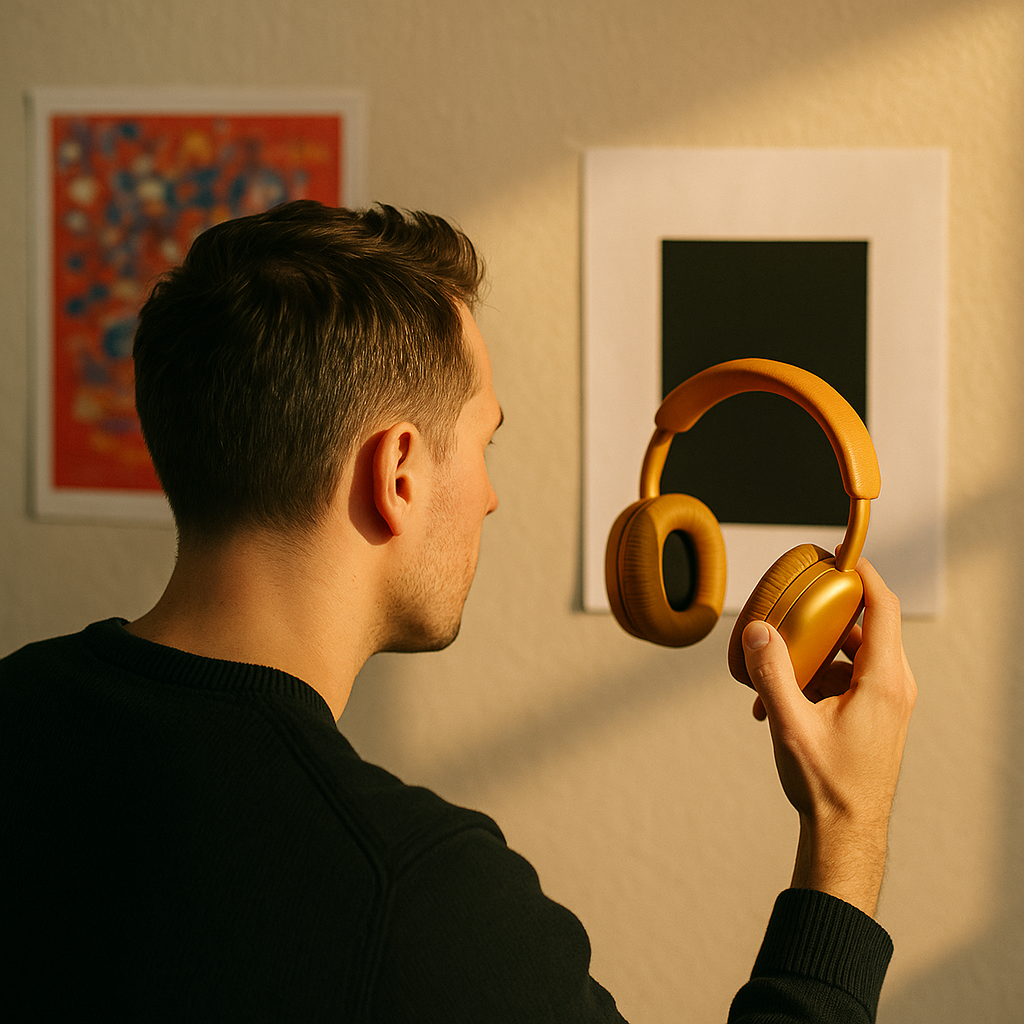
Scroll feeds move fast, notifications never stop, and most design competes by shouting. In 2025, low stimulus visuals are the rare creative choice that earns attention by reducing friction: calmer color, fewer elements, slower motion, and clearer hierarchy. This approach isn’t bland—it’s strategic, measurable, and kinder to the brain. Ready to stand out by turning the volume down?
Why digital noise fatigue is reshaping attention (secondary keyword: digital noise fatigue)
Digital experiences are louder than ever: autoplay videos, animated banners, push alerts, and UI patterns designed to keep people scrolling. The result is digital noise fatigue—a mix of cognitive overload and emotional weariness that changes how people process information and make decisions.
From a user perspective, noise fatigue shows up as:
- Shorter patience for confusing pages, pop-ups, and visual clutter
- More scanning and less deep reading
- Lower trust when a page feels manipulative or overwhelming
- Higher abandonment when the next option is one swipe away
Low stimulus visuals work because they align with how attention functions under stress. When users are overloaded, the brain prioritizes clarity: obvious next steps, clean information grouping, and predictable layout. Calm visuals reduce competing signals so your message becomes easier to perceive, remember, and act on.
If you’re wondering whether “calm” reduces impact, the practical answer is no—not when calm is paired with strong hierarchy. A quiet interface can still be decisive: one clear headline, one primary action, and one story at a time.
What low stimulus design looks like in practice (secondary keyword: low stimulus design)
Low stimulus design is not simply “minimalism.” Minimalism is an aesthetic. Low stimulus visuals are a behavioral choice: reduce sensory load so users can think, choose, and complete tasks without friction.
Common characteristics include:
- Restrained color: fewer hues, lower saturation, careful contrast for readability
- Intentional spacing: generous margins and line height to prevent crowding
- Reduced motion: minimal animations, no constant loops, gentle transitions
- Clear typographic hierarchy: fewer fonts, consistent scale, scannable structure
- Limited simultaneous calls-to-action: one primary action per screen whenever possible
- Predictable patterns: navigation and layout that feel familiar and easy to learn
Low stimulus does not mean “no personality.” Brands can still feel distinctive through:
- High-quality imagery with simple compositions and natural lighting
- Signature typography used consistently, without visual noise
- Microcopy that’s human and specific, rather than pushy
- One memorable accent: a single bold color, shape, or illustrative motif used sparingly
Answering a common follow-up: “Will my page look empty?” It shouldn’t. The goal is structured breathing room. Space becomes a tool for emphasis, not a lack of content.
The cognitive science behind calm visuals (secondary keyword: cognitive load)
In design terms, people don’t just “see” a screen—they interpret it. Every extra element adds decisions: Is this important? Is that an ad? What should I click? That mental effort is cognitive load, and high load reduces comprehension, accuracy, and confidence.
Low stimulus visuals reduce cognitive load by:
- Lowering competition between elements, making the primary message dominant
- Improving information chunking, so users process in groups rather than fragments
- Reducing vigilance demand, especially when motion and bright contrast fight for attention
- Supporting working memory, since users don’t have to remember where things are or what they mean
This matters beyond aesthetics. When people feel overwhelmed, they often default to three behaviors: bounce, delay, or choose the safest option. Calm visuals help users move forward with less hesitation because the interface signals: “This is understandable. This is under control.”
If you work in regulated or high-stakes industries—health, finance, education—this effect becomes even more important. Users need to read carefully and trust what they’re reading. A loud interface can unintentionally communicate risk or manipulation.
How low stimulus visuals improve UX and accessibility (secondary keyword: accessible web design)
Design that reduces stimulation often aligns naturally with accessible web design, but it still needs discipline. Accessibility isn’t just contrast ratios; it’s also predictability, readability, and comfort for a wider range of users—including those with ADHD, anxiety, migraines, vestibular disorders, or sensory sensitivities.
Practical accessibility wins that low stimulus visuals can deliver:
- Readable typography: adequate font size, line height, and strong hierarchy
- Motion control: fewer animations and no essential information conveyed only through motion
- Clear focus: obvious active states for keyboard navigation and links
- Reduced clutter: fewer competing elements improves comprehension for many users
To make this approach genuinely inclusive, pair calm visuals with explicit accessibility checks:
- Contrast testing for text and interactive elements (especially for muted palettes)
- Touch target sizing so buttons and links are easy to activate on mobile
- Consistent labels and plain-language UI copy (avoid clever but unclear wording)
- Respect user settings such as reduced motion preferences
A key follow-up question is, “Can calm visuals hurt accessibility if the palette is too soft?” Yes—if contrast drops too far or hierarchy becomes ambiguous. The fix is simple: keep calm color choices, but ensure decisive contrast where it matters—body text, primary actions, form fields, and error states.
Brand differentiation without shouting (secondary keyword: brand differentiation)
Many teams fear that quieter visuals will disappear in crowded feeds. In practice, brand differentiation can become stronger when you stop mimicking the loudest patterns in the market.
Low stimulus visuals differentiate brands by signaling:
- Confidence: you don’t need gimmicks to earn attention
- Clarity: you respect the user’s time and focus
- Quality: restrained design often feels more intentional and premium
- Trust: fewer manipulative elements, fewer distractions, cleaner claims
To avoid “generic minimalism,” build a calm identity system with specific, repeatable choices:
- One iconic visual move: a distinctive crop style, border radius, grid rhythm, or photography direction
- A controlled palette: neutrals plus one accent used strategically for actions and emphasis
- Typographic signature: a primary font with a clear scale and spacing rules
- Content voice: concise, direct microcopy that guides without pressure
Another follow-up: “Does this work for energetic brands?” Yes. Energy can come from message and moment, not constant visual stimulation. Use intensity like a spotlight: reserve bold color, strong contrast, or animation for key moments—launches, headlines, or a single conversion step—so it lands with more force.
Implementing low stimulus visuals: a practical playbook (secondary keyword: conversion rate optimization)
Calm design should pay off in outcomes you can measure. Done well, it supports conversion rate optimization by reducing decision friction and making next steps obvious. Here’s a practical playbook you can apply to websites, product interfaces, landing pages, email, and social creative.
1) Start with an attention audit
- List every element competing for attention on the screen: banners, badges, pop-ups, animations, carousels, secondary CTAs.
- For each, ask: Does this help the user complete the primary task right now?
- Remove, delay, or demote anything that doesn’t.
2) Design a single dominant path
- One primary CTA per page section.
- Clear reading order: headline → proof → details → action.
- Use whitespace and size contrast to show what matters most.
3) Reduce motion to “meaningful moments”
- Replace constant animation with micro-interactions that confirm actions (hover, focus, success states).
- Avoid auto-rotating carousels; if you keep them, make them user-controlled and slow.
- Respect reduced-motion preferences and avoid motion that can trigger dizziness.
4) Choose calm colors without sacrificing clarity
- Use muted backgrounds but keep text contrast strong and consistent.
- Reserve the accent color for primary actions and key highlights.
- Ensure error, warning, and success states remain unmistakable.
5) Strengthen credibility with visible evidence
- Use specific claims and support them: certifications, methodology, independent reviews, or clear product specs.
- Add human attribution where appropriate: who wrote the content, who reviewed it, and what expertise they bring.
- Avoid vague social proof; use verifiable testimonials with context (role, use case), with permission.
6) Measure what changes
- Behavior: scroll depth, time on task, form completion, misclick rate, rage clicks.
- Outcomes: conversion rate, qualified leads, trial starts, checkout completion.
- Quality: support tickets, refund rate, user-reported confusion, accessibility feedback.
If you need a low-risk rollout, test calm visuals on one high-intent page first (pricing, sign-up, appointment booking). Then expand based on results. Calm is not a faith-based design decision—it’s a hypothesis you can validate.
FAQs
What are low stimulus visuals?
Low stimulus visuals reduce sensory and cognitive load through restrained color, fewer competing elements, minimal motion, and clear hierarchy. The goal is to make content easier to process and actions easier to complete, especially in noisy digital environments.
Is low stimulus design the same as minimalism?
No. Minimalism is a style; low stimulus design is a user-centered approach focused on comfort, clarity, and task completion. A design can be visually rich and still low stimulus if it avoids clutter, aggressive contrast, and constant motion.
Will calmer visuals reduce engagement on social media?
Not necessarily. Calm creative can increase “stop power” by looking different from high-saturation, high-motion posts. The key is strong composition: one focal point, one message, and one clear next step.
How do I keep a calm design from feeling generic?
Build differentiation through consistent brand assets: a signature type scale, a controlled accent color, distinct photography direction, and specific microcopy. Calm doesn’t mean identical—it means intentional.
What mistakes should I avoid when adopting low stimulus visuals?
- Reducing contrast too much and hurting readability
- Removing hierarchy so users can’t tell what’s important
- Hiding key actions behind ambiguity to stay “clean”
- Overusing whitespace without improving structure and flow
How can I prove low stimulus visuals are working?
Run A/B tests or before-and-after comparisons on key pages. Track conversion rate, form completion, misclicks, time to complete tasks, and qualitative feedback. Pair metrics with usability testing to see where calm design reduces confusion.
In a high-noise digital world, attention is earned through clarity, not intensity. Low stimulus visuals reduce cognitive load, support accessibility, and strengthen trust by making the next step obvious and the experience comfortable. In 2025, this approach differentiates brands that respect focus and time. The takeaway: design like a good conversation—one point at a time, with space to think.