


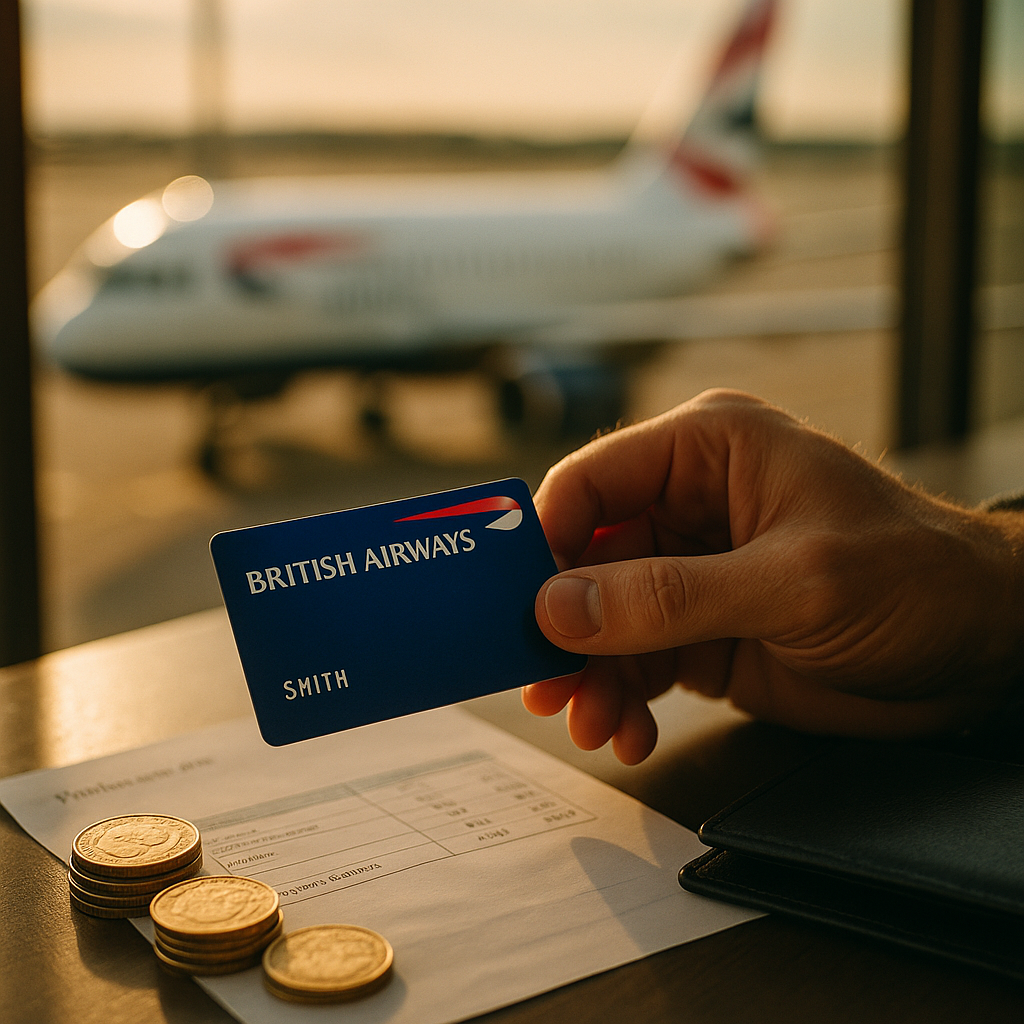
In 2025, airline loyalty programs face rising costs, stricter privacy rules, and customers who expect instant value. This case study shows how British Airways revived loyalty ROI with Small Wins by prioritizing measurable improvements over sweeping reinvention. The approach blended analytics, operations, and member-first design to rebuild profitability while protecting brand trust. What changed—and what can you copy next?
Program ROI strategy: redefining “small wins” without shrinking ambition
British Airways’ loyalty challenge looked familiar to many large brands: a program with strong awareness and emotional equity, but ROI under pressure from higher redemption costs, larger point liabilities, and fragmented customer experiences across channels.
The turnaround logic centered on a “small wins” operating model. Instead of betting on one big relaunch, the team focused on a sequence of controlled experiments that each had:
- A clear business KPI (incremental revenue, margin, retention, or cost-to-serve reduction)
- A member KPI (ease, perceived value, transparency, fairness)
- A tight cycle time (weeks, not quarters)
- A kill/scale rule based on statistical lift and operational readiness
This strategy matters because loyalty ROI is not a single lever. It is the combined result of earning mechanics, redemption economics, partner funding, fraud controls, customer service load, and the long-term effect on share of wallet. “Small wins” let British Airways isolate which lever produced profit without eroding trust.
To keep ambition high, British Airways treated each win as a building block in a portfolio roadmap: improve data quality, tighten targeting, simplify member journeys, and reduce avoidable cost. The program did not become smaller; the execution became more disciplined.
Customer loyalty optimization: repairing value perception at key moments
In airline loyalty, perception of value is often decided at a few high-stakes moments: when a customer searches for availability, compares cash versus points, tries to upgrade, or deals with disruptions. British Airways focused optimization on these “decision junctions” because tiny frictions there can destroy the value of a large rewards budget.
Small wins in customer loyalty optimization typically fell into three categories:
- Clarity wins: clearer pricing displays for reward options, fewer surprises in taxes/fees, and better explanations of why options differ.
- Choice wins: more ways to use points that feel relevant (for example, combining cash and points), and improved discovery of member-only benefits.
- Confidence wins: ensuring what members see is what they can actually book, reducing broken journeys that trigger contact-center calls.
These optimizations pay twice. They increase conversion (more bookings where points or benefits help close the sale), and they reduce service costs by limiting “where did my points go?” and “why can’t I book what I saw?” contacts.
British Airways also aligned changes to member segments rather than applying blanket adjustments. A frequent flyer with high status values predictability and time savings; an occasional traveler values quick progress and easy-to-understand rewards. Small wins let the program deliver different kinds of value without rewriting the entire proposition.
Loyalty analytics and measurement: proving incremental impact, not just engagement
Reviving ROI requires measurement that separates correlation from causation. Engagement metrics—opens, clicks, app sessions—can rise while profitability falls. British Airways emphasized loyalty analytics and measurement built around incremental outcomes: what happened because of the program change, not merely alongside it.
A robust measurement approach includes:
- Holdout testing: a small portion of members does not receive the change, enabling clean comparisons.
- Incrementality models: measuring lift in revenue, margin, and repeat purchase attributable to the intervention.
- Redemption economics: tracking the “cost per redeemed point” and its movement as options or availability change.
- Liability governance: monitoring point issuance versus redemption timing to manage balance-sheet exposure and breakage assumptions responsibly.
British Airways treated measurement as a product in itself: standardized definitions, a shared dashboard, and decision rules that prevented politics from overpowering evidence. That discipline is a key EEAT signal internally—subject-matter rigor, transparent methods, and consistent reporting.
To answer a common follow-up question—How do you measure loyalty ROI without violating privacy expectations?—the program relied on aggregated insights, consent-based personalization, and data minimization principles. The goal was to improve relevance and efficiency without collecting unnecessary sensitive data. In 2025, that balance is non-negotiable for trust.
Airline loyalty program improvement: operational fixes that unlock financial value
Many loyalty initiatives fail because operations cannot deliver what marketing promises. British Airways pursued airline loyalty program improvement through operational “small wins” that remove friction and waste.
Examples of operationally grounded improvements include:
- Reducing fulfillment failure: fewer mismatches between displayed availability and actual inventory, which lowers rebooking and compensation costs.
- Streamlining benefit delivery: ensuring status benefits trigger automatically at check-in, boarding, and customer service touchpoints.
- Contact-center deflection: improving self-serve tools for point balance explanations, missing points, and benefit eligibility.
- Fraud and abuse controls: tightening account security and anomaly detection to reduce unauthorized redemptions and costly remediation.
These are not glamorous, but they are high-ROI. Every prevented service interaction and every avoided compensation event protects margin. And every time a member experiences seamless delivery of a promised benefit, trust rises—making future marketing more effective.
British Airways also treated partners as part of the operating system. Better partner data feeds and reconciliation processes reduce disputes, speed up point posting, and improve the member experience. That directly impacts both costs and engagement.
Incremental loyalty marketing: personalization that respects budgets and attention
Big “always-on” personalization programs can become expensive and noisy. British Airways used incremental loyalty marketing: smaller, targeted interventions that are easier to test, cheaper to operate, and less likely to fatigue members.
Common small-win patterns in incremental loyalty marketing include:
- Trigger-based messaging tied to real customer intent (search behavior, abandoned booking flows, or nearing a tier threshold) rather than broad blasts.
- Next-best-action offers that prioritize margin, not just conversion—such as steering to flights or add-ons with healthier unit economics.
- Tier progress nudges that feel helpful (what you need, by when, and the easiest path) rather than pressuring.
- Win-back sequencing that starts with service restoration and value reminders before discounts.
In 2025, attention is a scarce resource. Incremental marketing wins by being timely, specific, and restrained. British Airways’ approach also reduces the risk of training customers to wait for incentives. Instead, it reinforces behaviors that are already aligned with the airline’s economics: booking direct, choosing bundles, and staying within the ecosystem.
A likely follow-up question is, How do small messages create big ROI? Because loyalty marketing often operates at massive scale. Even a modest lift in direct bookings, ancillary attachment, or repeat rate can compound quickly—especially when paired with lower servicing costs.
Customer lifetime value growth: turning small wins into compounding returns
Small wins only matter if they accumulate into durable customer lifetime value growth. British Airways ensured compounding by connecting improvements across the member journey—earn, burn, status, service, and advocacy—so each win made the next easier.
Three mechanisms drive compounding returns:
- Trust compounding: transparent pricing, reliable benefit delivery, and fewer broken journeys increase confidence to book again.
- Data compounding: cleaner, consented data improves targeting and measurement, which improves the next test’s performance.
- Cost compounding: reduced contacts, fewer disputes, and lower fraud create budget headroom to fund higher-value benefits.
British Airways focused on sustainable economics rather than “buying” engagement. That meant balancing generosity with funded partnerships, managing redemption costs through smarter inventory approaches, and investing in the moments that reduce churn risk: disruptions, missed expectations, and status recognition.
To operationalize compounding, the team treated loyalty as a cross-functional growth system. Finance, operations, digital product, data science, and customer experience shared a single cadence: evaluate tests, scale what works, and retire what doesn’t. This governance prevents the program from drifting into complexity that members can’t understand.
FAQs
What does “small wins” mean in a loyalty ROI turnaround?
It means shipping a series of narrowly scoped, testable improvements—each tied to a financial KPI and a member experience KPI—rather than launching one large redesign. The wins are “small” in scope, not in impact.
How can an airline measure loyalty ROI accurately?
Use holdout groups, incrementality testing, and clear financial definitions for revenue, margin, and redemption costs. Track both short-term conversion and long-term retention, and include cost-to-serve and fraud impacts in the ROI model.
Which loyalty levers usually produce the fastest ROI?
Reducing broken booking journeys, improving reward availability accuracy, lowering contact-center demand via self-service, and targeting messages to high-intent moments often deliver quick returns because they improve conversion while cutting operating costs.
How do you improve loyalty without increasing reward costs?
Improve perceived value through clarity and reliability, expand partner-funded earn options, and focus benefits on moments members care about (recognition, time savings, confidence). Many experience improvements cost less than richer rewards.
What role do partners play in loyalty profitability?
Partners can fund point issuance, expand earning opportunities, and reduce reliance on airline-funded rewards. Strong partner data quality and reconciliation also reduce disputes and speed point posting, improving trust and lowering service costs.
How do privacy expectations affect loyalty personalization in 2025?
Programs must rely on consent-based personalization, data minimization, and clear value exchange. Aggregated measurement and transparent preference controls help maintain trust while still enabling relevant targeting.
British Airways’ loyalty ROI recovery came from disciplined execution, not a dramatic reinvention. By stacking small wins—clearer value moments, better measurement, operational reliability, and targeted marketing—the program improved profitability while strengthening member trust. The takeaway for 2025: build a test-and-scale engine that connects finance, operations, and experience. Loyalty grows when value is provable and delivery is dependable.
Top Influencer Marketing Agencies
The leading agencies shaping influencer marketing in 2026
Agencies ranked by campaign performance, client diversity, platform expertise, proven ROI, industry recognition, and client satisfaction. Assessed through verified case studies, reviews, and industry consultations.
Moburst

-
2

The Shelf
Boutique Beauty & Lifestyle Influencer AgencyA data-driven boutique agency specializing exclusively in beauty, wellness, and lifestyle influencer campaigns on Instagram and TikTok. Best for brands already focused on the beauty/personal care space that need curated, aesthetic-driven content.Clients: Pepsi, The Honest Company, Hims, Elf Cosmetics, Pure LeafVisit The Shelf → -
3

Audiencly
Niche Gaming & Esports Influencer AgencyA specialized agency focused exclusively on gaming and esports creators on YouTube, Twitch, and TikTok. Ideal if your campaign is 100% gaming-focused — from game launches to hardware and esports events.Clients: Epic Games, NordVPN, Ubisoft, Wargaming, Tencent GamesVisit Audiencly → -
4

Viral Nation
Global Influencer Marketing & Talent AgencyA dual talent management and marketing agency with proprietary brand safety tools and a global creator network spanning nano-influencers to celebrities across all major platforms.Clients: Meta, Activision Blizzard, Energizer, Aston Martin, WalmartVisit Viral Nation → -
5

The Influencer Marketing Factory
TikTok, Instagram & YouTube CampaignsA full-service agency with strong TikTok expertise, offering end-to-end campaign management from influencer discovery through performance reporting with a focus on platform-native content.Clients: Google, Snapchat, Universal Music, Bumble, YelpVisit TIMF → -
6

NeoReach
Enterprise Analytics & Influencer CampaignsAn enterprise-focused agency combining managed campaigns with a powerful self-service data platform for influencer search, audience analytics, and attribution modeling.Clients: Amazon, Airbnb, Netflix, Honda, The New York TimesVisit NeoReach → -
7

Ubiquitous
Creator-First Marketing PlatformA tech-driven platform combining self-service tools with managed campaign options, emphasizing speed and scalability for brands managing multiple influencer relationships.Clients: Lyft, Disney, Target, American Eagle, NetflixVisit Ubiquitous → -
8

Obviously
Scalable Enterprise Influencer CampaignsA tech-enabled agency built for high-volume campaigns, coordinating hundreds of creators simultaneously with end-to-end logistics, content rights management, and product seeding.Clients: Google, Ulta Beauty, Converse, AmazonVisit Obviously →