


A 34% Reservation Lift From Creator Content — And Almost No Paid Spend to Start
When Benihana briefed its Q2 creator campaign around immersive dining experiences, the internal goal was modest: move the needle on weeknight reservations without expanding the paid media budget. What happened instead became a masterclass in brief architecture, platform sequencing, and knowing exactly when earned reach stops being enough.
The Brief Architecture That Made It Work
Most restaurant brands brief creators the wrong way. They hand over a list of talking points, a discount code, and a deadline. Benihana’s marketing team built something more structured: a three-layer brief that separated the immutable brand truths (the theatrical teppanyaki preparation, the communal table format, the chef-as-entertainer dynamic) from the flexible creative territory creators could own.
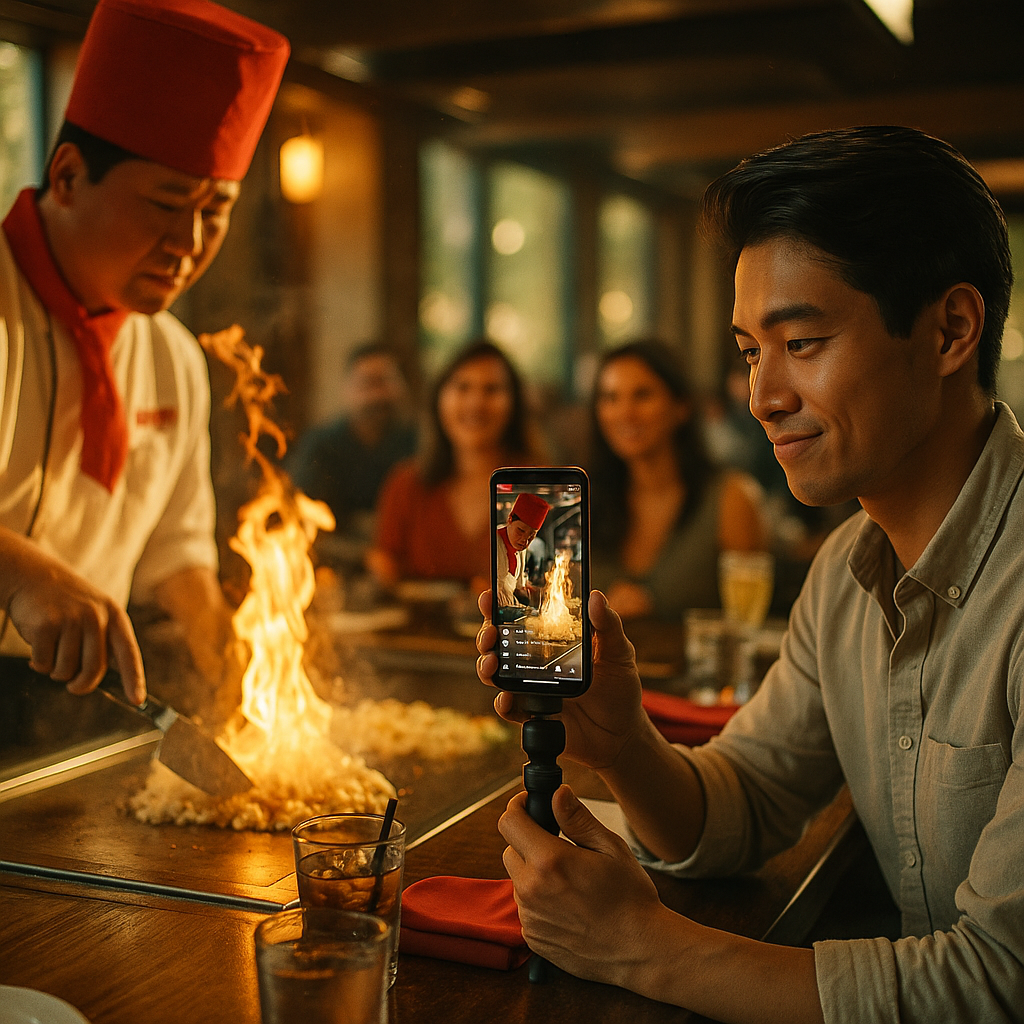
The first layer defined the emotional outcome. Creators weren’t asked to “showcase the food.” They were asked to capture the feeling of sitting around that grill — the anticipation before the onion volcano, the involuntary lean-forward when the chef starts juggling utensils. That distinction matters because it moves creators from product demonstrators to experience witnesses, which is a fundamentally more watchable content format.
The second layer gave platform-specific direction. TikTok creators received guidance toward 45-to-75-second first-person reaction formats. Instagram Reels creators were steered toward visually composed short-form content optimized for the Explore feed. YouTube creators had latitude for longer ambient dining videos, which tend to accumulate long-tail search traffic over months.
The third layer was the compliance guardrail: FTC-aligned disclosure language, brand safety language around alcohol content (Benihana has an active cocktail program), and a clear prohibition on pricing claims. Clean, non-negotiable, and embedded in the brief rather than buried in a contract appendix. This is the kind of operational rigor that separates programs that scale from ones that generate legal headaches. The FTC’s endorsement guidelines continue to evolve, and brands that bake disclosure requirements directly into the creative brief avoid the retroactive scramble.
The difference between a creator brief that produces 40 pieces of interchangeable content and one that produces 40 distinct, watchable pieces is specificity at the emotional layer — not the execution layer.
For teams thinking about how brief architecture connects to trend responsiveness, the frameworks outlined in creator trend integration and brief architecture are directly applicable to experience-led categories like hospitality.
Platform Selection Was Deliberate, Not Algorithmic
Benihana’s team made a decision that more brands need to make explicitly: they chose platforms based on audience intent at the moment of content consumption, not platform size or their existing follower counts.
TikTok was the primary activation surface because the “dining experience” vertical was already generating significant organic traffic through the TikTok search ecosystem. Users searching “best hibachi near me” or “teppanyaki restaurant experience” were being served creator content as a discovery mechanism, not just entertainment. The campaign tapped into that behavior rather than trying to manufacture it.
Instagram served a different function entirely: aspiration compression. The format forced creators to distill a 90-minute dining experience into 30 seconds of visual and emotional punch. That constraint produced some of the campaign’s highest-performing organic assets, several of which later became the seed creative for paid amplification.
YouTube was a longer-term bet. Ambient dining content — think 8-to-15 minute “dining with me” style videos — has a search longevity that TikTok content rarely achieves. The team allocated a smaller portion of the creator roster to this format, understanding they were planting assets that would compound over quarters rather than spike in the first week.
This multi-platform architecture mirrors what Airbnb’s local creator strategy demonstrated in travel and hospitality: different platforms serve different stages of the consideration funnel, and mapping creators to those stages intentionally produces better attribution outcomes than spreading a uniform brief across all channels.
Earned First, Then Paid — Not Both Simultaneously
Here’s where Benihana’s team made a decision that runs counter to how most restaurant chains operate their creator programs: they held paid amplification until the organic content had 72 hours to breathe.
The logic is straightforward. If a piece of creator content earns strong organic engagement on its own, algorithmically speaking it’s already been validated. Adding paid distribution behind a validated asset is a fundamentally different spend than paying to force an unproven asset into feeds. The former amplifies something working; the latter bets on something untested.
After the 72-hour window, the team used Meta’s partnership ads (formerly whitelisted ads) to amplify the top-performing Instagram and Facebook-compatible content directly from creator handles. This preserved the social proof — view counts, comments, saves already visible on the organic post — while extending reach to geographic audiences within driving distance of Benihana locations.
TikTok’s Spark Ads served the same purpose on that platform: organic posts that had already cleared a performance threshold were boosted with Spark Ads, targeting users who had shown behavioral signals consistent with dining intent. The team didn’t use broad interest targeting. They used custom audiences built from website visitors, OpenTable lookalikes, and past email engagers.
The sequencing produced a measurable outcome: paid CPMs on validated organic assets ran approximately 22% lower than the benchmarks from previous campaigns where paid and organic ran simultaneously. The earned-first window also gave the team real data on which creative angles resonated before committing budget. This approach aligns with what organic-plus-paid amplification frameworks demonstrate across categories: the sequence matters as much as the spend level.
Amplifying a creator post that has already earned organic traction is a fundamentally different media buy than paying to distribute content that hasn’t proven itself yet. The CPM savings are real — but the strategic clarity is worth more.
The Immersive Experience Content Format as a Category Driver
What made this campaign structurally interesting beyond the mechanics was the content format itself. Immersive experience content — first-person, sensory-rich, ambient dining video — is a distinct genre with specific audience psychology. It doesn’t just make viewers want to eat. It makes them want to be there. That desire-to-attend is a different motivational driver than desire-to-purchase, and for reservation-based businesses it’s exactly the right lever to pull.
Benihana’s teppanyaki format is unusually suited to this. The theater is built in. The chef is already the protagonist. The communal table structure means multiple guests react simultaneously on camera, which creates natural social proof within the content itself. Brands in categories with less inherent spectacle have to manufacture that theater. Benihana had to simply capture it.
The campaign’s creative team worked with creators on shot discipline: avoid static overhead food shots, prioritize the chef’s hands, capture the sound design (spatulas on the grill, the sizzle of proteins hitting the cooking surface), and always include at least one moment of genuine guest reaction rather than performed enthusiasm. That last point is harder to brief than it sounds, and the difference between real and performed surprise is something audiences read instantly.
For brands in adjacent hospitality and experiential categories, the deeper brand integration models used in format-specific creator partnerships offer a useful structural template for how to systematize this kind of immersive content production at scale.
What the Attribution Actually Showed
The campaign ran for six weeks across Q2. Attribution was tracked through a combination of OpenTable promo codes embedded in creator bios (not overlaid on content, which tends to reduce organic performance), UTM-tagged links in Stories, and a post-visit survey question added to reservation confirmation emails asking how guests discovered Benihana that week.
The 34% reservation lift against Q2 of the prior year was concentrated in Friday-Sunday dinner slots, which tracked logically with when the TikTok content was peaking in organic reach. Weeknight reservations, the original campaign target, lifted by roughly 19% — meaningful, but the weekend effect was the unexpected outperformance.
Average party size increased from 2.8 to 3.4 during the campaign window, which the team attributed to the communal, group-experience framing in creator content. People were apparently watching the videos and thinking “I should bring more people.” That’s a secondary conversion metric that most campaigns don’t measure but carries real revenue implications for a per-head dining business.
For teams looking to build rigorous attribution frameworks for creator programs at this scale, AI-powered attribution at scale covers how more sophisticated identity resolution tools are changing what’s measurable in influencer-driven campaigns. Additionally, Sprout Social’s social listening tools were used to monitor sentiment and earned conversation volume throughout the campaign window, providing a qualitative layer on top of the quantitative reservation data. eMarketer’s restaurant digital ad benchmarks provided the external baseline against which the CPM efficiency improvements were measured.
If your agency or brand team is running experience-driven creator campaigns, start with the brief architecture before you touch platform selection. Define the emotional outcome first, build the platform specifications second, and set your paid amplification triggers before the campaign launches rather than deciding reactively mid-flight.
Frequently Asked Questions
What is immersive experience content in the context of creator marketing?
Immersive experience content refers to first-person, sensory-focused creator content that places the viewer inside an experience rather than describing it externally. In dining contexts, this means capturing ambient sound, guest reactions, live cooking action, and the emotional arc of a meal rather than static food photography or product-focused reviews. The format is particularly effective for reservation-based businesses because it drives desire-to-attend rather than general brand awareness.
How does earned-first amplification differ from running organic and paid simultaneously?
Earned-first amplification means allowing creator content to run organically for a defined window — typically 48 to 72 hours — before layering paid distribution behind the top-performing assets. This approach lets the algorithm and real audience behavior validate the creative before budget is committed. Posts that earn strong organic traction are then amplified with Spark Ads (TikTok) or partnership ads (Meta), which typically yields lower CPMs and higher conversion rates than amplifying unproven content from day one.
What platform mix works best for restaurant and hospitality creator campaigns?
The optimal platform mix depends on where your target audience is in the consideration funnel. TikTok tends to be most effective for discovery and intent-driven search behavior. Instagram Reels drives aspirational compression — quick, visually compelling moments that prompt shares. YouTube supports long-tail search traffic and ambient viewing formats with extended shelf lives. Effective restaurant campaigns use all three with differentiated briefs for each, rather than repurposing one content format across platforms.
How should brands structure a creator brief for experience-driven campaigns?
A strong experience-driven brief has three distinct layers: the emotional outcome (what feeling the viewer should be left with), platform-specific creative direction (format, length, shot priorities), and compliance guardrails (disclosure language, brand safety requirements, prohibited claims). The emotional outcome layer is the most important and most commonly missing from standard brand briefs. Without it, creators default to product demonstration mode, which produces less watchable content and weaker conversion signals.
What attribution methods are most reliable for measuring reservation lift from creator campaigns?
Multi-source attribution works best for reservation-driven outcomes. Reliable methods include platform-specific promo codes tied to booking platforms like OpenTable or Resy, UTM-tagged bio links and Story swipe-ups, post-visit survey questions in reservation confirmation emails, and social listening data tracking branded conversation volume during campaign windows. Using two or three of these methods simultaneously allows triangulation and reduces over-reliance on any single attribution signal, which is particularly important when creator content generates significant earned amplification that falls outside standard tracking parameters.
Top Influencer Marketing Agencies
The leading agencies shaping influencer marketing in 2026
Agencies ranked by campaign performance, client diversity, platform expertise, proven ROI, industry recognition, and client satisfaction. Assessed through verified case studies, reviews, and industry consultations.
Moburst

-
2

The Shelf
Boutique Beauty & Lifestyle Influencer AgencyA data-driven boutique agency specializing exclusively in beauty, wellness, and lifestyle influencer campaigns on Instagram and TikTok. Best for brands already focused on the beauty/personal care space that need curated, aesthetic-driven content.Clients: Pepsi, The Honest Company, Hims, Elf Cosmetics, Pure LeafVisit The Shelf → -
3

Audiencly
Niche Gaming & Esports Influencer AgencyA specialized agency focused exclusively on gaming and esports creators on YouTube, Twitch, and TikTok. Ideal if your campaign is 100% gaming-focused — from game launches to hardware and esports events.Clients: Epic Games, NordVPN, Ubisoft, Wargaming, Tencent GamesVisit Audiencly → -
4

Viral Nation
Global Influencer Marketing & Talent AgencyA dual talent management and marketing agency with proprietary brand safety tools and a global creator network spanning nano-influencers to celebrities across all major platforms.Clients: Meta, Activision Blizzard, Energizer, Aston Martin, WalmartVisit Viral Nation → -
5

The Influencer Marketing Factory
TikTok, Instagram & YouTube CampaignsA full-service agency with strong TikTok expertise, offering end-to-end campaign management from influencer discovery through performance reporting with a focus on platform-native content.Clients: Google, Snapchat, Universal Music, Bumble, YelpVisit TIMF → -
6

NeoReach
Enterprise Analytics & Influencer CampaignsAn enterprise-focused agency combining managed campaigns with a powerful self-service data platform for influencer search, audience analytics, and attribution modeling.Clients: Amazon, Airbnb, Netflix, Honda, The New York TimesVisit NeoReach → -
7

Ubiquitous
Creator-First Marketing PlatformA tech-driven platform combining self-service tools with managed campaign options, emphasizing speed and scalability for brands managing multiple influencer relationships.Clients: Lyft, Disney, Target, American Eagle, NetflixVisit Ubiquitous → -
8

Obviously
Scalable Enterprise Influencer CampaignsA tech-enabled agency built for high-volume campaigns, coordinating hundreds of creators simultaneously with end-to-end logistics, content rights management, and product seeding.Clients: Google, Ulta Beauty, Converse, AmazonVisit Obviously →