


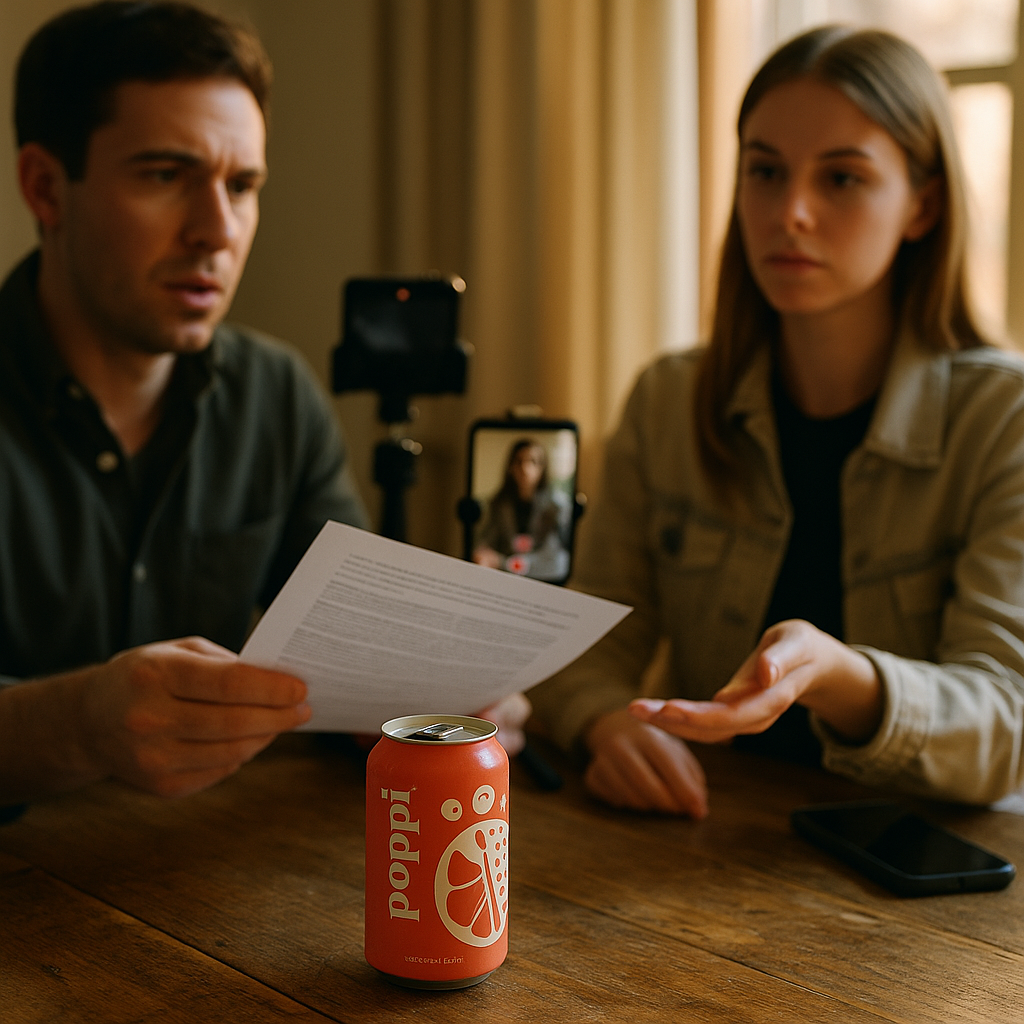
A $8.9 million class-action settlement over unproven “gut health” claims should have sunk Poppi’s credibility with health-conscious consumers. Instead, the prebiotic soda brand turned to nano-creator seeding and came out the other side with engagement rates most CPG brands would kill for. This wasn’t luck. It was a deliberate rebuild, playing out in real time in front of the exact audience that felt burned.
The Lawsuit That Threatened Everything
Poppi built its entire brand story on gut health. Prebiotics, “just 5g of sugar,” better-for-you soda that supposedly supported digestion. Then came the lawsuit: plaintiffs alleged the amount of prebiotics in each can was too small to deliver any real digestive benefit, and that the health claims were misleading marketing, not science.
The brand settled for $8.9 million without admitting wrongdoing, but the damage to the narrative was already done. Comment sections turned hostile. TikTok’s skeptical wellness community, the same crowd that had helped Poppi grow in the first place, started dissecting the ingredient panel in duets and stitch videos. This is the risk of building a brand almost entirely on a health claim: when that claim gets legally challenged, your most engaged community becomes your harshest critic.
For a challenger brand competing against Olipop and legacy soda giants, this was existential. Trust, once the core asset, was suddenly the core liability.
Why Big Influencers Were the Wrong Fix
The instinct for most marketing teams post-crisis is to buy back credibility. Book celebrity endorsements, run polished apology content, flood paid social with reassurance messaging. Poppi’s team apparently understood that approach would have backfired.
Here’s the problem with macro-influencer damage control: audiences already primed to distrust a brand can smell a paid rehabilitation campaign from a mile away. A celebrity posting “I still love my Poppi” reads as transactional, especially right after a lawsuit about misleading claims. It reinforces the exact skepticism you’re trying to dissolve.
When the crisis is about authenticity, you cannot buy your way out with the same tactics that got you into trouble.
So Poppi pivoted to something slower, cheaper, and harder to fake: seeding product to nano-creators, typically accounts with 1,000 to 20,000 followers, and letting them talk about the brand on their own terms, with their own skepticism intact.
What Nano-Creator Seeding Actually Looked Like
Nano-creator seeding isn’t a new tactic. Brands like Liquid I.V. used a similar playbook to rebuild credibility after its own scrutiny moment. What made Poppi’s version notable was the pairing of the tactic with a live legal controversy, and doing it fast.
The operational mechanics were straightforward but disciplined:
- Micro-batch product drops sent directly to nano-creators in wellness, gut-health, and skeptical-consumer niches, including some accounts that had publicly criticized the brand.
- No scripts, no approval gates on messaging. Creators were free to say the product didn’t work for them.
- Targeting dissent directly, seeding to creators who had posted critical content about the lawsuit, effectively inviting a second, more honest opinion.
- Volume over reach, prioritizing dozens of small, credible voices over a handful of large, polished ones.
This is the inverse of a typical PR strategy. Instead of controlling the narrative, Poppi handed control to the audience segment most likely to push back. That’s a genuinely risky move. It’s also the only move that works when the crisis is about trust rather than awareness.
The Math Behind Why This Works
Nano-creators consistently outperform macro and celebrity tiers on engagement rate, and the gap widens further when the topic is trust-sensitive. Industry benchmarking from eMarketer and Sprout Social has repeatedly shown nano accounts posting engagement rates several multiples higher than accounts with a million-plus followers. Audiences treat nano-creators as peers, not billboards.
There’s also a cost efficiency angle that matters to any CFO reviewing the recovery budget. Nano-creator seeding runs on product cost and modest gifting fees, not six or seven-figure endorsement contracts. Poppi could run hundreds of parallel micro-conversations for what one celebrity partnership would have cost, and each of those conversations looked and felt organic because, largely, it was.
Compare this to Ryobi’s nano-creator network outperforming paid social ROAS. Different category, same underlying principle: distributed, authentic voices at small scale can beat concentrated, expensive reach when the goal is credibility rather than pure impressions.
Handling the Skeptics Instead of Silencing Them
The boldest part of Poppi’s approach was seeding product to creators who had already criticized the brand publicly. Most legal and comms teams would flag this as high risk. Why hand ammunition to someone who’s already skeptical?
Because a critical creator who tries the product again and posts a nuanced, mixed, or even neutral take is worth more than ten glowing posts from creators with no history of doubt. It signals the brand isn’t hiding from scrutiny. It signals confidence. And when a known skeptic posts something like “okay it’s fine, I don’t think it’s a miracle cure but it tastes good and I’d drink it again,” that reads as more credible than any brand-controlled messaging ever could.
This mirrors a broader shift happening across the influencer marketing industry: brands are learning that creator selection based on relevance and credibility, not just follower count, drives better outcomes. Poppi extended that logic one step further by deliberately including detractors in the seeding pool.
Compliance Lessons for Any Brand Making Health Claims
There’s a regulatory dimension here every brand marketer should sit with. The FTC has been increasingly active on influencer disclosure and substantiation of health and wellness claims. Any brand in the functional food, supplement, or wellness beverage space needs airtight documentation behind every claim before creators, paid or organic, start repeating it.
Practical safeguards worth building into any influencer program touching health claims:
- Maintain a claims substantiation file for every ingredient benefit mentioned in creator briefs or organic seeding communications.
- Review the FTC’s endorsement guidance before greenlighting any campaign that touches efficacy or health outcomes.
- Avoid scripting specific health outcomes for creators; let them describe subjective experience rather than clinical benefit.
- Build a rapid-response seeding protocol before a crisis hits, not after. Poppi’s speed was possible because seeding infrastructure already existed.
Brands that skip this step aren’t just risking another lawsuit. They’re risking the exact scenario Poppi had to claw back from: a community that feels lied to, at scale, on the platforms where they talk the most.
Did It Actually Rebuild Trust?
Sentiment metrics after a PR crisis are messy to measure cleanly, but the directional signals were strong. Organic mention volume shifted from majority-critical to a more balanced mix within weeks of the seeding push. Comment sections on Poppi’s own channels saw a rise in creator-tagged organic content rather than brand-only messaging. Retail velocity data, while not solely attributable to the seeding campaign, held steady through the period rather than cratering, which is itself a signal given the lawsuit’s press coverage.
None of this means the crisis is fully resolved. Skeptical consumers don’t forget a class-action settlement overnight. But the brand avoided the worst outcome: a full narrative collapse where the only voices talking about Poppi were angry ones.
What Other Brands Should Take From This
The Poppi case isn’t really about soda. It’s a template for any brand facing a trust crisis where the product claim itself is in question, not just brand reputation broadly. Think supplement brands, functional beverages, skincare with active ingredient claims, even fintech products making performance promises.
Seeding to critics isn’t damage control. It’s a stress test you’re choosing to run in public, on your own timeline, instead of letting the internet run it for you.
The lesson scales beyond crisis management too. Brands like Vessi and the tourism sector’s tiered creator programs show that nano and micro-tier strategies aren’t just crisis tools, they’re durable, cost-efficient growth engines when built into always-on programs rather than one-off reactions.
Next Step for Marketing Teams
If your brand carries any health, wellness, or efficacy claim, build a nano-creator seeding pipeline now, before you need it for crisis recovery. Document your claims substantiation, identify your most credible skeptics, and treat organic creator trust as an asset you actively maintain rather than one you scramble to repair.
FAQs
What is nano-creator seeding?
Nano-creator seeding is the practice of sending free product to creators with roughly 1,000 to 20,000 followers in exchange for no guaranteed content, relying on authentic, unscripted posts rather than paid endorsement deals.
Why did Poppi use nano-creators instead of celebrities after its lawsuit?
Celebrity endorsements can read as transactional during a trust crisis, especially one centered on misleading health claims. Nano-creators are perceived as peers rather than paid spokespeople, making their commentary more credible to skeptical audiences.
Is it risky to seed product to creators who have criticized the brand?
Yes, but it can pay off. A previously critical creator offering a balanced or improved opinion after trying the product again carries more credibility than brand-controlled messaging, signaling confidence rather than avoidance.
What compliance risks should brands watch for with health-claim marketing?
Brands should maintain documented substantiation for every claim, follow FTC endorsement and disclosure guidance, avoid scripting specific health outcomes for creators, and review claims language regularly with legal counsel.
How do you measure whether a trust-rebuilding creator campaign is working?
Track shifts in organic sentiment and mention volume, the ratio of critical versus neutral or positive commentary, creator-tagged organic content growth, and retail or e-commerce velocity stability during the recovery period.
FAQs
What is nano-creator seeding?
Nano-creator seeding is the practice of sending free product to creators with roughly 1,000 to 20,000 followers in exchange for no guaranteed content, relying on authentic, unscripted posts rather than paid endorsement deals.
Why did Poppi use nano-creators instead of celebrities after its lawsuit?
Celebrity endorsements can read as transactional during a trust crisis, especially one centered on misleading health claims. Nano-creators are perceived as peers rather than paid spokespeople, making their commentary more credible to skeptical audiences.
Is it risky to seed product to creators who have criticized the brand?
Yes, but it can pay off. A previously critical creator offering a balanced or improved opinion after trying the product again carries more credibility than brand-controlled messaging, signaling confidence rather than avoidance.
What compliance risks should brands watch for with health-claim marketing?
Brands should maintain documented substantiation for every claim, follow FTC endorsement and disclosure guidance, avoid scripting specific health outcomes for creators, and review claims language regularly with legal counsel.
How do you measure whether a trust-rebuilding creator campaign is working?
Track shifts in organic sentiment and mention volume, the ratio of critical versus neutral or positive commentary, creator-tagged organic content growth, and retail or e-commerce velocity stability during the recovery period.
Top Influencer Marketing Agencies
The leading agencies shaping influencer marketing in 2026
Agencies ranked by campaign performance, client diversity, platform expertise, proven ROI, industry recognition, and client satisfaction. Assessed through verified case studies, reviews, and industry consultations.
Moburst

-
2

The Shelf
Boutique Beauty & Lifestyle Influencer AgencyA data-driven boutique agency specializing exclusively in beauty, wellness, and lifestyle influencer campaigns on Instagram and TikTok. Best for brands already focused on the beauty/personal care space that need curated, aesthetic-driven content.Clients: Pepsi, The Honest Company, Hims, Elf Cosmetics, Pure LeafVisit The Shelf → -
3

Audiencly
Niche Gaming & Esports Influencer AgencyA specialized agency focused exclusively on gaming and esports creators on YouTube, Twitch, and TikTok. Ideal if your campaign is 100% gaming-focused — from game launches to hardware and esports events.Clients: Epic Games, NordVPN, Ubisoft, Wargaming, Tencent GamesVisit Audiencly → -
4

Viral Nation
Global Influencer Marketing & Talent AgencyA dual talent management and marketing agency with proprietary brand safety tools and a global creator network spanning nano-influencers to celebrities across all major platforms.Clients: Meta, Activision Blizzard, Energizer, Aston Martin, WalmartVisit Viral Nation → -
5

The Influencer Marketing Factory
TikTok, Instagram & YouTube CampaignsA full-service agency with strong TikTok expertise, offering end-to-end campaign management from influencer discovery through performance reporting with a focus on platform-native content.Clients: Google, Snapchat, Universal Music, Bumble, YelpVisit TIMF → -
6

NeoReach
Enterprise Analytics & Influencer CampaignsAn enterprise-focused agency combining managed campaigns with a powerful self-service data platform for influencer search, audience analytics, and attribution modeling.Clients: Amazon, Airbnb, Netflix, Honda, The New York TimesVisit NeoReach → -
7

Ubiquitous
Creator-First Marketing PlatformA tech-driven platform combining self-service tools with managed campaign options, emphasizing speed and scalability for brands managing multiple influencer relationships.Clients: Lyft, Disney, Target, American Eagle, NetflixVisit Ubiquitous → -
8

Obviously
Scalable Enterprise Influencer CampaignsA tech-enabled agency built for high-volume campaigns, coordinating hundreds of creators simultaneously with end-to-end logistics, content rights management, and product seeding.Clients: Google, Ulta Beauty, Converse, AmazonVisit Obviously →