


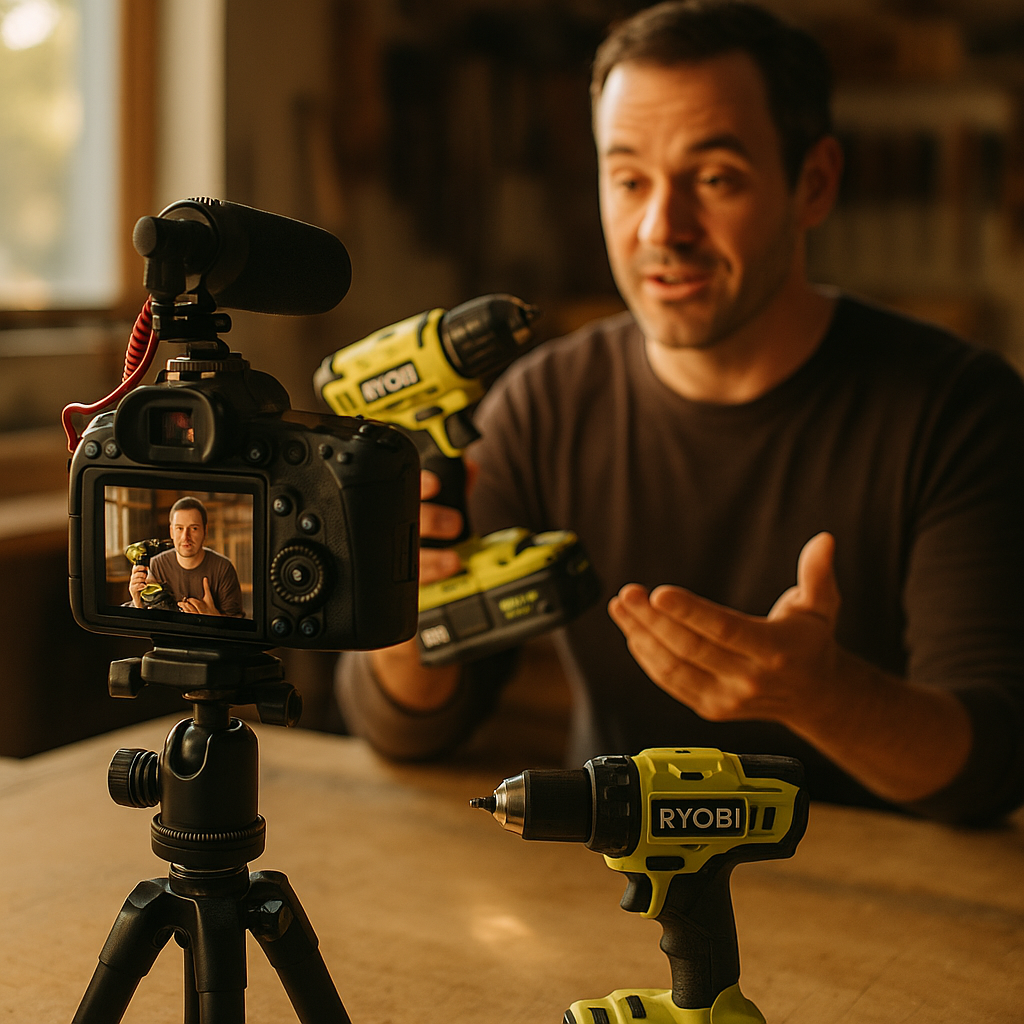
What if your best-performing marketing channel wasn’t a platform at all, but a network of 4,000-follower garage tinkerers filming drill reviews on iPhones? That’s the reality Ryobi built, and it now outperforms the brand’s paid social campaigns on ROAS by a wide margin. No celebrity endorsements. No six-figure creator contracts. Just tools, trust, and a nano-creator network most competitors still overlook.
The Channel Nobody Budgeted For
Power tool marketing has always leaned on trade shows, big-box endcaps, and the occasional NASCAR sponsorship. Ryobi, the orange-and-black brand owned by Techtronic Industries, took a different bet. Instead of chasing tool-review influencers with six-figure subscriber counts, the brand quietly built relationships with hundreds of nano-creators, people with 1,000 to 10,000 followers who post genuine project content: deck builds, garage organization, DIY furniture, backyard renovations.
These aren’t professional influencers. Many have day jobs. They post because they love the craft, not because a brand deal pays their rent. That distinction turns out to matter enormously for conversion.
Ryobi’s nano-creator program now delivers a reported ROAS several multiples higher than the brand’s programmatic and paid social spend, according to internal performance reviews shared with trade press.
Why Nano-Creators Beat Big Names for Tool Marketing
Tools are a trust purchase. Nobody buys a $200 impact driver because a celebrity held it for three seconds in a sponsored Reel. Buyers want to see the tool used, stressed, and reviewed by someone who actually does the work. That’s where nano-creators win.
A creator with 6,000 followers who posts weekly deck-building content has an audience that’s already self-selected for relevance. Every follower is a homeowner, a weekend builder, or someone actively researching a project. Compare that to a mid-tier lifestyle influencer whose audience is broad but shallow. Ryobi’s team reportedly found that engagement rate and purchase intent tracked far more closely with niche relevance than with follower count, echoing what Unilever discovered when it shifted creator discovery toward shared interest over raw reach.
- Higher trust density: Small audiences that follow a creator for tool content convert at higher rates than broad lifestyle audiences.
- Lower CPM, dramatically lower CPA: Nano-creator rates are a fraction of macro-influencer fees, often product-only or low-hundreds-of-dollars per post.
- Volume compensates for reach: Hundreds of small creators posting weekly generates more total impressions, and more organic search visibility, than a handful of big names posting monthly.
- Content feels earned, not bought: Viewers can tell the difference, and the FTC’s disclosure guidance means audiences are primed to spot paid puffery anyway.
Inside the Mechanics of the Program
Ryobi’s approach isn’t glamorous. It’s operational discipline applied to influencer seeding. The brand identifies active DIY, woodworking, and home-improvement creators on YouTube, Instagram, and TikTok, then seeds product directly, no upfront cash, in exchange for authentic project content. This mirrors the seeding-first model that worked so well for Liquid I.V.’s trust-rebuilding campaign, where product-first outreach outperformed paid placements on credibility metrics.
The program runs on a few core principles:
- Category-first discovery. Ryobi’s team scouts creators inside DIY and trade-specific communities rather than running broad influencer marketplace searches.
- Low-friction gifting. Product seeding removes the negotiation overhead that slows down larger campaigns, letting the brand activate hundreds of creators simultaneously.
- Repeat cadence over one-off posts. Creators who post consistently get prioritized for new tool launches, turning nano-influencers into semi-permanent brand ambassadors.
- Tagging and tracking at scale. UTM-tagged links and affiliate codes let the team attribute sales down to individual creator cohorts, not just campaign-level buckets.
This is the same operational logic Influencers Time covered in depth in the original breakdown of Ryobi’s nano-influencer network, which first flagged the ROAS gap between seeded creator content and paid media.
What the Numbers Actually Show
Precise ROAS figures from private brand programs rarely make it into public filings, but directional data backs up the claim. eMarketer and Statista have both tracked a multi-year climb in influencer marketing spend alongside declining efficiency for traditional paid social, as ad costs rise and attention fragments across platforms. Nano and micro-tier creators consistently post the highest engagement rates in Sprout Social’s annual benchmarking work, often outperforming macro accounts by a factor of two or more.
Ryobi’s own numbers reportedly follow that pattern: cost-per-acquisition on nano-creator content sits well below paid social benchmarks, while average order value on tool purchases driven by creator links tends to run higher, likely because viewers arrive already convinced rather than mid-funnel.
The lesson isn’t “influencers beat ads.” It’s that relevance-matched, high-frequency, low-cost creator content compounds in ways a media buy simply can’t.
That compounding effect matters for budget planning. A paid social campaign stops the moment spend stops. A nano-creator network keeps generating impressions, search-indexed video content, and word-of-mouth long after the initial seeding investment. It’s the same durability advantage Duolingo’s owl strategy exploited by leaning on organic creator content instead of sustained paid spend.
Where the Model Breaks (and How Brands Fix It)
Nano-creator programs aren’t free of risk. Scaling to hundreds of small creators introduces real operational headaches:
- Disclosure compliance at scale. Hundreds of creators means hundreds of chances to miss an FTC disclosure requirement. Brands need standardized contracts and creator education, not just a gifting spreadsheet. The FTC’s endorsement guidance applies just as strictly to a 3,000-follower creator as it does to a celebrity.
- Quality control drift. Not every seeded creator produces usable content. Brands need a filtering process, both for content quality and brand safety, to avoid off-message posts going live unchecked.
- Attribution fatigue. Tracking hundreds of creator links and codes requires infrastructure most small marketing teams don’t have. Affiliate platforms and UTM automation become mandatory, not optional.
- Diminishing novelty. As more brands chase nano-creators, the low-cost advantage could shrink. Early movers in tool and home-improvement categories captured the best relationships before competitors caught on.
Brands solving these problems well tend to build modular, tiered structures rather than one-size-fits-all programs, similar to the approach outlined in P&G’s modular agency model for mid-market creator activation. Ryobi’s parent company benefits from category focus: tools are visual, project-based, and naturally suited to demonstration content, which makes creator vetting simpler than in more abstract categories.
What Other Categories Can Steal From This Playbook
Tool marketing has an unfair advantage: the product does something visible. But the underlying strategy translates well beyond hardware stores.
Home improvement retailers have already caught on. Lowe’s creator DIY series drove measurable in-store purchase lift using a similar logic: match creators to project relevance, not follower size. Beauty and CPG brands have adapted the model too, with Rare Beauty’s cohort strategy proving that a curated group of smaller creators can outperform a single celebrity face on both cost and trust metrics.
The pattern holds across categories: high-consideration, demonstration-friendly products benefit most from nano-creator seeding, because buyers need proof, not aspiration. Compare that to categories built on aspiration and status, where a macro-influencer or celebrity face still carries more weight. Knowing which model fits your category is the real strategic decision, not just picking a follower-count tier and calling it a strategy.
Building the Business Case for Finance
Marketing leaders pitching a nano-creator shift internally need to frame it in finance’s language, not marketing’s. ROAS is the headline metric, but the supporting argument matters just as much: lower fixed media cost, lower creative production cost (creators shoot their own content), and a built-in hedge against rising paid social CPMs, a trend eMarketer has flagged repeatedly in its ad spend forecasts.
A simple way to model it: take current paid social CPA, then benchmark it against blended nano-creator CPA (seeding cost plus program management overhead, divided by attributed conversions). In tool and home categories, that comparison tends to favor creators by a wide margin once volume kicks in. It won’t happen in month one. Nano-creator programs are a compounding asset, not a campaign flight, and finance teams need to understand that time horizon upfront.
Next Step
If your brand sells anything that benefits from demonstration, tools, home goods, fitness gear, kitchenware, start a pilot with 20-30 category-relevant nano-creators before scaling further. Track CPA against your current paid social baseline for one full quarter, and let the data, not the follower count, decide where budget goes next.
Frequently Asked Questions
What counts as a nano-creator in influencer marketing?
Nano-creators typically have between 1,000 and 10,000 followers on a given platform. They’re distinguished less by follower count and more by high engagement rates and tightly focused, niche audiences, which often makes them more effective for conversion than larger accounts.
Why did Ryobi’s nano-creator network outperform paid social on ROAS?
Nano-creators in the DIY and tool space attract audiences that are already interested in the product category, reducing wasted impressions. Combined with low or zero cash cost per post, that relevance drove a much lower cost-per-acquisition than programmatic and paid social channels.
How do brands manage FTC compliance across hundreds of nano-creators?
Brands need standardized creator agreements, disclosure templates, and onboarding education that clarify FTC endorsement rules before content goes live. Manual spot-checking doesn’t scale past a few dozen creators, so most mature programs use influencer management platforms with built-in disclosure tracking.
Is a nano-creator strategy right for every product category?
It works best for high-consideration, demonstration-friendly products where buyers want proof before purchase, tools, appliances, fitness equipment, home goods. Aspiration-driven categories like luxury fashion or fragrance often still benefit more from macro-influencer or celebrity-level reach.
How long does it take to see ROI from a nano-creator program?
Most brands see limited results in the first month, since a critical mass of active creators takes time to build. Meaningful ROAS gains typically show up over one to two quarters as creator output compounds and organic reach accumulates.
Frequently Asked Questions
Top Influencer Marketing Agencies
The leading agencies shaping influencer marketing in 2026
Agencies ranked by campaign performance, client diversity, platform expertise, proven ROI, industry recognition, and client satisfaction. Assessed through verified case studies, reviews, and industry consultations.
Moburst

-
2

The Shelf
Boutique Beauty & Lifestyle Influencer AgencyA data-driven boutique agency specializing exclusively in beauty, wellness, and lifestyle influencer campaigns on Instagram and TikTok. Best for brands already focused on the beauty/personal care space that need curated, aesthetic-driven content.Clients: Pepsi, The Honest Company, Hims, Elf Cosmetics, Pure LeafVisit The Shelf → -
3

Audiencly
Niche Gaming & Esports Influencer AgencyA specialized agency focused exclusively on gaming and esports creators on YouTube, Twitch, and TikTok. Ideal if your campaign is 100% gaming-focused — from game launches to hardware and esports events.Clients: Epic Games, NordVPN, Ubisoft, Wargaming, Tencent GamesVisit Audiencly → -
4

Viral Nation
Global Influencer Marketing & Talent AgencyA dual talent management and marketing agency with proprietary brand safety tools and a global creator network spanning nano-influencers to celebrities across all major platforms.Clients: Meta, Activision Blizzard, Energizer, Aston Martin, WalmartVisit Viral Nation → -
5

The Influencer Marketing Factory
TikTok, Instagram & YouTube CampaignsA full-service agency with strong TikTok expertise, offering end-to-end campaign management from influencer discovery through performance reporting with a focus on platform-native content.Clients: Google, Snapchat, Universal Music, Bumble, YelpVisit TIMF → -
6

NeoReach
Enterprise Analytics & Influencer CampaignsAn enterprise-focused agency combining managed campaigns with a powerful self-service data platform for influencer search, audience analytics, and attribution modeling.Clients: Amazon, Airbnb, Netflix, Honda, The New York TimesVisit NeoReach → -
7

Ubiquitous
Creator-First Marketing PlatformA tech-driven platform combining self-service tools with managed campaign options, emphasizing speed and scalability for brands managing multiple influencer relationships.Clients: Lyft, Disney, Target, American Eagle, NetflixVisit Ubiquitous → -
8

Obviously
Scalable Enterprise Influencer CampaignsA tech-enabled agency built for high-volume campaigns, coordinating hundreds of creators simultaneously with end-to-end logistics, content rights management, and product seeding.Clients: Google, Ulta Beauty, Converse, AmazonVisit Obviously →