


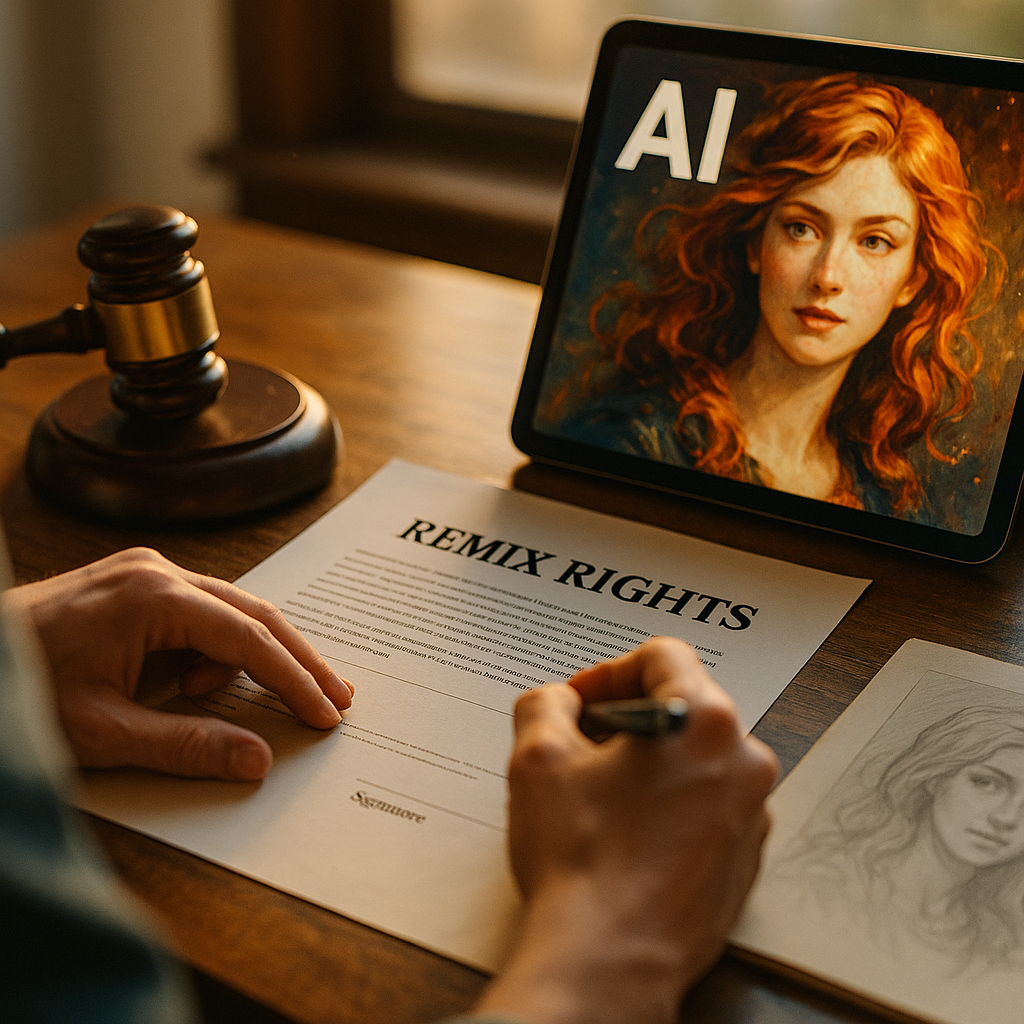
Ask any brand legal team what keeps them up at night, and “algorithmic remix rights” probably wasn’t on the list six months ago. Now it should be. TikTok and Instagram have both shipped generative tools that can auto-edit, remix, or reframe sponsored content without a human touching the timeline. If your creator contract clause library hasn’t caught up, you’re exposed on disclosure, brand safety, and usage rights simultaneously.
The Problem Nobody Wrote Into Their Templates
Traditional creator agreements assume a linear pipeline: creator films, brand approves, post goes live, everyone moves on. That model is dead. Instagram’s AI editing suite can now generate alternate cuts of a Reel for different audience segments. TikTok’s generative remix tools let the platform (or other users, depending on settings) reassemble a sponsored post into new formats entirely — different pacing, different captions, sometimes different background audio pulled from a licensed library.
None of that is theoretical. It’s live, it’s scaling, and it’s happening to posts your brand paid for right now.
The result is a legal gray zone. Who owns the remixed version? Does the original disclosure carry over? What happens if the algorithm strips the #ad tag during a reformat, or repositions a product claim next to different visuals that change its meaning? These aren’t hypotheticals for a future-proofing memo. They’re active risk vectors sitting in campaigns launching this quarter.
If your contract only addresses “derivative works” created by humans, it says nothing about content a platform’s own algorithm generates from your sponsored post — and that’s exactly the gap creators and platforms are exploiting by default.
What Platform-Level AI Remix Actually Does to Sponsored Content
Let’s get specific, because vague language is how contracts fail. Platform AI remix tools generally do one or more of the following to a piece of content once it’s published:
- Re-edit pacing and length — auto-generating a 15-second cutdown from a 60-second sponsored post for different placements.
- Swap audio tracks — replacing original sound with trending or licensed audio, which can change tone or context entirely.
- Recombine with other content — TikTok’s remix features can splice a sponsored clip alongside unrelated user content, sometimes without the brand’s product even remaining visible.
- Auto-caption and auto-translate — generating text overlays that weren’t reviewed by legal or compliance, in languages the brand never approved.
- Reformat for algorithmic reach — platforms increasingly test AI-suggested formats to boost watch time, which can alter framing, cropping, or thumbnail selection.
Each of these actions changes the asset. And under most existing influencer agreements, nobody explicitly granted or denied the platform the right to do it. The creator granted the brand a license. The brand granted the creator usage terms. Neither party contemplated the platform inserting itself as a third-party transformer of the finished asset.
This is the same structural blind spot covered in TikTok’s generative remix rules, but Instagram’s parallel rollout means brands now need language that works across both ecosystems, not just one.
Why “As-Is” Usage Rights Language No Longer Cuts It
Most legacy contracts grant brands a license to “the content as delivered” for paid promotion, whitelisting, or organic boosting. That phrase assumes a fixed asset. Once platforms can algorithmically transform that asset post-publication, “as delivered” becomes a moving target.
Here’s the practical failure mode: a brand runs a sponsored post through Meta’s Advantage+ creative tools, which auto-generates variants for testing. One variant removes the disclosure overlay because the AI cropped it out during aspect-ratio conversion. The FTC doesn’t care that an algorithm did it — the brand is still on the hook. That liability question isn’t new in structure, it’s the same disclosure-accountability logic outlined in brand-directed FTC liability tests, just with a new trigger mechanism.
So what needs to change? Three things, specifically:
- Define “the work” as version-inclusive. Contracts need language that explicitly covers AI-generated derivatives, cutdowns, and remixes created by platform tooling — not just human-made edits.
- Assign disclosure-preservation responsibility. Someone has to own the obligation to verify that #ad tags, overlays, and required disclosures survive algorithmic transformation. Usually this needs to sit with the brand’s compliance team, with creator cooperation as a contractual duty.
- Set remix consent defaults. Decide, in writing, whether the brand opts in or out of platform remix features by default, and who has authority to toggle those settings per campaign.
Drafting the Clause: A Working Template
You don’t need to reinvent contract law here. You need three sub-clauses bolted onto your existing content license section. Here’s a workable structure, adaptable to your standard MSA or campaign-level SOW.
1. AI Remix Scope Definition. Define what counts as an algorithmic transformation for contract purposes: “Any automated re-edit, recombination, translation, dubbing, cropping, or reformatting of the Content performed by a Platform’s native AI or machine learning tools, whether initiated by the Platform, the Creator, or a third-party user, without direct human review by Brand or Creator prior to publication.”
That definition matters because it captures both platform-initiated remixes and the increasingly common case where other users remix a creator’s content using platform tools, which then gets attributed back to the original sponsored post.
2. Rights Grant and Reservation. Specify whether the brand’s license extends to AI-remixed versions, and under what conditions. A conservative version: “Brand’s license to use, sponsor, or amplify the Content shall extend to Platform-generated AI remixes only where such remixes preserve all required disclosures and do not materially alter the claims, context, or visual representation of Brand’s product.” This gives the brand an opt-out if a remix mangles the message, without requiring pre-approval of every algorithmic variant, which is operationally impossible at scale.
3. Disclosure Preservation Warranty. Make disclosure survival a creator warranty, not just a brand hope: “Creator warrants that, to the extent technically feasible, Creator will configure platform settings to preserve sponsorship disclosures across any AI-generated remix or derivative of the Content, and will promptly flag to Brand any remix that removes or obscures such disclosure.” This mirrors the kind of proactive obligation frameworks discussed in disclosure templates built for dual ASA/FTC compliance — the goal is shared accountability, not brand-only liability.
The brands getting this right aren’t trying to ban AI remix outright — that’s a losing battle against platform defaults. They’re building consent architecture that lets remix happen while keeping disclosure and brand-safety guardrails intact.
Indemnification Needs a Refresh Too
Standard indemnification clauses assume a breach originates from a party’s own action. AI remix breaks that assumption because the “actor” is a platform’s model, not the creator or the brand. Who indemnifies whom when TikTok’s algorithm generates a remix that violates an FTC disclosure rule?
Practically, brands should push for a carve-out that treats platform-initiated remixes as a shared-risk category: the creator indemnifies for remixes they actively enabled or failed to disable when given the option; the brand accepts risk for remixes generated under its own paid media settings (like Meta’s Advantage+ suite). Neither party should be fully liable for autonomous platform behavior neither controlled — but silence on the issue defaults to messy litigation later.
This is structurally similar to the indemnification gaps already surfacing around AI agent creator selection, where automated systems make decisions no single contracting party fully directed.
Operational Checklist Before You Send the Next Contract
- Audit your last 90 days of sponsored posts on TikTok and Instagram for AI-remixed variants you didn’t know existed.
- Add the AI Remix Scope Definition to your master services agreement template, not just campaign-specific riders.
- Confirm who on your team has authority to toggle platform-level remix settings before a campaign goes live.
- Build a quarterly disclosure-survival spot check into your escalation protocol for undisclosed sponsorships, since remix-stripped disclosures will surface the same way undisclosed posts do.
- Loop in your indemnification language review alongside your standard dispute-prevention contract audit.
According to eMarketer’s creator economy forecasts, sponsored content spend keeps climbing even as platform automation expands, meaning the volume of unreviewed AI-altered sponsored assets will only grow. Meta and TikTok both continue investing in generative creative tools as core product bets, not side features — check Meta’s business platform documentation and TikTok’s advertiser resources for how deeply these tools are now embedded in standard campaign workflows. The FTC’s stance on disclosure, per its endorsement guidance, hasn’t carved out an exception for algorithmic transformation. It won’t.
Frequently Asked Questions
What is a platform-level AI remix in the context of creator contracts?
It refers to any automated transformation of sponsored content performed by a platform’s native AI tools, such as auto-generated cutdowns, audio swaps, or recombined clips, without direct human review before republishing.
Does my current influencer agreement already cover AI remix rights?
Almost certainly not. Most templates only address human-made derivative works and usage rights for the original delivered asset, not algorithmic transformations initiated by the platform itself.
Who is liable if an AI remix strips a required disclosure?
Liability typically depends on who controlled the setting that enabled the remix. Brands using paid amplification tools bear more risk; creators who leave remix permissions open on organic posts share responsibility if the contract assigns disclosure-preservation as a shared warranty.
Should brands try to ban AI remix features entirely in contracts?
Generally, no. Outright bans are hard to enforce and fight against platform defaults. A more workable approach sets conditions under which remixes are acceptable, tied to disclosure preservation and message integrity.
How often should these clauses be reviewed?
At minimum, quarterly, given how fast TikTok and Instagram ship new generative features. Treat this like any other fast-moving compliance area, similar to ongoing reviews of youth privacy or synthetic disclosure rules.
Next Step
Pull your current creator contract template today and check for a single term: “algorithmic” or “AI-generated derivative.” If it’s not there, you have a gap that platform features are already exploiting. Fix the clause before your next campaign brief goes out, not after a remix incident forces the rewrite.
Frequently Asked Questions
What is a platform-level AI remix in the context of creator contracts?
It refers to any automated transformation of sponsored content performed by a platform’s native AI tools, such as auto-generated cutdowns, audio swaps, or recombined clips, without direct human review before republishing.
Does my current influencer agreement already cover AI remix rights?
Almost certainly not. Most templates only address human-made derivative works and usage rights for the original delivered asset, not algorithmic transformations initiated by the platform itself.
Who is liable if an AI remix strips a required disclosure?
Liability typically depends on who controlled the setting that enabled the remix. Brands using paid amplification tools bear more risk; creators who leave remix permissions open on organic posts share responsibility if the contract assigns disclosure-preservation as a shared warranty.
Should brands try to ban AI remix features entirely in contracts?
Generally, no. Outright bans are hard to enforce and fight against platform defaults. A more workable approach sets conditions under which remixes are acceptable, tied to disclosure preservation and message integrity.
How often should these clauses be reviewed?
At minimum, quarterly, given how fast TikTok and Instagram ship new generative features. Treat this like any other fast-moving compliance area, similar to ongoing reviews of youth privacy or synthetic disclosure rules.
Top Influencer Marketing Agencies
The leading agencies shaping influencer marketing in 2026
Agencies ranked by campaign performance, client diversity, platform expertise, proven ROI, industry recognition, and client satisfaction. Assessed through verified case studies, reviews, and industry consultations.
Moburst

-
2

The Shelf
Boutique Beauty & Lifestyle Influencer AgencyA data-driven boutique agency specializing exclusively in beauty, wellness, and lifestyle influencer campaigns on Instagram and TikTok. Best for brands already focused on the beauty/personal care space that need curated, aesthetic-driven content.Clients: Pepsi, The Honest Company, Hims, Elf Cosmetics, Pure LeafVisit The Shelf → -
3

Audiencly
Niche Gaming & Esports Influencer AgencyA specialized agency focused exclusively on gaming and esports creators on YouTube, Twitch, and TikTok. Ideal if your campaign is 100% gaming-focused — from game launches to hardware and esports events.Clients: Epic Games, NordVPN, Ubisoft, Wargaming, Tencent GamesVisit Audiencly → -
4

Viral Nation
Global Influencer Marketing & Talent AgencyA dual talent management and marketing agency with proprietary brand safety tools and a global creator network spanning nano-influencers to celebrities across all major platforms.Clients: Meta, Activision Blizzard, Energizer, Aston Martin, WalmartVisit Viral Nation → -
5

The Influencer Marketing Factory
TikTok, Instagram & YouTube CampaignsA full-service agency with strong TikTok expertise, offering end-to-end campaign management from influencer discovery through performance reporting with a focus on platform-native content.Clients: Google, Snapchat, Universal Music, Bumble, YelpVisit TIMF → -
6

NeoReach
Enterprise Analytics & Influencer CampaignsAn enterprise-focused agency combining managed campaigns with a powerful self-service data platform for influencer search, audience analytics, and attribution modeling.Clients: Amazon, Airbnb, Netflix, Honda, The New York TimesVisit NeoReach → -
7

Ubiquitous
Creator-First Marketing PlatformA tech-driven platform combining self-service tools with managed campaign options, emphasizing speed and scalability for brands managing multiple influencer relationships.Clients: Lyft, Disney, Target, American Eagle, NetflixVisit Ubiquitous → -
8

Obviously
Scalable Enterprise Influencer CampaignsA tech-enabled agency built for high-volume campaigns, coordinating hundreds of creators simultaneously with end-to-end logistics, content rights management, and product seeding.Clients: Google, Ulta Beauty, Converse, AmazonVisit Obviously →