


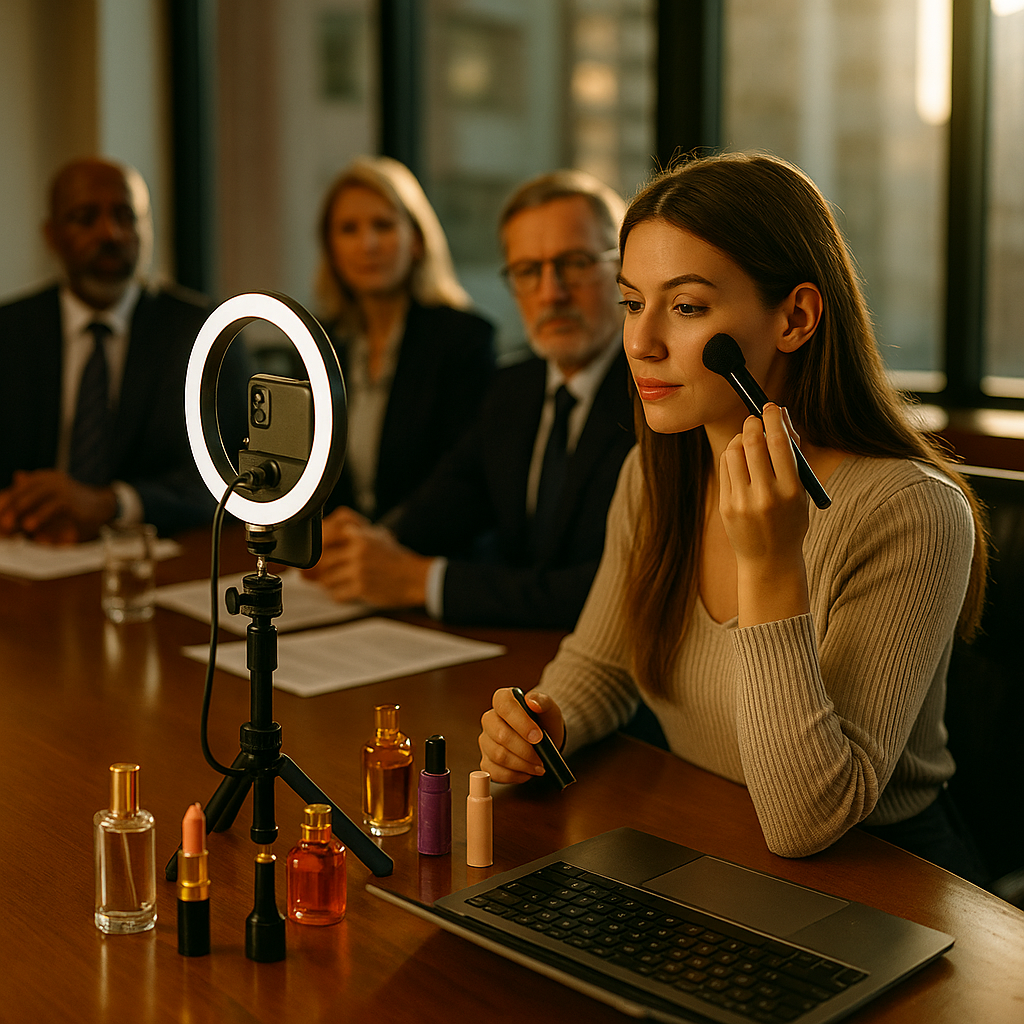
When a $9 billion beauty conglomerate rewires its executive suite around creator relationships instead of traditional marketing hierarchies, the industry should pay attention. Coty’s recent restructuring isn’t just a leadership shuffle. It’s a case study in creator-driven brand turnaround strategy, and it signals where beauty marketing budgets are headed next.
What Actually Happened at Coty
Coty spent much of the last two years underperforming against category peers like e.l.f. Beauty and L’Oréal’s mass portfolio. Revenue growth stalled in core brands like CoverGirl and Rimmel, even as prestige lines like Gucci fragrance held steady. The company’s response wasn’t a new ad campaign or a celebrity spokesperson deal. It was structural.
Coty consolidated marketing, digital, and consumer engagement functions under leadership with direct creator economy experience, reportedly prioritizing candidates who’d built influencer-first go-to-market playbooks at DTC challenger brands rather than legacy CPG marketers. That’s a meaningful departure from how beauty conglomerates have historically staffed their C-suites: promote from within, favor traditional brand management pedigrees, treat social media as a channel owned by a junior team, not a strategic lever owned by leadership.
The shift matters because it changes who controls budget, timelines, and creative approval. When creator strategy reports to a CMO who came up through influencer marketing rather than shopper marketing, the entire operating model changes.
Coty’s restructuring is less about who sits in which office and more about which discipline now controls the P&L narrative: creator economics, not traditional media buying.
Why Beauty Brands Keep Landing Here
Beauty was never going to be the category that resisted this shift. Product demonstration, texture, shade-matching, before-and-after transformation: none of that translates well to a 30-second TV spot. It translates perfectly to a 60-second TikTok video shot in someone’s bathroom.
Consider the data. eMarketer has repeatedly flagged beauty and personal care as the top-spending category in influencer marketing, and for good reason: the format matches the buying behavior. Consumers don’t want to be told a foundation matches their skin tone. They want to see it on someone who looks like them, in bathroom lighting, without a ring light or a script.
Rare Beauty figured this out early by building cohorts of creators rather than chasing a single celebrity face, a strategy detailed in Rare Beauty’s creator cohort approach. Milani did something similar with a tighter, more tactical brief structure aimed squarely at Gen Z shoppers, outlined in Milani’s TikTok creator brief strategy. Both brands outgrew legacy players not by outspending them on media, but by out-organizing them on creator relationships.
Coty’s leadership reshuffle reads like an admission that its previous org chart couldn’t compete with brands built creator-first from day one.
The Turnaround Playbook Coty Is Borrowing From DTC
Here’s the uncomfortable truth for legacy beauty marketers: the playbook already exists. It just wasn’t invented inside a beauty conglomerate.
DTC and challenger brands across categories have spent the better part of a decade proving that creator-led growth outperforms traditional paid media on efficiency metrics, not just reach. Liquid I.V. rebuilt category trust using nano-creator seeding rather than celebrity endorsement, a strategy worth studying in Liquid I.V.’s trust-rebuilding approach. Vessi turned a single organic TikTok moment into a durable shop referral engine, covered in Vessi’s TikTok shop strategy. Neither had a nine-figure media budget. Both had operational discipline around creator identification, briefing, and measurement.
What Coty appears to be doing is importing that operational muscle into a legacy structure. That’s harder than it sounds. Legacy beauty brands carry compliance layers, retail partner obligations, and multi-market approval chains that DTC brands never had to build around. A creator-first CMO at Coty doesn’t just need influencer instincts. They need to rebuild internal processes so creator content can move at TikTok speed inside a company built for eighteen-month campaign cycles.
Three Structural Changes Worth Watching
- Budget reallocation away from traditional media buys and toward creator retainers and always-on seeding programs, mirroring what Unilever has done with its content supply chain overhaul, detailed in Unilever’s real-time signal strategy.
- Flattened approval chains so creator content doesn’t sit in legal review for three weeks while the trend cycle moves on.
- Discovery methodology shifting from follower count to audience interest signals, an approach Unilever has also piloted and documented in Unilever’s creator discovery model.
Is This a Beauty-Specific Trend, or Something Bigger?
It’s tempting to file this under “beauty does beauty things.” Resist that urge. This is a broader signal about how struggling legacy brands across categories are choosing to turn around performance.
Macy’s modernized a heritage retail brand through creator partnerships rather than a rebrand, per Macy’s creator modernization strategy. American Eagle drove measurable in-store lift through TikTok creator programs, a case documented in American Eagle’s TikTok creator playbook. Alo Yoga built its entire pre-IPO growth narrative around TikTok creator strategy, covered extensively in Alo Yoga’s IPO-era creator strategy.
None of these are beauty brands. All of them faced some version of the same problem Coty faced: a brand perception gap that traditional marketing spend wasn’t closing. And all of them chose the same fix: put creator strategy at the center of the org chart, not at the edges.
Statista data on influencer marketing spend growth shows the category has more than doubled globally over the past several years, and marketers surveyed by HubSpot consistently rank creator partnerships among their highest-ROI channels. Coty’s leadership isn’t chasing a fad. It’s chasing the same efficiency curve every other CMO has already spotted.
The brands winning turnarounds aren’t spending more on influencers. They’re restructuring who owns the decision, which is a far more durable competitive advantage than budget alone.
What This Means for Your Org Chart
If you’re a brand strategist or CMO watching Coty’s move, the operational question isn’t “should we work with creators.” You’ve likely answered that already. The question is whether creator strategy sits close enough to leadership to actually shape brand decisions, or whether it’s still a line item buried three layers down in a social media coordinator’s job description.
A few practical signals to evaluate in your own organization:
- Does your creator program report up through a channel-specific manager, or does it inform brand strategy at the leadership table?
- Can a creator partnership move from pitch to live content in days, or does it still require the same approval chain as a national TV buy?
- Is creator discovery based on audience relevance, or still anchored to follower count and reach?
- Does your measurement framework track creator-driven revenue with the same rigor as paid media ROAS?
P&G’s modular agency model offers one answer for mid-market brands that can’t build Coty-scale internal teams but still need creator-first operational speed, detailed in P&G’s modular agency approach. It’s proof this shift isn’t limited to companies that can hire a dedicated creator-economy CMO. The principle scales down, provided the org structure supports it.
Compliance teams should also take note. As creator content moves faster and closer to leadership decision-making, disclosure and FTC compliance can’t be an afterthought bolted onto legal review. The FTC’s endorsement guidelines apply regardless of how fast your approval chain moves, and brands restructuring for speed need to build compliance checkpoints into the workflow itself, not treat it as a bottleneck to route around.
The Takeaway
Coty’s restructuring is a data point, not an outlier. Audit whether your creator program has a seat at the leadership table or just a budget line, because that distinction is increasingly what separates brand turnarounds from brand stagnation.
FAQs
Why did Coty restructure its executive team around creator marketing?
Coty faced stalled growth in core mass beauty brands and responded by consolidating marketing and digital leadership under executives with creator economy experience, aiming to compete more effectively with DTC and challenger beauty brands that built creator-first go-to-market strategies from the start.
Is creator-driven restructuring unique to the beauty industry?
No. Retail, apparel, and CPG brands including Macy’s, American Eagle, and Alo Yoga have made similar structural shifts, putting creator strategy closer to leadership decision-making rather than treating it as a siloed marketing channel.
What operational changes typically accompany a creator-first restructuring?
Common changes include reallocating budget from traditional media to creator retainers, flattening content approval chains, shifting creator discovery from follower count to audience interest signals, and building compliance checkpoints directly into faster-moving workflows.
How can mid-market brands adopt this approach without a large internal team?
Modular agency models allow mid-market brands to access creator-first operational speed without hiring a full internal team, letting them compete on creator strategy without Coty-scale resources.
What compliance risks come with faster creator content approval?
Speeding up approval chains increases the risk of missed FTC disclosure requirements. Brands should build compliance review into the workflow itself rather than treating it as a separate, slower step that gets bypassed under time pressure.
Top Influencer Marketing Agencies
The leading agencies shaping influencer marketing in 2026
Agencies ranked by campaign performance, client diversity, platform expertise, proven ROI, industry recognition, and client satisfaction. Assessed through verified case studies, reviews, and industry consultations.
Moburst

-
2

The Shelf
Boutique Beauty & Lifestyle Influencer AgencyA data-driven boutique agency specializing exclusively in beauty, wellness, and lifestyle influencer campaigns on Instagram and TikTok. Best for brands already focused on the beauty/personal care space that need curated, aesthetic-driven content.Clients: Pepsi, The Honest Company, Hims, Elf Cosmetics, Pure LeafVisit The Shelf → -
3

Audiencly
Niche Gaming & Esports Influencer AgencyA specialized agency focused exclusively on gaming and esports creators on YouTube, Twitch, and TikTok. Ideal if your campaign is 100% gaming-focused — from game launches to hardware and esports events.Clients: Epic Games, NordVPN, Ubisoft, Wargaming, Tencent GamesVisit Audiencly → -
4

Viral Nation
Global Influencer Marketing & Talent AgencyA dual talent management and marketing agency with proprietary brand safety tools and a global creator network spanning nano-influencers to celebrities across all major platforms.Clients: Meta, Activision Blizzard, Energizer, Aston Martin, WalmartVisit Viral Nation → -
5

The Influencer Marketing Factory
TikTok, Instagram & YouTube CampaignsA full-service agency with strong TikTok expertise, offering end-to-end campaign management from influencer discovery through performance reporting with a focus on platform-native content.Clients: Google, Snapchat, Universal Music, Bumble, YelpVisit TIMF → -
6

NeoReach
Enterprise Analytics & Influencer CampaignsAn enterprise-focused agency combining managed campaigns with a powerful self-service data platform for influencer search, audience analytics, and attribution modeling.Clients: Amazon, Airbnb, Netflix, Honda, The New York TimesVisit NeoReach → -
7

Ubiquitous
Creator-First Marketing PlatformA tech-driven platform combining self-service tools with managed campaign options, emphasizing speed and scalability for brands managing multiple influencer relationships.Clients: Lyft, Disney, Target, American Eagle, NetflixVisit Ubiquitous → -
8

Obviously
Scalable Enterprise Influencer CampaignsA tech-enabled agency built for high-volume campaigns, coordinating hundreds of creators simultaneously with end-to-end logistics, content rights management, and product seeding.Clients: Google, Ulta Beauty, Converse, AmazonVisit Obviously →