


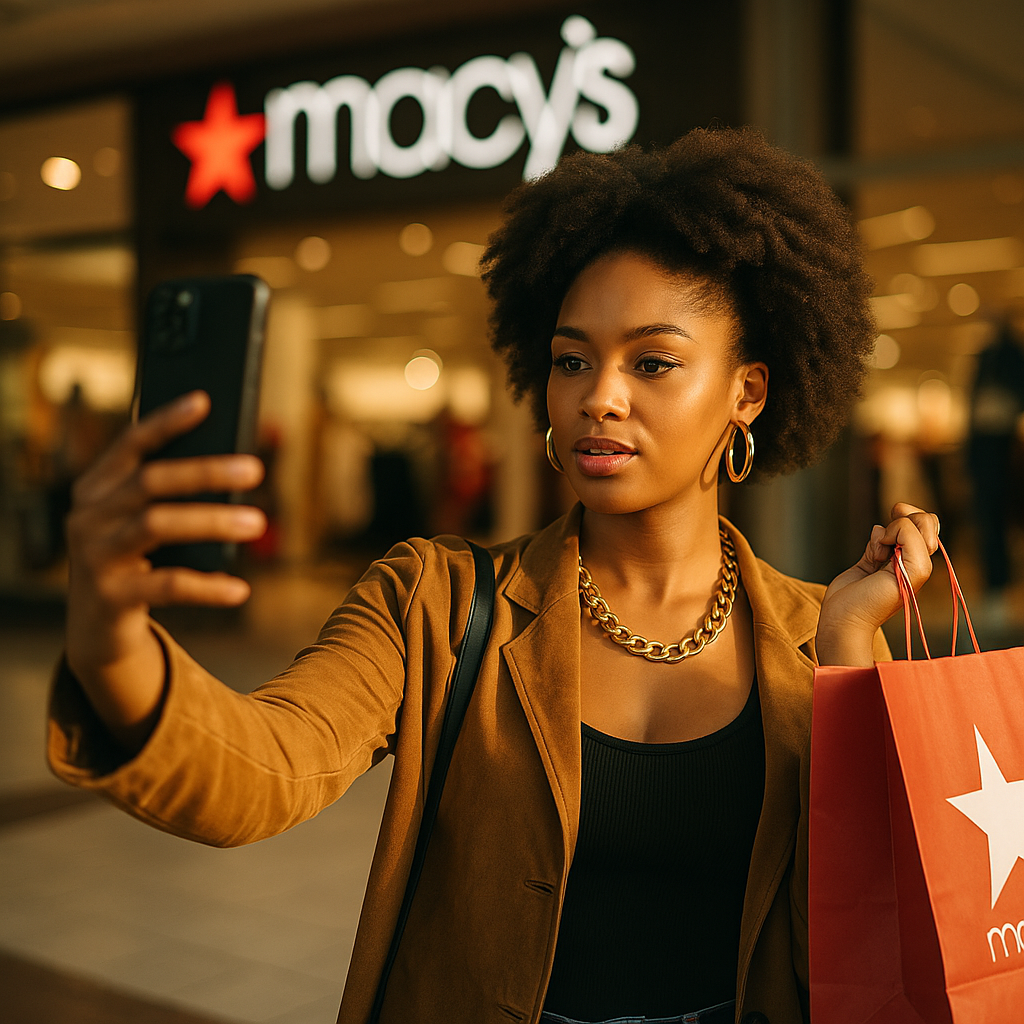
Heritage Brands Are Losing Younger Shoppers. Creator Moments May Be the Fix.
Only 34% of Gen Z consumers say they feel emotionally connected to legacy retail brands, according to data from eMarketer. For a 168-year-old department store, that stat is either a crisis or a creative brief. Macy’s has chosen to treat it as the latter, building a campaign architecture around cultural celebration moments that use creator partnerships to modernize brand perception without abandoning institutional equity.
What “Celebration-First” Actually Means as a Campaign Architecture
Most heritage brands approach creator marketing defensively. They hire influencers to validate existing products, run disclosure-heavy sponsored posts, and measure success by reach. Macy’s has inverted this. The retailer leads with the cultural moment — a Fourth of July fireworks spectacular, a Thanksgiving parade, a holiday gifting window — and builds creator activations around the emotional energy of that moment rather than around SKUs.
This is a structural difference, not a cosmetic one. When a creator is briefed to “show your Fourth of July look from Macy’s,” the content is transactional. When a creator is invited to experience and amplify a live cultural event that Macy’s owns, the brand becomes the context for celebration itself. That’s a fundamentally different brand impression, and it compounds over time.
The Fourth of July fireworks show is the clearest proof of concept. Macy’s has produced the event for decades, making it one of the most recognizable patriotic spectacles in the country. In recent campaigns, the retailer has activated creators across TikTok, Instagram Reels, and YouTube Shorts to cover the event as participants, not spokespeople. The resulting content reads as experiential coverage, not advertising.
When your brand owns the cultural moment, creator content becomes earned media coverage, not sponsored advertising. That’s the core leverage in Macy’s celebration-first architecture.
The Fourth of July Playbook: Three Mechanics Worth Stealing
Breaking down Macy’s Fourth of July creator activation reveals three mechanics that any heritage brand can adapt, regardless of category.
1. Event ownership as media property. Macy’s doesn’t just sponsor the fireworks; the brand produces it. That ownership converts a one-night cultural event into a multi-week content calendar. Pre-event creator content builds anticipation, live-night coverage captures peak emotional engagement, and post-event compilations extend shelf life across platforms. Brands without owned events can replicate this by co-producing or exclusively sponsoring events their target audience already attends.
2. Creator segmentation by audience cohort, not follower count. Macy’s Fourth of July creator mix typically spans macro lifestyle creators, mid-tier fashion voices, and niche “celebration culture” micro-creators who speak directly to party planning, patriotic decor, and family gathering audiences. This tiered approach, similar to what tiered influencer programs used by DMOs have demonstrated, generates broader reach while maintaining authenticity signals in high-trust, niche communities.
3. Brief architecture that protects the moment. Macy’s creator briefs for event-driven campaigns are reportedly looser on product integration and tighter on brand safety and tone. Creators are given latitude to express genuine excitement but are guided toward visual themes (red, white, and blue palettes; fireworks backdrops; festive family framing) that reinforce brand consistency without scripting content. This mirrors brief architecture principles that consistently outperform over-produced campaigns at scale.
Why This Matters for Heritage Brand Modernization Specifically
Legacy brands carry two competing assets: institutional trust and brand fatigue. Younger consumers often respect the cultural footprint of brands like Macy’s without feeling personally connected to them. Creator partnerships, when deployed correctly, solve the connection gap without eroding the trust asset.
The risk is executing creator campaigns that feel incongruent with brand heritage. A 168-year-old department store running a chaotic, trend-chasing TikTok strategy reads as inauthentic and frequently backfires. Macy’s sidesteps this by anchoring creator content to moments the brand already owns authentically. Fireworks on the Fourth of July is Macy’s territory. That credibility transfers to any creator amplifying the moment.
Compare this to Ralph Lauren’s social commerce approach, which uses platform-native content to modernize brand expression while keeping aspirational positioning intact. Both brands are solving the same problem: how do you stay relevant to younger audiences without becoming unrecognizable to your existing base? The answer, in both cases, is to let the brand’s authentic cultural territory do the heavy lifting.
Heritage brands often underestimate how much permission they already have. Macy’s doesn’t need to manufacture cultural relevance; it needs to invite creators into the cultural relevance it already holds.
Measurement: What to Track Beyond Impressions
Event-driven creator campaigns are notoriously difficult to attribute through standard last-click models. Macy’s campaign success shouldn’t be measured by direct conversion alone, and neither should yours if you’re building a similar architecture.
The metrics that matter here operate across three time horizons:
- Short-term: Earned media value (EMV) from creator content, branded hashtag volume, and share-of-voice during the event window
- Mid-term: Brand search lift in the weeks following the event, new customer acquisition rates in digital channels, and social follower growth among 18-34 demographics
- Long-term: Brand perception tracking among Gen Z and Millennial cohorts, net promoter scores among younger customer segments, and repeat purchase rate from new customers acquired during campaign periods
Platforms like Sprout Social and dedicated influencer analytics tools can capture EMV and share-of-voice in real time. The harder work is connecting campaign exposure to downstream retention, which requires investment in proper CRM attribution infrastructure before campaigns launch, not after.
Heritage brand modernization isn’t a single campaign win. It’s a measurement discipline. If you can’t connect creator moment exposure to long-term cohort behavior, you’re flying blind on whether it’s actually working.
Compliance and Risk Considerations for Large-Scale Event Activations
Running creator activations around owned events introduces specific compliance obligations. When creators cover a brand-produced event as participants, the FTC’s disclosure requirements still apply if there’s material compensation involved, including free attendance, travel, or hotel. The FTC’s updated disclosure guidelines are clear: experiential access counts as compensation.
Macy’s scale means its legal team almost certainly runs tight disclosure protocols for every creator in its Fourth of July program. Brands attempting to replicate this model without equivalent legal infrastructure create meaningful compliance exposure. Build disclosure requirements into your creator brief, use platform-native paid partnership labels, and document all agreements before any event access is granted.
Additionally, if you’re working with creators who generate content at a live event involving minors (which family-oriented fireworks events frequently include), you’ll want rights management and content approval protocols in place. This is operational complexity that brands often discover too late.
The Replication Framework for Non-Macy’s Brands
Not every heritage brand can produce a nationally televised fireworks show. But every brand can identify cultural moments it authentically owns or can credibly sponsor, and build creator architecture around those moments rather than around product launches.
Start by mapping your brand’s existing cultural territory. What celebrations, rituals, or seasonal behaviors does your audience already associate with your brand? Back-to-school season for office supply brands. Opening day for sports retailers. Harvest season for food and beverage. These are owned moments waiting to be activated with creator content.
Then apply the Macy’s model: treat the moment as the media property, segment creators by audience cohort rather than follower count alone (a strategy Unilever’s creator discovery approach validates), and brief creators on emotional tone rather than scripted product messaging. Finally, build measurement infrastructure before activation, not as an afterthought.
The brands that will win the heritage modernization challenge over the next three to five years are the ones that stop treating creator marketing as a media buy and start treating it as a cultural production capability. Macy’s is showing that the infrastructure for this already exists in most legacy brands. It just needs to be activated differently.
Start by auditing your existing cultural calendar for moments your brand already owns, then brief your first creator cohort around the highest-resonance event on that list. Build from proof of concept, not from a full program overhaul.
Frequently Asked Questions
What is Macy’s celebration-first campaign architecture?
Macy’s celebration-first campaign architecture means building creator marketing campaigns around culturally significant moments the brand owns or anchors, such as its Fourth of July fireworks spectacular and Thanksgiving parade, rather than leading with product promotion. Creators are invited to participate in and amplify the event, generating content that reads as experiential coverage rather than sponsored advertising. This approach shifts the brand from product vendor to cultural host in the consumer’s mind.
How does the Fourth of July strategy help Macy’s reconnect with younger shoppers?
Macy’s Fourth of July creator activations work by associating the brand with genuine emotional experiences that younger consumers are already engaged with. When creators document their experience at a Macy’s-produced event on TikTok or Instagram Reels, Gen Z and Millennial audiences encounter the brand in a high-trust, low-sales-pressure context. Over repeated exposures, this repositions Macy’s from a legacy department store to a brand that is part of culturally meaningful moments in their lives.
Can smaller or mid-size heritage brands replicate this model without a massive owned event?
Yes. The core mechanism is not the scale of the event but the brand’s authentic ownership of a cultural moment. Smaller heritage brands can identify seasonal behaviors, community rituals, or category-specific occasions their audience already associates with the brand, then build tiered creator activations around those moments. Even exclusive sponsorship of a regional event, paired with a structured creator program, can generate similar brand perception shifts at proportionally lower cost.
What are the FTC compliance requirements for creator activations at brand-owned events?
According to the FTC’s current disclosure guidelines, any creator who receives material compensation for attending or covering a brand event must disclose that relationship clearly in their content. Material compensation includes free event access, travel, accommodations, or gifts, not just direct payment. Brands should build disclosure requirements into creator briefs, use platform-native paid partnership labels, and maintain documented agreements with every creator in the program before the event date.
What metrics should brands track for event-driven creator campaigns?
Event-driven creator campaigns require measurement across three time horizons. Short-term metrics include earned media value, branded hashtag volume, and share-of-voice during the event window. Mid-term metrics include brand search lift, new customer acquisition rates in digital channels, and social follower growth among target demographics. Long-term metrics include brand perception tracking, net promoter scores among younger cohorts, and repeat purchase rates from customers acquired during the campaign period. Standard last-click attribution models are insufficient for this campaign type.
Top Influencer Marketing Agencies
The leading agencies shaping influencer marketing in 2026
Agencies ranked by campaign performance, client diversity, platform expertise, proven ROI, industry recognition, and client satisfaction. Assessed through verified case studies, reviews, and industry consultations.
Moburst

-
2

The Shelf
Boutique Beauty & Lifestyle Influencer AgencyA data-driven boutique agency specializing exclusively in beauty, wellness, and lifestyle influencer campaigns on Instagram and TikTok. Best for brands already focused on the beauty/personal care space that need curated, aesthetic-driven content.Clients: Pepsi, The Honest Company, Hims, Elf Cosmetics, Pure LeafVisit The Shelf → -
3

Audiencly
Niche Gaming & Esports Influencer AgencyA specialized agency focused exclusively on gaming and esports creators on YouTube, Twitch, and TikTok. Ideal if your campaign is 100% gaming-focused — from game launches to hardware and esports events.Clients: Epic Games, NordVPN, Ubisoft, Wargaming, Tencent GamesVisit Audiencly → -
4

Viral Nation
Global Influencer Marketing & Talent AgencyA dual talent management and marketing agency with proprietary brand safety tools and a global creator network spanning nano-influencers to celebrities across all major platforms.Clients: Meta, Activision Blizzard, Energizer, Aston Martin, WalmartVisit Viral Nation → -
5

The Influencer Marketing Factory
TikTok, Instagram & YouTube CampaignsA full-service agency with strong TikTok expertise, offering end-to-end campaign management from influencer discovery through performance reporting with a focus on platform-native content.Clients: Google, Snapchat, Universal Music, Bumble, YelpVisit TIMF → -
6

NeoReach
Enterprise Analytics & Influencer CampaignsAn enterprise-focused agency combining managed campaigns with a powerful self-service data platform for influencer search, audience analytics, and attribution modeling.Clients: Amazon, Airbnb, Netflix, Honda, The New York TimesVisit NeoReach → -
7

Ubiquitous
Creator-First Marketing PlatformA tech-driven platform combining self-service tools with managed campaign options, emphasizing speed and scalability for brands managing multiple influencer relationships.Clients: Lyft, Disney, Target, American Eagle, NetflixVisit Ubiquitous → -
8

Obviously
Scalable Enterprise Influencer CampaignsA tech-enabled agency built for high-volume campaigns, coordinating hundreds of creators simultaneously with end-to-end logistics, content rights management, and product seeding.Clients: Google, Ulta Beauty, Converse, AmazonVisit Obviously →