


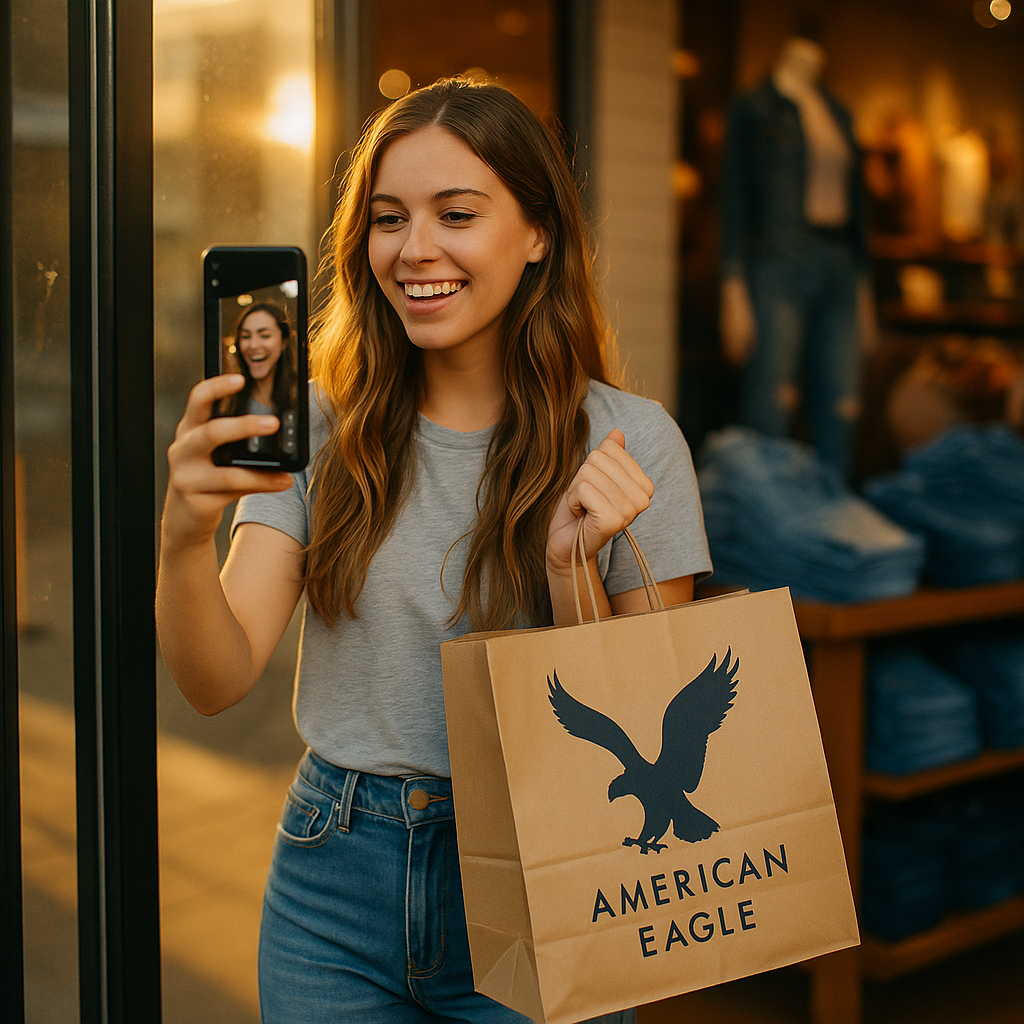
When federal regulators effectively shut down TikTok Shop as a direct commerce channel for certain product categories, most brands froze. American Eagle didn’t. Instead, the retailer rebuilt its influencer architecture around long-tail creator influence and drove measurable in-store foot traffic lift—without a single shoppable link. Here’s what regulated brand marketers can learn from that pivot.
The Regulatory Wall Nobody Planned For
FDA guidance restricting certain health-adjacent product claims on social commerce platforms created an operational problem for American Eagle’s broader product line, which includes categories that carry soft wellness positioning. TikTok Shop’s native checkout, affiliate link structures, and product tagging features all became compliance minefields overnight. The brand’s digital commerce team faced a choice: pull back entirely, or find a channel architecture that could still convert intent into physical store visits.
They chose the harder, smarter path.
The fundamental insight was that TikTok’s influence engine doesn’t require TikTok Shop to work. The platform’s discovery algorithm, combined with the right creator tier and content format, can drive offline behavior just as effectively as it drives online checkout—if you design the attribution system to capture it.
Creator influence on TikTok operates independently of its commerce infrastructure. Brands that conflate the two will always be one regulatory update away from losing their entire channel strategy.
Campaign Architecture: The Long-Tail Bet
American Eagle’s team shifted budget from a handful of macro creators (1M+ followers) toward a distributed network of micro and nano creators in the 10K to 150K range. This wasn’t a cost-cutting move. It was a deliberate audience-targeting decision.
Long-tail creators in fashion and lifestyle niches consistently deliver higher engagement rates and more geographically concentrated audiences. For a retailer with physical store locations, that geographic specificity is operationally valuable in a way that a national macro creator’s reach simply isn’t. A creator with 40,000 followers in the Dallas metro, posting content that drives her audience to the Northpark Center location, is worth more to American Eagle’s in-store KPIs than a creator with 2 million followers spread across every time zone.
The campaign deployed roughly 200 creators across 15 regional markets, each briefed to produce content that referenced specific store experiences rather than product purchase links. Try-on hauls filmed in-store. Styling challenges that named local mall locations. “Come with me” store visit content that made the physical retail experience feel like a TikTok moment in itself. The brief explicitly avoided any product claim language that could trigger regulatory review. For brands navigating similar constraints, the creator brief strategy Milani used for Gen Z beauty offers a useful structural parallel.
Attribution Design for Offline Conversion
This is where most brands stumble. Without a shoppable link, standard influencer attribution breaks. Click-through rates, affiliate conversions, and UTM parameters all become irrelevant when the conversion happens at a physical cash register.
American Eagle’s attribution stack used four signals in combination:
- Geo-targeted foot traffic measurement via a third-party location intelligence partner (platforms like Placer.ai or Foursquare provide this at the store level)
- Promo code redemption with unique codes per creator cohort, distributed through in-video callouts rather than link-in-bio, which kept the FTC disclosure requirements clean and avoided commerce platform dependency
- TikTok’s own Brand Lift Study tool, used to measure aided awareness and purchase intent shifts among exposed audiences in targeted DMAs
- POS data correlation matched against creator posting schedules, with a 72-hour attribution window per market
No single signal was conclusive. The attribution model treated convergent evidence across all four as a positive signal. When foot traffic in a market spiked within 72 hours of a creator cluster posting, and promo code redemption and POS data moved in the same direction, the team treated that as a validated in-store lift event. It’s probabilistic, not deterministic. But it’s significantly more defensible than “impressions” when you’re reporting to a CFO.
For a deeper look at how similar probabilistic attribution models are being built for offline retail, the AI-driven attribution playbook covering lead-to-close lift provides directly applicable methodology.
Budget Allocation: What the Numbers Actually Looked Like
Regulated brands often under-invest in creator programs precisely when compliance constraints are highest, which is backwards. The American Eagle campaign allocated budget across three buckets:
- Creator fees (55%): Distributed across the 200-creator network. Average per-creator fee in the micro tier ran $800 to $2,500 per post, depending on engagement rate and market size. No performance bonuses were tied to commerce metrics, given the regulatory environment. Instead, bonuses were tied to content quality scores and posting compliance.
- Attribution infrastructure (20%): Location intelligence tooling, Brand Lift Study fees paid directly to TikTok for Business, and POS data integration work. Most brands skip this. It’s a mistake.
- Content production support (15%): Providing creators with in-store access, styling support, and product seeding. Not scripted content, but the logistical infrastructure that makes high-quality in-store content possible at scale.
- Compliance review (10%): Legal and regulatory review of all creator briefs and a sample review of posted content. Non-negotiable for any brand operating near FDA-adjacent categories.
The 10% compliance line item surprises most marketers. It shouldn’t. For context on how other regulated-adjacent categories are building compliance into influencer budgets from the ground up, the La Roche-Posay dermatologist creator strategy is one of the cleaner examples in the market.
What the Results Showed
Across the 15 markets, American Eagle measured an average in-store foot traffic lift of 11 to 14 percent during active creator posting windows compared to control weeks. Markets with the highest creator density (more creators per geographic cluster) outperformed sparse markets by nearly 2x. The promo code data showed a 6.8 percent redemption rate across the creator network, which for an offline code distributed via video content is materially strong.
The Brand Lift Study data showed a 9-point lift in purchase intent among TikTok users in targeted DMAs who were exposed to creator content, versus a 2-point lift in control markets running only paid media. That’s a statistically significant gap, and it held across all age cohorts within the 18-to-34 target demographic.
What didn’t work: creators in the 150K to 500K follower range (the “micro-macro” tier) underperformed relative to their fees across almost every market. Their audiences were less geographically concentrated, their engagement rates were lower, and their content felt less authentic than the true micro creators. The data strongly favored doubling down on the sub-100K tier. This finding aligns with broader research from eMarketer showing engagement rate degradation as creator follower counts scale past the 100K threshold.
In regulated categories, the compliance budget is not overhead. It is the product. Brands that treat it as discretionary will pay for that decision in post-campaign legal exposure, not in the campaign budget line.
Structural Lessons for Regulated Brand Marketers
The American Eagle playbook is replicable, but it requires accepting some uncomfortable operational realities upfront.
First, offline attribution is never clean. Build a multi-signal model before the campaign launches, not after. Define what convergent evidence looks like for your specific retail environment. If you wait until post-campaign to figure out how you’ll prove lift, you won’t be able to.
Second, compliance is a brief problem, not a legal problem. The best regulatory protection is a creator brief that makes non-compliant content structurally difficult to produce. If the brief says “film in-store, reference the location, show the styling experience, avoid product health claims,” most creators will produce compliant content naturally. The brands that run into trouble are the ones with vague briefs and reactive legal review. The brief architecture frameworks that win at Cannes are built on this same principle.
Third, long-tail creator networks require more operational infrastructure than macro creator campaigns, not less. Managing 200 creators across 15 markets demands a creator relationship management system, a structured posting schedule, and a compliance review workflow. Brands that try to manage this at scale through spreadsheets will lose control of the program by week three.
For brands evaluating how to structure creator tiers and discovery protocols for a similar distributed network, Unilever’s interest-over-follower approach to creator discovery is a useful reference point. And if you’re building the commerce layer of your influencer program in parallel, the Ralph Lauren social commerce playbook demonstrates how a heritage retail brand maintains compliance while operating across multiple platforms simultaneously.
Regulatory pressure on social commerce is not going away. The brands that build influencer programs capable of driving measurable offline lift, without depending on platform-native checkout, will have a structural advantage that no algorithm update or regulatory ruling can take from them.
Start with your attribution infrastructure before you brief a single creator. If you can’t measure it before the campaign launches, you can’t defend it afterward.
Frequently Asked Questions
How did American Eagle measure in-store lift from TikTok creator content without TikTok Shop?
The brand used a four-signal attribution model combining third-party location intelligence (foot traffic data at the store level), unique promo codes distributed via creator videos, TikTok Brand Lift Study data for purchase intent shifts in targeted DMAs, and POS data correlated against creator posting schedules within a 72-hour attribution window. No single signal was treated as conclusive; convergent movement across all four was required to validate an in-store lift event.
What creator tier performed best for driving offline retail traffic?
Micro and nano creators in the 10K to 100K follower range significantly outperformed larger creators. Their audiences were more geographically concentrated, their engagement rates were higher, and their in-store content felt more authentic to their communities. Creators in the 150K to 500K range underperformed relative to their fees across nearly every market tested.
How should regulated brands structure influencer budgets when compliance is a constraint?
American Eagle allocated roughly 55% to creator fees, 20% to attribution infrastructure, 15% to content production support (including in-store access and product seeding), and 10% to compliance review of briefs and posted content. The compliance and attribution line items are non-negotiable investments, not discretionary overhead.
What makes a creator brief compliant for FDA-adjacent product categories?
A compliant brief for regulated or FDA-adjacent categories should explicitly define what creators cannot say (health claims, efficacy language, before/after framing), specify the content format that makes violations structurally unlikely (in-store experience content, styling challenges, try-on hauls), and require FTC-compliant disclosure language. Compliance is best built into the brief architecture rather than managed through post-publication legal review.
Can a long-tail creator network replace TikTok Shop as a conversion channel?
Not as a direct one-to-one replacement for e-commerce conversion, but it can be highly effective at driving offline retail lift, brand awareness, and purchase intent in ways that are measurable and defensible. For retailers with physical store networks, a geo-targeted long-tail creator program can outperform TikTok Shop on in-store KPIs, particularly when paired with robust multi-signal attribution infrastructure.
Top Influencer Marketing Agencies
The leading agencies shaping influencer marketing in 2026
Agencies ranked by campaign performance, client diversity, platform expertise, proven ROI, industry recognition, and client satisfaction. Assessed through verified case studies, reviews, and industry consultations.
Moburst

-
2

The Shelf
Boutique Beauty & Lifestyle Influencer AgencyA data-driven boutique agency specializing exclusively in beauty, wellness, and lifestyle influencer campaigns on Instagram and TikTok. Best for brands already focused on the beauty/personal care space that need curated, aesthetic-driven content.Clients: Pepsi, The Honest Company, Hims, Elf Cosmetics, Pure LeafVisit The Shelf → -
3

Audiencly
Niche Gaming & Esports Influencer AgencyA specialized agency focused exclusively on gaming and esports creators on YouTube, Twitch, and TikTok. Ideal if your campaign is 100% gaming-focused — from game launches to hardware and esports events.Clients: Epic Games, NordVPN, Ubisoft, Wargaming, Tencent GamesVisit Audiencly → -
4

Viral Nation
Global Influencer Marketing & Talent AgencyA dual talent management and marketing agency with proprietary brand safety tools and a global creator network spanning nano-influencers to celebrities across all major platforms.Clients: Meta, Activision Blizzard, Energizer, Aston Martin, WalmartVisit Viral Nation → -
5

The Influencer Marketing Factory
TikTok, Instagram & YouTube CampaignsA full-service agency with strong TikTok expertise, offering end-to-end campaign management from influencer discovery through performance reporting with a focus on platform-native content.Clients: Google, Snapchat, Universal Music, Bumble, YelpVisit TIMF → -
6

NeoReach
Enterprise Analytics & Influencer CampaignsAn enterprise-focused agency combining managed campaigns with a powerful self-service data platform for influencer search, audience analytics, and attribution modeling.Clients: Amazon, Airbnb, Netflix, Honda, The New York TimesVisit NeoReach → -
7

Ubiquitous
Creator-First Marketing PlatformA tech-driven platform combining self-service tools with managed campaign options, emphasizing speed and scalability for brands managing multiple influencer relationships.Clients: Lyft, Disney, Target, American Eagle, NetflixVisit Ubiquitous → -
8

Obviously
Scalable Enterprise Influencer CampaignsA tech-enabled agency built for high-volume campaigns, coordinating hundreds of creators simultaneously with end-to-end logistics, content rights management, and product seeding.Clients: Google, Ulta Beauty, Converse, AmazonVisit Obviously →