


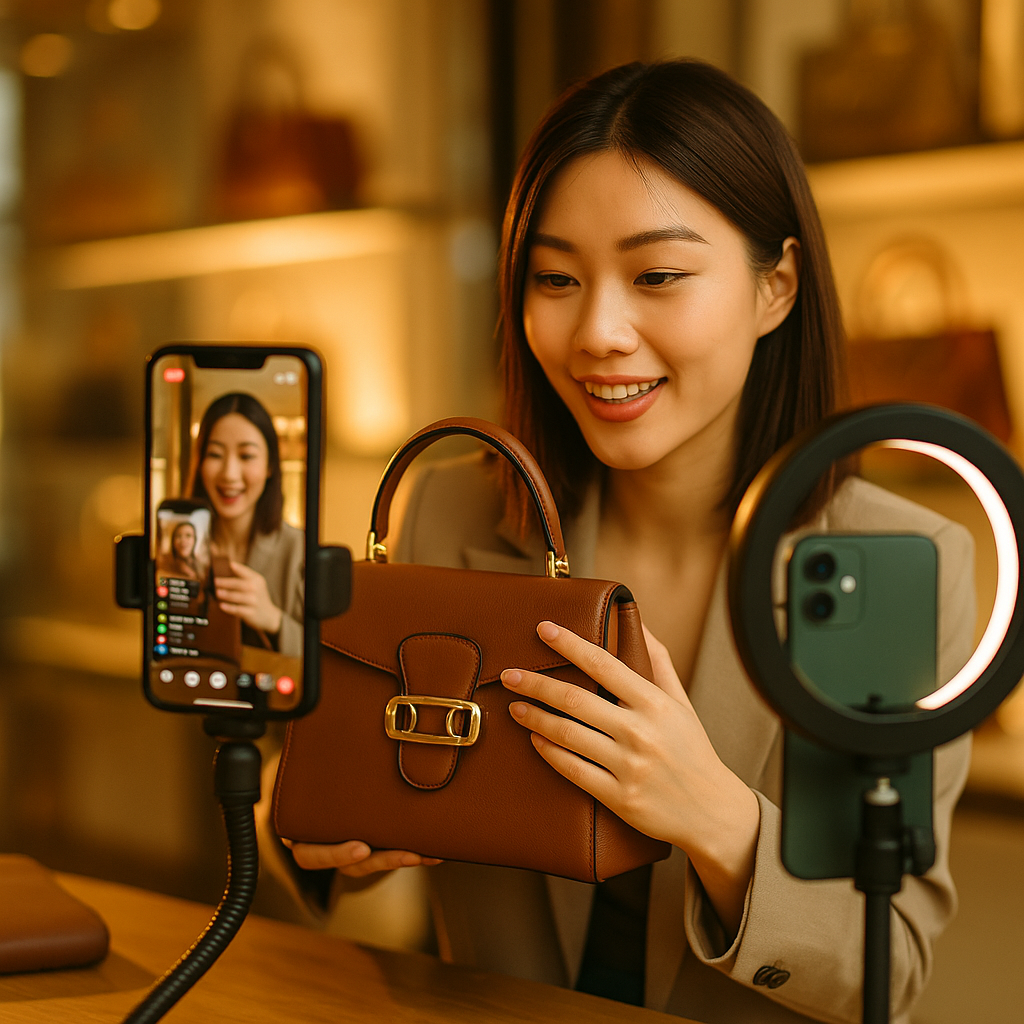
Luxury brands generating less than 15% of their digital revenue from Asia-Pacific social commerce are leaving serious money on the table. Ralph Lauren’s coordinated push across Douyin in China and LINE in Japan offers a rare, replicable blueprint for premium brands trying to win two radically different platform ecosystems at the same time — without diluting brand equity in either market.
Two Markets, Two Logics
China and Japan share a geography and a consumer appetite for premium Western lifestyle brands, but their social commerce architectures could not be more different. Douyin is a full-funnel platform: discovery, desire, and transaction happen in one continuous scroll. LINE is a messaging-first super-app where commerce sits inside a trusted relationship layer. Treating them with the same creator brief is one of the most common and costly mistakes global luxury teams make.
On Douyin, the purchase funnel is compressed. A KOL (key opinion leader) can move a consumer from first impression to checkout in under 90 seconds through shoppable livestream or embedded product cards. Statista data consistently shows China’s social commerce penetration outpacing every other major market, with luxury and premium lifestyle categories growing fastest among 25-45 year old urban consumers. Speed, spectacle, and social proof are the operating currency.
LINE in Japan operates on different trust mechanics. With over 96 million monthly active users and deep penetration into daily communication, LINE’s parent LY Corporation has built a commerce environment where intimacy beats virality. LINE Shopping, LIVE commerce features, and brand Official Accounts create a permission-based relationship that Japanese consumers extend to premium purchases only after trust is established. Urgency tactics that work on Douyin can actively repel a Japanese LINE audience.
Running the same creator brief across Douyin and LINE isn’t just inefficient — it’s brand-damaging. Each platform rewards fundamentally different consumer psychology, and luxury brands that ignore this distinction sacrifice conversion in both markets.
What Ralph Lauren Actually Built
Ralph Lauren’s dual-market approach is worth dissecting because it respects platform logic rather than fighting it. On Douyin, the brand leaned into KOL-driven aspirational storytelling combined with direct commerce integration. Creators in the fashion and lifestyle verticals were briefed to produce content that felt native to Douyin’s fast-cut aesthetic while anchoring to Ralph Lauren’s heritage codes: Americana, equestrian culture, understated wealth. Product drops were timed to Douyin’s peak shopping windows, with livestream events anchored by mid-tier fashion KOLs (500K to 3M followers) rather than mega-celebrities, which improved purchase conversion rates and kept cost-per-acquisition manageable.
In Japan, the playbook flipped. Ralph Lauren activated LINE Official Account campaigns supported by micro-influencer content distributed through LINE BLOG and cross-promoted via Instagram into the LINE ecosystem. Japanese lifestyle creators, particularly those focused on interior styling, seasonal fashion coordination, and “quiet luxury” aesthetics, became the channel. Content emphasized longevity, craftsmanship, and considered purchase rather than trend urgency. Coupon distribution through LINE’s messaging layer drove measurable foot traffic to physical retail alongside digital conversion — a hybrid mechanic that matters enormously in the Japanese luxury purchase journey.
The structural insight: Ralph Lauren didn’t build one program and localize it. They built two programs that shared brand standards but had entirely separate creator selection criteria, content formats, and commerce mechanics.
Creator Selection Criteria by Market
For Douyin, the selection framework prioritizes: GMV track record (creators with documented sales performance inside Douyin Shop), engagement-to-follower ratios above platform benchmarks, and content format fluency across both short-form video and livestream. Brands should also audit creator audience authenticity through third-party tools like HypeAuditor, since follower inflation remains a real problem in China’s influencer market despite platform crackdowns.
For LINE and the Japanese market, the criteria shift toward: audience trust scores (measurable through comment sentiment and response rates on LINE BLOG or connected Instagram), aesthetic alignment with the brand’s visual language, and demonstrated ability to drive affiliate or coupon redemption in previous campaigns. Follower count matters less than relationship depth. A creator with 80,000 engaged followers who moves product consistently outperforms a 2M-follower account with passive scroll behavior.
Understanding interest graph over follower count isn’t just relevant to CPG brands — it directly applies to how premium lifestyle brands should be evaluating creators in Japan’s more intimate social commerce environment.
Structuring the Dual-Market Program Operationally
The operational challenge most brand teams underestimate is compliance and disclosure. China’s advertising regulations under the Internet Advertising Management Measures require clear labeling of sponsored content, and Douyin’s own platform policies have tightened KOL disclosure requirements significantly. Japan’s Consumer Affairs Agency has its own influencer disclosure guidelines that differ from both Chinese and Western frameworks. Running a dual-market program without a compliance audit layer is an operational liability.
A creator campaign disclosure audit should be built into the program architecture before any creator contracts are signed, not retrofitted after. This is especially critical for luxury brands where regulatory scrutiny is higher and brand reputation damage from a disclosure violation compounds quickly in premium consumer segments.
Program structure recommendation for a brand operating at Ralph Lauren’s scale:
- Central brand team: Sets global brand standards, approves all creative, manages master campaign calendar
- China market team (or agency partner): Owns Douyin creator relationships, manages Douyin Shop integration, handles platform compliance, monitors GMV reporting
- Japan market team (or agency partner): Manages LINE Official Account strategy, owns creator relationships, coordinates with retail ops for hybrid digital-physical mechanics
- Shared measurement layer: Unified attribution dashboard that connects Douyin Shop sales data with LINE conversion events and allows cross-market ROI comparison
Attribution is where many dual-market programs fall apart. Douyin’s native analytics are strong but siloed. LINE’s commerce data requires integration work. Without a shared framework, the central team ends up making budget decisions based on incomplete signals. Reviewing attribution window design for creator contracts is foundational to making this measurement layer work correctly.
Paid Amplification Is Not Optional
Organic reach on both Douyin and LINE has contracted as platform algorithms have matured and competition for feed placement has intensified. Premium brands that rely on organic creator reach alone are systematically underperforming. On Douyin, creator content can be amplified through Spark Ads, which allow brands to boost organic KOL posts as paid inventory while preserving the native aesthetic. This is one of the highest-leverage paid mechanics available in the Chinese social commerce market.
On LINE, paid amplification options include LINE Ads targeted to Official Account followers and lookalike audiences, plus sponsored placement within LINE News and LINE LIVE. The principle that paid amplification is now essential applies as much to Asian platform ecosystems as it does to Meta or TikTok. Budget planning that doesn’t include a paid boost allocation for creator content is structurally flawed.
On Douyin, allocating 30-40% of creator program budget to Spark Ads amplification typically doubles the GMV efficiency of a campaign compared to organic-only creator distribution. The math is hard to argue with.
Content Format Differences That Actually Matter
Douyin rewards: fast hook (first 2 seconds), product demonstration, social proof signals (comment volume, purchase count displayed), and a clear CTA to the product card. Vertical video between 15-60 seconds drives the highest conversion rates for fashion and lifestyle categories. Livestream sessions of 2-4 hours anchored by a single creator with clear product rotation and time-limited offers remain the dominant GMV driver for premium fashion brands on the platform.
LINE rewards: visually cohesive content that matches Japanese aesthetic sensibilities (clean composition, seasonal relevance, “less is more” styling), narrative depth over speed, and coupon or exclusive offer mechanics that reward LINE followers specifically. Cross-format distribution — creating for LINE BLOG and repurposing into LINE LIVE short clips — extends content efficiency without requiring a massive production budget.
For teams managing creator briefs across multiple platforms simultaneously, the strategic logic behind platform-specific brief architecture applies directly here: one master brand brief, executed through separate platform briefs that speak each algorithm’s language.
Brands also exploring broader programmatic boost strategies for creator content will find that the principles translate well to Douyin’s Spark Ads infrastructure, even if the specific platform mechanics differ.
The Real Competitive Advantage
Most global luxury brands are running one of two failed strategies in Asia: either treating China and Japan as a single “APAC” market with unified creative, or running fully siloed programs that share nothing and miss cross-market efficiency gains. Ralph Lauren’s playbook threads the needle by maintaining shared brand governance while giving each market genuine operational autonomy over platform mechanics, creator selection, and commerce integration.
The brands that will compound this advantage fastest are those investing now in local platform expertise, not just local translation. Knowing that Douyin’s algorithm favors creator content with high completion rates and early comment velocity is operational knowledge that takes time to build. The same is true for understanding LINE’s Official Account engagement mechanics. eMarketer’s APAC commerce forecasts consistently project double-digit growth in social commerce revenue through the decade. The window to build durable platform expertise before competitors is closing.
Start by auditing your existing creator roster against Douyin Shop GMV data and LINE conversion metrics separately. If you cannot segment performance by platform and market today, that measurement gap is your first operational priority before any program expansion.
FAQs
What is the key difference between running creator programs on Douyin versus LINE?
Douyin is a full-funnel social commerce platform where discovery, engagement, and purchase happen in a single session through short-form video and livestream. LINE is a messaging-first super-app where commerce is embedded in a trust-based relationship layer. Creator briefs, content formats, and purchase mechanics must be built separately for each platform to match how consumers actually behave in each environment.
How should luxury brands select creators for Douyin social commerce campaigns?
Prioritize creators with a documented GMV track record inside Douyin Shop, strong engagement-to-follower ratios, and fluency in both short-form video and livestream formats. Mid-tier creators (500K to 3M followers) typically deliver better cost-per-acquisition than mega-celebrities for luxury fashion. Always audit follower authenticity using third-party tools before contracting.
What compliance requirements do brands need to manage in a dual China-Japan creator program?
China’s Internet Advertising Management Measures require clear labeling of sponsored content on Douyin. Japan’s Consumer Affairs Agency has separate influencer disclosure guidelines. Both sets of requirements differ from Western frameworks like FTC guidelines. A compliance audit layer covering both markets should be built into the program architecture before creator contracts are signed.
Is paid amplification necessary for creator content on Douyin and LINE?
Yes. Organic reach has contracted on both platforms as algorithms have matured. On Douyin, Spark Ads allow brands to amplify KOL content as paid inventory while preserving the native feel — allocating 30-40% of creator program budget to Spark Ads amplification significantly improves GMV efficiency. On LINE, paid amplification through LINE Ads and sponsored placements extends creator content reach beyond organic followers.
How should brands structure the operational team for a dual-market Douyin and LINE program?
Use a hub-and-spoke model: a central brand team sets global standards and approves creative, while dedicated China and Japan market teams (in-house or agency) own local creator relationships, platform compliance, and commerce mechanics independently. A shared measurement layer that unifies Douyin Shop and LINE conversion data is essential for accurate cross-market ROI comparison and budget allocation decisions.
Top Influencer Marketing Agencies
The leading agencies shaping influencer marketing in 2026
Agencies ranked by campaign performance, client diversity, platform expertise, proven ROI, industry recognition, and client satisfaction. Assessed through verified case studies, reviews, and industry consultations.
Moburst

-
2

The Shelf
Boutique Beauty & Lifestyle Influencer AgencyA data-driven boutique agency specializing exclusively in beauty, wellness, and lifestyle influencer campaigns on Instagram and TikTok. Best for brands already focused on the beauty/personal care space that need curated, aesthetic-driven content.Clients: Pepsi, The Honest Company, Hims, Elf Cosmetics, Pure LeafVisit The Shelf → -
3

Audiencly
Niche Gaming & Esports Influencer AgencyA specialized agency focused exclusively on gaming and esports creators on YouTube, Twitch, and TikTok. Ideal if your campaign is 100% gaming-focused — from game launches to hardware and esports events.Clients: Epic Games, NordVPN, Ubisoft, Wargaming, Tencent GamesVisit Audiencly → -
4

Viral Nation
Global Influencer Marketing & Talent AgencyA dual talent management and marketing agency with proprietary brand safety tools and a global creator network spanning nano-influencers to celebrities across all major platforms.Clients: Meta, Activision Blizzard, Energizer, Aston Martin, WalmartVisit Viral Nation → -
5

The Influencer Marketing Factory
TikTok, Instagram & YouTube CampaignsA full-service agency with strong TikTok expertise, offering end-to-end campaign management from influencer discovery through performance reporting with a focus on platform-native content.Clients: Google, Snapchat, Universal Music, Bumble, YelpVisit TIMF → -
6

NeoReach
Enterprise Analytics & Influencer CampaignsAn enterprise-focused agency combining managed campaigns with a powerful self-service data platform for influencer search, audience analytics, and attribution modeling.Clients: Amazon, Airbnb, Netflix, Honda, The New York TimesVisit NeoReach → -
7

Ubiquitous
Creator-First Marketing PlatformA tech-driven platform combining self-service tools with managed campaign options, emphasizing speed and scalability for brands managing multiple influencer relationships.Clients: Lyft, Disney, Target, American Eagle, NetflixVisit Ubiquitous → -
8

Obviously
Scalable Enterprise Influencer CampaignsA tech-enabled agency built for high-volume campaigns, coordinating hundreds of creators simultaneously with end-to-end logistics, content rights management, and product seeding.Clients: Google, Ulta Beauty, Converse, AmazonVisit Obviously →