


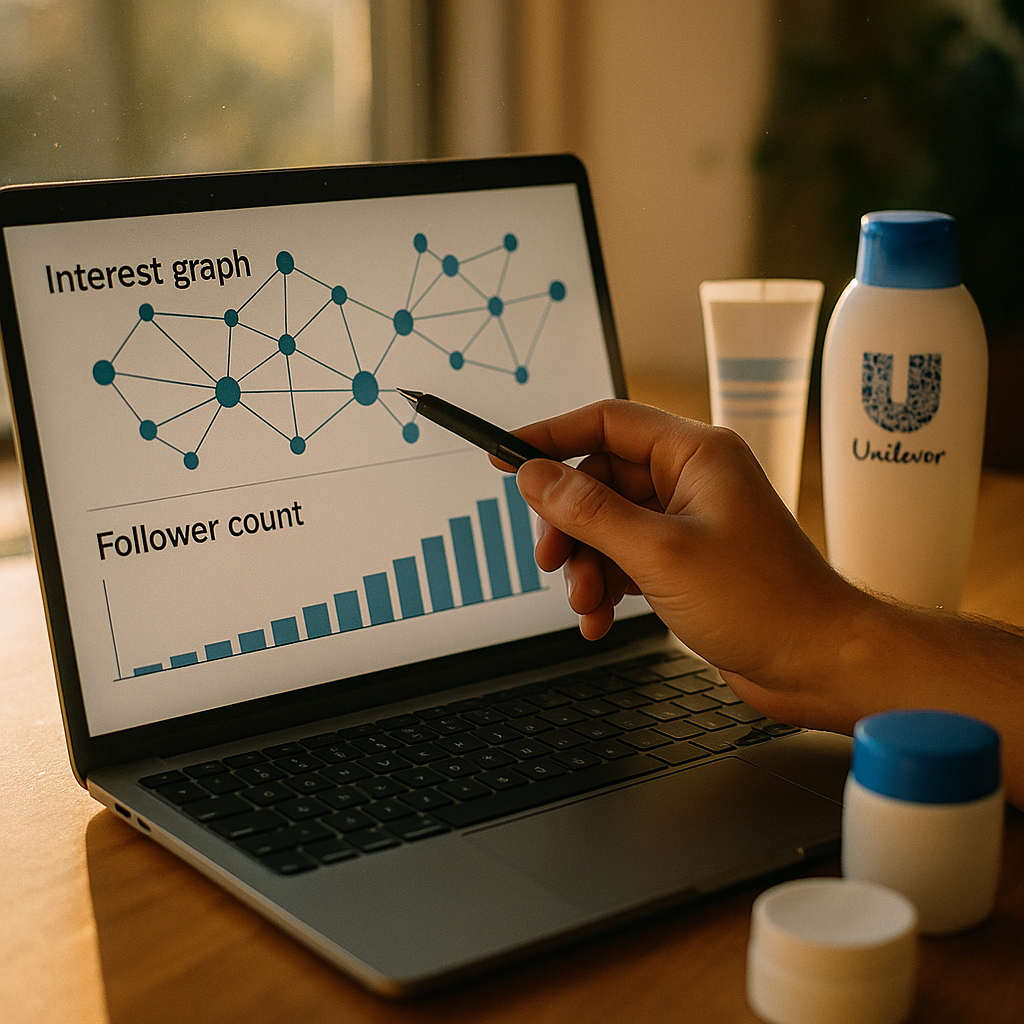
Follower count is a vanity metric masquerading as a reach predictor. Unilever’s interest-over-follower discovery model, now influencing how major CPG brands approach creator selection criteria, proves it. A creator with 40,000 followers in a tightly mapped interest cluster can outperform a 2-million-follower generalist by 6x on conversion rate — and the algorithms are the reason why.
Why Follower Count Broke as a Planning Input
Platform algorithms stopped serving content to followers first. They serve content to interest clusters. TikTok’s For You Page, Instagram’s GEM ranking system, and YouTube’s recommendation engine all prioritize content-to-viewer affinity over creator-to-follower relationships. This shift happened gradually, then completely. The result: a creator’s “audience” is no longer the primary distribution mechanism — the algorithm is.
For CPG brands that built influencer tiers around follower thresholds (macro, mid, micro), this is an operational crisis dressed up as a trend story. Procurement teams still write RFPs with follower floors. Media plans still estimate reach from follower counts multiplied by assumed engagement rates. Both inputs are now structurally unreliable on interest-graph-native platforms.
On TikTok, TikTok for Business data shows that over 75% of video views come from the For You Page, not from a creator’s follower feed. Follower count doesn’t predict who sees the content — interest affinity does.
Unilever recognized this early. Their procurement and brand teams began piloting interest-graph-based discovery as a primary selection signal, layering follower count as a secondary qualifier rather than a gate. The shift rewired how they briefed creators, how they set distribution expectations, and critically, how they measured success.
How the Interest-Graph Discovery Model Actually Works
Interest-graph algorithms map viewers by content consumption behavior, not by who they follow. Platforms like TikTok, Instagram, and increasingly Pinterest use machine learning to cluster users around topical affinities — “skincare minimalism,” “high-protein budget cooking,” “sustainable home renovation” — and then match content to those clusters in real time.
Creators who consistently produce content within a specific interest node build what you might call algorithmic authority in that cluster. Their content gets preferentially distributed to users already engaging in that topic area, regardless of follower count. A creator who posts exclusively about gut health supplements, with consistent engagement signals (saves, replays, click-throughs), is far more valuable to a probiotic CPG brand than a lifestyle creator with 10x the following but diluted topical signals.
For discovery, this means brand teams need to query platforms differently. Instead of searching for creators by follower range, they should be searching by content taxonomy, keyword performance, and cluster engagement rates. Tools like Sprout Social‘s influencer discovery and platforms like Traackr and CreatorIQ have started incorporating interest-graph signals into their filtering logic — though the sophistication varies considerably.
Unilever’s model goes a step further: they map product occasions to interest clusters before they identify creators. A body wash campaign targeting “recovery ritual” consumers begins with a cluster map, not a creator list. The creators come after the cluster is validated through platform search data and social listening.
Rebuilding Creator Selection Criteria for CPG Programs
The practical implication for brand teams: your creator scorecard needs surgery. Here’s what to cut, add, and reweight.
Cut or demote:
- Raw follower count as a reach proxy
- Overall engagement rate (too easily gamed and too aggregated)
- Platform-provided “Audience Demographics” at a surface level
Add or promote:
- Content cluster consistency score (how often does this creator post within the relevant interest node?)
- Topic-specific engagement rate (engagement on relevant content only, not their whole feed)
- Algorithm amplification ratio (what percentage of their views come from non-followers?)
- Keyword authority signals within the category (do platform search tools surface this creator for your product’s topical terms?)
- Save rate and replay rate on category-relevant content
Some of these signals require platform-native data you may not have direct access to. TikTok’s Creator Marketplace and Meta’s Creator Marketplace offer partial data on non-follower reach distribution. For deeper signals, third-party tools and direct creator partnerships with analytics sharing provisions are necessary. Build that data-sharing clause into your creator agreements now.
The interest-graph creator strategy is not a niche approach anymore. Brands rebuilding their creator frameworks around cluster authority rather than follower volume are consistently reporting lower CPMs and higher conversion on shoppable content.
Brief Architecture Has to Match the Algorithm, Not the Creator
This is where most CPG teams lose the execution. They update the selection criteria but leave the brief unchanged. A brief written for a macro-influencer with a large follower base assumes the creator’s audience is the primary distribution mechanism. An interest-graph brief assumes the algorithm is.
The practical difference is significant. Interest-graph briefs should prioritize:
- Topical keyword density. The content needs to contain the language that the algorithm’s content classification system uses to assign it to the right cluster. This means the brief should include specific phrases, not just brand talking points.
- Hook design for non-follower viewers. If 75%+ of views come from non-followers who have zero prior relationship with the creator, the hook cannot assume familiarity. It has to earn attention cold.
- Format signals over brand aesthetics. Algorithmic platforms reward native-feeling content. Briefs that over-specify production style create content the algorithm deprioritizes. Give creators freedom within topical guardrails, not visual guardrails.
- Explicit interest cluster anchoring. The brief should tell the creator which interest community the content is designed to reach — not just the brand objective. “We want to reach the gut health and functional food community on TikTok” is more useful than “we want to drive awareness of our probiotic line.”
Reviewing how Instagram’s GEM algorithm shapes creator briefs is instructive here — the same principle of algorithm-first brief construction applies across platforms, with platform-specific adaptations for signal weighting.
The brief is a distribution instrument, not just a creative directive. If it isn’t written with the algorithm’s classification logic in mind, you’re leaving distribution to chance.
Distribution Logic: Rethinking How You Scale Interest-Graph Campaigns
Traditional CPG influencer distribution logic: identify creators, negotiate posts, layer paid amplification on top of organic reach, optimize for impressions. This model was built for reach-based platforms. It fits interest-graph platforms poorly.
Interest-graph distribution logic: identify clusters, find creators with cluster authority, produce content optimized for cluster algorithms, use paid amplification to expand within the cluster (not outside it), measure performance within cluster engagement segments.
The paid amplification piece deserves particular attention. When you boost an interest-graph creator’s post, you should be targeting the interest cluster — not a demographic profile. On TikTok, this means using community-based targeting rather than age and gender segments. On Instagram, smarter Reels targeting aligned to interest behavior signals consistently outperforms demographic targeting for CPG content.
Unilever’s model also emphasizes cluster sequencing: running creator content within an interest cluster in waves, so the algorithm learns to associate the brand with the cluster over time. This is not a one-post play. It requires a content calendar built around cluster saturation, not campaign flights.
Measurement Reframing: What Good Looks Like Now
If your success metrics are still reach and impressions, you’re measuring the wrong thing. Interest-graph campaigns should be evaluated on cluster penetration, content classification accuracy, and downstream conversion from cluster-matched audiences.
Specifically, look at:
- Share of For You Page (or equivalent non-follower) views as a percentage of total views
- Engagement rate within the interest cluster (using audience interest data from platform analytics)
- Conversion rate delta between cluster-matched viewers and general audience viewers
- Organic search volume lift for category keywords in the target cluster during campaign periods
Brands running community-first creator strategies on TikTok have found that cluster-aligned content generates 3-4x better attributed conversion rates versus demographic-targeted content at equivalent spend. The efficiency gain comes from relevance compression: you’re reaching fewer people who are far more likely to act.
External benchmarking resources like eMarketer’s influencer marketing data and Statista’s creator economy reports can help contextualize your cluster performance against category norms, though platform-specific data from your own campaigns will always be more actionable than industry averages.
One compliance note: as creator selection becomes more algorithmically informed, disclosure practices don’t change. FTC guidelines on sponsored content apply regardless of how you discovered or selected the creator. Ensure your creator agreements and brief templates explicitly address disclosure requirements — interest-graph-native content formats (short video, audio overlays) are exactly where disclosure can slip.
Start by auditing your last three creator campaigns against interest-cluster alignment: pull the non-follower view percentage for each creator’s sponsored content and map it against your conversion data. That gap between cluster-matched and non-matched performance is your business case for rebuilding selection criteria from the ground up.
FAQs
What is Unilever’s interest-over-follower creator discovery model?
Unilever’s model prioritizes a creator’s topical authority within specific interest clusters — mapped by algorithm behavior — over their raw follower count. Rather than starting with a creator list segmented by follower tiers, the model begins with identifying which interest clusters are relevant to the product occasion, then finds creators who have built algorithmic authority within those clusters through consistent, high-engagement topical content.
Why has follower count become unreliable as a reach predictor?
Platform algorithms on TikTok, Instagram, and YouTube now distribute content primarily based on content-to-viewer interest affinity, not creator-to-follower relationships. On TikTok, over 75% of video views come from the For You Page, not the follower feed. This means a creator’s follower count does not reliably predict how many people will see their content — the algorithm’s interest-matching logic does.
How should CPG brands rebuild their creator selection criteria?
CPG brands should replace or significantly demote follower count and aggregate engagement rate in their creator scorecards. Priority signals should include: content cluster consistency (how often the creator posts within the relevant interest node), topic-specific engagement rate, algorithm amplification ratio (percentage of views from non-followers), and keyword authority signals within the brand’s product category.
How does interest-graph logic change the way creator briefs are written?
Interest-graph briefs should be written with the algorithm’s content classification system in mind, not just the creative audience. This means including specific topical keywords the algorithm uses to assign content to clusters, designing hooks for non-follower cold audiences, allowing creative format flexibility within topical guardrails, and explicitly stating which interest community the content is intended to reach.
What metrics should brands use to measure interest-graph creator campaigns?
Key metrics include: the percentage of total views coming from non-followers (For You Page or equivalent), engagement rate within cluster-matched audiences, conversion rate differential between cluster-matched and general viewers, and category keyword search volume lift during campaign periods. Reach and impressions alone are insufficient measurement outputs for interest-graph campaigns.
Does interest-graph-based creator selection change FTC disclosure requirements?
No. FTC disclosure requirements apply regardless of how creators are discovered or selected. Short-form video and audio-forward content formats — common in interest-graph-native campaigns — are particularly high-risk areas for disclosure gaps. Brand teams should ensure creator agreements and brief templates include explicit disclosure requirements compliant with current FTC guidelines.
Top Influencer Marketing Agencies
The leading agencies shaping influencer marketing in 2026
Agencies ranked by campaign performance, client diversity, platform expertise, proven ROI, industry recognition, and client satisfaction. Assessed through verified case studies, reviews, and industry consultations.
Moburst

-
2

The Shelf
Boutique Beauty & Lifestyle Influencer AgencyA data-driven boutique agency specializing exclusively in beauty, wellness, and lifestyle influencer campaigns on Instagram and TikTok. Best for brands already focused on the beauty/personal care space that need curated, aesthetic-driven content.Clients: Pepsi, The Honest Company, Hims, Elf Cosmetics, Pure LeafVisit The Shelf → -
3

Audiencly
Niche Gaming & Esports Influencer AgencyA specialized agency focused exclusively on gaming and esports creators on YouTube, Twitch, and TikTok. Ideal if your campaign is 100% gaming-focused — from game launches to hardware and esports events.Clients: Epic Games, NordVPN, Ubisoft, Wargaming, Tencent GamesVisit Audiencly → -
4

Viral Nation
Global Influencer Marketing & Talent AgencyA dual talent management and marketing agency with proprietary brand safety tools and a global creator network spanning nano-influencers to celebrities across all major platforms.Clients: Meta, Activision Blizzard, Energizer, Aston Martin, WalmartVisit Viral Nation → -
5

The Influencer Marketing Factory
TikTok, Instagram & YouTube CampaignsA full-service agency with strong TikTok expertise, offering end-to-end campaign management from influencer discovery through performance reporting with a focus on platform-native content.Clients: Google, Snapchat, Universal Music, Bumble, YelpVisit TIMF → -
6

NeoReach
Enterprise Analytics & Influencer CampaignsAn enterprise-focused agency combining managed campaigns with a powerful self-service data platform for influencer search, audience analytics, and attribution modeling.Clients: Amazon, Airbnb, Netflix, Honda, The New York TimesVisit NeoReach → -
7

Ubiquitous
Creator-First Marketing PlatformA tech-driven platform combining self-service tools with managed campaign options, emphasizing speed and scalability for brands managing multiple influencer relationships.Clients: Lyft, Disney, Target, American Eagle, NetflixVisit Ubiquitous → -
8

Obviously
Scalable Enterprise Influencer CampaignsA tech-enabled agency built for high-volume campaigns, coordinating hundreds of creators simultaneously with end-to-end logistics, content rights management, and product seeding.Clients: Google, Ulta Beauty, Converse, AmazonVisit Obviously →