


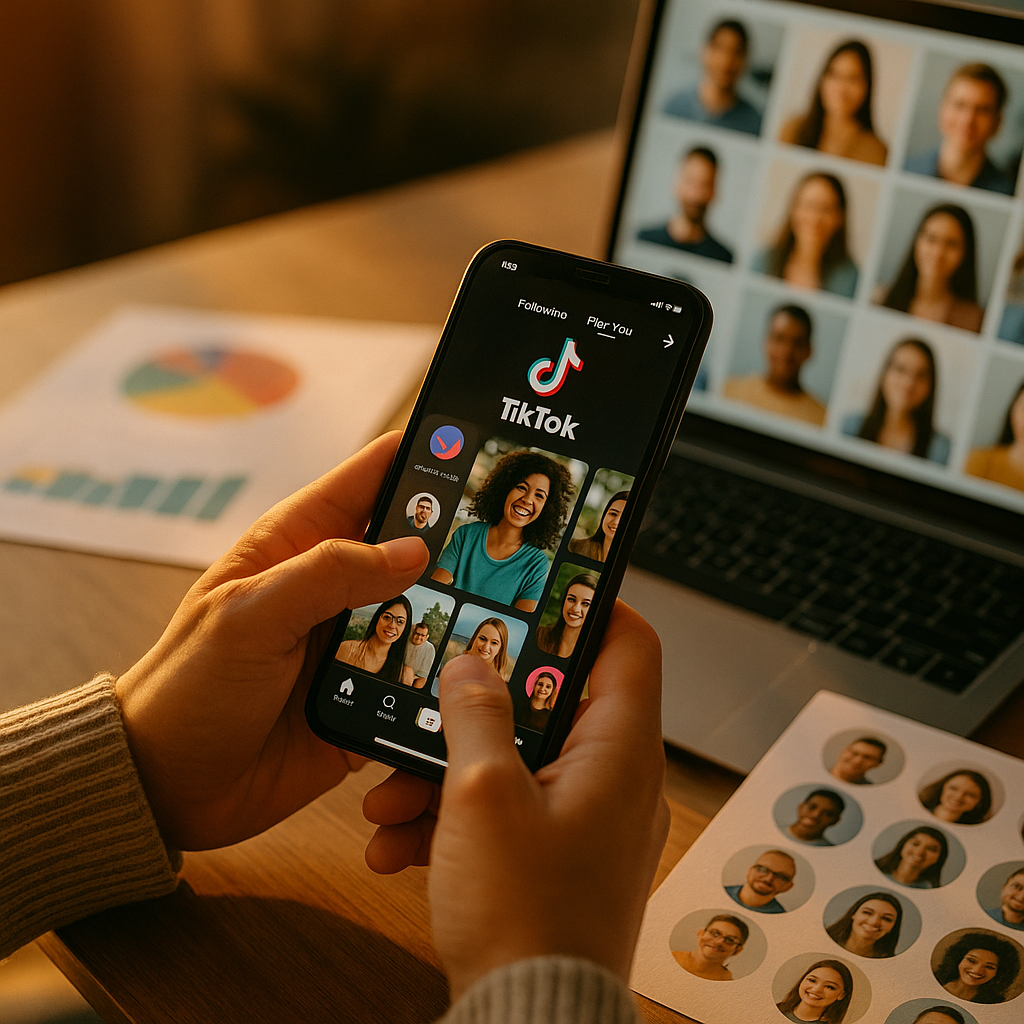
If your TikTok targeting strategy still anchors on 18-to-34-year-old women, you’re already behind. TikTok’s ad platform has quietly deprioritized demographic segmentation in favor of interest-cluster logic, and most brand media plans haven’t caught up. This shift in TikTok’s community-over-demographics targeting changes how brands reach, resonate with, and convert audiences at scale.
Why Demographics Were Always a Shortcut on TikTok
Demographic targeting was a comfort blanket borrowed from legacy TV planning. Age and gender gave media buyers a familiar lever, and platforms supported it because the data was easy to collect. But TikTok’s algorithm was never built around who a user is. It was built around what a user does.
The ForYou Page doesn’t ask your age. It watches your thumbs. A 52-year-old man who watches every cottagecore recipe video gets served the same niche culinary content as a 19-year-old who does the same. The algorithm clusters behavior, not birth years. Brands that kept layering demographic constraints onto TikTok campaigns were essentially fighting the feed.
TikTok’s internal research shows that interest-based targeting can outperform age/gender targeting by up to 2x on purchase intent metrics for mid-funnel campaigns, according to data shared through TikTok for Business.
The practical consequence: a brand targeting “women 25-34 interested in skincare” was artificially shrinking a reachable audience that actually included a much broader swath of skincare-obsessed users across every age bracket and gender. The demographic filter was the budget leak.
What “Community” Actually Means in TikTok’s Model
TikTok now formally uses the language of communities rather than cohorts. Communities are defined by shared content consumption patterns, hashtag ecosystems, sound usage, and creator affinity. #BookTok is a community. #StanleyTumbler obsessives are a community. #FinTok is a community. These aren’t hashtag campaigns — they’re behavioral clusters the algorithm has already identified and reinforced.
For brand marketers, this is a structural shift. You’re no longer mapping your product to a demographic profile. You’re mapping it to a behavioral cluster with its own language, content formats, trusted creators, and engagement rituals. That requires a fundamentally different brief.
The good news: these communities often have higher purchase intent within their niche than any demographic slice would. interest graph targeting research consistently shows that shared-interest audiences convert faster than shared-age audiences. The interest graph is a stronger buying signal than a birthday.
Rebuilding Your Audience Targeting Logic: A Practical Framework
This isn’t about abandoning your customer data. It’s about translating it.
Step 1: Audit your existing persona maps. For each persona, strip out the demographic descriptors and list only behavioral signals: what do they watch, save, share, and search? What creators do they follow? What hashtag communities do they participate in? You’re building a behavioral fingerprint, not a census profile.
Step 2: Use TikTok’s Creative Center and Audience Insights tools to identify which communities already over-index for your product category. Search your category keywords and examine which communities are generating organic volume around those terms. These are your target clusters. For brands running creator campaigns, custom creator networks structured around community affinity rather than follower demographics tend to produce more efficient ROAS.
Step 3: Reassign your campaign KPIs to community-level metrics. Reach within a specific hashtag ecosystem, comment sentiment from community insiders, and save rates (which signal community-level content adoption) matter more than raw impression delivery against a demographic.
Step 4: Test creative that speaks to community codes, not just product benefits. Each TikTok community has its own visual language, audio cues, and content formats. A brand entering #CleanTok (the cleaning community) needs to understand the reveal format, the specific product-shot conventions, and the creator tone that community expects. Demographic-targeted creative ignores all of this.
Creator Selection Has to Change Too
If you’re still vetting TikTok creators primarily by audience age/gender split on their media kit, you’re optimizing for a metric the algorithm has largely made irrelevant.
The right question is: which communities does this creator hold credibility in? A micro-creator with 40,000 followers who is genuinely embedded in #PlantTok will outperform a macro-creator with 2 million followers whose audience skews your target demographic but who has no authentic community standing in the plant space.
Tools like Modash, Passionfroot, and Traackr have started incorporating interest-cluster affinity scores into their creator vetting outputs. Use them. The TikTok Symphony Agent also uses behavioral clustering to recommend creator matches, which aligns with this community-first logic at the platform level.
For brands running paid amplification behind creator content, the targeting layer should match. If your creator is embedded in #VanLife, your Spark Ads targeting should prioritize that interest cluster, not a demographic overlay. Layering demographics on top actually suppresses delivery to the high-intent community members the algorithm has already identified.
Budget Allocation Implications
Shifting to community targeting doesn’t just change your creative and media execution. It changes how you should allocate budget across campaigns.
Demographic-led planning typically allocates budget by audience size (reach a certain number of 25-34-year-olds). Community-led planning allocates by penetration depth: how much of a specific interest cluster can you meaningfully reach and influence? A smaller, deeper community investment often delivers better brand recall and purchase lift than a wide demographic spray.
The Branded Buzz and TopReach combined buy is one media structure worth examining for community-first campaigns. The sequencing logic, when mapped to specific communities rather than age bands, can build genuine familiarity within a cluster before asking for conversion.
eMarketer data consistently shows TikTok’s CPMs running lower for interest-targeted campaigns compared to broad demographic buys, with significantly higher engagement rates. The efficiency argument for rebuilding your targeting logic is straightforward.
Community-targeted campaigns on TikTok aren’t just a creative preference — they’re a media efficiency play. Narrower behavioral clusters drive higher engagement rates and lower effective CPMs than broad demographic buys.
Compliance and Brand Safety in Interest-Cluster Targeting
One underappreciated risk: some interest communities on TikTok exist in content adjacency to categories that create brand safety exposure. The #FinTok community, for example, sits next to unregulated financial advice content. The wellness community intersects with health claims that could trigger FTC regulatory concerns depending on your product category.
Before committing budget to a community cluster, run a content audit on the top 100 videos in that hashtag ecosystem. What else is being said there? Which creators are the community’s most influential voices, and do any of them represent reputational risk? The TikTok brand safety configuration tools can block category-level adjacencies, but manual community auditing remains essential for regulated categories.
Also relevant: AI-powered keyword and synonym blocking on TikTok now extends to community-level content filtering, which matters when you’re deliberately placing your brand inside a specific hashtag ecosystem.
The Measurement Problem Nobody Is Talking About
Here’s the honest friction: most brand measurement frameworks aren’t built for community-level success metrics. Your existing brand tracker probably measures awareness and consideration by demographic cohort, not by interest cluster penetration.
This means you can run a genuinely effective community-first campaign and have it look underperforming in your legacy reporting. Fix the measurement before you run the campaign. Work with your analytics partner to define community-specific lift measurement: are users within the target interest cluster showing higher search intent, higher product page visits, higher conversion rates after exposure? Sprout Social’s listening tools and Statista’s platform benchmarks can help calibrate what good looks like within specific community contexts.
The measurement infrastructure needs to evolve alongside the targeting logic. Otherwise you’re making better decisions with worse-looking numbers, which is a hard sell to a CFO.
Start with one campaign this quarter. Pick a product line with a clear community affinity, strip the demographic targeting, and let the interest clusters drive delivery. Measure penetration depth, not demographic reach. The data from that single test will tell you more about TikTok’s community model than any planning deck.
Frequently Asked Questions
What is community-over-demographics targeting on TikTok?
It refers to TikTok’s shift away from age and gender as the primary audience segmentation variables toward interest-based behavioral clusters. The platform’s algorithm groups users by shared content consumption patterns — such as hashtag communities, creator affinity, and sound usage — rather than demographic profiles. Advertisers who align their targeting to these behavioral clusters typically see higher engagement rates and more efficient CPMs than those relying on traditional demographic overlays.
How should brands rebuild their audience personas for TikTok’s community model?
Brands should strip demographic descriptors from existing personas and rebuild them around behavioral signals: what content categories does the audience engage with, which creator communities do they participate in, and which hashtag ecosystems do they inhabit? TikTok’s Audience Insights and Creative Center tools can identify which communities over-index for a given product category, giving media planners a data-driven starting point for community selection.
Does removing demographic targeting hurt campaign reach?
Not necessarily. In many cases, removing demographic filters expands reachable audience size by allowing the algorithm to find all high-intent users within a community cluster, regardless of age or gender. The efficiency trade-off typically favors interest-cluster targeting: smaller, behaviorally defined audiences tend to generate higher engagement rates and lower effective CPMs than broad demographic buys, according to TikTok for Business performance benchmarks.
How does creator selection change under a community-first model?
Brands should evaluate creators based on their community credibility and interest-cluster affinity rather than audience demographic splits. A micro-creator deeply embedded in a specific community (such as #PlantTok or #FinTok) will generally outperform a larger creator whose demographic profile matches your target but who lacks authentic community standing. Tools like Modash, Traackr, and TikTok’s Symphony Agent now incorporate community affinity scoring to support this evaluation.
What brand safety risks come with interest-cluster targeting on TikTok?
Some interest communities on TikTok exist in content adjacency to potentially problematic categories. For example, wellness communities may intersect with unverified health claims, and financial communities may overlap with unregulated financial advice. Brands should audit the top content within a target community before committing budget, use TikTok’s brand safety and keyword-blocking tools to manage adjacency risk, and apply extra caution in regulated product categories such as financial services, supplements, and healthcare.
Top Influencer Marketing Agencies
The leading agencies shaping influencer marketing in 2026
Agencies ranked by campaign performance, client diversity, platform expertise, proven ROI, industry recognition, and client satisfaction. Assessed through verified case studies, reviews, and industry consultations.
Moburst

-
2

The Shelf
Boutique Beauty & Lifestyle Influencer AgencyA data-driven boutique agency specializing exclusively in beauty, wellness, and lifestyle influencer campaigns on Instagram and TikTok. Best for brands already focused on the beauty/personal care space that need curated, aesthetic-driven content.Clients: Pepsi, The Honest Company, Hims, Elf Cosmetics, Pure LeafVisit The Shelf → -
3

Audiencly
Niche Gaming & Esports Influencer AgencyA specialized agency focused exclusively on gaming and esports creators on YouTube, Twitch, and TikTok. Ideal if your campaign is 100% gaming-focused — from game launches to hardware and esports events.Clients: Epic Games, NordVPN, Ubisoft, Wargaming, Tencent GamesVisit Audiencly → -
4

Viral Nation
Global Influencer Marketing & Talent AgencyA dual talent management and marketing agency with proprietary brand safety tools and a global creator network spanning nano-influencers to celebrities across all major platforms.Clients: Meta, Activision Blizzard, Energizer, Aston Martin, WalmartVisit Viral Nation → -
5

The Influencer Marketing Factory
TikTok, Instagram & YouTube CampaignsA full-service agency with strong TikTok expertise, offering end-to-end campaign management from influencer discovery through performance reporting with a focus on platform-native content.Clients: Google, Snapchat, Universal Music, Bumble, YelpVisit TIMF → -
6

NeoReach
Enterprise Analytics & Influencer CampaignsAn enterprise-focused agency combining managed campaigns with a powerful self-service data platform for influencer search, audience analytics, and attribution modeling.Clients: Amazon, Airbnb, Netflix, Honda, The New York TimesVisit NeoReach → -
7

Ubiquitous
Creator-First Marketing PlatformA tech-driven platform combining self-service tools with managed campaign options, emphasizing speed and scalability for brands managing multiple influencer relationships.Clients: Lyft, Disney, Target, American Eagle, NetflixVisit Ubiquitous → -
8

Obviously
Scalable Enterprise Influencer CampaignsA tech-enabled agency built for high-volume campaigns, coordinating hundreds of creators simultaneously with end-to-end logistics, content rights management, and product seeding.Clients: Google, Ulta Beauty, Converse, AmazonVisit Obviously →