


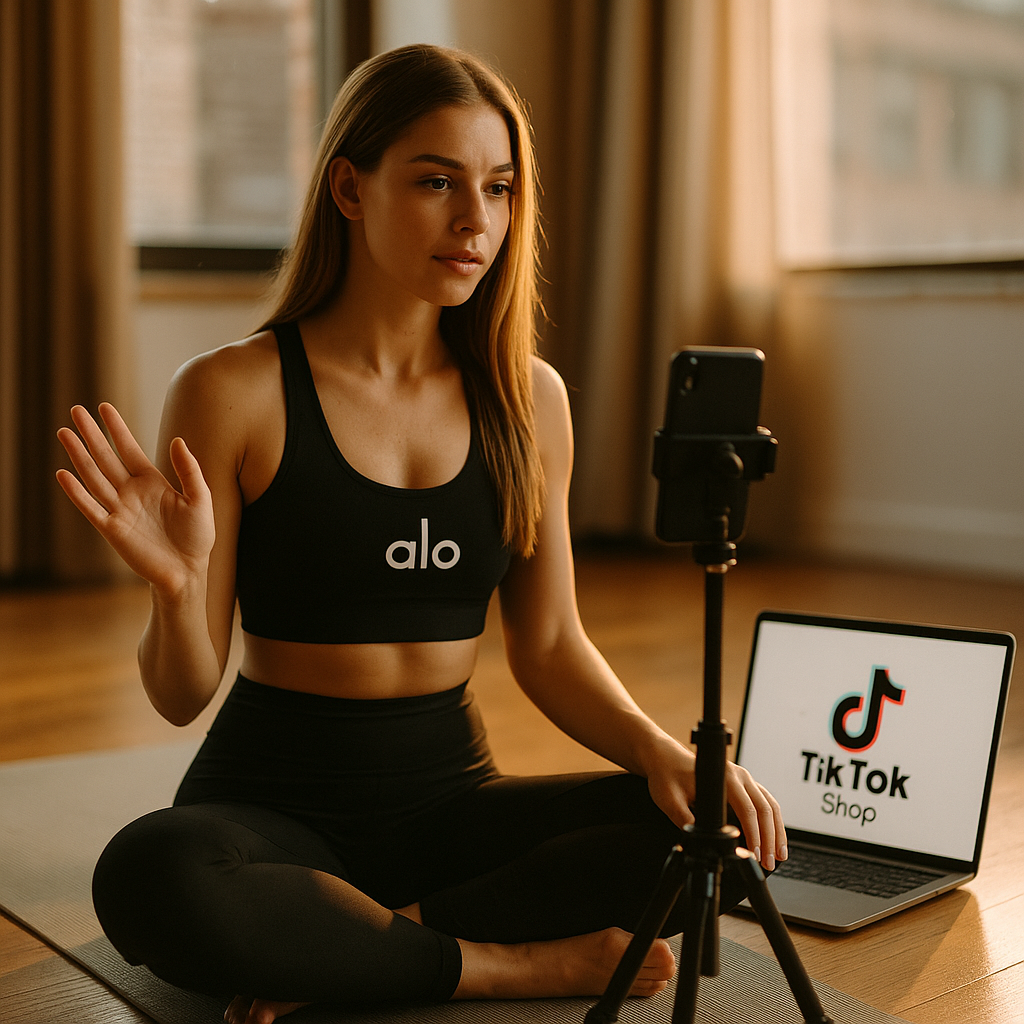
Alo Yoga Didn’t Just Go Viral. It Built a Public Market Asset.
What if your influencer program was your IPO roadmap? Alo Yoga’s TikTok-first strategy has quietly become one of the most studied creator economy blueprints in consumer brand history, and brands eyeing public markets are paying close attention. The brand reportedly surpassed $1 billion in revenue, driven not by paid media dominance but by creator credibility stacked systematically over years.
Why Creator Credibility Is Now a Balance Sheet Variable
Institutional investors used to gloss over social metrics. That era is over. Post-pandemic public market entries have shown that brands with organic creator communities carry demonstrably lower customer acquisition costs and higher lifetime value trajectories than those relying on paid performance channels. Underwriters know this. Due diligence teams at major banks now include social commerce infrastructure reviews as part of pre-IPO audits.
Alo Yoga’s positioning is instructive. The brand didn’t simply partner with creators. It embedded creators into its brand architecture. Athletes, wellness influencers, and lifestyle creators became product co-signers, content machines, and social proof engines simultaneously. That’s a fundamentally different operating model than running a seasonal influencer campaign.
Brands that structure creator relationships as infrastructure rather than campaign spend show measurably lower CAC variance during market volatility — a signal institutional investors increasingly weight in consumer growth stories.
For brands preparing a public market entry, this distinction matters enormously. Investors evaluate brand moat. A deep creator network, particularly one with documented commerce conversion data, is a moat. It’s also an asset that’s genuinely hard to replicate quickly.
The TikTok Shop Layer: Social Commerce as Proof-of-Revenue Mechanism
Alo Yoga’s TikTok infrastructure isn’t just a marketing channel. It functions as a real-time sales attribution system. Every creator post tied to a TikTok Shop link generates trackable conversion data. That data answers a question every pre-IPO CFO needs answered: can we demonstrate repeatable, scalable digital revenue with attributable acquisition costs?
Compare this to traditional DTC brands that relied on Meta’s attribution models through iOS 14.5 disruption. Those brands went into IPO roadshows with fragmented attribution stories. Alo’s TikTok-anchored commerce stack provides native first-party data at the creator level, allowing performance storytelling that’s granular and defensible.
The TikTok Shop attribution mechanics that Ulta Beauty deployed share structural similarities with what Alo built: a tiered creator system that connects content production to purchase events without relying on third-party pixel assumptions. For a brand on an IPO trajectory, this architecture is material.
If you want to see how a brand can turn a single TikTok Shop activation into a documented revenue event, the GARVEE Super Brand Day breakdown is required reading. The mechanics translate directly to how Alo structured its ongoing commerce presence.
Lifestyle Positioning as Competitive Moat
Alo didn’t just sell activewear. It sold a worldview. Studio to street. Mindfulness meets movement. This might sound like brand-speak, but the operational implications are significant. Lifestyle positioning allows a brand to extend its creator network across adjacent verticals: wellness, travel, nutrition, fashion, spiritual practice. That breadth means a larger addressable creator pool and a more defensible community identity.
Contrast this with single-category activewear competitors. When your brand identity is tightly defined by product function alone, your creator network naturally narrows. Alo’s approach created what marketers sometimes call “identity lock-in” — consumers who wear Alo aren’t just buying leggings, they’re signaling participation in a lifestyle. Creators reinforce that signal continuously, at scale, without the brand paying for every impression.
The Rhode creator camp model demonstrates similar logic: when brands structure creator experiences around identity rather than product, earned media velocity compounds over time rather than decaying post-campaign.
What the Operational Stack Actually Looks Like
Execution is where most brands fall short when attempting to replicate Alo’s model. The visible output, polished TikTok content and seamless shop integrations, obscures a significant back-end infrastructure investment.
Here’s what that operational stack typically includes:
- Creator tiering with differentiated content briefs: Macro creators handle brand positioning and cultural signaling. Mid-tier creators drive conversion-intent content. Nano creators generate authentic peer endorsement at community scale.
- Product seeding cadences tied to campaign calendars: Not ad hoc gifting, but structured release cycles that align creator content drops with inventory availability and promotional windows.
- First-party commerce data integration: TikTok Shop pixel data fed back into CRM systems to build creator-attributed revenue records. This is the data story that survives due diligence.
- Content compliance infrastructure: FTC disclosure workflows, affiliate link management, and content approval layers that scale without bottlenecking creator output.
Brands that skip the infrastructure layer and attempt to replicate Alo’s surface-level output typically generate impressive vanity metrics and weak conversion data. That’s a dangerous gap to have when institutional investors ask for unit economics.
The Chief Creator Officer model covers why DTC brands increasingly need dedicated executive ownership of creator infrastructure, not just a social media manager with an influencer budget.
The IPO Readiness Signal Framework: What Investors Actually Scrutinize
Pre-IPO consumer brands should be building creator programs with one eye on S-1 narrative construction. That means documenting specific metrics that translate to investor confidence:
- Creator-attributed revenue as a percentage of total digital revenue. If you can demonstrate that 30-40% of your e-commerce revenue carries a documented creator touchpoint, that’s a compelling CAC efficiency story.
- Community size relative to paid media spend ratio. A large, engaged organic community signals brand health that paid media cannot manufacture. Investors understand the difference between bought attention and earned community.
- Creator retention rates. Long-tenured creator relationships suggest authentic brand alignment. High creator churn suggests transactional relationships that don’t compound into brand equity.
- Social commerce conversion benchmarks against category peers. TikTok for Business publishes category-level commerce benchmarks. Brands that outperform their category average have a narrative advantage in roadshow presentations.
The parallel to content supply chain efficiency is worth noting here. Unilever’s real-time signal strategy demonstrates how enterprise brands build content production systems that generate this kind of documented ROI at scale, which is exactly the type of operational credibility that pre-IPO investors want to see.
An IPO roadshow built on creator economy data isn’t a soft story anymore. It’s a revenue attribution argument — and brands that can make it with first-party data will command better multiples.
Applying the Blueprint: Where Most Brands Underinvest
The gap between Alo’s model and where most aspiring brands operate comes down to three underinvestments: time horizon, data infrastructure, and identity clarity.
Time horizon first. Alo spent years building its creator community before any IPO speculation surfaced. Brands that start building creator infrastructure six months before a planned public offering are not building a moat; they’re producing a presentation layer. Investors with consumer brand experience will see through this quickly.
Data infrastructure second. Most mid-market brands still run influencer programs through spreadsheets and manual affiliate link tracking. That’s not a capital markets story. It’s a pilot program. Platforms like Sprout Social and dedicated creator CRM tools are table stakes for building the kind of reportable creator-attributed revenue records that pre-IPO audits require.
Identity clarity third. Lifestyle positioning only works when it’s genuinely consistent across every creator touchpoint. Brands that let creators define the narrative inconsistently produce content volume without brand equity accumulation. The brief architecture principles from top-performing creator campaigns speak directly to this: creative freedom within a tightly held identity framework, not creative freedom in a vacuum.
Compliance is also worth flagging explicitly. The FTC’s endorsement guidelines and evolving eMarketer social commerce benchmarks both underscore that brands with documented disclosure compliance programs carry less regulatory risk in public market contexts, which matters to institutional investors managing portfolio exposure.
If your brand is serious about a creator-centric IPO narrative, start by auditing your creator attribution data now: identify gaps, build the infrastructure to close them, and ensure every creator relationship is generating documented revenue events, not just impressions.
FAQ
What makes Alo Yoga’s creator strategy different from standard influencer marketing?
Alo Yoga integrated creators into its brand architecture rather than using them as campaign-level promotional tools. Creators function as ongoing brand co-signers, content producers, and commerce conversion drivers simultaneously. This structural difference means creator activity compounds into brand equity over time rather than generating one-time awareness spikes.
How does TikTok Shop attribution data support a pre-IPO narrative?
TikTok Shop generates native first-party purchase data tied to specific creator content. This allows brands to document creator-attributed revenue with granularity that survives financial due diligence. Unlike legacy social media attribution that relied on third-party pixels, TikTok Shop data is defensible and directly reportable as part of digital revenue documentation.
Can smaller consumer brands realistically replicate Alo Yoga’s model?
The framework is replicable, but the timeline is not compressible. Smaller brands can adopt tiered creator structures, first-party commerce data integration, and lifestyle identity positioning. However, building the community depth and creator tenure that creates investor-grade brand equity takes years of consistent execution, not months of intensive campaign spend.
What creator program metrics should pre-IPO brands prioritize?
Focus on four metrics: creator-attributed revenue as a percentage of total digital revenue, community size relative to paid media spend, creator retention rates over time, and social commerce conversion rates benchmarked against category peers. These metrics directly map to the unit economics and brand moat arguments that institutional investors evaluate in consumer brand due diligence.
How important is lifestyle positioning versus product quality for creator economy credibility?
Both matter, but lifestyle positioning determines the ceiling of your creator network’s breadth. A brand positioned purely around product function limits its creator pool to one content category. Lifestyle positioning allows creator partnerships across adjacent verticals, which broadens the community, increases earned media surface area, and creates the identity lock-in that drives repeat purchase behavior and investor confidence in brand defensibility.
Top Influencer Marketing Agencies
The leading agencies shaping influencer marketing in 2026
Agencies ranked by campaign performance, client diversity, platform expertise, proven ROI, industry recognition, and client satisfaction. Assessed through verified case studies, reviews, and industry consultations.
Moburst

-
2

The Shelf
Boutique Beauty & Lifestyle Influencer AgencyA data-driven boutique agency specializing exclusively in beauty, wellness, and lifestyle influencer campaigns on Instagram and TikTok. Best for brands already focused on the beauty/personal care space that need curated, aesthetic-driven content.Clients: Pepsi, The Honest Company, Hims, Elf Cosmetics, Pure LeafVisit The Shelf → -
3

Audiencly
Niche Gaming & Esports Influencer AgencyA specialized agency focused exclusively on gaming and esports creators on YouTube, Twitch, and TikTok. Ideal if your campaign is 100% gaming-focused — from game launches to hardware and esports events.Clients: Epic Games, NordVPN, Ubisoft, Wargaming, Tencent GamesVisit Audiencly → -
4

Viral Nation
Global Influencer Marketing & Talent AgencyA dual talent management and marketing agency with proprietary brand safety tools and a global creator network spanning nano-influencers to celebrities across all major platforms.Clients: Meta, Activision Blizzard, Energizer, Aston Martin, WalmartVisit Viral Nation → -
5

The Influencer Marketing Factory
TikTok, Instagram & YouTube CampaignsA full-service agency with strong TikTok expertise, offering end-to-end campaign management from influencer discovery through performance reporting with a focus on platform-native content.Clients: Google, Snapchat, Universal Music, Bumble, YelpVisit TIMF → -
6

NeoReach
Enterprise Analytics & Influencer CampaignsAn enterprise-focused agency combining managed campaigns with a powerful self-service data platform for influencer search, audience analytics, and attribution modeling.Clients: Amazon, Airbnb, Netflix, Honda, The New York TimesVisit NeoReach → -
7

Ubiquitous
Creator-First Marketing PlatformA tech-driven platform combining self-service tools with managed campaign options, emphasizing speed and scalability for brands managing multiple influencer relationships.Clients: Lyft, Disney, Target, American Eagle, NetflixVisit Ubiquitous → -
8

Obviously
Scalable Enterprise Influencer CampaignsA tech-enabled agency built for high-volume campaigns, coordinating hundreds of creators simultaneously with end-to-end logistics, content rights management, and product seeding.Clients: Google, Ulta Beauty, Converse, AmazonVisit Obviously →