


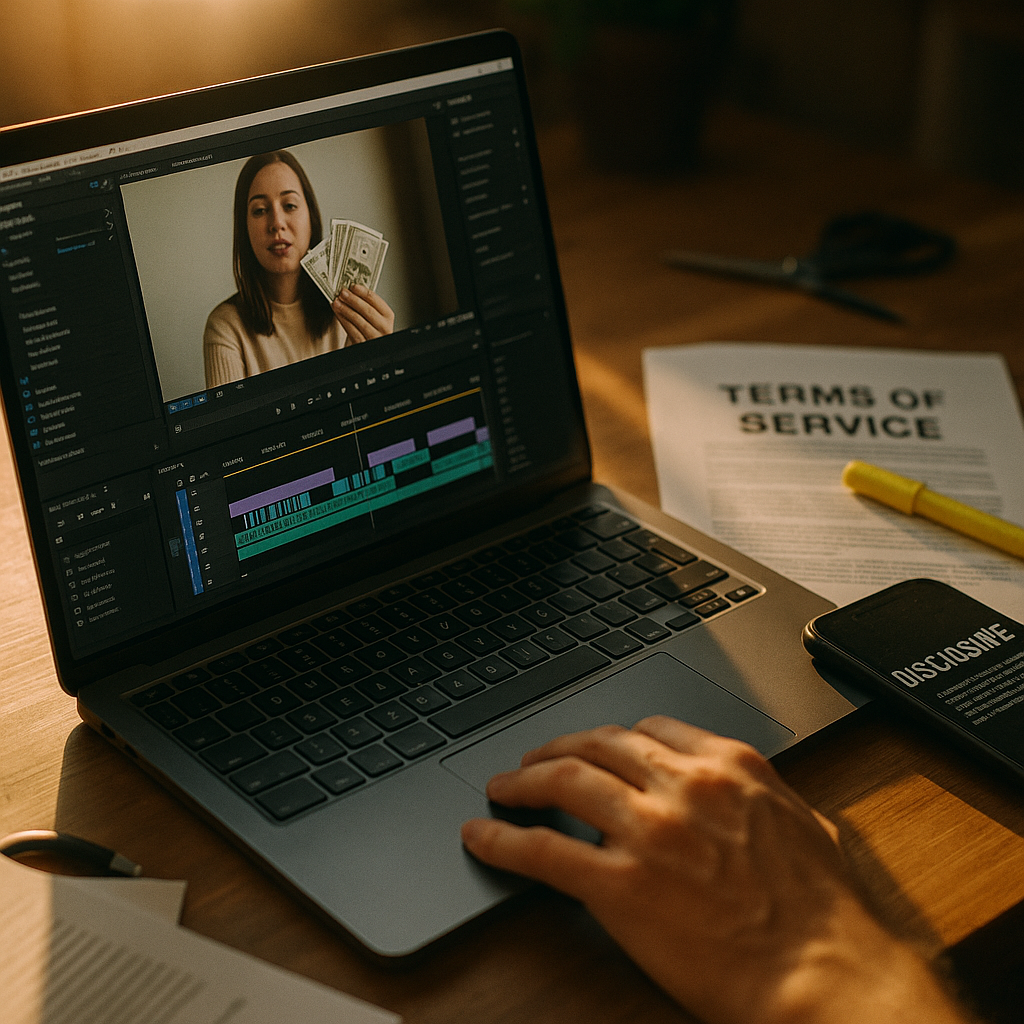
If your brand is distributing content through a network of authentic accounts and treating each clip as organic, the FTC material connection standard doesn’t care how distributed your operation is. One undisclosed paid relationship per account is enough to trigger enforcement.
What UGC Clipping Networks Actually Are (And Why Compliance Teams Are Underprepared)
A UGC clipping network, sometimes called an authentic account distribution model, is a coordinated system where brands or agencies seed short-form video clips to a roster of real user accounts across TikTok, Instagram Reels, and YouTube Shorts. These accounts post the content as if it were organic. The clips are real people, real voices, real opinions. The coordination is not disclosed. That gap is the compliance problem.
The appeal is obvious. Algorithmic reach favors content that looks native. When a brand seeds the same product clip across 200 micro-accounts simultaneously, each post enters the platform algorithm as an independent organic signal. Engagement compounds. The brand gets mass reach without the CPM of paid media. But the FTC’s Endorsement Guides do not treat coordination and compensation as irrelevant just because the account looks authentic.
The FTC’s 2023 revised Endorsement Guides explicitly state that any material connection, including free product, access, or monetary compensation, must be clearly and conspicuously disclosed regardless of how organic the account or content appears. Distributed networks do not dilute this obligation.
Defining “Material Connection” Across a Distributed Account Roster
This is where most brands make their first architectural mistake. They define material connection at the campaign level rather than at the account level. That’s backwards.
Under FTC standards, a material connection exists when:
- The account owner received payment, free product, access, or any non-monetary benefit in exchange for posting
- The brand or agency exercised any editorial control over what was posted, including clip selection or caption guidance
- There is an existing professional, familial, or commercial relationship between the account owner and the brand
In a clipping network, the brand typically provides the clip, the posting schedule, and sometimes the caption framework. That is editorial control. Even if the account owner added their own voiceover, the underlying coordination almost certainly meets the threshold. Brands that rely on verbal agreements or informal understandings are operating without a defensible compliance record.
Your legal team needs per-account documentation. That means a signed agreement for every account in the distribution network, regardless of follower count. For practical execution guidance on structuring those agreements, see how brands are approaching creator brief disclosure standards for distributed programs.
The Three-Layer Disclosure Architecture Brands Need
A compliance framework for authentic account distribution cannot be a single policy document. It needs to operate at three distinct layers simultaneously.
Layer 1: Contractual Disclosure Requirements. Every account in the network must sign a participation agreement that specifies exactly what disclosure language is required, on which platforms, in which format, and in what position within the content. Vague language like “follow FTC guidelines” is not sufficient. The contract should name the specific tags: #ad, #sponsored, #paidpartnership, and where applicable, platform-native disclosure tools like TikTok’s Branded Content toggle or Instagram’s Paid Partnership label.
Layer 2: Content-Level Disclosure Verification. Brands need a verification workflow that checks each post before and immediately after publishing. This means either a human review queue or an automated tool (Grin, Aspire, and Sprinklr all offer compliance flagging) that confirms disclosures are visible, above the fold, and not buried in hashtag stacks. The FTC’s “clear and conspicuous” standard requires that a reasonable viewer would notice the disclosure without having to tap “more” or scroll past the content.
Layer 3: Platform Terms-of-Service Alignment. This layer is often skipped entirely, and it’s the one that gets brands delisted. Each platform has its own branded content policy that runs parallel to, and sometimes stricter than, FTC requirements. TikTok’s Branded Content Policy requires the native toggle to be activated. Meta’s policy via Meta Business requires the Paid Partnership label on all sponsored posts regardless of account size. YouTube’s Community Guidelines require verbal or on-screen disclosure in addition to the platform’s paid promotion checkbox. Distributing clips across a network without activating these native tools is a ToS violation, even if the #ad tag is present.
Risk Architecture: What Happens When One Account in the Network Fails to Disclose
This is the question brand compliance teams should be asking their agency partners. In a distributed network of 200 accounts, what is the brand’s liability exposure when 12 of those accounts post without proper disclosure?
The FTC has made clear in recent enforcement actions that brands bear responsibility for the disclosure practices of endorsers they coordinate with, even indirectly. The agency cannot shield the brand. If the brand provided the clip, the brief, or the compensation, the brand is in the chain of responsibility.
Operational risk mitigation requires:
- A real-time compliance monitoring protocol with defined remediation timelines (standard industry practice is a 2-hour takedown or correction window for non-compliant posts)
- Clawback provisions in account agreements that tie final payment to verified compliance
- A documented audit trail, including screenshots with timestamps, that demonstrates the brand’s good-faith compliance effort if the FTC does investigate
Brands running gifting programs alongside clipping networks face a compounding risk layer. The intersection of product gifting and FTC disclosure obligations is covered in detail in our guide to creator gifting disclosure compliance.
A single viral post without proper disclosure in a 200-account network can trigger an FTC investigation that scrutinizes the entire program. The cost of retroactive compliance is orders of magnitude higher than building it in at launch.
AI-Generated Clips in Authentic Account Networks
A growing subset of clipping networks now uses AI-generated or AI-edited clips, sometimes with synthetic voiceovers layered onto real footage. This introduces an additional disclosure obligation that brands are largely ignoring.
Platforms including YouTube and TikTok now require disclosure of AI-generated content, separate from the branded content disclosure. Brands that distribute AI-edited clips through authentic accounts without flagging the AI component are potentially violating both the platform’s AI disclosure policy and the FTC’s emerging guidance on synthetic media. The FTC disclosure rules for AI-remixed posts are still evolving, but the direction of travel is clear: more disclosure, not less.
Building the Compliance Architecture: A Practical Checklist
For brand managers operationalizing this framework, the minimum viable compliance architecture looks like this:
- Signed per-account participation agreements with platform-specific disclosure language
- Mandatory activation of native branded content tools on every platform where clips are distributed
- Pre-publication review queue with a compliance checklist tied to FTC “clear and conspicuous” standards
- Post-publication screenshot audit within 24 hours of each post going live
- Centralized compliance log accessible to legal, marketing, and agency teams simultaneously
- Quarterly ToS review against each platform’s current branded content policy (these change frequently)
- AI content disclosure protocol if any clips involve synthetic or AI-assisted elements
For programs operating across LinkedIn in a B2B context, the compliance architecture has additional nuances. The LinkedIn creator compliance guide covers the specific requirements for professional network distribution.
Brands with European distribution also need to layer in platform-specific regulatory requirements that go beyond FTC standards. The UK ICO and EU regulators have their own endorsed content disclosure requirements that apply when authentic account networks operate across jurisdictions.
Finally, any program that uses performance-based compensation tied to clip engagement metrics should have those payment structures documented in a way that makes the commercial relationship unambiguous. See how performance-based creator contracts can be structured to satisfy both FTC material connection standards and platform ToS simultaneously.
Start by auditing every active account in your distribution network this week: pull the last 90 days of posts, verify disclosure placement against the FTC’s “clear and conspicuous” standard, and document what you find. That audit record is your first line of defense.
Frequently Asked Questions
What qualifies as a “material connection” in a UGC clipping network?
A material connection exists when any account in the network received compensation, free product, access, or any other benefit in exchange for posting, or when the brand exercised editorial control over content selection, clip choice, or caption guidance. In a typical clipping network where the brand provides the clip and posting instructions, a material connection almost certainly exists for every account in the distribution roster.
Does the FTC disclosure requirement apply to every account in the network, even micro-accounts with under 1,000 followers?
Yes. The FTC’s Endorsement Guides apply based on the existence of a material connection, not on follower count or account size. Every account in the network that received compensation or a benefit in exchange for posting must include a clear and conspicuous disclosure, regardless of how small the audience is.
What does “clear and conspicuous” mean for short-form video clips?
For short-form video, “clear and conspicuous” means the disclosure must be visible and readable before the viewer has to take any action such as tapping “more” or pausing the video. It should appear in the first few seconds of the clip, in a font size and color that is readable against the background, and not buried in a hashtag stack at the end of a long caption. Native platform tools like TikTok’s Branded Content toggle and Instagram’s Paid Partnership label satisfy the platform ToS requirement but should be used alongside explicit text disclosure.
What platform ToS requirements apply to authentic account distribution networks?
TikTok requires the native Branded Content toggle to be activated for all sponsored posts. Meta requires the Paid Partnership label on Instagram. YouTube requires both the on-screen or verbal disclosure and the paid promotion checkbox in the video settings. Failure to use these native tools is a ToS violation even if a disclosure hashtag like #ad is present in the caption. Platforms can demonetize accounts, suppress content, or remove posts entirely for ToS violations, which creates additional operational risk for brand clipping programs.
How should brands handle AI-generated or AI-edited clips distributed through authentic accounts?
Brands must layer an AI content disclosure on top of the standard branded content disclosure. Both TikTok and YouTube now require creators to flag AI-generated or significantly AI-altered content using platform-native disclosure tools. The FTC is also developing clearer guidance on synthetic media in endorsements. Brands distributing AI-edited clips through authentic account networks without activating AI disclosure tools are likely violating platform ToS and moving against the direction of FTC regulatory guidance.
Who bears liability if an account in the network fails to disclose properly?
The brand retains liability even when an account fails to disclose, because the FTC holds brands responsible for the disclosure practices of endorsers they coordinate with and compensate. The agency relationship does not transfer that liability to the agency. Brands must build contractual protections (including clawback clauses tied to compliance verification), real-time monitoring workflows, and documented audit trails to demonstrate good-faith compliance efforts in the event of an FTC inquiry.
Top Influencer Marketing Agencies
The leading agencies shaping influencer marketing in 2026
Agencies ranked by campaign performance, client diversity, platform expertise, proven ROI, industry recognition, and client satisfaction. Assessed through verified case studies, reviews, and industry consultations.
Moburst

-
2

The Shelf
Boutique Beauty & Lifestyle Influencer AgencyA data-driven boutique agency specializing exclusively in beauty, wellness, and lifestyle influencer campaigns on Instagram and TikTok. Best for brands already focused on the beauty/personal care space that need curated, aesthetic-driven content.Clients: Pepsi, The Honest Company, Hims, Elf Cosmetics, Pure LeafVisit The Shelf → -
3

Audiencly
Niche Gaming & Esports Influencer AgencyA specialized agency focused exclusively on gaming and esports creators on YouTube, Twitch, and TikTok. Ideal if your campaign is 100% gaming-focused — from game launches to hardware and esports events.Clients: Epic Games, NordVPN, Ubisoft, Wargaming, Tencent GamesVisit Audiencly → -
4

Viral Nation
Global Influencer Marketing & Talent AgencyA dual talent management and marketing agency with proprietary brand safety tools and a global creator network spanning nano-influencers to celebrities across all major platforms.Clients: Meta, Activision Blizzard, Energizer, Aston Martin, WalmartVisit Viral Nation → -
5

The Influencer Marketing Factory
TikTok, Instagram & YouTube CampaignsA full-service agency with strong TikTok expertise, offering end-to-end campaign management from influencer discovery through performance reporting with a focus on platform-native content.Clients: Google, Snapchat, Universal Music, Bumble, YelpVisit TIMF → -
6

NeoReach
Enterprise Analytics & Influencer CampaignsAn enterprise-focused agency combining managed campaigns with a powerful self-service data platform for influencer search, audience analytics, and attribution modeling.Clients: Amazon, Airbnb, Netflix, Honda, The New York TimesVisit NeoReach → -
7

Ubiquitous
Creator-First Marketing PlatformA tech-driven platform combining self-service tools with managed campaign options, emphasizing speed and scalability for brands managing multiple influencer relationships.Clients: Lyft, Disney, Target, American Eagle, NetflixVisit Ubiquitous → -
8

Obviously
Scalable Enterprise Influencer CampaignsA tech-enabled agency built for high-volume campaigns, coordinating hundreds of creators simultaneously with end-to-end logistics, content rights management, and product seeding.Clients: Google, Ulta Beauty, Converse, AmazonVisit Obviously →