


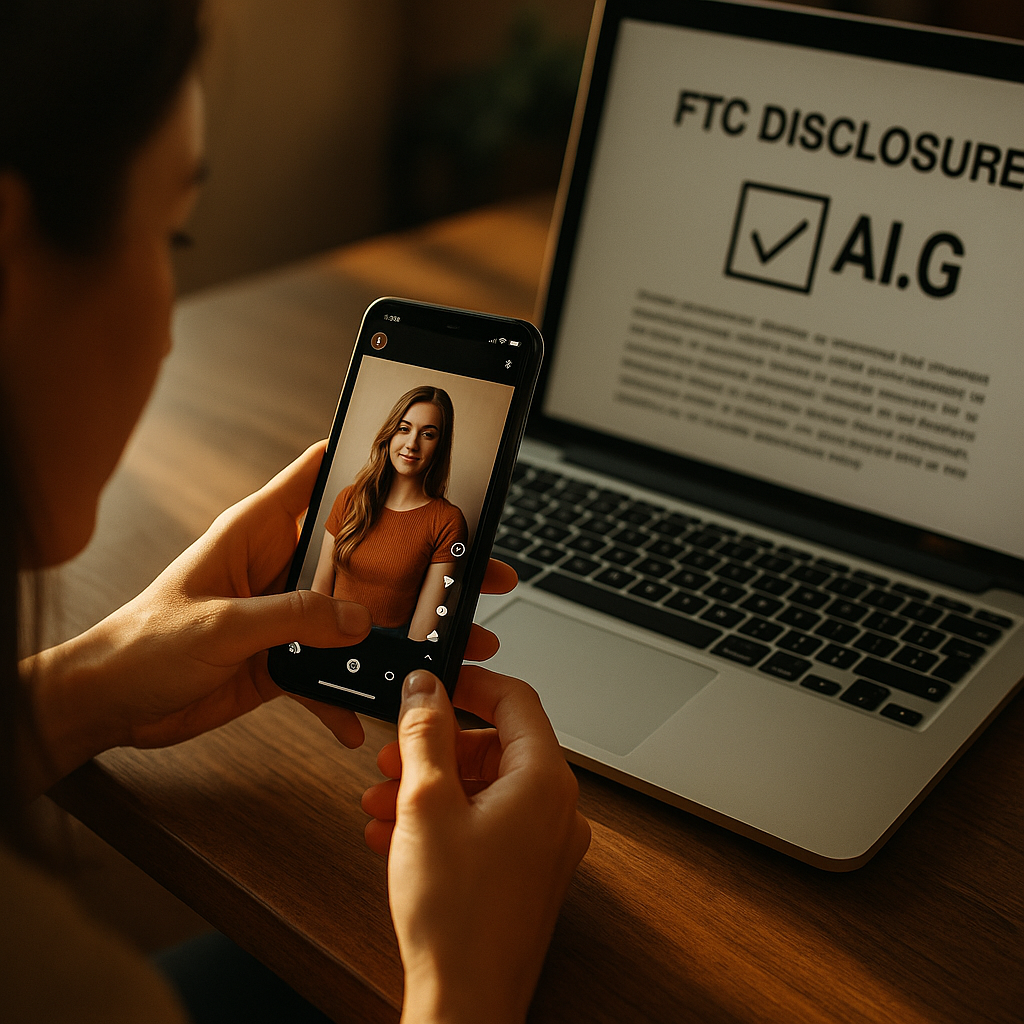
Nearly 40% of sponsored posts on TikTok and Instagram are redistributed through algorithmic remix or recommendation surfaces within 72 hours of publication — and most brand disclosure frameworks were built for a world where a post stays exactly where the creator put it. They weren’t. The FTC’s clear and conspicuous standard doesn’t care about your original post format. It cares what the consumer actually sees.
Why the Old Disclosure Model Is Already Broken
The standard brand playbook has always gone something like this: brief the creator, approve the content, confirm the “#ad” or “Paid partnership” label is visible, and ship it. Compliance box checked. But that model assumes static delivery, and static delivery is a fiction on modern social platforms.
TikTok’s Remix, Duet, and Stitch features can lift a creator’s sponsored video and embed it inside another piece of content where the original disclosure label may be cropped, overlaid, or simply rendered invisible by the new UI frame. Instagram’s Collaborative Posts and Reels remix tools do something structurally similar. When a user encounters the remixed version, they’re often seeing a brand’s product featured without any visible connection to sponsorship. That’s not a creator compliance failure. That’s a platform architecture problem that lands squarely on the brand’s legal exposure.
The FTC’s “clear and conspicuous” standard applies to the consumer experience at point of impression — not to the disclosure as it existed at the moment the creator originally posted. If algorithmic redistribution strips or obscures a disclosure, the brand is exposed regardless of what the original post looked like.
The FTC’s endorsement guidelines have always required that disclosures be unavoidable and immediately visible. The 2023 updated guides specifically addressed multi-platform distribution and reinforced that disclosure adequacy must be evaluated from the consumer’s perspective, not the advertiser’s. A buried “#ad” in a Stitch thumbnail does not meet that bar.
What Algorithmic Remix Actually Does to Your Disclosure
Let’s get specific, because the mechanics matter for compliance architects.
On TikTok, when a creator’s video is Stitched, the original appears as a split-screen clip. Any text overlay disclosure placed in the lower third of the original may be cut off entirely depending on how the stitching creator frames their content. The “Paid Partnership” label embedded in TikTok’s native creator marketplace tool does carry over to Stitched content in theory, but only if the brand campaign was set up through TikTok’s own platform. Third-party managed campaigns frequently don’t carry that tag, and even when they do, UI updates have historically reset or suppressed it during platform transitions.
Instagram Collabs — where two accounts co-author a single post — distribute that post to both audiences simultaneously, but the disclosure visibility depends on whose profile the viewer lands on first. If the non-creator account (say, a brand’s trade partner or a micro-influencer not directly contracted by the brand) shares the Collab, the disclosure chain breaks. The FTC doesn’t recognize “we only contracted the original creator” as a defense.
For a deeper look at how AI remix creates disclosure gaps in creator contracts, the structural contractual vulnerabilities run parallel to what we’re describing here on the platform mechanics side.
The FTC’s Clear and Conspicuous Standard: A Practical Stress Test
Four criteria define whether a disclosure meets the standard: it must be noticeable, readable, understandable, and presented before the consumer acts on the sponsored message. Run your current disclosure architecture through that lens for a remixed post, not the original.
- Noticeable: Is the disclosure visible in every format the content might take after algorithmic redistribution? If a vertical video gets cropped to square for a Reels recommendation surface, does your text overlay still appear?
- Readable: Is the font size and contrast ratio sufficient after compression artifacts from re-encoding? TikTok and Instagram both re-encode video when it’s redistributed — quality and overlay clarity often degrade.
- Understandable: Does “#ad” survive translation into non-English recommendation feeds? The FTC has been explicit that abbreviations must be unambiguous.
- Timing: Does the disclosure appear before the product claim? In remixed content, edit points can shift timing entirely.
If your disclosure fails any one of these on a remixed surface, you have a compliance gap. Full stop.
It’s also worth cross-referencing the FTC dual disclosure rules for AI campaigns, which add another layer when AI-generated assets or AI-assisted content creation are part of the creator’s workflow — increasingly the norm in 2026.
Restructuring Your Disclosure Architecture
This is where most brands get stuck. They understand the problem conceptually but don’t know where to pull the lever operationally. Here’s a framework that actually works at scale.
1. Require platform-native disclosure tools as a contract default. Creator contracts must mandate use of TikTok’s Branded Content toggle and Instagram’s Paid Partnership label for every deliverable, not just the ones managed through the platform’s ad buying interface. These native tags have the best chance of surviving algorithmic redistribution because they’re embedded at the metadata level, not the visual layer. The AI remix contract clauses brands need should be your starting template here.
2. Mandate redundant disclosure placement. Text overlays should appear at minimum twice in any video: once in the first three seconds and once at the midpoint. Neither should be placed in areas vulnerable to cropping (bottom 15% or top 10% of frame). Audio disclosures should be scripted and required, not optional.
3. Build post-publication monitoring into your campaign SLA. Tools like Sprout Social and third-party brand safety platforms now offer remix and reshare tracking. Set monitoring windows for 30 days post-publication minimum. Any viral redistribution event should trigger an automatic compliance review.
4. Contractually restrict remix permissions. You can’t stop TikTok’s algorithm, but you can contractually require creators to disable Stitch and Duet on sponsored posts if your compliance team determines the redistribution risk outweighs the reach benefit. This is a real business tradeoff, but it belongs in the contract, not in a last-minute Slack message. Review your contract revision and brand safety caps to make sure this authority is locked in.
5. Audit your campaign trafficking setup. If you’re running paid amplification on top of organic creator posts (a standard hybrid activation), the TikTok Ads Manager and Meta Business Suite both have specific settings for Branded Content Ad whitelisting that control how disclosures render in paid placements. Many brands are running whitelisted posts without verifying that the disclosure state is locked for the paid distribution version.
Platform Accountability and the Brand’s Residual Risk
There’s a tempting argument that platforms should carry the liability burden for disclosure degradation caused by their own algorithmic features. Legally, that argument hasn’t held. The FTC’s enforcement posture consistently treats the brand as the responsible advertiser, with creators as secondary parties. Platforms are not named in endorsement enforcement actions; brands are.
The EU’s Digital Services Act creates a parallel obligation for algorithmic transparency, and brands running EU-facing campaigns through UK or US creators need to understand the intersection. The EU DSA’s algorithm rules create additional audit requirements that dovetail with FTC disclosure obligations rather than replacing them.
Waiting for platform policy updates to solve your disclosure compliance problem is a liability strategy, not a compliance strategy. The brand absorbs the regulatory risk in the gap between what the platform allows and what the FTC requires.
The practical reality is that social platforms iterate their algorithmic features faster than their policy teams can document compliance implications. TikTok rolled out AI-generated “highlight clips” from long-form content in early 2026, and the disclosure transfer behavior on those clips remains inconsistently documented in their business help center. Brands cannot wait for platform clarity that may never arrive.
Audit your active creator programs now. Map every campaign deliverable format against the four FTC conspicuousness criteria in its most redistributed state, not its original state. That single operational shift separates brands building durable compliance infrastructure from those accumulating quiet liability.
FAQs
Does the FTC require brands to monitor how creator posts are redistributed after publication?
The FTC doesn’t prescribe a specific monitoring requirement, but its clear and conspicuous standard applies at the point of consumer impression. If a remixed or algorithmically redistributed version of a sponsored post reaches consumers without a visible disclosure, the brand faces exposure. Building post-publication monitoring into your campaign operations is the only practical way to demonstrate ongoing compliance.
If a creator uses TikTok’s native Branded Content toggle, is the brand automatically compliant when the post gets Stitched?
Not automatically. TikTok’s Branded Content label carries over in most Stitch scenarios at the metadata level, but visual rendering depends on the UI frame and the device. Brands should verify disclosure visibility in Stitched format manually and require redundant visual disclosures in the video itself as a contractual backup.
Can brands contractually prohibit creators from enabling Stitch or Duet on sponsored posts?
Yes. Brands can and should include platform feature restrictions in creator contracts when the remix risk is material. This is a legitimate brand safety clause. However, enforcement depends on the creator actually configuring their settings correctly, so contracts should also include audit rights and remediation obligations if a post goes live with remix features enabled.
How does AI-generated content from creators interact with FTC disclosure requirements?
AI-assisted or AI-generated content in sponsored posts triggers both the standard endorsement disclosure requirement and, in some jurisdictions, additional AI-generated content disclosure requirements. The FTC has signaled that AI generation doesn’t change the advertiser’s disclosure obligations but may layer on additional transparency requirements. Brands should consult both the FTC endorsement guides and applicable state laws when AI tools are part of the creator’s production workflow.
What’s the biggest contractual gap most brands currently have on this issue?
The most common gap is silence on post-publication platform feature behavior. Most creator contracts specify what the original post must contain but say nothing about what happens if the platform algorithmically reshapes, crops, or redistributes the content. Adding explicit provisions around remix feature settings, disclosure durability requirements, and brand audit rights for redistributed content closes the largest part of this exposure.
Top Influencer Marketing Agencies
The leading agencies shaping influencer marketing in 2026
Agencies ranked by campaign performance, client diversity, platform expertise, proven ROI, industry recognition, and client satisfaction. Assessed through verified case studies, reviews, and industry consultations.
Moburst

-
2

The Shelf
Boutique Beauty & Lifestyle Influencer AgencyA data-driven boutique agency specializing exclusively in beauty, wellness, and lifestyle influencer campaigns on Instagram and TikTok. Best for brands already focused on the beauty/personal care space that need curated, aesthetic-driven content.Clients: Pepsi, The Honest Company, Hims, Elf Cosmetics, Pure LeafVisit The Shelf → -
3

Audiencly
Niche Gaming & Esports Influencer AgencyA specialized agency focused exclusively on gaming and esports creators on YouTube, Twitch, and TikTok. Ideal if your campaign is 100% gaming-focused — from game launches to hardware and esports events.Clients: Epic Games, NordVPN, Ubisoft, Wargaming, Tencent GamesVisit Audiencly → -
4

Viral Nation
Global Influencer Marketing & Talent AgencyA dual talent management and marketing agency with proprietary brand safety tools and a global creator network spanning nano-influencers to celebrities across all major platforms.Clients: Meta, Activision Blizzard, Energizer, Aston Martin, WalmartVisit Viral Nation → -
5

The Influencer Marketing Factory
TikTok, Instagram & YouTube CampaignsA full-service agency with strong TikTok expertise, offering end-to-end campaign management from influencer discovery through performance reporting with a focus on platform-native content.Clients: Google, Snapchat, Universal Music, Bumble, YelpVisit TIMF → -
6

NeoReach
Enterprise Analytics & Influencer CampaignsAn enterprise-focused agency combining managed campaigns with a powerful self-service data platform for influencer search, audience analytics, and attribution modeling.Clients: Amazon, Airbnb, Netflix, Honda, The New York TimesVisit NeoReach → -
7

Ubiquitous
Creator-First Marketing PlatformA tech-driven platform combining self-service tools with managed campaign options, emphasizing speed and scalability for brands managing multiple influencer relationships.Clients: Lyft, Disney, Target, American Eagle, NetflixVisit Ubiquitous → -
8

Obviously
Scalable Enterprise Influencer CampaignsA tech-enabled agency built for high-volume campaigns, coordinating hundreds of creators simultaneously with end-to-end logistics, content rights management, and product seeding.Clients: Google, Ulta Beauty, Converse, AmazonVisit Obviously →