


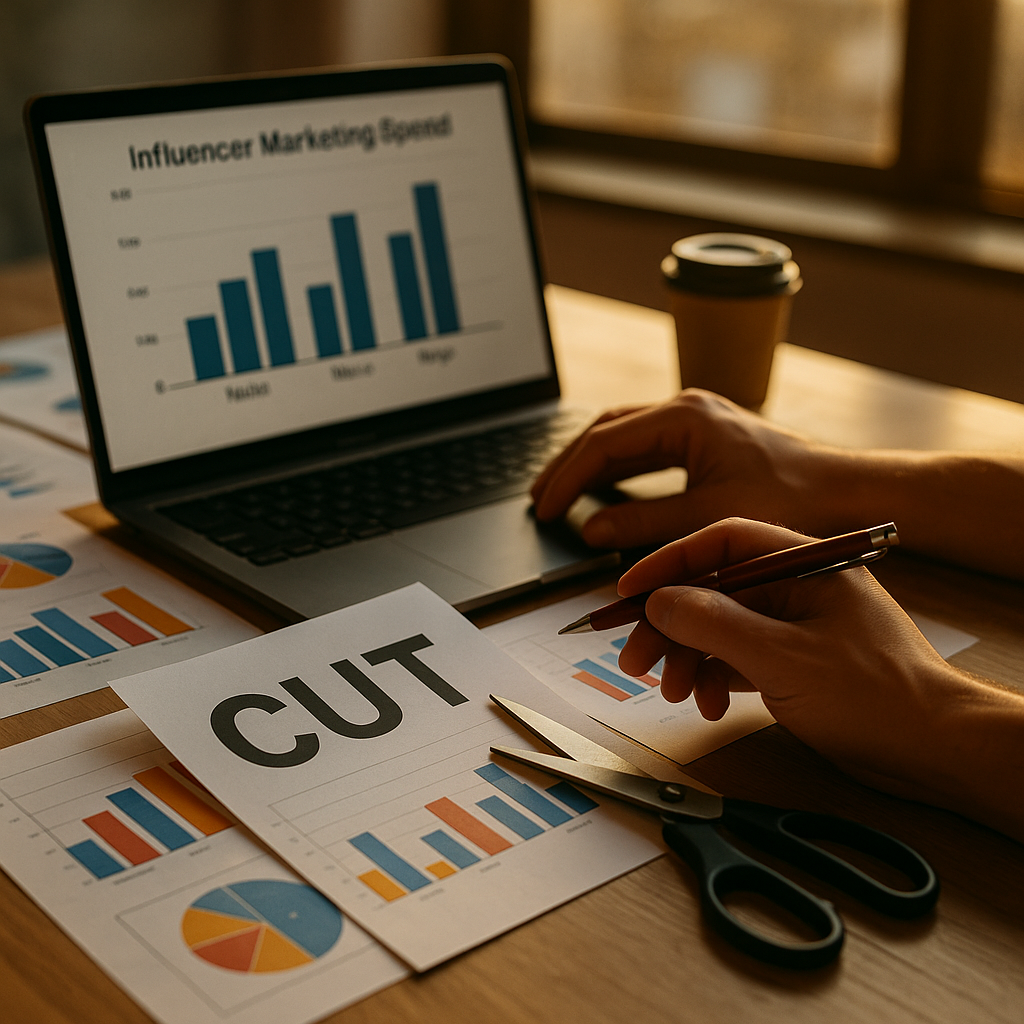
Only a fraction of influencer spend actually drives incremental sales, according to Circana’s latest incrementality research. That single finding should terrify any mid-size beauty or specialty retail brand still justifying influencer budgets with reach and engagement screenshots. If your CFO asks “what would we lose if we cut this by 30%?” and you can’t answer with a number, you don’t have a media plan. You have a hope.
What Circana Actually Found, and Why It Matters More for Mid-Size Brands
Circana’s incrementality study measured what happens to sales when influencer campaigns run versus when they don’t, isolating the lift that wouldn’t have occurred organically. That’s a different discipline than most influencer reporting, which tracks impressions, engagement rate, and vague “brand awareness” outputs that never connect to a P&L line.
The headline takeaway: a meaningful share of influencer-driven impressions produced no measurable incremental sales lift. Some categories and creator tiers performed far better than others. Beauty and specialty retail, it turns out, showed some of the widest variance between top-performing and bottom-performing creator partnerships.
For a mid-size brand, that variance is the whole story. Large beauty conglomerates can afford to run broad-spectrum influencer programs and let inefficiency wash out in aggregate volume. A $40M-$150M revenue beauty or specialty retail brand cannot. Every dollar spent on a creator partnership that produces zero incrementality is a dollar that didn’t go toward inventory, retention, or a channel that actually moves units.
Circana’s research effectively hands mid-size brands a diagnostic tool they’ve never had: proof that reach and revenue are not the same thing, and a method for telling them apart before the budget is spent, not after.
Why 2027 Budget Conversations Will Look Different
Finance teams are getting sharper about marketing attribution across every channel, not just influencer. But influencer has historically gotten a pass because it’s hard to measure and easy to defend with vanity metrics. That pass is expiring.
Mid-size beauty and specialty retail brands typically operate with tighter marketing-to-revenue ratios than national CPG players. A regional skincare brand or a specialty pet retailer doesn’t have the luxury of a nine-figure marketing budget that absorbs waste. When you’re allocating 8-12% of revenue to marketing rather than 20%+, every reallocation decision carries real operational weight.
This is exactly the dynamic covered in Go Zero’s creator budget freeze, where a major CPG brand froze influencer spend pending better ROI proof. Mid-size brands should expect the same scrutiny in the coming budget cycle, just applied with less margin for error. If a brand with a billion-dollar balance sheet is pausing to demand incrementality data, a brand ten times smaller cannot expect a rubber stamp.
The Reach Trap Beauty Brands Keep Falling Into
Beauty marketing has an addiction to reach. It’s visual, it’s aspirational, and it’s easy to sell internally: “This creator has 800K followers, imagine the exposure.” Except exposure isn’t a KPI you can bank.
Circana’s data reinforces something Influencers Time has flagged before: reach is commoditizing, and brands chasing it are competing on a metric that’s losing pricing power every quarter. When every competitor can buy the same reach from the same creator pool, reach stops being a differentiator and starts being a cost center.
Specialty retail has a slightly different version of the same problem. Home goods, pet, outdoor, and hobbyist categories often rely on niche creators whose audiences are smaller but more purchase-ready. Yet many of these brands still evaluate creator performance using the same reach-first scorecard borrowed from beauty and fashion. Circana’s incrementality lens exposes that mismatch directly: a creator with 40K followers and a highly engaged, high-intent audience can outperform a 500K-follower account on actual sales lift, and the old reporting framework would never catch it.
Building the Incrementality Case Internally
So how does a mid-size brand actually use this data to justify (or defend) 2027 budgets? Start with three moves.
- Segment past spend by incrementality proxy, not by platform or creator tier. Pull sales lift data from your existing MMM or retail POS partner (Circana itself, NielsenIQ, or your retailer’s own analytics) and map it against campaign flight dates. You’re looking for correlation between creator waves and unexplained sales bumps beyond seasonal baseline.
- Separate awareness spend from conversion spend explicitly in the budget deck. Stop asking finance to approve one lump “influencer” line. Split it into discovery/awareness (measured by search lift, branded search volume, site traffic) and conversion/incrementality (measured by sales lift, promo code redemption, affiliate attribution).
- Build a control-group habit. Even a simple geo-holdout test, running campaigns in half your DMAs and withholding in the other half, gives you internal incrementality data without paying for a full Circana study. Retailers like Ulta and Sephora’s media networks increasingly support this kind of testing for brand partners.
None of this requires enterprise budget. It requires discipline and a willingness to admit that some creator relationships you’ve renewed on autopilot for three years might not be earning their keep.
The Retainer Question Gets Harder to Dodge
Circana’s findings land at an awkward moment for the industry’s shift toward always-on creator retainers. Influencers Time has covered how creator retainers are replacing one-off deals as brands chase consistency and lower per-post negotiation overhead. Retainers make sense operationally. They do not automatically make sense financially unless the incrementality holds up over the life of the contract.
A 12-month retainer with a beauty creator who delivered strong incremental lift in month one but has since become background noise to their own audience is a sunk cost dressed up as a relationship. Mid-size brands need renewal clauses tied to measurable lift, not just deliverable counts. That’s a harder conversation with creators and their agents, but it’s the only version of the retainer model that survives a finance audit in 2027.
This also connects to a broader trend: creator ROI still has no standard metric across the industry, which is exactly why brands that build their own incrementality framework now will have a negotiating advantage later. You don’t need the industry to agree on a standard. You need your own standard, applied consistently, that survives a budget review.
Specialty Retail’s Unique Exposure
Specialty retail brands face a compounding risk that beauty brands mostly don’t: seasonality and purchase cycle length. A skincare product might get repurchased every six to eight weeks. A specialty retail item, camping gear, home renovation tools, high-end pet equipment, might have a purchase cycle measured in months or years.
That long cycle makes incrementality harder to measure in a short attribution window, and it’s exactly the kind of gap that lets underperforming creator spend hide. If your attribution window is 14 days but your customer’s actual purchase decision takes 60, you’re going to systematically undercount lift from top-of-funnel creator content and overcount lift from bottom-funnel, code-driven placements.
The fix isn’t complicated, but it requires patience most quarterly budget cycles don’t allow. Extend attribution windows to match actual purchase cycles. Use branded search volume and direct traffic as leading indicators of delayed incrementality, particularly relevant given generative search now driving half of product research, which means a lot of that “delayed” purchase intent is happening inside AI chat interfaces you can’t directly attribute yet.
A Word on AI Overviews and Attribution Blind Spots
It’s worth flagging: as more product research shifts into AI-generated summaries, traditional click-based attribution is degrading across the board, not just for influencer. Research on AI Overviews cutting click-through rates shows the funnel is getting harder to trace end to end. Circana’s incrementality methodology, which measures sales lift rather than clicks, is actually more resilient to this shift than platform-reported engagement metrics. That’s another reason to lean into incrementality testing now rather than waiting for platforms to fix an attribution problem they have little incentive to solve.
What This Means for the 2027 Budget Deck
If you’re building your influencer budget justification for the next fiscal year, the Circana data gives you cover to make three specific asks:
- Ask for incrementality testing budget as its own line item, separate from media spend. Even a modest allocation (5-8% of total influencer budget) toward geo-holdout tests or MMM refresh pays for itself by preventing renewal of underperforming creator contracts.
- Ask for permission to reallocate mid-year based on incrementality data rather than locking 100% of spend at the start of the year. Beauty and specialty retail trend cycles move fast enough that a rigid annual plan is already a liability.
- Ask leadership to accept fewer, better-vetted creator partnerships over broad rosters. This is a harder sell to teams that equate volume with coverage, but it’s the direct implication of Circana’s variance findings: concentration in what works beats diversification for its own sake.
None of this is about cutting influencer budgets wholesale. It’s about defending the budgets that deserve defending, and reallocating the ones that don’t, with data your finance team will actually trust. According to eMarketer and Statista, creator marketing spend continues climbing year over year, which means the brands that can prove incrementality will simply out-compete those still defending budgets with reach decks.
FAQs
Frequently Asked Questions
What is incrementality in influencer marketing, and how does it differ from engagement metrics?
Incrementality measures the sales lift directly attributable to a marketing activity that wouldn’t have happened otherwise, typically established through controlled testing like geo-holdouts. Engagement metrics like likes, comments, and reach measure audience interaction but say nothing about whether that interaction converted into a purchase that wouldn’t have occurred anyway.
Why does Circana’s incrementality study matter specifically for mid-size beauty and specialty retail brands?
Mid-size brands operate with tighter marketing budgets and less tolerance for waste than large CPG or beauty conglomerates. Circana’s findings showed wide variance in incrementality across creator tiers and categories, meaning brands that fail to isolate what’s actually driving sales risk overspending on reach that produces no measurable return.
How can a brand test incrementality without an enterprise research budget?
Geo-holdout tests, running campaigns in select markets while withholding them in comparable control markets, offer a low-cost way to approximate incrementality data internally. Retail media networks and POS data partners can also help brands correlate campaign timing with sales lift without commissioning a full third-party study.
Should mid-size brands cut influencer budgets based on this data?
Not necessarily. The goal is reallocation, not blanket cuts. Brands should identify which creator partnerships and content types produce measurable incrementality and shift budget toward those, while trimming spend on partnerships that generate reach but no sales lift.
How does attribution window length affect incrementality measurement for specialty retail?
Specialty retail products often have longer purchase cycles than beauty or CPG items, meaning a short attribution window (like 14 days) can undercount the true impact of top-of-funnel creator content. Brands should extend attribution windows to reflect actual customer purchase timelines and use branded search volume as a leading indicator of delayed conversion.
Next step: Before finalizing next year’s influencer budget, run one geo-holdout test on your top three creator partnerships. If the data doesn’t show measurable lift, that’s your answer before finance asks the question.
Top Influencer Marketing Agencies
The leading agencies shaping influencer marketing in 2026
Agencies ranked by campaign performance, client diversity, platform expertise, proven ROI, industry recognition, and client satisfaction. Assessed through verified case studies, reviews, and industry consultations.
Moburst

-
2

The Shelf
Boutique Beauty & Lifestyle Influencer AgencyA data-driven boutique agency specializing exclusively in beauty, wellness, and lifestyle influencer campaigns on Instagram and TikTok. Best for brands already focused on the beauty/personal care space that need curated, aesthetic-driven content.Clients: Pepsi, The Honest Company, Hims, Elf Cosmetics, Pure LeafVisit The Shelf → -
3

Audiencly
Niche Gaming & Esports Influencer AgencyA specialized agency focused exclusively on gaming and esports creators on YouTube, Twitch, and TikTok. Ideal if your campaign is 100% gaming-focused — from game launches to hardware and esports events.Clients: Epic Games, NordVPN, Ubisoft, Wargaming, Tencent GamesVisit Audiencly → -
4

Viral Nation
Global Influencer Marketing & Talent AgencyA dual talent management and marketing agency with proprietary brand safety tools and a global creator network spanning nano-influencers to celebrities across all major platforms.Clients: Meta, Activision Blizzard, Energizer, Aston Martin, WalmartVisit Viral Nation → -
5

The Influencer Marketing Factory
TikTok, Instagram & YouTube CampaignsA full-service agency with strong TikTok expertise, offering end-to-end campaign management from influencer discovery through performance reporting with a focus on platform-native content.Clients: Google, Snapchat, Universal Music, Bumble, YelpVisit TIMF → -
6

NeoReach
Enterprise Analytics & Influencer CampaignsAn enterprise-focused agency combining managed campaigns with a powerful self-service data platform for influencer search, audience analytics, and attribution modeling.Clients: Amazon, Airbnb, Netflix, Honda, The New York TimesVisit NeoReach → -
7

Ubiquitous
Creator-First Marketing PlatformA tech-driven platform combining self-service tools with managed campaign options, emphasizing speed and scalability for brands managing multiple influencer relationships.Clients: Lyft, Disney, Target, American Eagle, NetflixVisit Ubiquitous → -
8

Obviously
Scalable Enterprise Influencer CampaignsA tech-enabled agency built for high-volume campaigns, coordinating hundreds of creators simultaneously with end-to-end logistics, content rights management, and product seeding.Clients: Google, Ulta Beauty, Converse, AmazonVisit Obviously →