


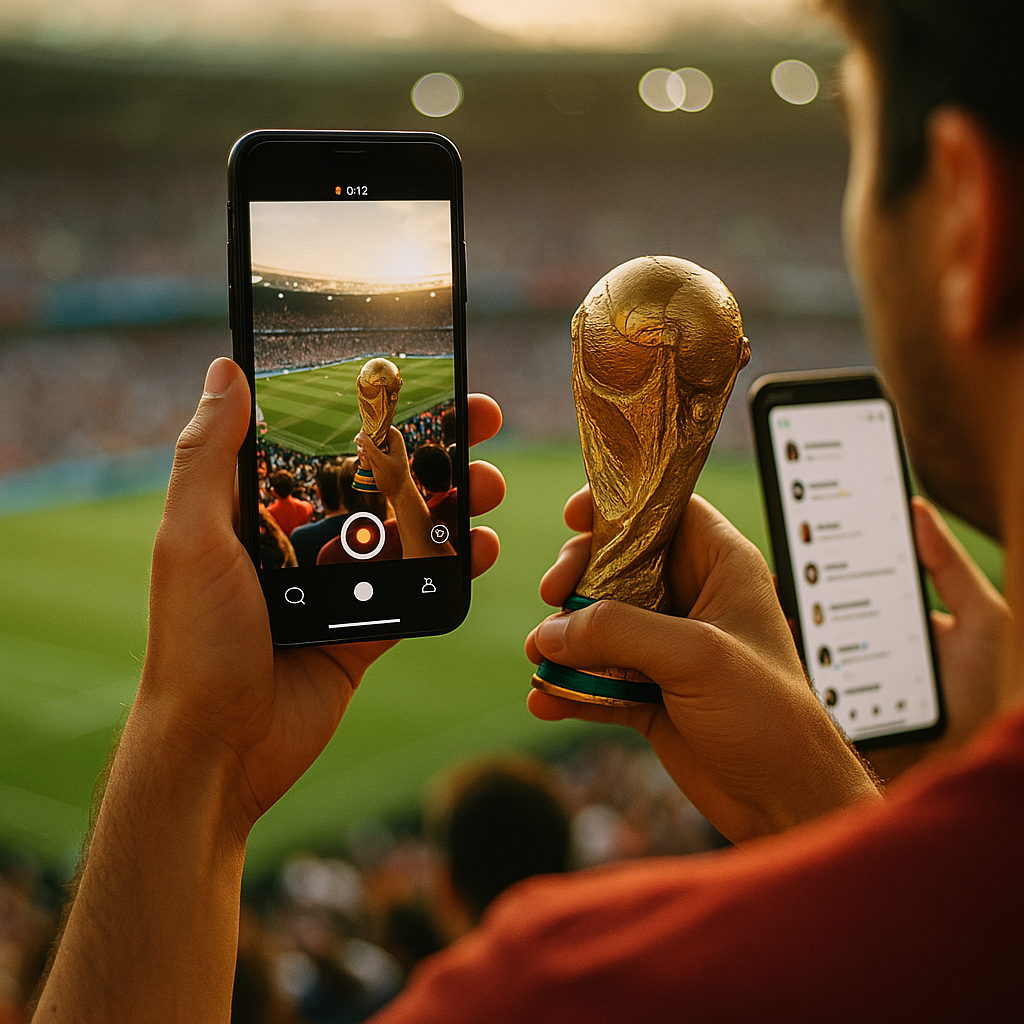
The World Cup will generate over 5 billion social interactions across Meta’s platforms. Most brands will waste the majority of that attention because their creator briefs are written for one surface, not three. Here is how to fix that before kickoff.
Why One Brief, Three Surfaces Is Now a Competitive Requirement
Meta’s architecture has quietly shifted. Reels surfaces in platform-native search, Threads threads pull in topic-clustered conversation, and Facebook Groups around club allegiances and national team fandoms operate as high-trust recommendation engines. For a major sporting event like the World Cup, all three are firing simultaneously. A brief that only accounts for Reels is leaving Threads and Groups distribution to chance.
The operational problem most brands face is not creativity. It is that their briefing process treats each surface as a separate production workstream. That multiplies cost, dilutes creative consistency, and creates compliance gaps across deliverables. The smarter play is designing a single creative scaffold that flexes across all three surfaces without requiring three separate production runs.
For context on how Meta is positioning its search infrastructure around major sporting moments, the Meta World Cup search hub strategy lays out the rights-free brand opportunity in detail. Read that first if you have not already.
The Anatomy of a Multi-Surface Creator Brief
A brief that works across Reels, Threads, and Facebook Groups has four structural layers. Skip any one of them and the content either fails to surface or fails to convert.
1. The core content unit. This is the short-form video, typically 30 to 60 seconds, optimized for Reels. It needs to function as a standalone piece of content: native hook in the first two seconds, brand message embedded in seconds 8 to 15 (not front-loaded), and a clear verbal or visual anchor that a viewer can reference when they see the creator discussing the same topic in text form on Threads.
2. The Threads derivative. This is not a caption. It is a standalone opinion or question that continues the conversation the Reel started. Brief creators to write a 150 to 280 character take that references the video thematically but works for someone who never watched it. Threads’ topic clustering means this text post will surface in World Cup-adjacent interest graphs independently of the Reel. That is a second organic impression from the same creative session.
3. The Facebook Group seed. Groups around national teams, fantasy football (soccer), and regional fandom are already active and highly engaged during major tournaments. Brief creators to share the Reel into one or two relevant Groups with a genuine conversation starter, not a promotional caption. Group moderators and algorithm signals both reward content that generates replies over content that generates passive views. The difference in briefing language here is significant: instead of “share your Reel in a relevant Group,” write “post the video in [specific Group name] and ask members which player they think will have the breakout tournament.”
4. Search signal architecture. Meta’s search now indexes Reels captions, Threads posts, and Group post text. Brief creators to include two to three natural-language phrases that match how fans actually search: “best World Cup moments,” “which team wins Group C,” “[national team] jersey review.” These are not hashtags. They are search-intent phrases embedded in the caption or post body. This is the layer most brands omit entirely.
Meta’s search indexing now spans Reels captions, Threads posts, and Group content simultaneously. A creator brief that does not account for natural-language search phrases is effectively invisible to platform-native discovery.
Production Efficiency: One Shoot, Three Assets
The fear brands have is that briefing for three surfaces means three times the production cost. That fear is misplaced, but it does require upfront brief design rather than post-production adaptation.
Structure the shoot around a single core video. Then brief creators to record a 30-second “Threads companion” clip during the same session: a face-to-camera opinion, no editing required, that they transcribe into a Threads text post. The video goes to Reels. The transcription, lightly edited for Threads formatting, becomes the derivative text post. The Group seed post is written in the brief itself, requiring the creator to customize one sentence of context for the specific Group. Total additional time per creator: approximately 20 minutes per campaign activation.
This model maps closely to how smart TikTok briefs handle discovery layers, where the core video and the search metadata are designed together rather than bolted on after. The same logic applies here.
Platform-Native Search: What Your Brief Needs to Specify
Meta’s search hubs for major events function differently from Google or even TikTok search. They surface content based on a combination of recency, engagement velocity, and keyword density in captions and post text. For the World Cup, this means the window for search surfacing is narrow but high-volume: the 48 hours before and after each match are the peak search periods.
Your brief needs to specify posting windows, not just posting instructions. A creator posting a “Group C preview” Reel two days before the match has a materially different search surface opportunity than one posting it six hours before. Brief creators with explicit time windows tied to the match schedule. This is operational discipline that most briefs skip because it feels like micromanagement. It is not. It is the difference between organic search traffic and content that gets buried.
If you are building this into a broader Instagram topic targeting strategy, the same time-window logic applies across Reels and Stories, and the briefing mechanics transfer directly.
Threads Community Discussions: Briefing for Conversation, Not Broadcast
Most brands brief Threads posts the same way they brief Instagram captions. Wrong surface, wrong mechanic. Threads rewards genuine opinion and reply-generation. A creator who posts “Here is my brand partnership content” performs worse than a creator who posts “Genuinely cannot decide if [Team X] gets out of the group stage. What do you think?” with the brand integrated naturally into their profile context or a pinned Reel link.
Brief creators to post at least one Threads reply to their own post within the first two hours. This keeps the thread active and signals to Threads’ algorithm that the conversation has legs. Also brief them to reply to two or three other high-engagement Threads posts on World Cup topics during the campaign window. This is organic community participation, not broadcast. The distinction matters for both algorithm performance and audience trust.
This approach to community-first briefing is something the sports creator partnership models from MLB and Netflix have demonstrated effectively: creators who participate in the conversation drive more brand recall than creators who announce into it.
Facebook Groups: The High-Trust Distribution Channel Brands Underuse
Facebook Groups are experiencing a significant engagement resurgence around sports content. Groups tied to specific national teams, fantasy competition, and regional viewing culture have member bases that are actively seeking content recommendations from trusted community voices. A creator who is a genuine member of a national team fan Group carries more persuasive weight there than any paid placement in that same Group’s feed.
The briefing requirement here is vetting. Before activating a creator for Group seeding, confirm they are an existing member of the target Group, not a new joiner. Moderators and members both detect and reject obvious outsider promotion. The brief should also specify that Group posts carry the FTC-required disclosure language, even in community settings. Compliance risk in Groups is real and often overlooked.
Facebook Groups offer some of the highest trust-to-reach ratios in Meta’s ecosystem during major sporting events. But a creator who joins a fan Group solely to post branded content will be flagged by moderators and algorithmically penalized. Authenticity is not optional here — it is operational.
For brands managing multiple creators across different national team communities, creator roster diversification principles apply directly: do not rely on a single creator to cover multiple Group communities. Each Group has its own culture and trust dynamics.
What Compliance and Rights Restrictions Mean for Your Brief Language
FIFA’s commercial rights framework is tight. Brands without official sponsorship cannot use match footage, official logos, or tournament trademarks in creator content. Your brief needs to make this explicit with specific prohibited language examples, not just a generic “do not use official marks” clause. Brief creators on what they can use: reaction content, fan commentary, player name mentions (with care), cultural celebration of the sport, and original visual content captured in public settings.
The brief should also specify that AI-generated imagery of players or official tournament branding is prohibited, since this is an emerging compliance gap that several brands have already stumbled into during recent major sports events. Reference FTC disclosure requirements directly in the brief document, and consider adding a Meta-specific clause referencing Meta’s branded content policies for Reels and Group posts.
Rights restrictions also affect posting windows. Brief creators to avoid posting during live match broadcasts in regions where rights holders have exclusivity agreements. This is a nuance most creators will not know without explicit guidance.
Measurement: What to Track Across All Three Surfaces
A multi-surface brief requires a multi-surface measurement framework. Reels performance should be tracked via Meta Business Suite reach and search-driven views (available in Creator Studio analytics). Threads posts should be tracked for reply rate and follower-to-non-follower impression ratio, which indicates topic-graph distribution beyond the creator’s existing audience. Group posts should be tracked for comment volume and Group member engagement rate, not just views.
Set these KPIs in the brief itself. Creators who understand what success looks like across each surface make better decisions in real time, especially around posting timing and reply engagement. If you are new to connecting short-form creator content to broader campaign ROI, the short-form video budget frameworks used in upfront submissions provide a useful benchmarking structure.
For platform-level benchmarking on engagement and reach norms, Sprout Social’s benchmarks and eMarketer’s social data are the most reliable external reference points available.
Start your brief revision now, before the tournament schedule locks in posting windows. Build the three-surface scaffold into your brief template once, and every creator activation scales from it automatically.
Frequently Asked Questions
Can a single creator brief really work across Reels, Threads, and Facebook Groups?
Yes, if it is structured around a single core content unit with defined derivative outputs for each surface. The brief needs to specify the Reels video, the Threads text post format, and the Facebook Group seeding copy separately, but all three should share a common creative and keyword anchor. The production session is one shoot; the distribution is three surfaces.
How do you ensure creators stay compliant with FIFA rights restrictions in their content?
Include a prohibited content list in the brief with specific examples: no match footage, no official tournament logos, no AI-generated imagery of players or trademarks. Specify what creators can use: fan reaction content, cultural commentary, original footage in public settings, and player name mentions within editorial context. Reference Meta’s branded content policy and FTC disclosure requirements directly in the brief document.
What is the optimal posting window for World Cup creator content on Meta?
The highest-traffic windows for search surfacing are 24 to 48 hours before each match and the two to four hours immediately after final whistle. Brief creators with specific posting times tied to the match schedule, not generic “day of match” guidance. Post-match content benefits from high emotional search volume; pre-match content captures planning and prediction search behavior.
How should brands handle Facebook Group seeding without appearing promotional?
Only activate creators who are existing, active members of the target Groups. The brief should instruct creators to open with a genuine conversation starter or question relevant to the Group’s interest, not a branded announcement. Disclosure language must still appear, but it can be integrated naturally. Moderator rejection risk drops significantly when the creator has authentic Group history.
What metrics should brands use to evaluate Threads performance for creator campaigns?
Prioritize reply rate and the ratio of impressions from non-followers to total impressions, which signals topic-graph distribution beyond the creator’s owned audience. High reply volume indicates Threads’ algorithm is amplifying the post into relevant interest clusters. Avoid over-indexing on follower reach metrics, which do not reflect Threads’ distribution mechanics accurately.
Top Influencer Marketing Agencies
The leading agencies shaping influencer marketing in 2026
Agencies ranked by campaign performance, client diversity, platform expertise, proven ROI, industry recognition, and client satisfaction. Assessed through verified case studies, reviews, and industry consultations.
Moburst

-
2

The Shelf
Boutique Beauty & Lifestyle Influencer AgencyA data-driven boutique agency specializing exclusively in beauty, wellness, and lifestyle influencer campaigns on Instagram and TikTok. Best for brands already focused on the beauty/personal care space that need curated, aesthetic-driven content.Clients: Pepsi, The Honest Company, Hims, Elf Cosmetics, Pure LeafVisit The Shelf → -
3

Audiencly
Niche Gaming & Esports Influencer AgencyA specialized agency focused exclusively on gaming and esports creators on YouTube, Twitch, and TikTok. Ideal if your campaign is 100% gaming-focused — from game launches to hardware and esports events.Clients: Epic Games, NordVPN, Ubisoft, Wargaming, Tencent GamesVisit Audiencly → -
4

Viral Nation
Global Influencer Marketing & Talent AgencyA dual talent management and marketing agency with proprietary brand safety tools and a global creator network spanning nano-influencers to celebrities across all major platforms.Clients: Meta, Activision Blizzard, Energizer, Aston Martin, WalmartVisit Viral Nation → -
5

The Influencer Marketing Factory
TikTok, Instagram & YouTube CampaignsA full-service agency with strong TikTok expertise, offering end-to-end campaign management from influencer discovery through performance reporting with a focus on platform-native content.Clients: Google, Snapchat, Universal Music, Bumble, YelpVisit TIMF → -
6

NeoReach
Enterprise Analytics & Influencer CampaignsAn enterprise-focused agency combining managed campaigns with a powerful self-service data platform for influencer search, audience analytics, and attribution modeling.Clients: Amazon, Airbnb, Netflix, Honda, The New York TimesVisit NeoReach → -
7

Ubiquitous
Creator-First Marketing PlatformA tech-driven platform combining self-service tools with managed campaign options, emphasizing speed and scalability for brands managing multiple influencer relationships.Clients: Lyft, Disney, Target, American Eagle, NetflixVisit Ubiquitous → -
8

Obviously
Scalable Enterprise Influencer CampaignsA tech-enabled agency built for high-volume campaigns, coordinating hundreds of creators simultaneously with end-to-end logistics, content rights management, and product seeding.Clients: Google, Ulta Beauty, Converse, AmazonVisit Obviously →