


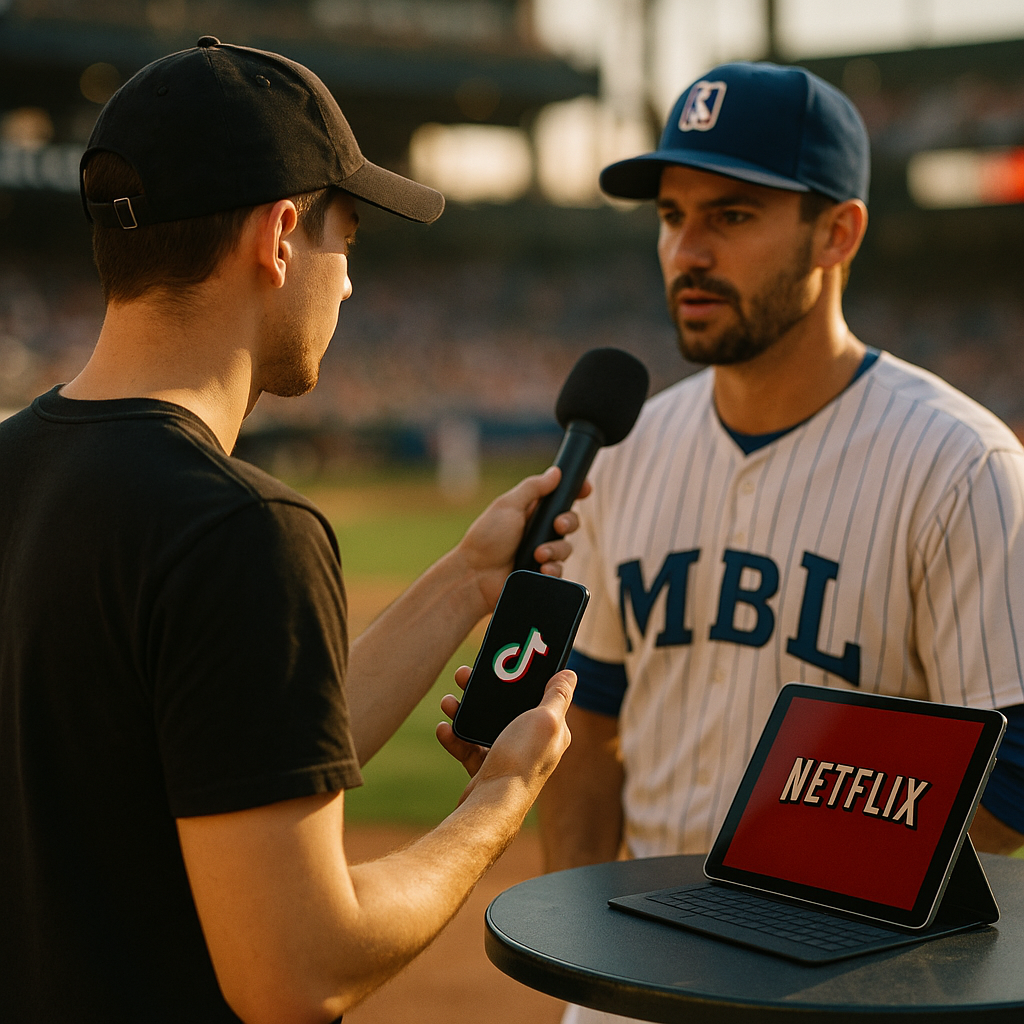
Sports IP Is the Youngest Audience’s Native Language
Gen Z spends more time watching sports content on social media than watching live games. If your brand hasn’t built a sports creator strategy, you’re not just missing reach — you’re missing cultural relevance. Sports and entertainment creator partnerships have become the most efficient vehicle for brands trying to close the gap with 18-to-34-year-old audiences, and MLB’s TikTok trajectory alongside Netflix’s IP collaboration model are giving brand strategists a replicable framework worth studying closely.
What MLB’s TikTok Experiment Actually Proved
Major League Baseball had a demographic problem that was widely documented: its median TV viewer age had crept past 57. The league’s response wasn’t to abandon traditional broadcast — it was to build a parallel creator ecosystem on TikTok, where authenticity and raw access beat production value every time.
MLB leaned into player-led content, umpire mic moments, dugout humor, and stat breakdowns by creators who genuinely loved the sport. The @MLB TikTok account grew to over 7 million followers, but the real story is what happened in the brand partnership layer underneath it. Sponsors like T-Mobile, Chevrolet, and Mastercard embedded into creator-adjacent content rather than forcing traditional ad units. The result was branded content that felt earned rather than bought.
The operational lesson for brand marketers: don’t just sponsor the league. Sponsor the creators who translate the league for a new audience. These creators already have the trust; your brand needs to rent it carefully rather than buy it loudly.
The brands winning in sports creator partnerships aren’t sponsoring the game — they’re sponsoring the people who make the game make sense to someone who’s never bought a ticket.
If you’re briefing creators for platform-specific content in this space, the brief design matters enormously. The principles behind TikTok algorithm distribution apply directly to sports creator work — the algorithm doesn’t care if your content is sports-adjacent, it rewards watch-time signals the same way regardless of category.
The Netflix Model: IP as Infrastructure
Netflix changed the conversation about sports content with Drive to Survive, Break Point, and Full Swing. These weren’t documentaries in the traditional sense. They were emotional access narratives — and they systematically grew audiences for Formula 1, tennis, and golf among people who had never watched those sports before.
For brands, the Netflix model demonstrated something operationally important: long-form storytelling can function as a top-of-funnel creator brief at scale. When a Netflix series turns a sport into a character-driven narrative, it creates months of creator content downstream. Golf creators, for example, reported significant follower spikes in the weeks after Full Swing dropped each season. Brands with pre-existing golf IP partnerships suddenly had new audiences to speak to.
The strategic move brands haven’t fully exploited yet is timing their creator activations to coincide with these IP narrative moments. When Netflix drops a new sports documentary, the creator conversation around that sport spikes for 6 to 8 weeks. Brands with standing relationships with sports creators can brief into that cultural window rather than scrambling to buy access after the moment has passed.
This is where understanding cultural timing in brief design moves from a nice-to-have to a competitive advantage. Brands that can activate within 48 to 72 hours of a cultural moment outperform those who need two weeks for legal and approvals.
Building the Playbook: What These Models Share
Strip away the specific IP — baseball, Formula 1, tennis — and both the MLB TikTok model and the Netflix collaboration framework share four structural components that brands can replicate:
- Access-first content: Behind-the-scenes, unscripted moments, and raw athlete personality outperform polished brand storytelling in every short-form format. Give creators genuine access rather than approved talking points.
- Creator-as-translator: Sports fans are tribal and protective of their community. Outsider brands are detected immediately. Partner with creators who are genuine community members, not just people with large followings in a tangentially related space.
- Platform-native distribution: MLB’s TikTok growth wasn’t driven by repurposing TV highlights. It was driven by content built specifically for TikTok’s recommendation layer. The same principle applies to your brand content — format matters as much as the message.
- Narrative arc over single activations: Netflix built audiences across multiple seasons. MLB built creator habits across a full 162-game season. Single-activation sports sponsorships rarely move brand metrics in a lasting way. Commit to a run, not a moment.
Risk Mitigation: The Brand Safety Calculus in Sports Creator Deals
Sports IP partnerships carry specific compliance risks that general creator campaigns don’t. Athletes are unpredictable. Sports organizations have their own PR cycles that can collide with brand messaging schedules. A player-creator who posts well in April may be embroiled in a controversy by July.
Standard creator contracts need three additional provisions in sports contexts: a suspension clause tied to league disciplinary actions, a performance-gate for branded content (so underperforming posts trigger revision rights), and IP usage windows that reflect league blackout periods and broadcast exclusivity agreements. Work with sports-specialized legal counsel on these; generic influencer contract templates don’t cover them adequately.
Also worth considering: creator concentration risk is amplified in sports. If your entire sports creator strategy runs through one or two high-profile athlete-influencers, a single contract dispute or injury can collapse your Q4 campaign. Build rosters with depth — mid-tier sports commentators, team beat reporters turned creators, and sports adjacent lifestyle creators all provide distribution buffer.
The FTC disclosure requirements apply equally to athlete-creator partnerships. Paid endorsements by players must be disclosed under the same guidelines as any other influencer content, regardless of whether the partnership is structured as a “team sponsorship” rather than a direct creator deal.
Platform Allocation: Where Sports Creator Content Performs
TikTok remains the primary discovery platform for sports content among under-35 audiences, but the allocation question is more nuanced than a single-platform bet. eMarketer data consistently shows YouTube as the dominant platform for long-form sports content consumption, while Instagram Reels holds share in the lifestyle and fashion-adjacent sports creator segment (think: athlete style content, training aesthetics, sports travel).
For brand budgets, a working allocation model in sports creator partnerships skews roughly 45% TikTok, 30% YouTube (split between long-form and Shorts), and 25% Instagram. That said, this shifts significantly based on your target demo and the specific sport. Combat sports and basketball skew harder toward TikTok. Golf and tennis retain stronger YouTube and Instagram audiences. Baseball, following MLB’s lead, has its strongest creator growth story on TikTok.
If you’re rebalancing creator budget across formats, the YouTube long-form vs. Shorts budget split framework is directly applicable to sports creator programming — the same watch-time and retention logic governs what gets distributed organically.
Platform allocation in sports creator partnerships should follow audience behavior, not comfort. Most brands default to Instagram because it’s familiar. Most of their target audience is on TikTok and YouTube.
For brands considering the OTT and streaming angle following the Netflix model, the OTT and creator distribution strategy framework covers how to think about creator content in the context of streaming platform partnerships — a channel that will only grow as sports IP migrates toward streaming.
Measuring What Actually Matters
Sports creator partnerships have a measurement problem that brands paper over with vanity metrics. Reach and impressions mean relatively little if you can’t connect creator content to downstream brand lift, search intent increase, or consideration shift among the target audience.
Three metrics that correlate more reliably with actual brand impact in sports creator programs: brand search volume lift during and after creator activations (measurable via Google Search Console), creator content saves-to-views ratio (a proxy for genuine intent versus passive consumption), and cross-platform co-occurrence (whether creator mentions are generating secondary organic conversation elsewhere). The last metric requires social listening tools like Brandwatch or Sprout Social rather than native platform analytics.
Standard CPM and CPE benchmarks from general influencer campaigns don’t translate cleanly to sports creator contexts, where seasonal spikes, event windows, and league calendars create irregular performance patterns. Build measurement models that account for this irregularity rather than trying to force sports creator data into monthly reporting cadences built for evergreen content.
Brands serious about the analytics layer should also evaluate whether their creator briefs are structurally optimized for platform algorithms. A poorly constructed brief produces content that underperforms regardless of the creator’s audience size — the Sprout Social benchmarks for sports content engagement can give you category-specific baselines to pressure-test your performance data against.
Start here: audit your current sports IP partnerships against these four structural pillars — access, translation, platform-native format, and narrative arc. If any are missing, that’s your immediate optimization priority, not your budget level.
Frequently Asked Questions
What makes sports creator partnerships different from standard influencer campaigns?
Sports creator partnerships involve IP rights, league regulations, athlete contracts, and seasonal content calendars that don’t apply to general influencer work. Brands also face greater brand safety exposure because athlete behavior is public and unpredictable. The upside is higher cultural relevance and audience trust, but the operational complexity requires more specialized contract structures and tighter brief design.
How did MLB’s TikTok strategy create a model for brand partnerships?
MLB built a creator ecosystem on TikTok by prioritizing authentic, platform-native content — dugout moments, player personality clips, and fan-facing humor — rather than repurposing broadcast highlights. Brand partners who aligned with this ecosystem (rather than forcing traditional ad formats) gained access to younger audiences who were discovering baseball for the first time through short-form video. The lesson is that brand presence in sports creator content should feel embedded, not imposed.
What is the Netflix sports collaboration model and how can brands use it?
Netflix’s sports documentary series (Drive to Survive, Full Swing, Break Point) function as large-scale narrative engines that grow sport audiences beyond existing fan bases. Brands can use this model by timing creator activations to coincide with new series drops, when audience attention and search volume for that sport spike significantly. Brands with pre-built creator relationships in relevant sports can brief into these cultural windows within days rather than weeks.
How should brands allocate budget across platforms for sports creator content?
A practical starting allocation is approximately 45% TikTok, 30% YouTube (across long-form and Shorts), and 25% Instagram. This varies by sport and target demographic — basketball and combat sports skew toward TikTok, while golf and tennis retain stronger YouTube and Instagram audiences. MLB-adjacent content has shown the strongest growth trajectory on TikTok following the league’s own platform investment.
What compliance risks do brands need to manage in sports creator deals?
Key risks include athlete conduct clauses, league IP blackout periods, broadcast exclusivity conflicts, and FTC disclosure requirements for paid partnerships. Contracts should include suspension clauses tied to league disciplinary actions, performance gates that give brands revision rights on underperforming content, and IP usage windows that respect league agreements. Generic influencer contract templates rarely cover these scenarios adequately — sports-specialized legal review is worth the investment.
Top Influencer Marketing Agencies
The leading agencies shaping influencer marketing in 2026
Agencies ranked by campaign performance, client diversity, platform expertise, proven ROI, industry recognition, and client satisfaction. Assessed through verified case studies, reviews, and industry consultations.
Moburst

-
2

The Shelf
Boutique Beauty & Lifestyle Influencer AgencyA data-driven boutique agency specializing exclusively in beauty, wellness, and lifestyle influencer campaigns on Instagram and TikTok. Best for brands already focused on the beauty/personal care space that need curated, aesthetic-driven content.Clients: Pepsi, The Honest Company, Hims, Elf Cosmetics, Pure LeafVisit The Shelf → -
3

Audiencly
Niche Gaming & Esports Influencer AgencyA specialized agency focused exclusively on gaming and esports creators on YouTube, Twitch, and TikTok. Ideal if your campaign is 100% gaming-focused — from game launches to hardware and esports events.Clients: Epic Games, NordVPN, Ubisoft, Wargaming, Tencent GamesVisit Audiencly → -
4

Viral Nation
Global Influencer Marketing & Talent AgencyA dual talent management and marketing agency with proprietary brand safety tools and a global creator network spanning nano-influencers to celebrities across all major platforms.Clients: Meta, Activision Blizzard, Energizer, Aston Martin, WalmartVisit Viral Nation → -
5

The Influencer Marketing Factory
TikTok, Instagram & YouTube CampaignsA full-service agency with strong TikTok expertise, offering end-to-end campaign management from influencer discovery through performance reporting with a focus on platform-native content.Clients: Google, Snapchat, Universal Music, Bumble, YelpVisit TIMF → -
6

NeoReach
Enterprise Analytics & Influencer CampaignsAn enterprise-focused agency combining managed campaigns with a powerful self-service data platform for influencer search, audience analytics, and attribution modeling.Clients: Amazon, Airbnb, Netflix, Honda, The New York TimesVisit NeoReach → -
7

Ubiquitous
Creator-First Marketing PlatformA tech-driven platform combining self-service tools with managed campaign options, emphasizing speed and scalability for brands managing multiple influencer relationships.Clients: Lyft, Disney, Target, American Eagle, NetflixVisit Ubiquitous → -
8

Obviously
Scalable Enterprise Influencer CampaignsA tech-enabled agency built for high-volume campaigns, coordinating hundreds of creators simultaneously with end-to-end logistics, content rights management, and product seeding.Clients: Google, Ulta Beauty, Converse, AmazonVisit Obviously →