


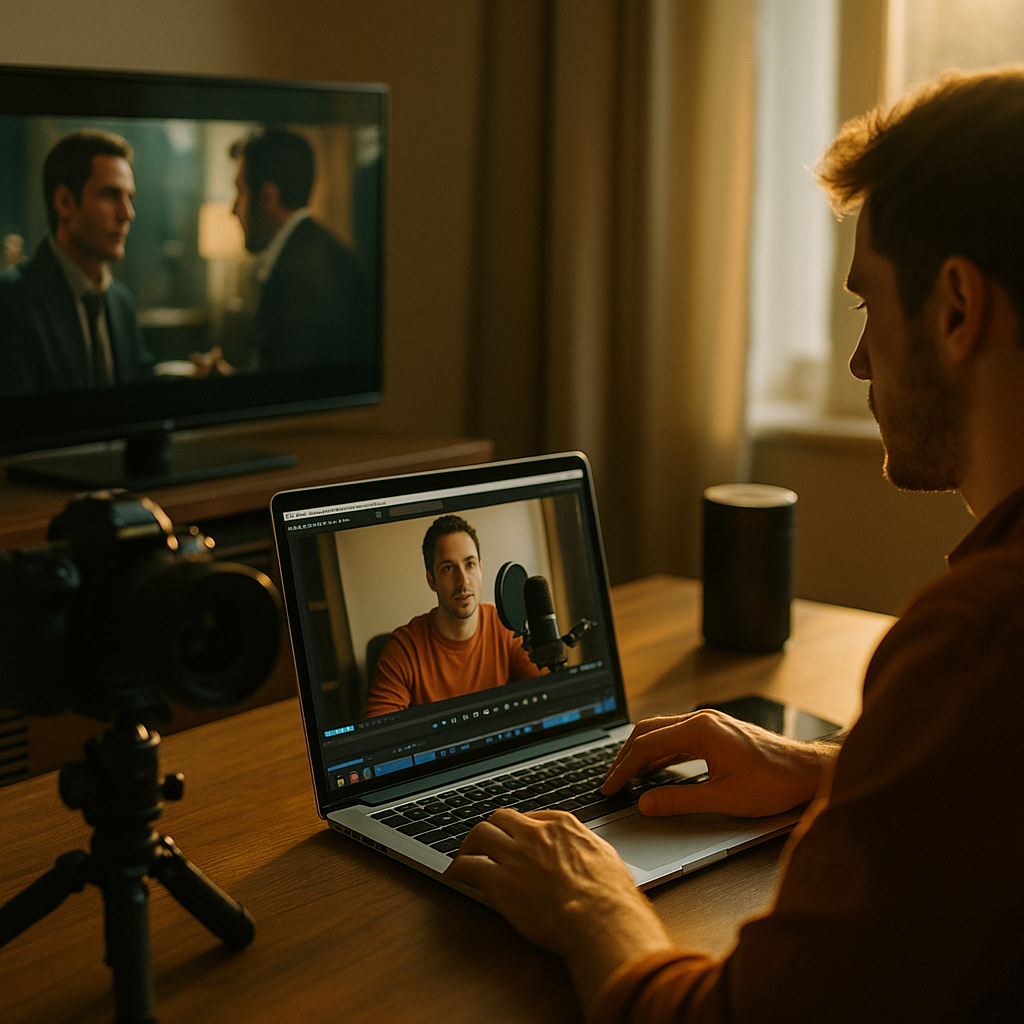
Most brands treat OTT, linear TV, and social creator content as three separate budgets. That’s the problem.
Sixty-eight percent of U.S. adults now consume video across three or more screens in a single day, according to eMarketer. Yet most brand media plans still silo creator content in a social budget, TV spots in a broadcast budget, and streaming in a separate programmatic line. The result is waste, inconsistency, and missed compounding reach. OTT and linear TV collaboration with creators isn’t just an emerging tactic — it’s becoming a core distribution discipline.
Why Integration Is a Revenue Problem, Not a Creative One
Before you solve the creative brief, solve the architecture. The most common failure mode isn’t a bad creator partnership or a weak script. It’s a brand that produces a 30-second linear spot, asks a creator to repurpose it as a Reel, and calls that an integrated plan. It isn’t. Real integration means creator content is designed from the brief stage to travel across OTT pre-roll, connected TV (CTV) inventory, broadcast placements, and social feeds — with each format serving a distinct role in the funnel.
Think of it this way: linear TV builds mass awareness fast. OTT and CTV let you layer precision targeting on top of that awareness signal. Creator content on social closes the loop by converting attention into action. When those three channels share consistent visual language, messaging hierarchy, and attribution logic, you stop paying to re-educate the same audience three times.
Brands that align creator briefs with OTT and broadcast planning at the campaign outset report significantly higher brand recall lift compared to brands that adapt content after the fact. The brief is the integration point — not the edit suite.
How to Structure a Creator Brief for Multi-Platform Distribution
The brief is where integration either happens or doesn’t. Most creator briefs are written for a single platform. If you want content that performs on a 65-inch connected TV screen, a 15-second OTT pre-roll, and a vertical TikTok feed, you need to build format requirements into the brief architecture itself.
Here’s the practical structure that works:
- Primary creative asset: A 60-90 second “hero” video shot in a format-agnostic ratio (think horizontal 16:9 with safe zones for 9:16 crop). This becomes the source file for broadcast and OTT.
- Cut-down for OTT/CTV pre-roll: A 15-second version that leads with the product, not the creator. CTV audiences are often leaning back; they need immediate context.
- Social-native edits: Vertical 9:16 cuts for TikTok, Reels, and YouTube Shorts that use the creator’s authentic voice. These can reference the TV campaign to create recognition loops. If your team needs guidance on building algorithm-ready creator briefs, that structural thinking applies here too.
- Linear TV version: Produced to broadcast spec, often with voiceover or end-card adjusted for network compliance requirements.
One practical note on rights: negotiate usage rights across broadcast, streaming, and digital in the initial contract. Brands that return to creators post-production to expand usage rights consistently pay 30-50% more and delay launch windows.
Selecting the Right Creator Profiles for TV-Adjacent Campaigns
Not every creator is built for this kind of multi-channel lift. Social-native creators with 500K followers and strong engagement aren’t automatically equipped to deliver broadcast-quality production or to represent a brand in a linear TV context without significant production support.
The profiles that work best tend to fall into one of two categories. First, creators who already operate at a premium production level — YouTubers with cinematic setups, podcast hosts who’ve done brand integrations with broadcast-quality audio, or creators who’ve appeared in streaming content before. Second, emerging creators with strong audience trust who you pair with a production partner to handle the technical lift. For brands managing YouTube creator concentration risk, diversifying into TV-adjacent talent is also a smart hedge against algorithmic dependency.
Audience alignment matters more than follower count here. A creator with 200K highly engaged followers in a specific CTV-heavy demographic (households with connected TVs, higher income brackets, 35-54 age range) may deliver better OTT campaign efficiency than a mass-reach creator whose audience skews mobile-only.
Attribution: The Hardest Part of the Integrated Plan
Here’s where most campaigns fall apart operationally. You can build a beautiful integrated creative plan, place it across Peacock, Hulu, NBC broadcast, and creator social feeds — and still have no idea which channel drove which outcome.
The current best practice is a layered attribution model that combines:
- Brand lift studies run through streaming platforms directly (Hulu’s Ad Manager, Amazon’s streaming TV tools, YouTube’s brand lift suite). These measure awareness and recall shifts against an unexposed control group.
- Pixel-based and UTM tracking on creator-specific social posts and any OTT inventory bought programmatically through DSPs like The Trade Desk or DV360.
- Incremental reach analysis to understand where your audiences overlap between linear, streaming, and social. Tools like Comscore or Nielsen One can provide this cross-platform view.
- Creator-specific promo codes or landing pages tied to each distribution environment, giving you a lower-funnel signal even when attribution is fuzzy upstream.
The honest reality is that cross-channel attribution for TV-plus-social campaigns is still imperfect. Accept it. Your goal is directional confidence, not forensic precision. If brand lift is up, CTV completion rates are strong, and creator social conversion rates are holding, the integrated plan is working.
Cross-channel attribution for TV and creator campaigns will never be perfectly clean. Build your measurement framework to answer “is the whole greater than the sum of its parts?” — not to assign credit to individual channels with false precision.
Paid Amplification: Closing the Loop Between TV Spend and Social Feed
Organic creator reach alone won’t bridge the gap between a linear TV impression and a social conversion. You need paid amplification strategy built into the plan from day one.
The playbook that’s working right now: use the same creator content that runs on OTT as a whitelisted creative asset in social paid campaigns. When a viewer sees a creator on Peacock pre-roll and then encounters the same creator’s content as a sponsored Reel in their feed 48 hours later, the recognition effect compounds. CTV targeting paired with creator whitelisting is increasingly being used to create exactly this kind of sequential messaging. The LinkedIn-Amazon CTV deal is a signal that B2B brands are catching on fast.
For social-side amplification, structure your paid budget to run retargeting against audiences who have completed OTT views. Most major DSPs can now pass that signal to Meta’s and TikTok’s ad systems, enabling you to serve creator content specifically to people who were already reached by the TV placement. That’s not a media plan — that’s a conversion funnel. Understanding how to brief for paid reach on Reels becomes essential when you’re using social as the downstream closer in an OTT-led campaign.
Budget allocation typically runs 50-60% to TV and OTT inventory, 25-30% to paid social amplification of creator content, and 10-15% to production and rights. Adjust based on your category — direct-response brands often shift more toward social paid; brand-building campaigns weight toward broadcast and streaming.
Operational Checklist Before You Launch
Before a single asset goes live, verify these five items are resolved:
- Usage rights locked for broadcast, streaming, and digital — including whitelisting rights for paid social
- All creative assets cleared for FTC disclosure compliance across every distribution environment (yes, creator disclosures are required even in broadcast-adjacent formats — see FTC guidelines for current standards)
- Attribution infrastructure in place before launch, not after (UTMs, pixel events, promo codes, brand lift study enrollment)
- Creator deliverable timeline aligned with broadcast trafficking deadlines, which are typically 5-10 days more rigid than social timelines
- Platform-specific specs confirmed for each OTT and streaming partner, since Hulu, Peacock, and Amazon Fire TV have different technical requirements
If you’re managing creator roster diversity as part of your integrated strategy, it’s worth reviewing your Instagram concentration risk at the same time — over-indexing any single platform in a multi-channel plan creates fragility.
For teams new to cross-platform distribution infrastructure, HubSpot’s marketing resources and Sprout Social’s analytics tools offer frameworks for managing multi-channel campaign workflows at scale. And for programmatic TV buying, Statista’s CTV data provides useful benchmarks for CPM expectations across streaming environments.
Your next move: Audit your current creator contracts for multi-platform usage rights before you build the next brief. Rights gaps are the single most common reason integrated plans get delayed or cut short — and they’re entirely preventable.
Frequently Asked Questions
What is OTT and linear TV collaboration with creators?
It refers to the practice of co-developing creator content specifically designed to run across over-the-top streaming platforms (OTT), connected TV (CTV), traditional broadcast/cable (linear TV), and social media feeds within a single integrated campaign. Rather than treating each channel as a separate content silo, brands build one unified creative framework that serves all distribution environments.
How do you brief creators for multi-platform TV and streaming campaigns?
The brief needs to specify format requirements for every distribution environment upfront: a 16:9 hero asset with safe zones for vertical crop, a 15-second cut for OTT pre-roll, a social-native vertical edit, and a broadcast-compliant version. Usage rights, FTC disclosure requirements, and brand safety guidelines for broadcast environments must all be addressed in the original contract, not negotiated after production.
What attribution models work best for integrated OTT and creator campaigns?
The most effective approach combines platform-native brand lift studies (through Hulu, Amazon, or YouTube), pixel-based tracking for social and programmatic OTT placements, incremental reach analysis tools like Nielsen One or Comscore, and creator-specific promo codes or landing pages. No single model provides complete visibility — a layered approach gives you directional confidence across the full funnel.
How much does it cost to produce content for OTT, linear TV, and social in one campaign?
Production budgets vary widely, but integrated campaigns typically allocate 10-15% of total campaign spend to production and rights. The efficiency gain comes from producing one master asset and adapting it across formats, rather than producing separate creative for each channel. Rights negotiation is the variable most brands underestimate — securing broadcast, streaming, and digital whitelist rights upfront can add 20-40% to a creator’s base rate but saves significantly more in renegotiation costs later.
Which creators work best for TV-adjacent integrated campaigns?
Creators with premium production capabilities (professional lighting, broadcast-quality audio, experience with longer-form scripted content) or those with strong audience alignment to CTV-heavy demographics tend to perform best. Pure social-native creators can succeed in these campaigns when paired with a production partner, but the brief must account for the additional production support and longer lead times that broadcast and streaming placements require.
Top Influencer Marketing Agencies
The leading agencies shaping influencer marketing in 2026
Agencies ranked by campaign performance, client diversity, platform expertise, proven ROI, industry recognition, and client satisfaction. Assessed through verified case studies, reviews, and industry consultations.
Moburst

-
2

The Shelf
Boutique Beauty & Lifestyle Influencer AgencyA data-driven boutique agency specializing exclusively in beauty, wellness, and lifestyle influencer campaigns on Instagram and TikTok. Best for brands already focused on the beauty/personal care space that need curated, aesthetic-driven content.Clients: Pepsi, The Honest Company, Hims, Elf Cosmetics, Pure LeafVisit The Shelf → -
3

Audiencly
Niche Gaming & Esports Influencer AgencyA specialized agency focused exclusively on gaming and esports creators on YouTube, Twitch, and TikTok. Ideal if your campaign is 100% gaming-focused — from game launches to hardware and esports events.Clients: Epic Games, NordVPN, Ubisoft, Wargaming, Tencent GamesVisit Audiencly → -
4

Viral Nation
Global Influencer Marketing & Talent AgencyA dual talent management and marketing agency with proprietary brand safety tools and a global creator network spanning nano-influencers to celebrities across all major platforms.Clients: Meta, Activision Blizzard, Energizer, Aston Martin, WalmartVisit Viral Nation → -
5

The Influencer Marketing Factory
TikTok, Instagram & YouTube CampaignsA full-service agency with strong TikTok expertise, offering end-to-end campaign management from influencer discovery through performance reporting with a focus on platform-native content.Clients: Google, Snapchat, Universal Music, Bumble, YelpVisit TIMF → -
6

NeoReach
Enterprise Analytics & Influencer CampaignsAn enterprise-focused agency combining managed campaigns with a powerful self-service data platform for influencer search, audience analytics, and attribution modeling.Clients: Amazon, Airbnb, Netflix, Honda, The New York TimesVisit NeoReach → -
7

Ubiquitous
Creator-First Marketing PlatformA tech-driven platform combining self-service tools with managed campaign options, emphasizing speed and scalability for brands managing multiple influencer relationships.Clients: Lyft, Disney, Target, American Eagle, NetflixVisit Ubiquitous → -
8

Obviously
Scalable Enterprise Influencer CampaignsA tech-enabled agency built for high-volume campaigns, coordinating hundreds of creators simultaneously with end-to-end logistics, content rights management, and product seeding.Clients: Google, Ulta Beauty, Converse, AmazonVisit Obviously →