


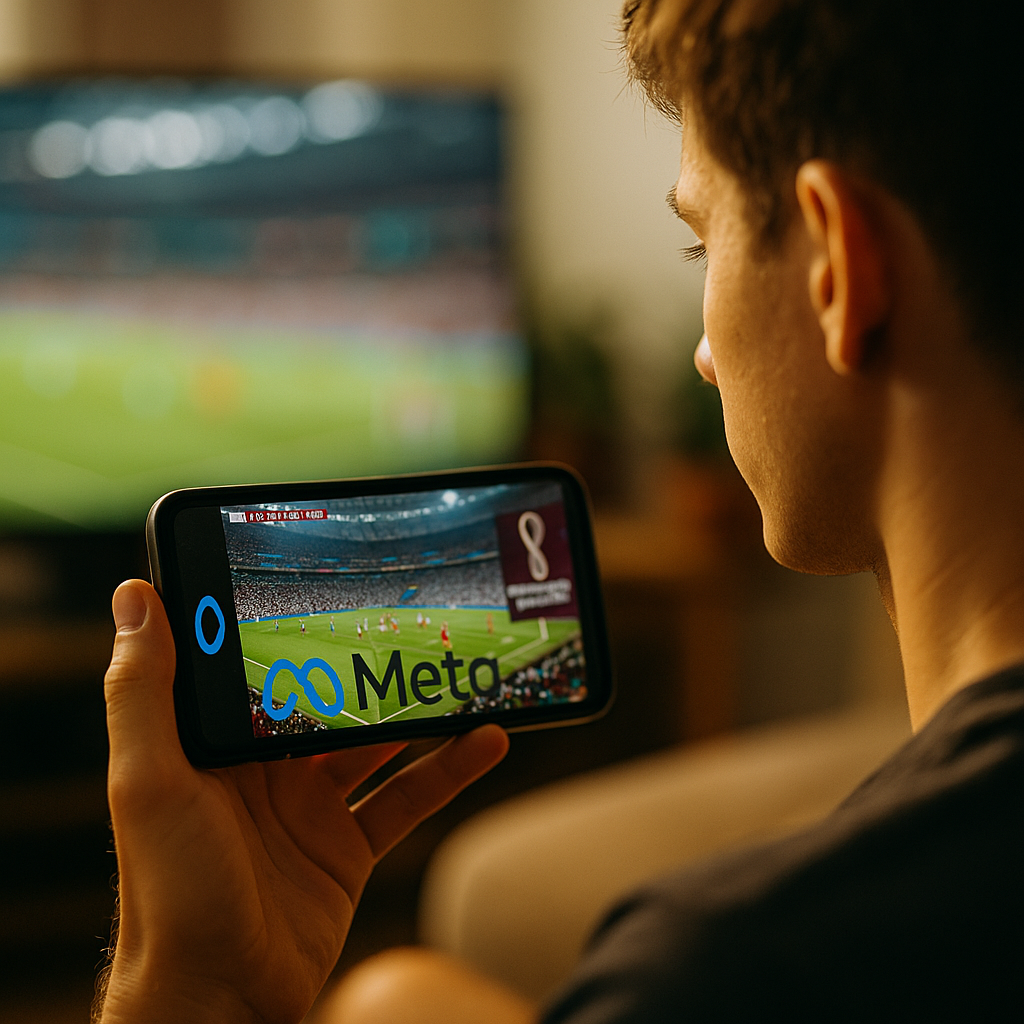
You don’t need to own the rights to own the moment. Meta’s World Cup-themed search hubs across Instagram, Threads, and Facebook are handing brands a legitimate, scalable activation architecture for real-time event sponsorship — no official tournament deal required. Here’s what that actually means for your budget and your brief.
What Meta Actually Built (And Why It Matters Now)
Meta quietly rolled out dedicated search hubs tied to World Cup conversations across all three of its major properties. On Instagram, users searching tournament-related terms land in a curated discovery environment that surfaces Reels, Stories, and creator content around match moments. Threads is functioning as a real-time commentary layer, closer in behavior to what X used to be for live sports. Facebook’s hub aggregates Watch Party features, fan group content, and publisher posts into a unified event feed.
For brands, the architecture is significant. These hubs are not just content aggregators. They are intent surfaces. A user opening Instagram mid-match and searching for a team name is in a fundamentally different mindset than someone scrolling their feed on a Tuesday morning. That search intent, in a live-event context, is one of the highest-value moments in digital advertising.
Meta’s event search hubs create discoverable, intent-driven environments where brands can intercept engaged audiences at peak cultural moments — without paying FIFA’s official sponsorship premiums.
The Ambush Marketing Question Brands Keep Asking
Let’s address it directly: is this ambush marketing? Technically, ambush marketing involves creating a deliberate false impression of official sponsorship. What Meta’s search hubs enable is something different. They create a contextually relevant discovery environment that any brand can appear within through paid placement, creator partnerships, or organic search-optimized content. There is no implied official affiliation, as long as your creative and copy are handled correctly.
The compliance guardrail matters. Brands should avoid any language that implies an official partnership with FIFA, the host federation, or any national football association. Your legal team needs to review asset-level copy before launch, not after. The FTC’s guidance on endorsements and the broader framework at ftc.gov still applies to any influencer content running within these environments.
What you’re activating against is cultural relevance, not contractual exclusivity. That distinction protects you legally and frames your brand as a genuine participant in the conversation rather than a logo renting stadium space.
Three Activation Surfaces, Three Different Briefs
The mistake most brand teams make is treating all three Meta properties as interchangeable distribution channels. They aren’t. Each hub has different content physics.
Instagram rewards visual storytelling and creator-led Reels that tap into match energy. The search hub amplifies content that gets strong early saves and shares, so your creator brief should prioritize formats that work without sound (for stadium environments) and that surface a clear brand cue in the first three seconds. If you’re building Instagram topic targeting into your influencer strategy, World Cup search hubs are a natural extension of that logic.
Threads is the real-time play. Match commentary, hot takes, rapid-response posts tied to goals or key moments — this is the format. Brands that have pre-built a content calendar with conditional logic (if Team A scores in the first half, post X; if match goes to penalties, post Y) will outperform those reacting manually. Response time on Threads during a live match window can mean the difference between appearing in a trending conversation thread and being invisible.
Facebook skews toward older, higher-income audiences who are often the actual purchase decision-makers. The Watch Party feature creates a co-viewing context that brands can sponsor or align with through creator partnerships. Sports creator partnerships that have worked in MLB and streaming contexts translate well here — the model is familiar, and the audience behavior is similar.
Real-Time Budget Architecture for Non-Rights Holders
Here’s how to think about budget allocation across a multi-match activation window. The traditional sports sponsorship model front-loads investment in logo placement and static assets. The Meta hub model inverts that logic.
- Pre-tournament (2-3 weeks out): Creator seeding, cultural credibility building, search-optimized content publishing. Goal is to establish brand presence in the hub’s content pool before the volume spike hits.
- Match windows (live and +2 hours): Paid amplification of best-performing organic content. Don’t create new assets during live windows — amplify what’s already resonating. Use Meta’s advantage+ targeting to reach users actively engaging with hub content.
- Post-match (24-48 hours): Long-tail content, creator reaction pieces, product integration into highlight discussions. This is where shoppable creator formats on Instagram perform well because purchase intent remains elevated.
The ratio that’s working for non-rights holder brands in early tournament activations is roughly 40% pre-tournament content seeding, 35% live-window paid amplification, and 25% post-match shoppable and conversion content. That’s not a fixed rule — adjust based on your category, audience age skew, and whether your product has a natural match-time use case.
Non-rights holder brands activating through Meta’s search hubs are reporting CPMs that are 60–75% lower than equivalent premium sports broadcast inventory, with engagement rates that rival official sponsor content during live match windows.
Creator Brief Design for Event-Triggered Content
The brief is where most campaigns collapse. Standard influencer briefs are built for scheduled publishing. World Cup activation requires briefs that account for unpredictability.
Your creator brief should include: a pre-approved content matrix with conditional triggers (match outcomes, player moments, penalty scenarios), clear response time SLAs (ideally sub-30 minutes for Threads, sub-2 hours for Reels), usage rights language that covers Meta’s hub surfaces explicitly, and a compliance checklist that flags prohibited language around official sponsorship claims. If you’re unsure how to structure conditional brief logic, the frameworks used in TikTok creator campaign briefs adapt well to Meta’s ecosystem.
Creator selection matters here as much as the brief itself. Sports-adjacent creators with audiences who are already active in these hub environments will outperform lifestyle creators with larger followings who lack contextual credibility. Engagement rate within sports and football-specific content clusters is the metric you should be screening for, not follower count.
Measurement and Attribution in a Hub Environment
The standard last-click attribution model breaks down in live-event contexts. Users discover your brand in the search hub, engage with a creator’s Reel, share a Threads post, and convert three days later through a Facebook retargeting ad. That journey won’t show up cleanly in a single-platform report.
Meta’s Advantage+ attribution settings, combined with Conversions API, give you the best cross-surface view available within the ecosystem. But you’ll also want to layer in brand lift studies run through Meta Business tools to capture the awareness impact that conversion tracking misses. For brands running simultaneous activity on other platforms, tools like Northbeam or Triple Whale can model the incremental contribution of the Meta hub traffic without requiring perfect UTM coverage across live social content.
One benchmark to anchor against: brands using Meta’s event-based ad products during major sports moments have seen view-through conversion rates 2-3x higher than equivalent evergreen campaign benchmarks, according to data circulating from Meta’s own case study library. Set that as your floor expectation, not your ceiling.
For cross-platform planning context, short-form video budget trends in upfront submissions show that event-adjacent activations are increasingly being treated as standalone line items, separate from always-on social, which is the right way to frame your internal budget proposal for this kind of World Cup push. External benchmarking from sources like Statista and eMarketer can help you contextualize sports marketing CPMs when making the case to finance.
The Operational Edge Is the Real Competitive Advantage
Every non-rights-holder brand in your category has access to the same Meta hub infrastructure. The brands that win are the ones that have the operational rigor to execute faster and smarter. Pre-approved asset libraries, creator SLAs, conditional content matrices, legal sign-off on copy variants — these aren’t creative decisions. They’re operational ones. Build the machine before the tournament starts. The window for in-flight pivots is measured in minutes, not days.
Start your creator brief review now. The search hub content pool is already filling up.
Frequently Asked Questions
Do brands need official World Cup sponsorship rights to appear in Meta’s search hubs?
No. Meta’s World Cup search hubs are open discovery environments. Any brand can appear within them through paid ad placements, creator partnerships, or organically optimized content. The key compliance requirement is that brand creative must not imply an official affiliation with FIFA or any tournament rights holder. Brands should have legal review all copy and assets before publishing to avoid ambush marketing claims.
What’s the difference between activating on Instagram, Threads, and Facebook during the World Cup?
Each platform serves a different function within the hub ecosystem. Instagram is best for visual, creator-led Reels content that benefits from search discovery. Threads functions as a real-time commentary layer suited to rapid-response posts tied to live match moments. Facebook’s hub aggregates Watch Party content and fan communities, skewing toward an older, higher-income demographic. Brands should build platform-specific briefs rather than repurposing identical assets across all three.
How should brands structure their budget for a non-rights-holder World Cup activation on Meta?
A working allocation for non-rights holder activations is roughly 40% pre-tournament content seeding, 35% live-window paid amplification, and 25% post-match conversion and shoppable content. The key principle is to seed creator content before the volume spike hits, amplify what’s already performing during live windows rather than creating new assets in real time, and capture post-match purchase intent with shoppable formats.
How do you measure brand impact in Meta’s event search hubs when standard attribution breaks down?
Multi-touch attribution is essential here because the typical discovery-to-conversion journey spans multiple surfaces and multiple days. Meta’s Conversions API combined with Advantage+ attribution settings provides the best within-ecosystem view. Brand lift studies through Meta Business tools capture awareness impact that conversion tracking misses. Third-party tools like Northbeam or Triple Whale can model incremental contribution from hub traffic for brands running cross-platform campaigns.
What makes a strong creator brief for real-time event content on Meta?
Event-triggered briefs need conditional content matrices (pre-approved post variants tied to different match outcomes), clear response time SLAs (sub-30 minutes for Threads, sub-2 hours for Reels), explicit usage rights covering Meta’s hub surfaces, and a compliance checklist flagging prohibited sponsorship language. Creator selection should prioritize sports-adjacent creators with high engagement within football content clusters over lifestyle creators with larger but less contextually relevant followings.
Top Influencer Marketing Agencies
The leading agencies shaping influencer marketing in 2026
Agencies ranked by campaign performance, client diversity, platform expertise, proven ROI, industry recognition, and client satisfaction. Assessed through verified case studies, reviews, and industry consultations.
Moburst

-
2

The Shelf
Boutique Beauty & Lifestyle Influencer AgencyA data-driven boutique agency specializing exclusively in beauty, wellness, and lifestyle influencer campaigns on Instagram and TikTok. Best for brands already focused on the beauty/personal care space that need curated, aesthetic-driven content.Clients: Pepsi, The Honest Company, Hims, Elf Cosmetics, Pure LeafVisit The Shelf → -
3

Audiencly
Niche Gaming & Esports Influencer AgencyA specialized agency focused exclusively on gaming and esports creators on YouTube, Twitch, and TikTok. Ideal if your campaign is 100% gaming-focused — from game launches to hardware and esports events.Clients: Epic Games, NordVPN, Ubisoft, Wargaming, Tencent GamesVisit Audiencly → -
4

Viral Nation
Global Influencer Marketing & Talent AgencyA dual talent management and marketing agency with proprietary brand safety tools and a global creator network spanning nano-influencers to celebrities across all major platforms.Clients: Meta, Activision Blizzard, Energizer, Aston Martin, WalmartVisit Viral Nation → -
5

The Influencer Marketing Factory
TikTok, Instagram & YouTube CampaignsA full-service agency with strong TikTok expertise, offering end-to-end campaign management from influencer discovery through performance reporting with a focus on platform-native content.Clients: Google, Snapchat, Universal Music, Bumble, YelpVisit TIMF → -
6

NeoReach
Enterprise Analytics & Influencer CampaignsAn enterprise-focused agency combining managed campaigns with a powerful self-service data platform for influencer search, audience analytics, and attribution modeling.Clients: Amazon, Airbnb, Netflix, Honda, The New York TimesVisit NeoReach → -
7

Ubiquitous
Creator-First Marketing PlatformA tech-driven platform combining self-service tools with managed campaign options, emphasizing speed and scalability for brands managing multiple influencer relationships.Clients: Lyft, Disney, Target, American Eagle, NetflixVisit Ubiquitous → -
8

Obviously
Scalable Enterprise Influencer CampaignsA tech-enabled agency built for high-volume campaigns, coordinating hundreds of creators simultaneously with end-to-end logistics, content rights management, and product seeding.Clients: Google, Ulta Beauty, Converse, AmazonVisit Obviously →