


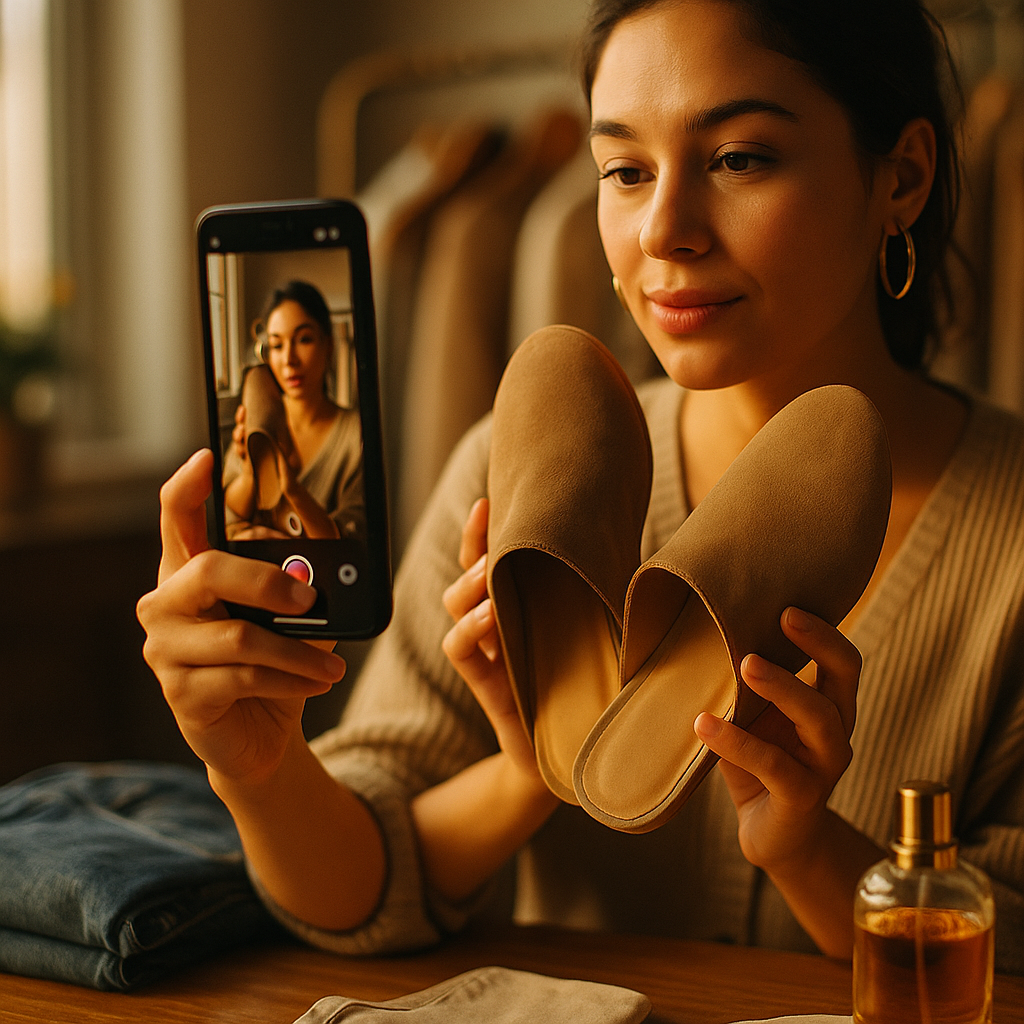
Most Instagram Briefs Are Written for Brand Safety, Not Purchase Intent
Instagram’s shoppable feed now accounts for over 30% of all in-app purchases among users aged 18-44, yet the majority of creator briefs still prioritize compliance checkboxes over the production direction that actually drives commerce outcomes. If your brief isn’t built around Instagram’s purchase-intent feed logic, you’re not just leaving conversions on the table — you’re actively training the algorithm to suppress your sponsored posts.
How Instagram’s Purchase-Intent Feed Logic Actually Works
Instagram’s ranking system for shoppable content operates differently from standard Reels or feed post distribution. The platform reads product tags, caption structure, on-screen text overlays, and early engagement signals as a combined commerce-readiness score. Posts that score well get surfaced in the Shop tab, Explore’s shopping grid, and the main feed’s “Suggested for you” layer. Posts that don’t get deprioritized regardless of paid amplification behind them.
The algorithm specifically rewards content that demonstrates what Meta internally calls “purchase-intent signals”: saves (which indicate product research behavior), profile visits from non-followers after viewing, and direct link taps within the first 90 minutes of posting. This means your brief must direct creators to produce content that generates these specific micro-conversions, not just views or likes.
Saves and profile visits within the first 90 minutes are the most reliable early signals that Instagram’s algorithm uses to determine shoppable content distribution. If your brief isn’t designed to generate them, no paid boost will compensate.
For brands already investing in shoppable Reels for product tags, the brief architecture needs to go further than format requirements. It needs to encode the behavioral triggers that the algorithm reads as purchase-readiness.
The Platform-Native Tension: Sponsored Content That Doesn’t Look Sponsored
Here’s the operational paradox every brand manager running Instagram programs faces: the content that performs best commercially looks the least commercial. Instagram’s internal research (shared via Meta Business) consistently shows that creator content with hard product pushes in the first three seconds performs 40-60% worse on organic reach than content that opens with a genuine use-case narrative.
This isn’t a creative opinion. It’s an algorithmic reality. Sponsored content that gets flagged (either by the algorithm’s pattern recognition or by user scroll behavior) as overtly transactional gets throttled. Instagram’s Reels ranking in particular penalizes low completion rates and early exits, both of which skyrocket when a post leads with a promotional frame.
The brief’s job is to resolve this tension at the production direction level, before the creator picks up a camera.
Brands getting the most from their Instagram shoppable programs are writing briefs that front-load a “native moment” — a problem, observation, or routine that viewers recognize as authentic — before any product integration occurs. The product enters as the solution, not the subject. This structural discipline is what separates suppressed sponsored content from organically distributed commerce posts. See how the same logic applies across platforms in our breakdown of TikTok briefs for AI recommendation layers.
Writing Production Direction That Satisfies Both Commerce and Creative
A shoppable-first Instagram brief has four functional layers that most brand-side teams collapse into one or skip entirely.
Layer 1: Scene and context direction. Specify the setting not by aesthetics but by purchase-context relevance. “Film in your kitchen during meal prep” outperforms “film in a bright, clean space” because it anchors the product in a recognizable use-context that triggers the viewer’s own purchase logic. Be specific. “Morning routine, bathroom counter visible” is a production instruction. “Lifestyle setting” is not.
Layer 2: Narrative sequencing. Instagram’s commerce algorithm reads watch-time curves. Content that holds attention through a mid-video product reveal performs significantly better than front-loaded reveals. Direct creators to structure content as: hook (problem or scenario) → context build (30-50% of runtime) → product integration → explicit save-worthy moment. The save-worthy moment is critical: a tip, a piece of information, or a visual that gives viewers a reason to save the post for later reference. Saves are weighted heavily in Instagram’s purchase-intent score.
Layer 3: On-screen text and tag placement. Product tags placed in the first two seconds are associated with lower completion rates because they signal an ad frame immediately. Brief creators to add product tags at the point of product reveal, not at the opening. On-screen text should reinforce the use-case, not the discount. “For when you need X” outperforms “20% off now” in organic distribution, even if the promotional offer appears later in the caption.
Layer 4: Caption architecture for commerce signals. The caption should open with a question or statement that matches the problem framed in the video. This creates semantic alignment between the video content and the caption text, which Instagram’s content understanding layer uses to categorize and distribute posts. Include the product category keyword naturally in the first sentence of the caption. Keep the promotional language, including pricing and discount codes, below the fold (after the “more” truncation point).
For brands running multi-creator programs, our analysis of briefs that win on saves and completion provides a useful benchmark framework for measuring brief effectiveness before full campaign deployment.
Compliance Without the Flag: #Ad Placement That Doesn’t Tank Reach
FTC disclosure requirements per FTC guidelines are non-negotiable, but placement is not prescribed down to the pixel. Most briefs default to “include #ad or #sponsored in the caption,” which is legally compliant but algorithmically suboptimal when placed as the first hashtag in a visible caption line.
Production direction should specify that disclosure labels (whether #ad, #sponsored, or Instagram’s native “Paid partnership” label, which is strongly preferable from both a compliance and algorithmic standpoint) appear as follows: the native “Paid partnership with [brand]” tag should always be enabled in creator settings, as Instagram’s algorithm treats this differently from organic posts but does not suppress it the way it suppresses content that pattern-matches to undisclosed advertising. Use the native tag. Then place any hashtag disclosures below the fold.
The Paid Partnership label also unlocks branded content boosting capabilities via Meta Business Suite, which means the same post can run as a paid ad without requiring a separate creative asset. Brief for this from the start: direct creators to enable the tag before posting, not after.
The Brief Itself as an Algorithmic Asset
There’s a meta-level consideration most brand teams miss. The brief doesn’t just direct the creator; it defines the population of creative executions your program will produce. If your brief is vague on production direction, you’ll get a wide range of content quality and algorithmic performance variance that makes it impossible to diagnose what’s working. If your brief is specific at the layer level described above, you create a testable creative framework.
Treat each brief iteration as a variable in your creative testing strategy. Change one layer at a time: test different native-moment framings, different product reveal timings, different save-incentive structures. Tools like Sprout Social and HubSpot can help track the relationship between brief specifications and post-level performance data when integrated with your creator reporting workflow.
Brands managing large creator rosters should also track performance by brief version rather than by creator, as this separates content quality from creator audience size as a variable. If briefs drive consistent performance across creators of different sizes, the brief architecture is sound. If performance clusters around specific creators, the brief is likely too loose and relying on individual creator instinct rather than structured commerce production logic.
This approach also directly addresses creator concentration risk on Instagram, where over-reliance on a handful of top performers masks brief-level weaknesses that only surface when a roster changes.
The brief is your most repeatable creative asset. A well-structured shoppable brief should be able to produce consistently performing commerce content across creators at different tiers — if it can’t, the brief is the problem, not the roster.
One additional operational note: brief the product tagging workflow explicitly. Creators frequently add product tags after posting, which means the post goes live untagged and loses its initial distribution window in the Shop tab. Include a pre-post checklist in your brief that covers tag placement, partnership label activation, and caption structure review. It sounds operational rather than creative, but it’s one of the most common sources of suppressed shoppable content across programs of every size.
For programs that span both Instagram and TikTok commerce formats, aligning brief architecture across both platforms requires understanding how their respective algorithms diverge; the Sponsored Reels algorithm and paid reach dynamics differ enough from TikTok’s shop-native model that separate brief templates are always warranted.
Start by auditing your last five campaign briefs against the four production layers outlined above. Score each layer: is it specific enough to drive predictable algorithmic behavior, or is it a preference statement that leaves the commerce logic entirely to creator interpretation? That gap is where suppression lives.
Frequently Asked Questions
What makes an Instagram creator brief “shoppable-first”?
A shoppable-first brief prioritizes production direction that generates purchase-intent signals the Instagram algorithm can read: saves, profile visits, product tag interactions, and high completion rates. It specifies scene context, narrative sequencing, tag placement timing, and caption architecture as distinct layers, rather than leaving these decisions to the creator’s discretion.
How does Instagram’s algorithm treat sponsored shoppable content differently from organic posts?
Instagram applies a commerce-readiness score to posts with product tags, evaluating early engagement signals, watch-time curves, and semantic alignment between video content and captions. Sponsored content that uses the native “Paid partnership” label is processed differently from organically-framed posts but is not automatically suppressed. Content that pattern-matches to undisclosed or overtly transactional advertising is more likely to receive reduced organic distribution.
Where should the #ad or sponsored disclosure appear in an Instagram shoppable post?
FTC guidelines require clear and conspicuous disclosure, but Instagram’s native “Paid partnership with [brand]” tag is the most algorithmically favorable and legally defensible placement. It should always be enabled before posting. Hashtag disclosures like #ad or #sponsored should be placed below the caption fold (after the “more” truncation) to avoid triggering pattern-recognition signals associated with suppressed paid content.
Why do product tags placed in the first two seconds hurt content performance?
Early product tags signal an advertising frame to both viewers and the algorithm, increasing early exits and reducing completion rates. Instagram’s purchase-intent scoring weights completion and saves heavily. Brief creators to add product tags at the moment of product reveal rather than at the video’s opening to improve completion rates and overall commerce distribution.
How should brands test whether their brief design is working?
Treat each brief version as a creative variable and track performance by brief iteration rather than by individual creator. If consistent performance appears across creators of different audience sizes, the brief architecture is driving outcomes. If results cluster around specific creators, the brief is likely too vague and relying on individual creator instinct. Tools like Sprout Social integrated with creator reporting workflows can help surface this distinction.
Top Influencer Marketing Agencies
The leading agencies shaping influencer marketing in 2026
Agencies ranked by campaign performance, client diversity, platform expertise, proven ROI, industry recognition, and client satisfaction. Assessed through verified case studies, reviews, and industry consultations.
Moburst

-
2

The Shelf
Boutique Beauty & Lifestyle Influencer AgencyA data-driven boutique agency specializing exclusively in beauty, wellness, and lifestyle influencer campaigns on Instagram and TikTok. Best for brands already focused on the beauty/personal care space that need curated, aesthetic-driven content.Clients: Pepsi, The Honest Company, Hims, Elf Cosmetics, Pure LeafVisit The Shelf → -
3

Audiencly
Niche Gaming & Esports Influencer AgencyA specialized agency focused exclusively on gaming and esports creators on YouTube, Twitch, and TikTok. Ideal if your campaign is 100% gaming-focused — from game launches to hardware and esports events.Clients: Epic Games, NordVPN, Ubisoft, Wargaming, Tencent GamesVisit Audiencly → -
4

Viral Nation
Global Influencer Marketing & Talent AgencyA dual talent management and marketing agency with proprietary brand safety tools and a global creator network spanning nano-influencers to celebrities across all major platforms.Clients: Meta, Activision Blizzard, Energizer, Aston Martin, WalmartVisit Viral Nation → -
5

The Influencer Marketing Factory
TikTok, Instagram & YouTube CampaignsA full-service agency with strong TikTok expertise, offering end-to-end campaign management from influencer discovery through performance reporting with a focus on platform-native content.Clients: Google, Snapchat, Universal Music, Bumble, YelpVisit TIMF → -
6

NeoReach
Enterprise Analytics & Influencer CampaignsAn enterprise-focused agency combining managed campaigns with a powerful self-service data platform for influencer search, audience analytics, and attribution modeling.Clients: Amazon, Airbnb, Netflix, Honda, The New York TimesVisit NeoReach → -
7

Ubiquitous
Creator-First Marketing PlatformA tech-driven platform combining self-service tools with managed campaign options, emphasizing speed and scalability for brands managing multiple influencer relationships.Clients: Lyft, Disney, Target, American Eagle, NetflixVisit Ubiquitous → -
8

Obviously
Scalable Enterprise Influencer CampaignsA tech-enabled agency built for high-volume campaigns, coordinating hundreds of creators simultaneously with end-to-end logistics, content rights management, and product seeding.Clients: Google, Ulta Beauty, Converse, AmazonVisit Obviously →