


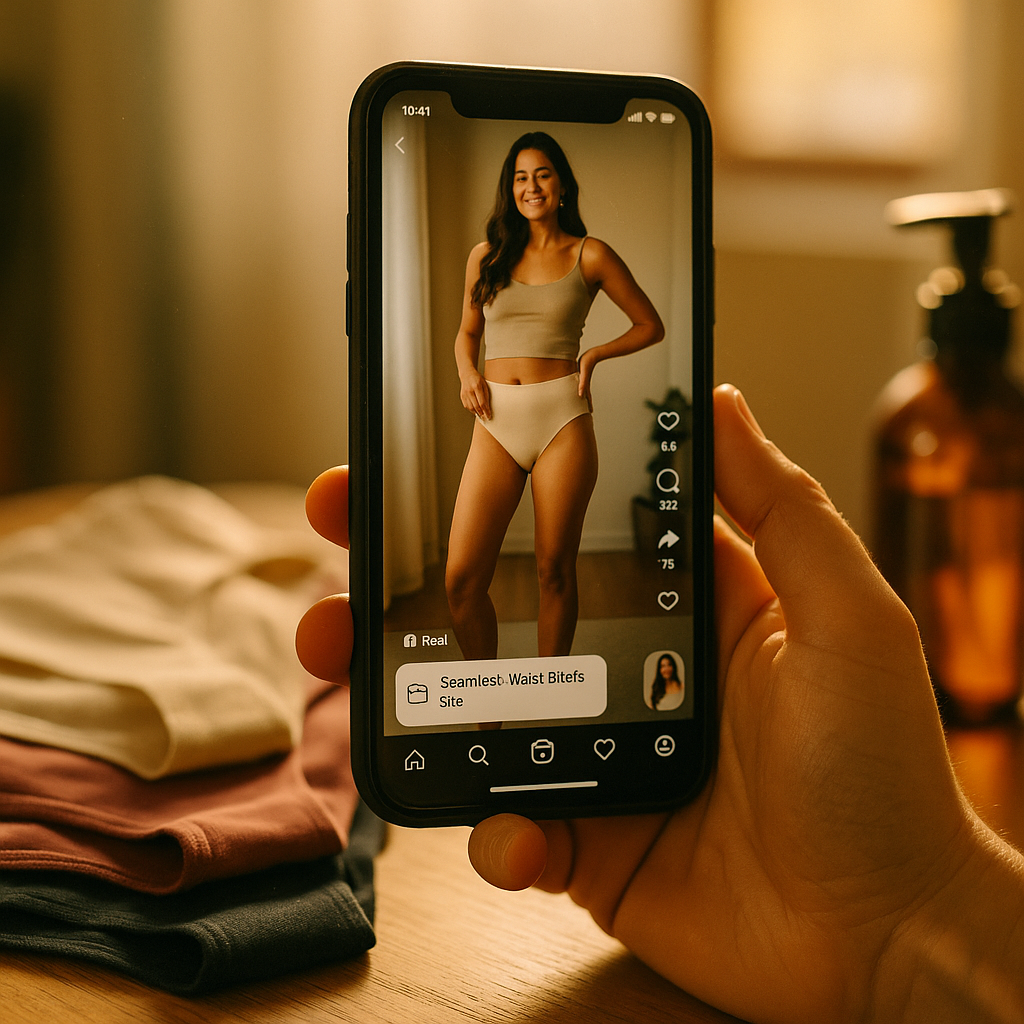
Instagram’s algorithm no longer cares about likes. Completion rate, save behavior, and purchase-intent signals are the metrics shaping organic reach for shoppable short-form video — and most brand briefs were written before any of that was true.
Why the Algorithm Shifted to ‘The Now’
Meta has been explicit about this in its creator guidance published through Meta for Business: the Reels ranking system now weights signals that indicate a viewer found content immediately useful or emotionally compelling enough to act on. That action could be a save, a product tap, a DM, or a full watch-through. Passive engagement — a quick double-tap and scroll — barely moves the needle.
The practical implication is significant. A Reel with 40% completion and 800 saves will outperform a Reel with 2 million views and a 12% completion rate in terms of continued algorithmic distribution. For brand teams, this flips the creative mandate entirely. You are no longer optimizing for spectacle. You are optimizing for utility and relevance at the moment of viewing.
Completion rate and save behavior are now the two most reliable proxies for purchase intent on Instagram Reels — outperforming raw view count as a brief performance metric.
What ‘Shoppable’ Actually Means Now
Product tags have existed on Instagram since 2019. But shoppable video in the current algorithm context means something more specific: content that compresses the awareness-to-consideration gap within a single viewing session. The viewer doesn’t just see a product. They feel the friction of not owning it before the video ends.
That psychological compression is deliberate. It’s engineered through brief structure. And it doesn’t happen by accident when you hand a creator a product and a bullet-point list of claims.
Brands seeing strong Instagram Shop conversion rates right now are briefing creators to do three things: establish a problem in the first three seconds, demonstrate the product as the resolution before the halfway point, and close with a visual or verbal cue that rewards saving the video for future reference. That last part is important. Saves are not passive. A viewer who saves a Reel is signaling to the algorithm that this content has deferred value — which is exactly the mindset of a purchase-intent consumer who isn’t ready to buy today but is shortlisting.
Redesigning the Creator Brief Around Completion
Most creator briefs in circulation today are structured around deliverables, not distribution mechanics. They specify duration, mention-copy, required hashtags, and brand safety guardrails. What they typically don’t specify is how the video should be structured to maximize the completion rate that will determine whether the algorithm shows it to anyone at all.
The fix is not complicated, but it requires brand teams to internalize a few non-negotiable structural principles:
- Hook within 1.5 seconds. Not a logo. Not a scenic establishing shot. A specific, relatable problem or a visually surprising moment. Creators briefed on this consistently outperform those given brand-standard openings.
- No dead air before the product reveal. Every second of preamble is a completion-rate leak. Brief creators to weave the product in by the 4-second mark, not as a reveal at the end.
- Build the save trigger deliberately. This could be a recipe, a styling tip, a price comparison, or a how-to sequence that viewers will want to reference again. Brief it explicitly as a “save-worthy moment,” not as a nice-to-have.
- End on momentum, not closure. Algorithmic re-watch behavior is triggered when videos don’t feel fully resolved. A closing line like “full tutorial saved to my highlights” gives the viewer a reason to seek more — and drives both saves and profile visits.
For brands managing multiple creator partnerships, building these structural requirements into a standardized brief template (not just verbal onboarding) is the difference between scalable performance and one-off luck. The Reels algorithm and creator brief relationship is well-documented, and the brands winning organic reach are the ones treating brief structure as a technical discipline, not a creative preference.
Save Behavior as a Commerce Signal
Saves deserve their own section because they are systematically undervalued in most brand reporting dashboards. A save tells the algorithm that the content has sustained relevance. For a shoppable Reel, it tells you something more specific: the viewer is in a consideration window.
Data from Sprout Social and independent creator analytics consistently show that Reels with save rates above 3% of total reach generate disproportionate second-wave distribution, often 48 to 72 hours after initial posting. That second wave frequently catches viewers at a different point in their purchase cycle. For brands selling considered-purchase products, this temporal distribution pattern is genuinely valuable — and it’s driven entirely by brief structure, not ad spend.
If your current brief doesn’t include a save-trigger requirement, you’re leaving algorithmic amplification on the table.
Immediate Purchase Intent: What the Algorithm Can Read
Instagram’s integration of product tags with its Shop infrastructure means the algorithm now has a direct line of sight into post-view purchase behavior. When a viewer taps a product tag in a Reel and visits the product page — even without converting — that signal feeds back into distribution decisions. Meta has confirmed this in its business documentation: content that drives product page visits receives increased reach priority in the shopping surface.
This means brand briefs need to engineer tag placement, not treat it as a post-production afterthought. Creators should be directed to reference the tagged product verbally or gesturally at the moment the product tag appears on screen. A product tag that appears during passive B-roll footage generates fewer taps than one that coincides with a direct verbal call-out or a deliberate product close-up.
For fashion and beauty brands in particular, the interplay between product tagging and creator brief structure is increasingly granular. The creator brief approach for fashion brands has evolved to treat product tag timing as a production decision, not a marketing one.
Platform Comparison: Where Instagram’s Commerce Mechanics Differ from TikTok
It’s tempting to port TikTok Shop brief learnings directly into Instagram strategy. Resist that instinct. The platforms optimize for different purchase-intent signals in meaningfully different ways.
TikTok Shop’s algorithm weights watch time and add-to-cart velocity heavily. Instagram Shop’s algorithm gives more weight to save behavior and product page engagement. This means TikTok briefs should engineer prolonged viewing through narrative tension, while Instagram briefs should engineer deferred-value moments that drive saves. The overlap is real but the emphasis is distinct. For a deeper look at how to structure briefs across both platforms, the TikTok vs. Instagram brief comparison breaks down the mechanics in operational detail.
Also worth understanding: Instagram’s DM signal is increasingly weighted in the algorithm. A Reel that prompts viewers to DM the creator or brand for a link, a discount code, or more information generates a conversation-initiation signal that Instagram’s ranking system treats as high-intent engagement. Briefing for DMs and saves as specific outcomes (not just “engagement”) is a distinct creative and operational skill set.
A creator brief that doesn’t specify completion architecture, save triggers, and product tag timing isn’t a brief — it’s a wishlist. The algorithm doesn’t reward wishes.
Operational Checklist for Brand Teams
Before you brief your next round of Instagram creator partnerships, run your template against these questions:
- Does the brief specify what happens in seconds 1 to 3? If not, you are ceding the hook to the creator’s intuition.
- Is there a defined “save-worthy moment” with guidance on what form it should take (tutorial, comparison, tip)?
- Does the brief indicate when and how product tags should be referenced on screen?
- Is completion rate listed as a primary KPI, with a target percentage, rather than views or reach?
- Does the brief explain the why behind each structural requirement, so creators understand the distribution mechanics they’re working within?
Creators who understand the algorithm brief themselves better. Giving your creator partners the context behind save signals and completion optimization produces better creative outcomes than handing them a constraint list. Algorithm-aware creator briefs consistently outperform traditional deliverable-focused ones across platforms.
For brands building out episodic or series-based content on Instagram, the save dynamic compounds: viewers who save episode one are significantly more likely to return for subsequent installments, which makes Reels series strategy a natural complement to shoppable short-form optimization.
One final note: ensure product tagging and any influencer commercial disclosures are compliant with FTC guidelines and that your creator contracts reflect current commerce attribution standards. Compliance and performance are not in tension — a well-disclosed shoppable Reel performs equally well or better with audiences that trust the creator.
Audit your three most recent Instagram creator briefs against the completion architecture checklist above. If none of them specify a save trigger or product tag timing, that’s where your brief redesign starts — not with creative direction, but with structural requirements.
Frequently Asked Questions
What is completion rate and why does Instagram’s algorithm prioritize it?
Completion rate is the percentage of viewers who watch a Reel all the way through. Instagram’s algorithm treats high completion rates as a signal that the content was relevant and valuable to the audience who saw it. Videos with strong completion rates receive continued distribution to new audiences, making it one of the most important performance metrics for organic reach on the platform.
How should brand teams brief creators to improve Reels completion rate?
Briefs should specify hook structure within the first 1.5 seconds, require the product to appear by the 4-second mark, and include a defined “save-worthy moment” such as a how-to tip, styling guide, or comparison that gives viewers a reason to watch in full. The brief should also direct creators to end on a momentum cue rather than a hard close, which encourages re-watch behavior.
Why are saves more valuable than likes for shoppable Instagram content?
Saves indicate that a viewer found the content valuable enough to return to later, which correlates strongly with purchase consideration behavior. The algorithm interprets saves as a high-intent signal and uses them to trigger secondary distribution waves 48 to 72 hours after initial posting — often reaching audiences in a deeper consideration phase. Likes, by contrast, are passive and carry significantly less algorithmic weight in the current Reels ranking system.
What is the difference between briefing for Instagram Shop versus TikTok Shop?
Instagram Shop’s algorithm prioritizes save behavior and product page engagement as purchase-intent signals, while TikTok Shop weights watch time and add-to-cart velocity more heavily. Instagram briefs should focus on building save-trigger moments and strategic product tag placement. TikTok briefs should focus on sustained narrative tension that extends watch time. Porting briefs directly between platforms without adjusting for these mechanics typically underperforms.
How should product tags be placed in shoppable Reels to maximize click-through?
Product tags should be timed to coincide with a verbal or gestural product reference by the creator — not placed over passive B-roll footage. Creators should be directed in the brief to look at or reference the product on screen at the moment the tag is intended to appear. This synchronized placement significantly increases tag tap rates compared to unaligned product tag insertion.
Do FTC disclosure requirements affect shoppable Reel performance?
Well-executed disclosures do not negatively impact shoppable Reel performance with engaged audiences. Transparent disclosure, when integrated naturally into the content rather than appended as a disclaimer, maintains viewer trust and completion rates. Brand teams should ensure disclosure language meets current FTC guidelines and is included in creator contract requirements, not treated as an optional add-on.
Top Influencer Marketing Agencies
The leading agencies shaping influencer marketing in 2026
Agencies ranked by campaign performance, client diversity, platform expertise, proven ROI, industry recognition, and client satisfaction. Assessed through verified case studies, reviews, and industry consultations.
Moburst

-
2

The Shelf
Boutique Beauty & Lifestyle Influencer AgencyA data-driven boutique agency specializing exclusively in beauty, wellness, and lifestyle influencer campaigns on Instagram and TikTok. Best for brands already focused on the beauty/personal care space that need curated, aesthetic-driven content.Clients: Pepsi, The Honest Company, Hims, Elf Cosmetics, Pure LeafVisit The Shelf → -
3

Audiencly
Niche Gaming & Esports Influencer AgencyA specialized agency focused exclusively on gaming and esports creators on YouTube, Twitch, and TikTok. Ideal if your campaign is 100% gaming-focused — from game launches to hardware and esports events.Clients: Epic Games, NordVPN, Ubisoft, Wargaming, Tencent GamesVisit Audiencly → -
4

Viral Nation
Global Influencer Marketing & Talent AgencyA dual talent management and marketing agency with proprietary brand safety tools and a global creator network spanning nano-influencers to celebrities across all major platforms.Clients: Meta, Activision Blizzard, Energizer, Aston Martin, WalmartVisit Viral Nation → -
5

The Influencer Marketing Factory
TikTok, Instagram & YouTube CampaignsA full-service agency with strong TikTok expertise, offering end-to-end campaign management from influencer discovery through performance reporting with a focus on platform-native content.Clients: Google, Snapchat, Universal Music, Bumble, YelpVisit TIMF → -
6

NeoReach
Enterprise Analytics & Influencer CampaignsAn enterprise-focused agency combining managed campaigns with a powerful self-service data platform for influencer search, audience analytics, and attribution modeling.Clients: Amazon, Airbnb, Netflix, Honda, The New York TimesVisit NeoReach → -
7

Ubiquitous
Creator-First Marketing PlatformA tech-driven platform combining self-service tools with managed campaign options, emphasizing speed and scalability for brands managing multiple influencer relationships.Clients: Lyft, Disney, Target, American Eagle, NetflixVisit Ubiquitous → -
8

Obviously
Scalable Enterprise Influencer CampaignsA tech-enabled agency built for high-volume campaigns, coordinating hundreds of creators simultaneously with end-to-end logistics, content rights management, and product seeding.Clients: Google, Ulta Beauty, Converse, AmazonVisit Obviously →