


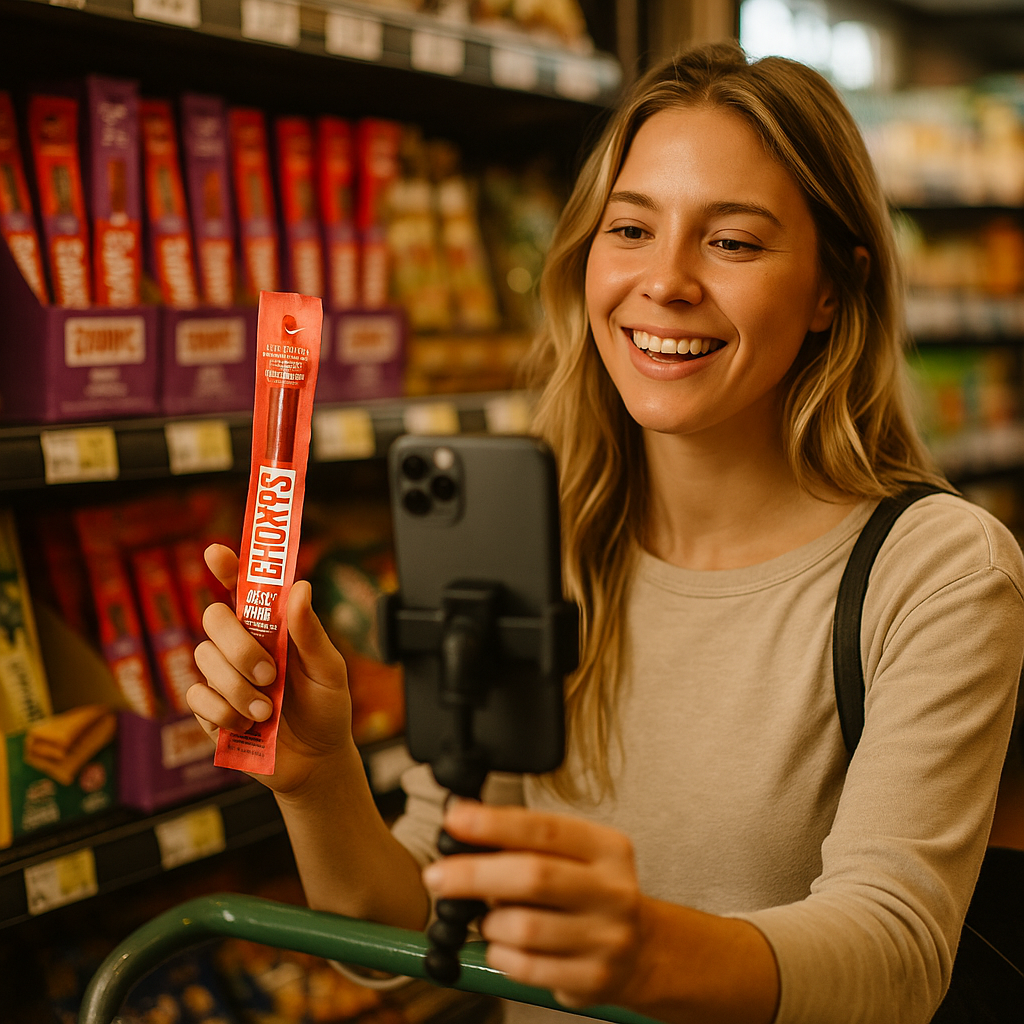
Retail media spend now eats up double-digit percentages of CPG marketing budgets, and slotting fees alone can run six figures per SKU. Chomps skipped both. Using a nano-to-micro creator wave strategy, the meat snack brand built enough shelf demand to win retail placement without writing a single check to a retail media network. The nano-to-micro creator wave approach is now one of the most replicable playbooks in CPG.
The Shelf Space Problem Nobody Talks About
Getting into Target or Kroger is one thing. Staying there is another. Retailers track velocity — units sold per store per week — and if a new SKU doesn’t move fast enough, it gets delisted within a review cycle, often 12 to 16 weeks. Most challenger brands try to buy their way past this with retail media placements, endcap fees, and digital coupon pushes. Chomps took a different route: it manufactured velocity before the product even hit certain shelves, using creator content to build demand that retail buyers couldn’t ignore.
This isn’t a new story for Chomps. The brand’s earlier creator seeding work has been covered in detail, including how Chomps built a meat stick category from a near-empty shelf category years ago. What’s different now is the mechanics of the wave structure itself — and how it’s being used specifically to win and defend shelf space rather than just drive DTC sales.
What a “Creator Wave” Actually Means
A creator wave isn’t a single influencer drop. It’s a sequenced release of content across creator tiers, timed to build a compounding social proof effect before a retail or algorithmic decision point.
- Wave 1 — Nano (1K–10K followers): Dozens of hyper-authentic posts, usually gym-adjacent, parenting, or keto/carnivore niche accounts, seeded with free product weeks ahead of a retail reset.
- Wave 2 — Micro (10K–100K): A smaller batch of creators reacts to the nano buzz, often referencing “everyone’s talking about this” framing, which reads as organic rather than manufactured.
- Wave 3 — Mid-tier amplification: A handful of larger creators or category authorities (nutrition coaches, CrossFit influencers) validate the trend, giving retail buyers a screenshot-able narrative.
The sequencing matters more than the spend. Nielsen and Kantar data on shelf-set decisions consistently show buyers weighing social proof and search demand alongside historical velocity, especially for new-to-category items. Chomps essentially engineered that proof before asking for the shelf.
Chomps didn’t buy shelf space with retail media dollars — it earned it with a documented surge in organic social mentions that buyers could point to in category reviews.
Why Nano Creators Come First, Not Last
Most brands treat nano-influencers as an afterthought, a cheap way to pad impressions. Chomps flips that. Nano creators are the seed layer specifically because their audiences trust them more than they trust ads or even mid-tier influencers. A 2023 Edelman trust study found consumers were significantly more likely to trust recommendations from “someone like me” than from celebrities or macro influencers. That trust translates into comment sections full of “where do I buy this” — the exact kind of unprompted demand signal that retail buyers and category managers now monitor.
The same principle underpins other brand strategies covered on this site, including how Wyze built a cult camera brand and how Chamberlain Coffee won Target shelf space using nearly identical seeding logic before scaling up creator tiers.
The Retail Media Trap Chomps Avoided
Retail media networks like Walmart Connect, Kroger Precision Marketing, and Target Roundel are effective — but they’re also expensive and increasingly saturated. CPG brands are now spending upward of 10-13% of revenue on retail media in some categories, according to eMarketer’s retail media forecasts. That’s before slotting fees, co-op marketing, and demo costs.
Chomps instead funneled that budget into creator gifting, product seeding logistics, and a lean team managing outreach. The math is stark: a nano-creator wave costs a fraction of a single quarter of retail media placement, and the content lives permanently on social platforms, continuing to drive search and consideration long after the campaign ends.
How the Waves Actually Drove Shelf Wins
Chomps didn’t walk into buyer meetings with vibes. It walked in with data: spikes in branded search volume, TikTok Shop conversion data (where applicable), and screenshots of organic UGC volume tied to specific SKUs like the new flavor extensions. Retail buyers, particularly at regional grocery chains and club stores, use this as a proxy for shelf-ready demand when historical POS data doesn’t exist yet.
This is the part most brands miss. Creator content isn’t just a sales channel — it’s a sales enablement asset for the buyer conversation itself. A single Instagram Reel with 200K organic views and a comment section begging for restock is more persuasive to a category manager than a media plan deck.
- Nano wave generated roughly 300+ pieces of authentic content per flavor launch cycle
- Micro wave amplified reach into adjacent fitness and wellness niches
- Mid-tier creators supplied “proof” content buyers could reference directly in line reviews
Similar sequencing logic shows up in REI’s nano-influencer trail review strategy, where localized trust-building content drove foot traffic without a national ad buy.
Nano-to-Micro vs. Macro: Why Tier Order Matters
Plenty of brands run creator waves backward — start with a big name, hope it trickles down. That rarely works for a category-defining CPG product because macro creators’ audiences are broad, not niche-qualified. Meat snacks needed carnivore-diet accounts, gym-goers, and parents packing lunches, not general lifestyle influencers with no category relevance.
The nano-to-micro-to-mid ladder mirrors what worked for Vuori’s nano-to-macro creator ladder in menswear and Gap’s tiered creator seeding for denim. The pattern holds across categories: smaller, more credible voices first, scale second.
Measurement Without Retail Media Dashboards
Here’s the awkward truth: without a retail media platform’s built-in attribution, brands have to get creative about proving ROI to leadership. Chomps reportedly leaned on a mix of:
- Branded search lift (via Google Trends and internal SEO tracking)
- UGC volume and sentiment tracking across TikTok and Instagram
- Direct-to-retailer sales velocity reports post-launch, compared against non-seeded control markets
This control-market approach is the same rigor used in nano-creator campaigns that beat paid search CPA for other snack brands, and it’s becoming the default way challenger brands justify creator budgets to CFOs who are used to line-item retail media reporting.
Brands considering this model should also review FTC disclosure requirements before scaling any creator wave. The FTC’s endorsement guidelines apply regardless of creator tier or whether product was gifted or paid, and non-compliance risk grows as wave volume increases into the hundreds of creators.
What This Means for Your Next Category Launch
If you’re a brand manager staring down a retail media quote that eats a quarter’s budget, the Chomps model offers a legitimate alternative path — but it’s not free. It requires product seeding logistics, creator relationship management, and a willingness to move slower and build proof before asking for shelf space. It’s operationally harder than writing a check to Roundel. It’s also considerably cheaper, and the content asset library it builds keeps compounding value long after the buyer meeting is over.
Next step: Before your next retail line review, audit whether you have organic creator proof points to bring to the table — if not, start a nano-tier seeding wave at least one full sales cycle ahead of your pitch, not after you’ve already secured the shelf.
Frequently Asked Questions
What is a nano-to-micro creator wave?
It’s a sequenced influencer marketing strategy where brands seed product to nano-influencers (1,000–10,000 followers) first, then layer in micro and mid-tier creators to amplify and validate the initial organic buzz, building a compounding demand signal over several weeks.
How did Chomps win shelf space without retail media spend?
Chomps used organic UGC volume, branded search lift, and social proof from nano and micro creators as evidence of consumer demand, presenting that data to retail buyers instead of paying for retail media placements or slotting guarantees.
Is this strategy only for CPG or food brands?
No. The same tiered creator seeding approach has worked across categories including apparel, coffee, supplements, and electronics, as seen in brands like Vuori, Chamberlain Coffee, and Wyze.
How much does a creator wave typically cost compared to retail media?
Costs vary by category and creator count, but nano and micro creator gifting programs generally cost a fraction of a single quarter’s retail media spend, since compensation is often product-based rather than cash-per-impression.
What are the compliance risks with large-scale creator seeding?
Brands running hundreds of creator relationships must ensure consistent FTC disclosure compliance across every post, regardless of whether the creator was paid or simply gifted product, to avoid regulatory exposure.
Top Influencer Marketing Agencies
The leading agencies shaping influencer marketing in 2026
Agencies ranked by campaign performance, client diversity, platform expertise, proven ROI, industry recognition, and client satisfaction. Assessed through verified case studies, reviews, and industry consultations.
Moburst

-
2

The Shelf
Boutique Beauty & Lifestyle Influencer AgencyA data-driven boutique agency specializing exclusively in beauty, wellness, and lifestyle influencer campaigns on Instagram and TikTok. Best for brands already focused on the beauty/personal care space that need curated, aesthetic-driven content.Clients: Pepsi, The Honest Company, Hims, Elf Cosmetics, Pure LeafVisit The Shelf → -
3

Audiencly
Niche Gaming & Esports Influencer AgencyA specialized agency focused exclusively on gaming and esports creators on YouTube, Twitch, and TikTok. Ideal if your campaign is 100% gaming-focused — from game launches to hardware and esports events.Clients: Epic Games, NordVPN, Ubisoft, Wargaming, Tencent GamesVisit Audiencly → -
4

Viral Nation
Global Influencer Marketing & Talent AgencyA dual talent management and marketing agency with proprietary brand safety tools and a global creator network spanning nano-influencers to celebrities across all major platforms.Clients: Meta, Activision Blizzard, Energizer, Aston Martin, WalmartVisit Viral Nation → -
5

The Influencer Marketing Factory
TikTok, Instagram & YouTube CampaignsA full-service agency with strong TikTok expertise, offering end-to-end campaign management from influencer discovery through performance reporting with a focus on platform-native content.Clients: Google, Snapchat, Universal Music, Bumble, YelpVisit TIMF → -
6

NeoReach
Enterprise Analytics & Influencer CampaignsAn enterprise-focused agency combining managed campaigns with a powerful self-service data platform for influencer search, audience analytics, and attribution modeling.Clients: Amazon, Airbnb, Netflix, Honda, The New York TimesVisit NeoReach → -
7

Ubiquitous
Creator-First Marketing PlatformA tech-driven platform combining self-service tools with managed campaign options, emphasizing speed and scalability for brands managing multiple influencer relationships.Clients: Lyft, Disney, Target, American Eagle, NetflixVisit Ubiquitous → -
8

Obviously
Scalable Enterprise Influencer CampaignsA tech-enabled agency built for high-volume campaigns, coordinating hundreds of creators simultaneously with end-to-end logistics, content rights management, and product seeding.Clients: Google, Ulta Beauty, Converse, AmazonVisit Obviously →