


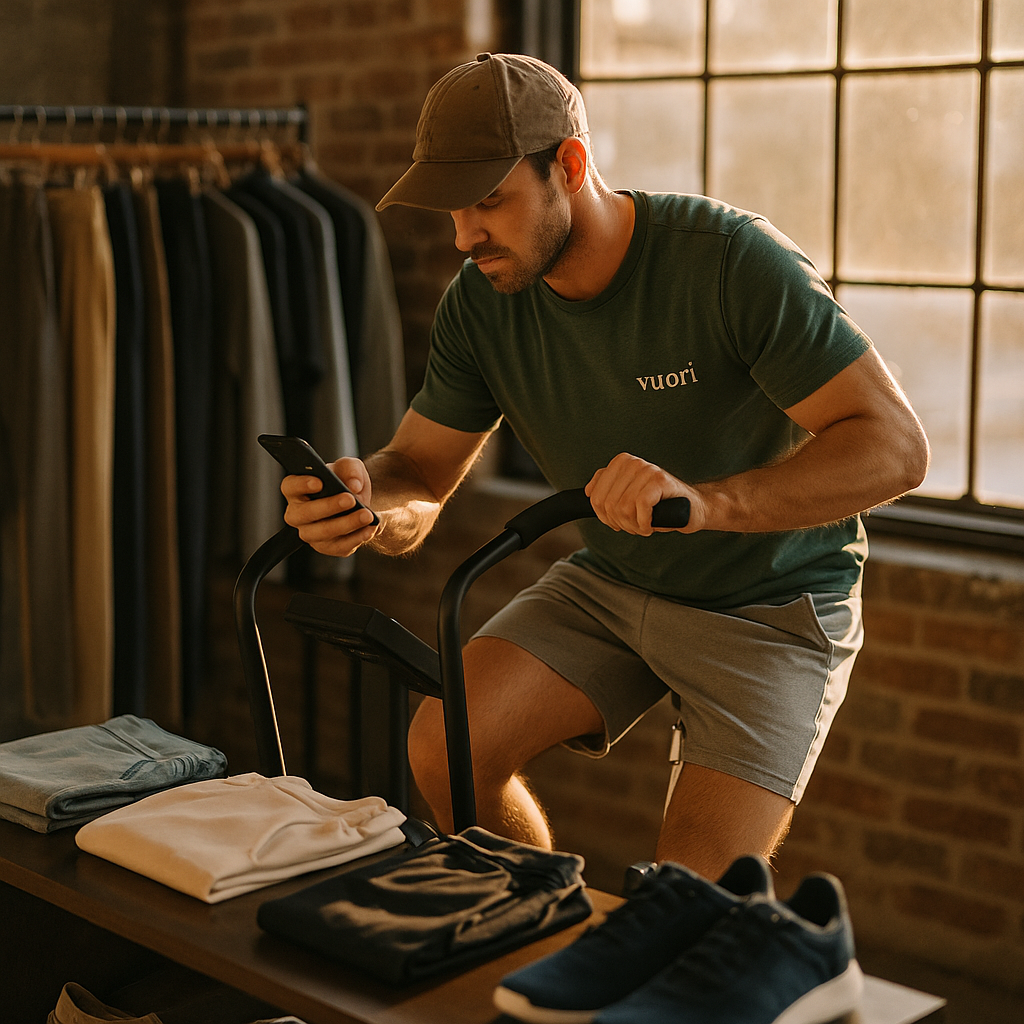
Menswear buyers hate being sold to. So how did Vuori move into a category dominated by legacy giants, with zero discount codes and no influencer-fee bidding war? The answer is a nano-to-macro creator ladder that built credibility layer by layer, before a single macro deal ever got signed.
Most brands entering a new category do the opposite. They buy reach first, credibility never. Vuori flipped the sequence, and the case study is worth studying line by line if you’re a brand strategist trying to break into a skeptical vertical without torching margin.
The Problem With Buying Your Way Into Menswear
Athleisure for men is crowded, and men are notoriously slow to switch brands. Lululemon, Rhone, and Alo Yoga already had mindshare. A new entrant typically has two levers: discount aggressively to force trial, or pay macro influencers a premium to borrow their audience. Both are expensive, and both train customers to wait for a deal.
Vuori chose neither. Instead, it built what internal marketing teams have described as a tiered seeding structure: start with nano-creators who look like real customers, prove the product works through repeated organic mentions, then layer in mid-tier and macro talent once demand signals are already visible. This mirrors what worked for Aritzia’s tiered creator seeding approach and the pattern documented in Gap’s tiered creator strategy for denim. The category differs, but the mechanics of trust-building before scale are nearly identical.
Vuori didn’t buy attention. It rented credibility in small increments, then let compounding word-of-mouth do the expensive part for free.
Step One: Nano-Creators as Product Testers, Not Ad Units
The ladder starts at the bottom, deliberately. Vuori’s seeding programs prioritized nano-creators, typically men with under 20,000 followers, active in fitness, golf, or everyday-carry content niches. These aren’t influencers in the traditional sense. They’re guys who post workout clips and weekend content anyway, and Vuori simply made sure product showed up in that content.
This is the same logic REI used with trail review seeding: real users, real settings, unscripted reactions. No hard sell. No promo code. Just a guy in his DreamKnit joggers saying the fabric doesn’t sag after a workout.
Why does this matter for menswear specifically? Men are far more likely to trust a peer’s casual mention than a polished ad, according to research on social trust and purchase behavior. A macro creator hawking joggers reads as an ad. A nano-creator wearing them to the gym three times reads as a habit. Vuori bet on habit.
Nano seeding also solved a cold-start problem cheaply. Gifting product costs a fraction of a paid placement, and volume compensates for reach. Send product to 200 nano-creators and even a 15% organic post rate generates dozens of authentic touchpoints, at a cost that would barely cover one macro placement.
Why Skip Straight to Macro Feels Efficient But Isn’t
It’s tempting to shortcut this. Macro reach looks efficient on a media plan: one creator, one big number, done. But reach without trust in a new category just buys impressions, not conversions. Category entrants who lead with macro spend often see high CPMs and disappointing conversion, because the audience has no prior context for the brand.
Vuori’s team understood something a lot of performance marketers miss: in menswear, social proof needs repetition across ordinary people before a celebrity endorsement means anything. This is the exact insight behind Olipop’s category-building playbook, where whitelisting and layered creator tiers built category trust before any big-name push.
Step Two: Mid-Tier Creators Add Context and Category Framing
Once nano seeding generated a baseline of organic content, Vuori moved to mid-tier creators, generally 50,000 to 300,000 followers, in fitness, golf, and men’s lifestyle content. This tier does something nano-creators can’t: they frame the product within a lifestyle narrative. A nano-creator proves the product works. A mid-tier creator explains why it fits a specific identity, whether that’s “quiet luxury athleisure” or “guy who takes his fitness seriously but isn’t a gym bro.”
This is the framing stage, and it’s where a lot of brands get greedy and skip straight to celebrity-tier partnerships. Vuori resisted. Mid-tier creators were paid, but modestly, and the deals emphasized long-form content (YouTube reviews, TikTok “what I wear to the gym” formats) over one-off posts. That longer format matters for menswear because purchase consideration cycles are longer than in beauty or snacking categories. Men research before they buy performance apparel; they don’t impulse-buy joggers off a six-second clip.
Compare this to how L’Oréal’s tiered roster mixed content formats by tier to lift overall view counts by 82%. Different category, same underlying principle: match the creator tier to the content format that actually persuades that segment of buyer.
Step Three: Macro and Athlete Partnerships Close the Loop
Only after nano and mid-tier layers built organic buzz did Vuori bring in macro names and athlete partnerships. By this point the brand wasn’t introducing itself cold. It was validating something the algorithm and the audience had already started to believe.
This sequencing changes the entire economics of a macro deal. A macro creator entering a market with zero prior context has to do all the persuasion work alone, which is expensive and slow. A macro creator entering a market where nano and mid-tier voices have already normalized the product just needs to add scale and aspiration. The heavy lifting is already done.
By the time Vuori signed bigger names, the audience wasn’t being introduced to the brand. They were having a suspicion confirmed.
It’s a subtle distinction, but it’s the difference between a macro post that converts and one that just racks up vanity metrics. Marketers tracking creator ROI should recognize this pattern; it’s the same reason Chipotle’s TikTok Go data showed commission-based payouts outperforming flat fees once organic demand was already established. Scale spend when a signal exists, not before.
No Discounts, No Promo Codes, No Race to the Bottom
Here’s the part that should get more attention: Vuori’s creator strategy ran with virtually no discount-driven urgency. No “use code CREATOR15” links, no flash sales tied to influencer drops. That’s unusual, and it’s a deliberate positioning choice.
Discount-driven influencer programs train an audience to associate a brand with deal-seeking. That’s fine for CPG snacks or beauty dupes, categories where Poppi rebuilt trust through micro-creator seeding without needing premium pricing to hold. But menswear performance apparel lives or dies on perceived quality. Vuori’s price point (often $70-plus for a pair of joggers) needs to feel earned, not negotiated down by a creator’s link.
By keeping creator content commission-free of discount mechanics and focused on product experience instead, Vuori protected full-price selling across its entire funnel. Nano-creators posted because they liked the product, not because they got a kickback tied to a coupon. That distinction shows up in brand perception surveys and, more importantly, in gross margin.
What This Means for Attribution and Reporting
Skipping discount codes creates a real operational challenge: how do you measure ROI without a trackable coupon? Vuori’s team reportedly leaned on a mix of share-of-voice tracking, branded search lift, and retail sell-through data at wholesale partners, rather than last-click attribution tied to promo codes.
This is a harder measurement model to build, but it’s more honest. Coupon-driven attribution overcredits the last touch and undercredits the nano-creator who built awareness three weeks earlier. Brands serious about creator-driven category entry should budget for incrementality testing and geo-lift studies, not just UTM tracking. For more on measurement models that don’t rely on discount mechanics, marketers can reference eMarketer’s influencer measurement research and the FTC’s endorsement disclosure guidance, which still applies regardless of whether a code is attached.
What Other Brands Can Steal From This Playbook
- Sequence, don’t stack. Nano first, mid-tier for framing, macro to confirm. Running all three tiers simultaneously without a discovery phase wastes the macro budget.
- Match content format to purchase cycle length. Long consideration categories need longer-form creator content, not just short clips.
- Resist the discount reflex. If premium positioning is the goal, keep creator programs product-led, not code-led.
- Build measurement before you need it. Branded search lift and sell-through data matter more than promo codes when there’s no coupon to track.
- Let nano-creators be normal. Overproduced content undermines the exact trust signal you’re paying for.
Brands like Warby Parker with nano try-on content and Viator with micro-creator bookings have proven this same tiered logic works well beyond apparel. The category changes. The sequencing discipline doesn’t.
FAQs
Frequently Asked Questions
What is a nano-to-macro creator ladder?
It’s a sequencing strategy where brands seed product with nano-creators first to build organic trust and content volume, then layer in mid-tier creators for lifestyle framing, and finally bring in macro or celebrity talent once demand signals already exist. The goal is to make each tier’s job easier by building on proof from the tier before it.
Why did Vuori avoid discount codes in its creator strategy?
Discount-driven influencer content trains audiences to associate a brand with deal-seeking, which undermines premium positioning. Since Vuori’s menswear pricing depends on perceived quality, the brand kept creator content focused on product experience rather than promo mechanics to protect full-price sales.
How do you measure creator ROI without promo codes?
Brands typically rely on branded search lift, share-of-voice tracking, geo-lift or incrementality testing, and retail sell-through data instead of last-click coupon attribution. It’s a harder model to build but gives more accurate credit to upper-funnel nano and mid-tier content.
Does this strategy work outside of apparel?
Yes. The same nano-to-macro sequencing has shown results in categories from snacks to eyewear to travel bookings, because the underlying principle, building trust before buying reach, isn’t category-specific.
How many nano-creators does a brand typically need to seed before moving up tiers?
There’s no fixed number, but brands often seed product to 100-300 nano-creators as a baseline, watching organic post rate and engagement quality before committing budget to mid-tier or macro talent.
Next step: before signing a single macro deal, audit whether your nano-tier seeding has actually generated organic proof points. If it hasn’t, you’re not ready to scale, you’re just buying reach without a foundation.
FAQs
What is a nano-to-macro creator ladder?
It’s a sequencing strategy where brands seed product with nano-creators first to build organic trust and content volume, then layer in mid-tier creators for lifestyle framing, and finally bring in macro or celebrity talent once demand signals already exist. The goal is to make each tier’s job easier by building on proof from the tier before it.
Why did Vuori avoid discount codes in its creator strategy?
Discount-driven influencer content trains audiences to associate a brand with deal-seeking, which undermines premium positioning. Since Vuori’s menswear pricing depends on perceived quality, the brand kept creator content focused on product experience rather than promo mechanics to protect full-price sales.
How do you measure creator ROI without promo codes?
Brands typically rely on branded search lift, share-of-voice tracking, geo-lift or incrementality testing, and retail sell-through data instead of last-click coupon attribution. It’s a harder model to build but gives more accurate credit to upper-funnel nano and mid-tier content.
Does this strategy work outside of apparel?
Yes. The same nano-to-macro sequencing has shown results in categories from snacks to eyewear to travel bookings, because the underlying principle, building trust before buying reach, isn’t category-specific.
How many nano-creators does a brand typically need to seed before moving up tiers?
There’s no fixed number, but brands often seed product to 100-300 nano-creators as a baseline, watching organic post rate and engagement quality before committing budget to mid-tier or macro talent.
Top Influencer Marketing Agencies
The leading agencies shaping influencer marketing in 2026
Agencies ranked by campaign performance, client diversity, platform expertise, proven ROI, industry recognition, and client satisfaction. Assessed through verified case studies, reviews, and industry consultations.
Moburst

-
2

The Shelf
Boutique Beauty & Lifestyle Influencer AgencyA data-driven boutique agency specializing exclusively in beauty, wellness, and lifestyle influencer campaigns on Instagram and TikTok. Best for brands already focused on the beauty/personal care space that need curated, aesthetic-driven content.Clients: Pepsi, The Honest Company, Hims, Elf Cosmetics, Pure LeafVisit The Shelf → -
3

Audiencly
Niche Gaming & Esports Influencer AgencyA specialized agency focused exclusively on gaming and esports creators on YouTube, Twitch, and TikTok. Ideal if your campaign is 100% gaming-focused — from game launches to hardware and esports events.Clients: Epic Games, NordVPN, Ubisoft, Wargaming, Tencent GamesVisit Audiencly → -
4

Viral Nation
Global Influencer Marketing & Talent AgencyA dual talent management and marketing agency with proprietary brand safety tools and a global creator network spanning nano-influencers to celebrities across all major platforms.Clients: Meta, Activision Blizzard, Energizer, Aston Martin, WalmartVisit Viral Nation → -
5

The Influencer Marketing Factory
TikTok, Instagram & YouTube CampaignsA full-service agency with strong TikTok expertise, offering end-to-end campaign management from influencer discovery through performance reporting with a focus on platform-native content.Clients: Google, Snapchat, Universal Music, Bumble, YelpVisit TIMF → -
6

NeoReach
Enterprise Analytics & Influencer CampaignsAn enterprise-focused agency combining managed campaigns with a powerful self-service data platform for influencer search, audience analytics, and attribution modeling.Clients: Amazon, Airbnb, Netflix, Honda, The New York TimesVisit NeoReach → -
7

Ubiquitous
Creator-First Marketing PlatformA tech-driven platform combining self-service tools with managed campaign options, emphasizing speed and scalability for brands managing multiple influencer relationships.Clients: Lyft, Disney, Target, American Eagle, NetflixVisit Ubiquitous → -
8

Obviously
Scalable Enterprise Influencer CampaignsA tech-enabled agency built for high-volume campaigns, coordinating hundreds of creators simultaneously with end-to-end logistics, content rights management, and product seeding.Clients: Google, Ulta Beauty, Converse, AmazonVisit Obviously →