


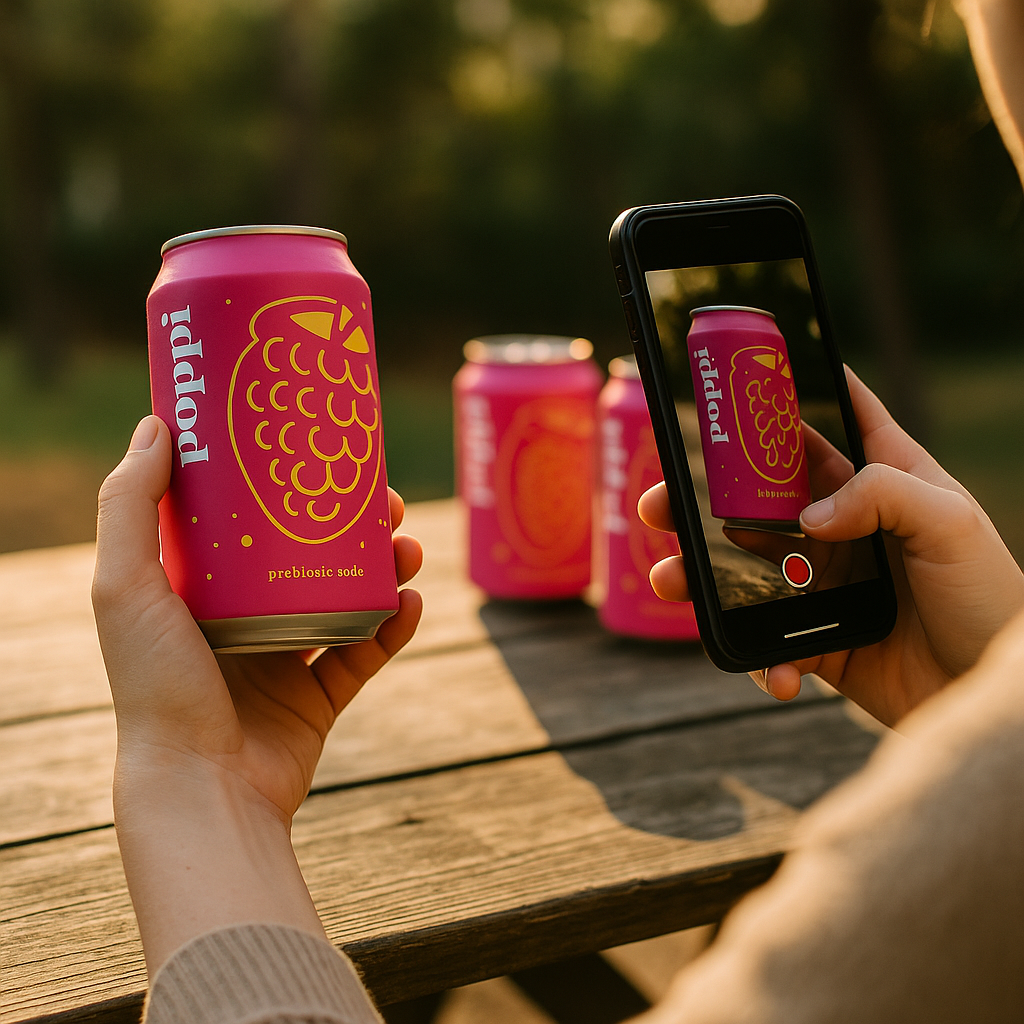
A $9 million class-action settlement would sink most beverage brands’ social channels for a year. Poppi’s micro-creator seeding strategy instead turned its prebiotic soda lawsuit into one of the sharpest trust-recovery plays in recent CPG history. The lesson for brand teams: when legal exposure meets public skepticism, your influencer roster might matter more than your PR statement.
The Lawsuit That Threatened the Brand’s Whole Premise
Poppi built its entire identity on gut health. Pastel cans, “prebiotic soda,” a founder-story about fixing sugary drinks — it worked. Then came the lawsuit alleging the company overstated the health benefits of its prebiotic content, claiming the actual functional fiber levels didn’t match the marketing. Poppi settled for roughly $8.9 million without admitting wrongdoing, but the reputational damage was already circulating on TikTok before the ink dried.
Here’s the uncomfortable truth about health-claims litigation: settling doesn’t settle anything with consumers. It just moves the conversation to a platform you don’t control. Comment sections filled with “so is this just soda now?” and “I feel scammed” — exactly the sentiment that kills repeat purchase behavior in a category where trust is the entire product.
A legal settlement resolves liability. It does not resolve the thousands of individual purchase decisions being made by skeptical consumers scrolling TikTok that same afternoon.
Why Poppi Didn’t Reach for a Celebrity Apology Tour
Most brands facing this kind of hit lean on paid media, a polished statement, maybe a celebrity partner to reassure the public. Poppi went the opposite direction. It leaned into micro-creator seeding — sending product to hundreds of smaller creators (generally in the 5K-100K follower range) rather than concentrating spend on a handful of mega-influencers or celebrity faces.
Why does this work better in a trust crisis? Because audiences don’t trust brand-controlled messaging right now. They trust peers. A creator with 22,000 followers who’s been drinking Poppi for two years and says “yeah, I read the lawsuit stuff, here’s what I actually think” carries more credibility than a celebrity spot that reads like it was written by legal. This mirrors what we’ve seen in other brand recovery and trust-building plays — see how Poppi used micro-creators to reframe the conversation entirely around real usage rather than legal defense.
The Mechanics of the Seeding Program
Poppi’s approach followed a pattern that’s becoming a playbook for CPG brands under scrutiny:
- Volume over concentration. Hundreds of nano and micro creators received product, rather than a handful of high-cost partnerships.
- No scripted defense. Creators weren’t handed talking points rebutting the lawsuit. They were given product and space to react honestly.
- Category-adjacent creators, not just beverage reviewers. Wellness, gut-health, and “what I eat in a day” creators were prioritized because their audiences already care about ingredient transparency.
- Repeat seeding cycles. Rather than a one-time send, creators received product across multiple flavor drops, building an ongoing relationship instead of a single transactional post.
This isn’t revolutionary in structure — it resembles the tiered seeding models brands like Gap used to sell out denim drops or the roster strategy behind L’Oréal’s creator tiering. What’s different is the objective. Poppi wasn’t optimizing for sales velocity. It was optimizing for perceived authenticity at scale, during a window when every branded post was going to get read skeptically.
Did It Actually Work? Reading the Signals
Sentiment and share-of-voice are harder to pin to a single dashboard than a sales lift, but the directional signals matter here. Engagement on Poppi’s owned channels didn’t collapse post-settlement the way brand teams often fear. UGC volume — creators posting about Poppi without direct brand ask — stayed active through the news cycle rather than drying up.
Compare that to what typically happens after a trust-damaging headline: organic mention volume craters, and the brand is forced to buy its way back into the conversation with paid media at a much higher CPA than it was paying before the crisis. Poppi’s continued presence in nano and micro-creator content suggests the seeding strategy kept genuine advocates talking, which is a far cheaper insurance policy than a reactive ad blitz.
Marketers should also note the category context. Prebiotic and gut-health claims are under increasing scrutiny — the FTC has made health-claim substantiation a clear enforcement priority, and functional beverage brands are operating in a higher-risk regulatory environment than a standard snack or apparel brand would. That’s exactly why the micro-creator approach matters more here than in a lower-stakes category: it lets real product experience, not brand copy, carry the credibility burden.
What Brand Teams Should Actually Copy
It’s tempting to read this case study and think “just send free product to small creators.” That’s the mechanism, not the strategy. The actual transferable lessons:
- Don’t script the recovery narrative. Scripted creator responses to a lawsuit read as damage control and get called out instantly. Give creators the product and trust them to be honest — even mildly critical honesty beats obvious PR spin.
- Diversify creator tiers before you need them. Brands that already have an active micro-creator base can activate it fast during a crisis. Brands starting from zero are stuck building trust infrastructure during the worst possible week.
- Treat compliance as a creative constraint, not an afterthought. Health and wellness brands especially need creator briefs that avoid restating the exact claims under legal scrutiny. That requires legal and marketing sitting in the same room, not sequential sign-off.
- Measure sentiment, not just conversion. A CPA dashboard won’t tell you if trust is recovering. Social listening tools and qualitative comment analysis matter more in this window than standard attribution models.
This same instinct — use smaller, more credible voices instead of concentrated celebrity spend — shows up across categories facing very different pressures. Liquid Death’s nano-creator seeding and Warby Parker’s try-on creator strategy both lean on the same principle: peer credibility outperforms polish when the audience is primed to be skeptical.
The Risk Nobody Talks About
Seeding at scale during active litigation isn’t risk-free. Brands need airtight FTC disclosure compliance across hundreds of creators simultaneously, which is operationally harder than managing five agency-vetted influencers. Every #ad tag, every affiliate disclosure, every “gifted” label needs to be correct, because a brand already under legal scrutiny is the last brand that wants an FTC endorsement guideline violation stacked on top of a class action. Compliance tooling and creator briefing at scale isn’t optional here — it’s the thing that keeps seeding from becoming a second headline.
Scale without disclosure discipline doesn’t rebuild trust. It just gives regulators a second reason to look at your brand.
How This Compares to Standard Crisis Comms
Traditional crisis playbooks favor centralized control: one statement, one spokesperson, minimal surface area for the story to mutate. Micro-creator seeding does the opposite — it decentralizes the narrative deliberately. That feels counterintuitive to legal teams trained to minimize public commentary during litigation exposure.
But decentralization is precisely the point when the crisis is about authenticity. A single controlled statement can’t out-argue thousands of individual TikTok comments questioning your fiber content math. Hundreds of real people using the product and saying so, unscripted, does more to shift sentiment than any press release, according to data from platforms like Sprout Social on how consumers weigh peer content versus brand messaging. Marketers evaluating eMarketer’s ongoing research on creator marketing ROI will find the same pattern across categories: trust recovers faster through volume of authentic voices than through message control.
For nano and micro-creator programs specifically, the operational lessons Poppi’s team applied echo what’s worked in other trust-sensitive categories, including how a credit union used nano-creators to rebuild consumer confidence in a similarly regulated, trust-dependent space.
FAQs
Frequently Asked Questions
What is micro-creator seeding, and why did Poppi use it after its lawsuit?
Micro-creator seeding means sending free product to a large number of smaller creators (typically 5,000-100,000 followers) instead of paying for a few large influencer partnerships. Poppi used it after its prebiotic health-claims lawsuit because peer-level, unscripted content rebuilds consumer trust faster than brand-controlled statements or celebrity endorsements during a credibility crisis.
Did Poppi’s health-claims lawsuit affect its sales?
Poppi settled the class-action lawsuit for roughly $8.9 million without admitting wrongdoing. While exact sales impact varies by retail channel, the brand’s continued organic UGC volume and creator engagement suggest the micro-creator seeding strategy helped offset the sentiment risk that typically follows this kind of litigation.
Why use micro-creators instead of a celebrity spokesperson during a trust crisis?
Celebrity endorsements can read as brand-controlled messaging, which audiences are primed to distrust after a lawsuit. Micro-creators offer peer-level credibility: real people with real product usage history, which is harder to dismiss as PR spin.
What compliance risks come with large-scale creator seeding?
The main risk is FTC endorsement disclosure compliance across hundreds of creators simultaneously. Brands already facing legal scrutiny need airtight #ad and gifted-product disclosures, since a disclosure violation stacked on existing litigation compounds reputational and regulatory risk.
How should other CPG brands apply this playbook?
Build an active micro-creator base before a crisis hits, avoid scripting creator responses to controversy, treat legal and marketing as collaborative partners on creator briefs, and measure sentiment recovery alongside — not instead of — standard conversion metrics.
The takeaway for brand teams: build your micro-creator relationships before you need them, because you can’t seed trust overnight during a crisis. Audit your current creator roster’s tier distribution now, not after the next lawsuit lands.
Top Influencer Marketing Agencies
The leading agencies shaping influencer marketing in 2026
Agencies ranked by campaign performance, client diversity, platform expertise, proven ROI, industry recognition, and client satisfaction. Assessed through verified case studies, reviews, and industry consultations.
Moburst

-
2

The Shelf
Boutique Beauty & Lifestyle Influencer AgencyA data-driven boutique agency specializing exclusively in beauty, wellness, and lifestyle influencer campaigns on Instagram and TikTok. Best for brands already focused on the beauty/personal care space that need curated, aesthetic-driven content.Clients: Pepsi, The Honest Company, Hims, Elf Cosmetics, Pure LeafVisit The Shelf → -
3

Audiencly
Niche Gaming & Esports Influencer AgencyA specialized agency focused exclusively on gaming and esports creators on YouTube, Twitch, and TikTok. Ideal if your campaign is 100% gaming-focused — from game launches to hardware and esports events.Clients: Epic Games, NordVPN, Ubisoft, Wargaming, Tencent GamesVisit Audiencly → -
4

Viral Nation
Global Influencer Marketing & Talent AgencyA dual talent management and marketing agency with proprietary brand safety tools and a global creator network spanning nano-influencers to celebrities across all major platforms.Clients: Meta, Activision Blizzard, Energizer, Aston Martin, WalmartVisit Viral Nation → -
5

The Influencer Marketing Factory
TikTok, Instagram & YouTube CampaignsA full-service agency with strong TikTok expertise, offering end-to-end campaign management from influencer discovery through performance reporting with a focus on platform-native content.Clients: Google, Snapchat, Universal Music, Bumble, YelpVisit TIMF → -
6

NeoReach
Enterprise Analytics & Influencer CampaignsAn enterprise-focused agency combining managed campaigns with a powerful self-service data platform for influencer search, audience analytics, and attribution modeling.Clients: Amazon, Airbnb, Netflix, Honda, The New York TimesVisit NeoReach → -
7

Ubiquitous
Creator-First Marketing PlatformA tech-driven platform combining self-service tools with managed campaign options, emphasizing speed and scalability for brands managing multiple influencer relationships.Clients: Lyft, Disney, Target, American Eagle, NetflixVisit Ubiquitous → -
8

Obviously
Scalable Enterprise Influencer CampaignsA tech-enabled agency built for high-volume campaigns, coordinating hundreds of creators simultaneously with end-to-end logistics, content rights management, and product seeding.Clients: Google, Ulta Beauty, Converse, AmazonVisit Obviously →