


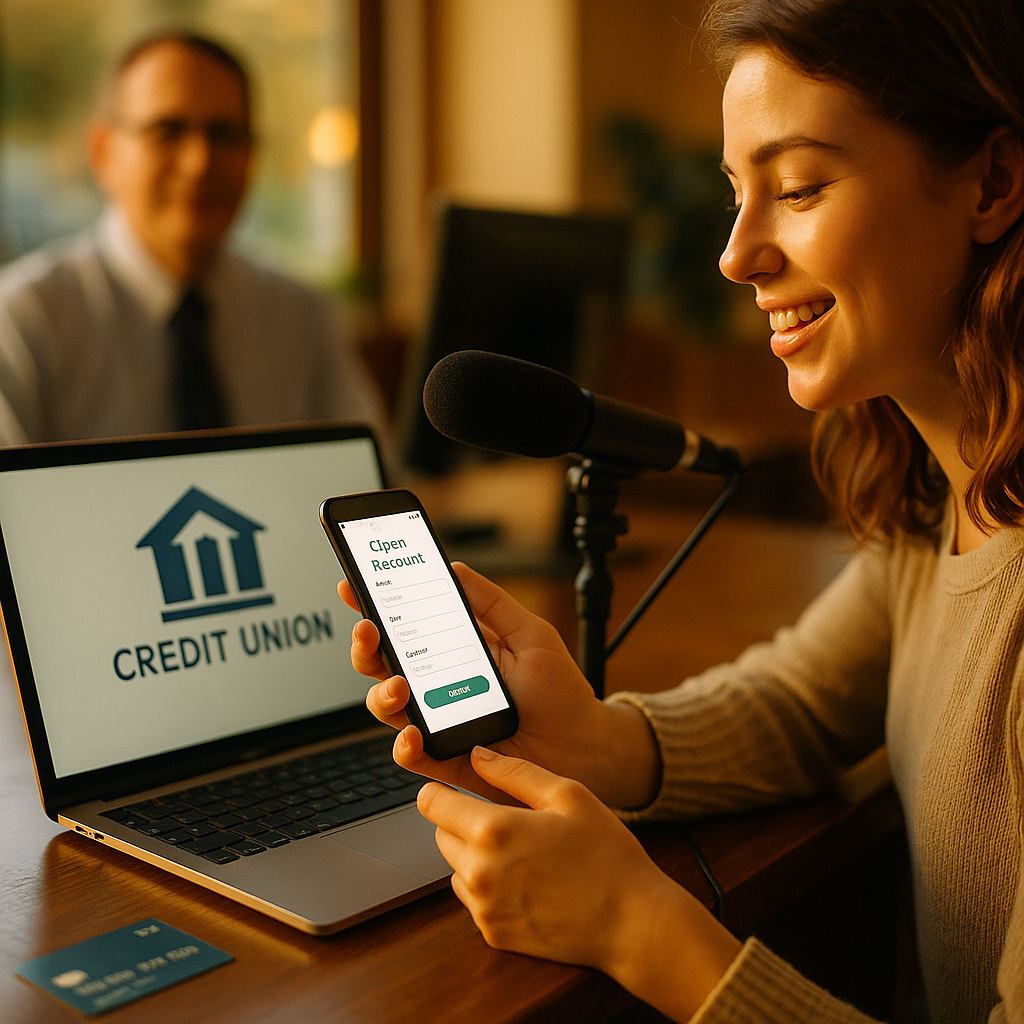
$187. That’s what one regional credit union was paying per new checking account through Google Search ads. Then it tried something almost embarrassingly low-budget: nano-creator explainer videos. Cost-per-new-account dropped to $61. This is the case study behind that number, and why cost-per-new-account through nano creators is becoming a real line item in financial marketing budgets.
The Problem: Paid Search Was Winning the Auction, Losing the Budget
The credit union in question — we’ll call it Heartland Community Credit Union, at their request for anonymity around competitive data — serves roughly 140,000 members across three Midwest states. Like most regional financial institutions, its digital acquisition strategy leaned almost entirely on paid search and display retargeting. Google Search terms like “best checking account near me” or “credit union vs bank fees” were driving traffic. But the cost per click on finance keywords had climbed steadily, a trend well documented by eMarketer and echoed across banking marketing forums for the past several cycles.
By the time Heartland’s marketing team pulled a full-funnel report, the math was ugly. Search campaigns were converting, technically. But cost-per-new-account had crept to $187, and that figure excluded the agency retainer managing the bids. Compare that to community bank benchmarks tracked by Statista, which peg average digital acquisition costs for regional banks well below that number, and it’s clear something was broken.
The deeper issue wasn’t the channel. It was the message. Search ads answered intent but never built trust. And trust, more than any other variable, determines whether someone actually opens an account with a credit union they’ve never heard of.
Paid search captures people already looking. It does almost nothing to explain why a credit union is a better fit than a national bank — and that explanation is exactly what moves the needle for first-time members.
Why Nano Creators, Not Micro or Macro
Heartland’s marketing director, tired of watching CPA climb, tested a hypothesis: what if the explanation came from a real member instead of a landing page? The team didn’t reach for big-name financial influencers or even established micro-creators with 50,000 followers. Instead, they recruited nano creators — people with 1,000 to 8,000 followers, mostly local to the credit union’s service footprint.
The logic was simple. Nano creators in a specific metro area carry hyper-local credibility. A 26-year-old teacher in Springfield explaining why she switched her direct deposit doesn’t read as an ad. It reads as a tip from someone in the group chat. This mirrors a pattern seen across other categories — ThredUp’s nano-creator resale hauls beat paid social on CPA for similar reasons, and Ryobi’s nano-creator network outperformed big box media on cost-per-sale. Financial services just hadn’t tested it seriously yet.
Nano creators also cost less. Heartland paid an average of $150 to $400 per video, plus a small usage-rights fee for repurposing content in paid social. Compare that to a single macro-influencer financial post, which can run into five figures depending on the niche and platform.
Building the Explainer Video Format
The creative brief was deliberately narrow. Each creator received:
- A single topic to cover (switching accounts, avoiding overdraft fees, first-time home buyer savings accounts, youth accounts)
- A required disclosure statement compliant with FTC endorsement guidelines
- A 45-to-90-second runtime cap
- Freedom to script it in their own words — no teleprompter reads allowed
That last point mattered more than anything else in the brief. Early tests with polished, brand-scripted videos performed worse. Viewers could smell the ad copy. Once creators were allowed to explain things the way they’d explain them to a friend — “okay so here’s the thing nobody tells you about overdraft fees” — completion rates on the videos nearly doubled.
This tracks with what other brands have learned the hard way. Poppi’s rebuild-trust playbook after its lawsuit leaned on the same insight: audiences forgive imperfection but punish obvious scripting.
The Media Plan: Organic Seeding Plus Paid Amplification
Heartland didn’t rely purely on organic reach from nano creators’ small followings. Instead, they used a hybrid model:
- Organic post from the creator’s own account, tagged and disclosed, driving initial engagement and social proof.
- Whitelisted paid amplification through Meta’s Partnership Ads tool, running the same video as an ad from the creator’s handle rather than the credit union’s branded page.
- Retargeting sequences aimed at site visitors who watched 50%+ of the video but didn’t convert.
This whitelisting approach is well-documented in Meta’s advertising resources for branded content, and it’s precisely what makes nano-creator campaigns scalable rather than a one-off stunt. The ad still feels like a creator post in the feed. But it’s targeted with the same precision as a normal paid social buy — lookalike audiences, geo-fencing around branch locations, interest layering around competitor bank customers.
The Numbers: Where Cost-Per-New-Account Landed
Over a 10-week test period, Heartland ran 22 nano-creator explainer videos across TikTok and Instagram Reels, with a combined production and amplification spend of $38,400.
- New accounts attributed to the campaign (via unique landing page + promo code tracking): 629
- Cost-per-new-account: $61
- Paid search cost-per-new-account over the same period: $187
- Average video completion rate: 71%
- Click-through rate on amplified posts: 2.3%, roughly triple the credit union’s typical paid social benchmark
A 67% reduction in cost-per-new-account, achieved with a production budget smaller than a single month of a mid-tier search campaign’s ad spend.
Worth noting: not every video performed equally. The top three creators, all covering the “switching from a big bank” angle, drove nearly 40% of total conversions. Topic selection mattered as much as creator selection. Videos about youth accounts and student savings underperformed, likely because the target demographic wasn’t actively in an acquisition mindset when scrolling.
What Almost Went Wrong: Compliance
Financial services marketing carries regulatory weight that a sneaker brand or beauty label doesn’t have to think about. Heartland’s compliance team was involved from day one, not brought in after the fact. Every creator video required:
- Pre-approval of scripts for accuracy on rates, terms, and fees
- Clear #ad or #sponsored disclosure per FTC endorsement guidelines
- A retained record of the final published video and caption for audit purposes
- No specific APR or rate promises that could shift before the video was published (they used ranges instead)
One near-miss: an early draft script referenced a “no-fee” checking account, but the account actually carried a minimum balance requirement to waive fees. Compliance caught it before publishing. That single catch probably saved the credit union from a misleading-advertising complaint. Any brand in a regulated category running creator programs should build this review step into the workflow from the start, not bolt it on later.
This is the same discipline that separates durable creator programs from campaigns that generate a headline and then a lawsuit. The anti-AI beer campaign backfire is a useful cautionary tale in a different category, but the underlying lesson about authenticity and risk applies directly to regulated industries too.
Could This Work for a Bigger Institution?
Skeptics will point out that Heartland is a relatively small player with a tight geographic footprint, which makes hyper-local nano creators easier to source and more relevant to a local audience. Fair point. A national bank chasing this exact playbook would need regional creator cohorts rather than one national roster, plus a heavier compliance layer across state-specific regulations.
But the underlying mechanism — trust-building explainer content outperforming intent-based search for consideration-heavy financial decisions — isn’t unique to small credit unions. It’s the same dynamic behind Liquid I.V.’s nano-creator seeding strategy and Vessi’s single-video referral engine. Financial services is just a later adopter of a pattern that’s already proven out in retail and CPG.
The bigger question for marketing leaders isn’t whether nano creators can beat paid search on cost. This case, and others like it, suggests they often can. The real question is whether your compliance and creative teams can move fast enough to make it repeatable rather than a one-time win.
FAQs
Frequently Asked Questions
What is cost-per-new-account and why does it matter for credit unions?
Cost-per-new-account measures total marketing spend divided by the number of new accounts opened as a direct result of that spend. It matters because it’s a cleaner efficiency metric than cost-per-click or impressions — it ties marketing directly to a bottom-line business outcome that credit union boards actually track.
Why did nano creators outperform paid search for this campaign?
Paid search captures existing intent but doesn’t build trust or explain differentiation. Nano creators, especially ones local to the service area, delivered explanatory content that felt like peer advice rather than advertising, which increased conversion rates enough to offset the lower reach per video.
How much does a nano-creator financial explainer video typically cost?
In this case study, videos ranged from $150 to $400 per creator, significantly lower than micro or macro influencer rates, which can run into the thousands or tens of thousands depending on niche and platform.
What compliance steps are required for financial services creator content?
Scripts should be pre-approved for accuracy on rates and terms, disclosures must follow FTC endorsement guidelines, published content should be archived for audit purposes, and specific rate promises should be avoided in favor of ranges that won’t shift before publication.
Can this strategy scale beyond a regional credit union?
Yes, but larger institutions need regional creator cohorts rather than a single national roster, plus a more robust compliance review process to account for state-by-state regulatory differences.
Next step: if your acquisition cost through paid search has plateaued or climbed, run a small nano-creator test — even five videos and a $2,000 budget — before committing to a full program. The data will tell you fast whether local trust-building content beats intent-based bidding in your category.
Top Influencer Marketing Agencies
The leading agencies shaping influencer marketing in 2026
Agencies ranked by campaign performance, client diversity, platform expertise, proven ROI, industry recognition, and client satisfaction. Assessed through verified case studies, reviews, and industry consultations.
Moburst

-
2

The Shelf
Boutique Beauty & Lifestyle Influencer AgencyA data-driven boutique agency specializing exclusively in beauty, wellness, and lifestyle influencer campaigns on Instagram and TikTok. Best for brands already focused on the beauty/personal care space that need curated, aesthetic-driven content.Clients: Pepsi, The Honest Company, Hims, Elf Cosmetics, Pure LeafVisit The Shelf → -
3

Audiencly
Niche Gaming & Esports Influencer AgencyA specialized agency focused exclusively on gaming and esports creators on YouTube, Twitch, and TikTok. Ideal if your campaign is 100% gaming-focused — from game launches to hardware and esports events.Clients: Epic Games, NordVPN, Ubisoft, Wargaming, Tencent GamesVisit Audiencly → -
4

Viral Nation
Global Influencer Marketing & Talent AgencyA dual talent management and marketing agency with proprietary brand safety tools and a global creator network spanning nano-influencers to celebrities across all major platforms.Clients: Meta, Activision Blizzard, Energizer, Aston Martin, WalmartVisit Viral Nation → -
5

The Influencer Marketing Factory
TikTok, Instagram & YouTube CampaignsA full-service agency with strong TikTok expertise, offering end-to-end campaign management from influencer discovery through performance reporting with a focus on platform-native content.Clients: Google, Snapchat, Universal Music, Bumble, YelpVisit TIMF → -
6

NeoReach
Enterprise Analytics & Influencer CampaignsAn enterprise-focused agency combining managed campaigns with a powerful self-service data platform for influencer search, audience analytics, and attribution modeling.Clients: Amazon, Airbnb, Netflix, Honda, The New York TimesVisit NeoReach → -
7

Ubiquitous
Creator-First Marketing PlatformA tech-driven platform combining self-service tools with managed campaign options, emphasizing speed and scalability for brands managing multiple influencer relationships.Clients: Lyft, Disney, Target, American Eagle, NetflixVisit Ubiquitous → -
8

Obviously
Scalable Enterprise Influencer CampaignsA tech-enabled agency built for high-volume campaigns, coordinating hundreds of creators simultaneously with end-to-end logistics, content rights management, and product seeding.Clients: Google, Ulta Beauty, Converse, AmazonVisit Obviously →